For most UK hotels and venues, corporate business arrives by chance. A regular picks up the phone, or an agency’s request for proposal lands in the inbox. The venues that win more of it don’t have bigger budgets. They show up in front of the right bookers before anyone starts searching.
This guide is for independent hotels, conference venues and restaurants with function rooms. It shows how to use LinkedIn to win corporate and MICE (meetings, incentives, conferences, exhibitions) bookings: who to target, how to structure your marketing, when to start and which numbers to track.
Quick answer: UK hotels and event venues win more corporate and MICE bookings by treating LinkedIn as an always-on engine rather than a one-off ad spend. Target corporate bookers by role and industry, prove the venue experience with real content, and follow up fast enough to convert enquiries before a competitor does. UK corporate events support hundreds of thousands of jobs and billions in annual spend. Most venues still rely on word of mouth and inbound RFP forms to capture a share of it.
1. Why corporate bookings are a bigger opportunity than most venues realise
Ask most UK hotel or venue managers how they win corporate business and the honest answer is usually the same: someone who already knows them picks up the phone, or a request for proposal lands from an events agency. That works, but it’s reactive. It depends on the booker already knowing the venue exists.
Meanwhile, the market those bookers represent is substantial and growing. UK meetings, incentives, conferences and exhibitions activity has expanded steadily, and corporate events now support a huge number of UK jobs across hospitality, catering and venue management. The businesses driving that spend, from small consultancies booking a 15-person away day to national companies running a 300-delegate conference, are almost all on LinkedIn. That’s where their HR teams, executive assistants, marketing departments, and the event agencies they hire actually work.
A practical guide to winning corporate and MICE bookings through LinkedIn, from first impression to repeat business. |
|
The venues that show up there consistently, with the right message for the right kind of booker, get found before they would ever be considered through word of mouth alone. Corporate bookers also check Google before they enquire, so it pays to be visible there too. Start with our guides to local SEO for hospitality businesses and GEO for hotels.
2. The old way vs. the new way
Most UK venues still market corporate space the way they always have. An always-on approach looks different in almost every respect.
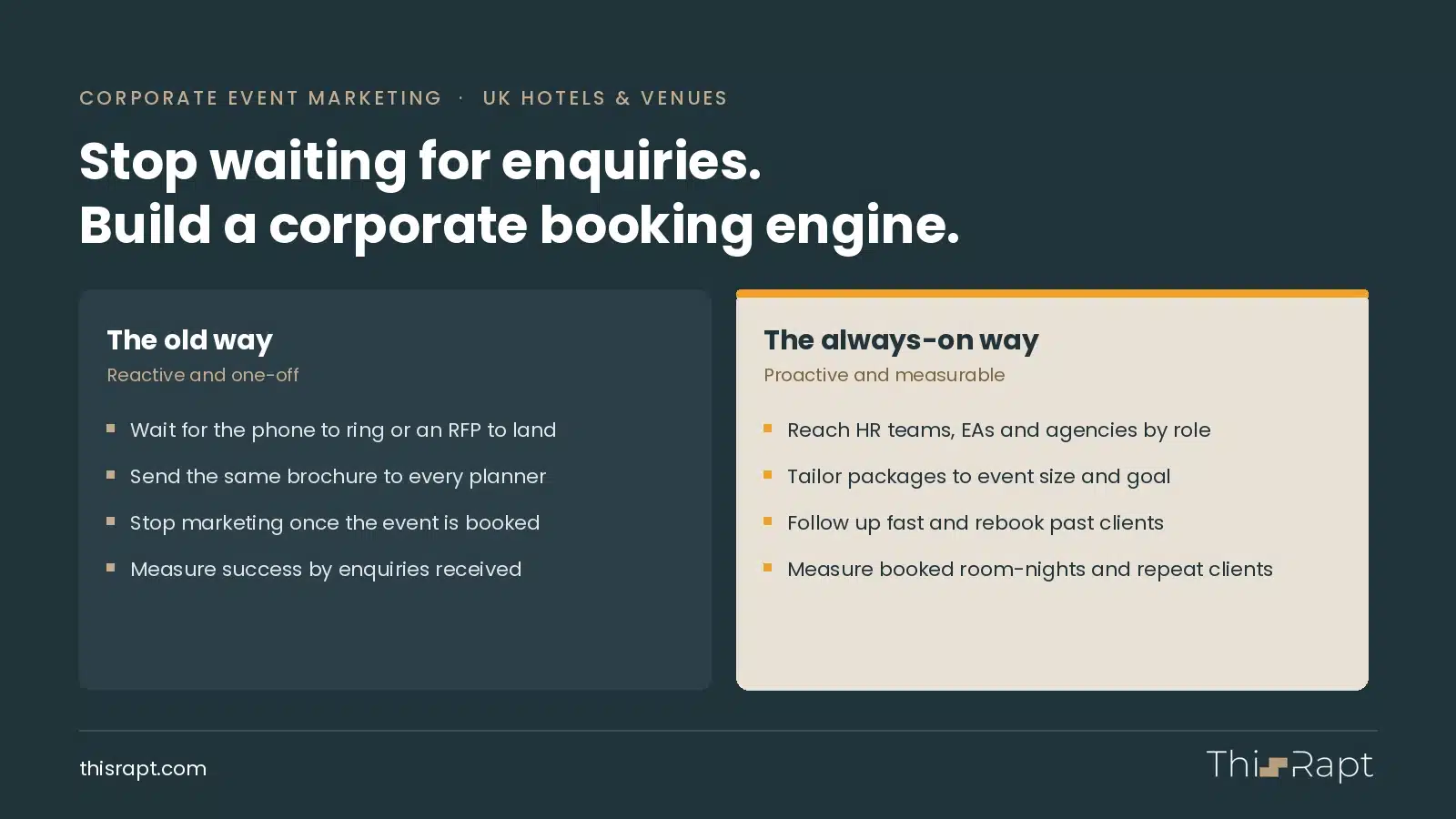
The old way isn’t wrong, exactly. It’s just incomplete. A strong reputation and repeat clients will always matter, but relying on them alone means a venue only competes for the corporate bookings that happen to find it. An always-on approach puts the venue in front of the right people before they start searching, so when they do need a space, it’s already on their shortlist.
3. Build audiences around the people who actually book
The biggest mistake venues make on LinkedIn is targeting too broadly, such as “companies in London” or “businesses in the hospitality industry”, then wondering why the enquiries are the wrong fit. Corporate event bookings are usually decided or heavily influenced by a small, identifiable set of roles:
- HR and People teams book away days, training sessions and end-of-year events.
- Executive assistants and office managers are often the ones actually filling in the RFP form.
- Marketing and events managers organise product launches, client dinners and brand activations.
- Independent event planners and agencies book on behalf of several corporate clients at once.
Building separate, smaller audiences around these roles means the message can speak to what each one cares about. An EA wants to know the booking process is simple and the venue is reliable. A marketing manager wants to know the space will photograph well and impress clients. The venue that addresses both separately outperforms the one sending the same generic brochure to everyone.
Make sure your Google Business Profile lists your meeting rooms, capacity, and photos too. Many bookers check it before they click an ad.
4. Build an always-on engine, not a one-off campaign
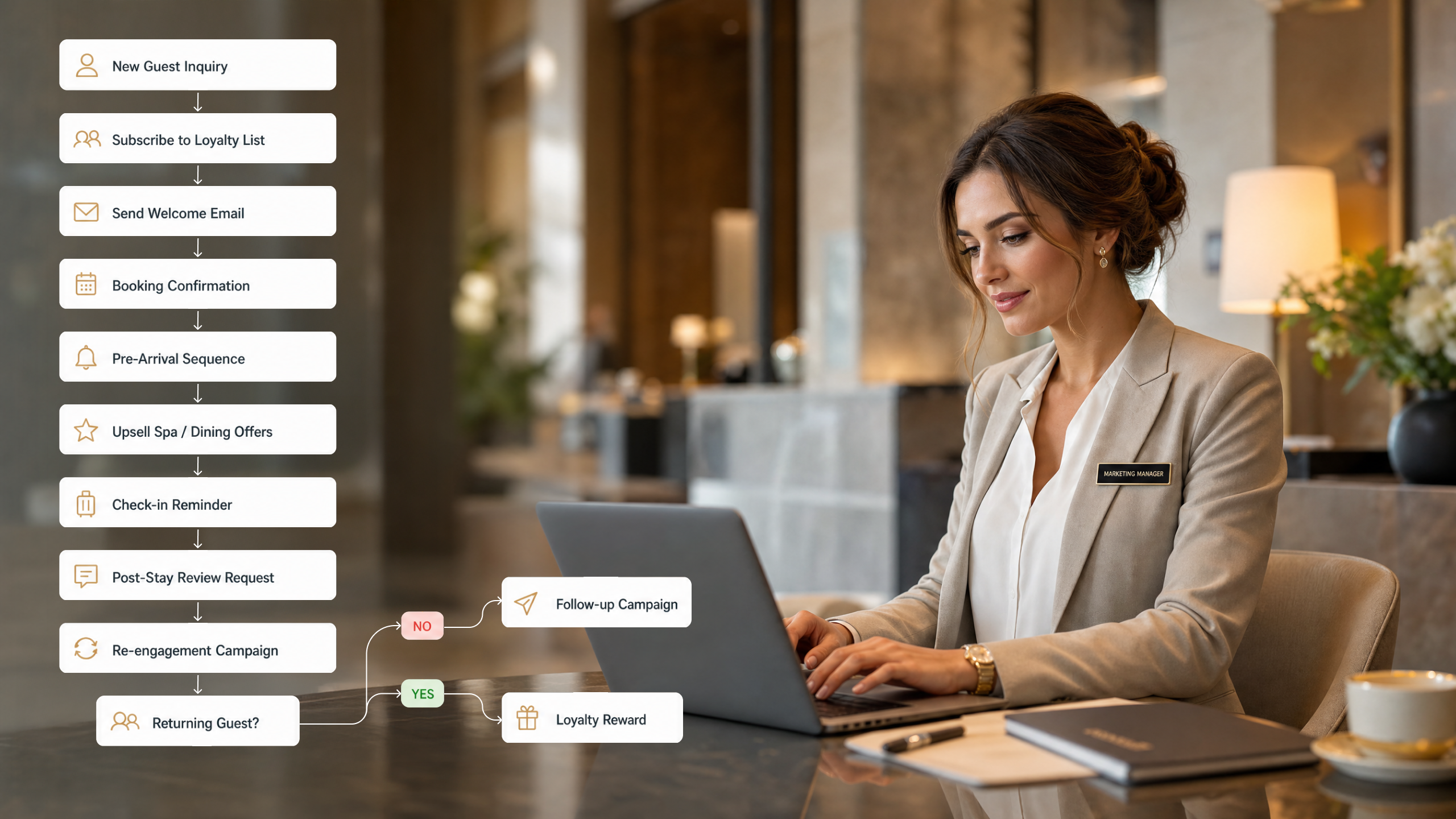
A single burst of LinkedIn activity around a slow season rarely moves the needle. Corporate booking decisions have long lead times, weeks or months rather than days. The venues that win are visible across the whole decision journey, not just at the point someone is ready to enquire.
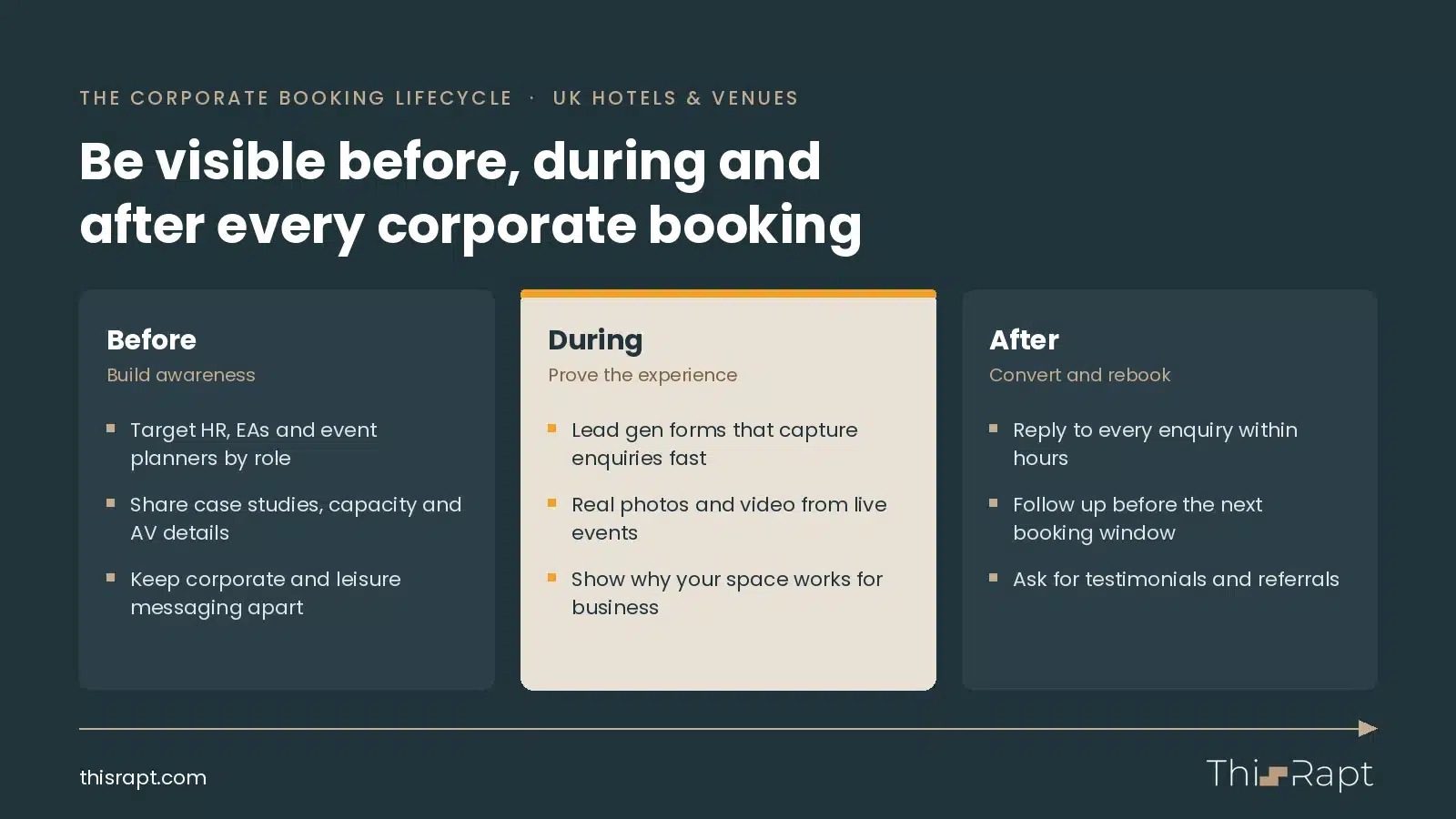
4.1 Before: build awareness.
- Share proof that the venue handles corporate events well: case studies, capacity details, AV capability, and real event photography.
- Target by role and industry rather than geography alone, so the right bookers see you repeatedly over time.
- Keep leisure and corporate messaging separate. A wedding photo gallery doesn’t reassure a conference organiser.
4.2 During: prove the experience.
- Use lead gen forms that let a booker request a proposal without leaving LinkedIn. Fewer steps mean more completed enquiries.
- Share real, recent content from live corporate events: room set-ups, catering and delegate feedback.
- Make it obvious what sets the venue apart for corporate bookings: flexible room layouts, on-site parking, dietary flexibility and breakout spaces.
4.3 After: convert and rebook.
- Respond to every enquiry within hours, not days. Corporate bookers often compare two or three venues at once.
- Follow up past corporate clients ahead of their next likely booking window, such as the annual conference, Q4 celebration or quarterly training. Our hotel email marketing guide covers the basics.
- Ask satisfied organisers for a short testimonial or referral. Reviews matter here too: see hotel reputation management and review strategies.
Not sure where your corporate enquiries are being lost?
Our team reviews UK hotel and venue marketing for exactly these gaps: audience targeting, enquiry follow-up and Google visibility.
5. When to start promoting a corporate event or package
If you are promoting a specific seasonal package, such as a Christmas party offer, a summer conference package, or a new meeting room launch, timing matters. Restaurants and pubs with function rooms can pair this with our Christmas marketing playbook. A rough guide that works well for UK corporate booking cycles:
- 4 to 6 weeks before the booking window: start building awareness with the relevant audience, before anyone is actively comparing venues.
- 2 to 4 weeks before: shift toward direct response with proof points, availability, and a clear way to enquire.
- Final week: a last-chance reminder for anyone who has shown interest but hasn’t enquired yet.
For a major seasonal push, starting the full cycle six weeks out gives enough time to build awareness before the rush of enquiries in the final fortnight.
6. Choosing the right LinkedIn ad formats for a venue
Not every format suits every stage of the journey. For most UK hospitality venues, a small, focused mix works better than spreading budget across everything LinkedIn offers:
- Single image or carousel ads are the simplest way to showcase event spaces, catering and past events. Strong for the awareness stage.
- Lead gen forms come pre-filled with the booker’s profile details, removing friction from requesting a proposal or site visit. Strong for conversion.
- Thought leader-style posts from a named sales or events manager build more trust than a branded ad, particularly with first-time corporate bookers. Share honest insight, such as how to plan a hybrid conference or what makes a site visit worthwhile.
- Short video, such as a 20- to 30-second walk-through of a function room or a time-lapse of an event being set up, performs well and is cheap to produce in-house.
Plan these alongside your wider content. Our guides to social media marketing for hotels and content marketing strategies for hotels will help.
7. The numbers that matter to ownership
Impressions and clicks are easy to report but tell ownership little about return. For corporate and MICE marketing, four numbers matter far more:
- Qualified enquiries, not just form fills. How many came from the right type of booker, for the right type of event.
- Enquiry-to-booking conversion rate. This shows whether the sales process, not just the marketing, is working.
- Average booking value by source. Compare corporate bookings sourced through LinkedIn with those from word of mouth or agencies.
- Repeat and referral bookings from past corporate clients. The clearest sign the always-on approach is compounding rather than resetting every quarter.
Tracking these consistently turns a vague sense that “LinkedIn is working” into a number ownership can act on when deciding where next year’s budget goes. Our guide to analysing your marketing ROI shows how to set it up.
8. Key takeaways
- UK corporate and MICE bookings are a substantial, growing opportunity that most venues still approach reactively.
- Targeting by role (HR, EAs, marketing managers, event agencies) outperforms broad company or location targeting.
- An always-on Before, During, and After structure keeps a venue visible across the full booking decision, not just at the point of enquiry.
- Fast follow-up on enquiries matters as much as the marketing that generated them.
- Qualified enquiries, conversion rate, booking value, and repeat business matter far more than impressions or clicks.
9. Get more corporate bookings
ThisRapt works with UK hotels, venues and hospitality SMEs on search, email, social and paid campaigns that win corporate and MICE bookings, not just leisure guests. If you want to know where your corporate enquiries are being lost, book a free audit with our team.
Ready to fill your function space year-round?
ThisRapt works exclusively with hospitality SMEs to grow direct bookings through search, email and social.
10. Corporate event marketing FAQs
Yes, arguably more so. A single-site venue doesn’t need national reach. It needs to be visible to a small, specific pool of corporate bookers within a realistic travel radius, which LinkedIn’s role and location targeting handles well without a large budget.
There is no fixed figure. Start with a modest, consistent monthly spend and test it over two to three months, rather than one large short burst. That gives a far clearer read on what works before you scale up.
It helps, but it isn’t essential. What matters more is that enquiries get a fast, personal reply from someone who can answer questions and book a site visit. In smaller venues that can be the general manager or an events coordinator.
That is a strong foundation, not a reason to skip this. Word of mouth tends to plateau once it reaches your existing network. An always-on LinkedIn presence extends your reach beyond the people who already know the venue, while word of mouth keeps doing what it does well.
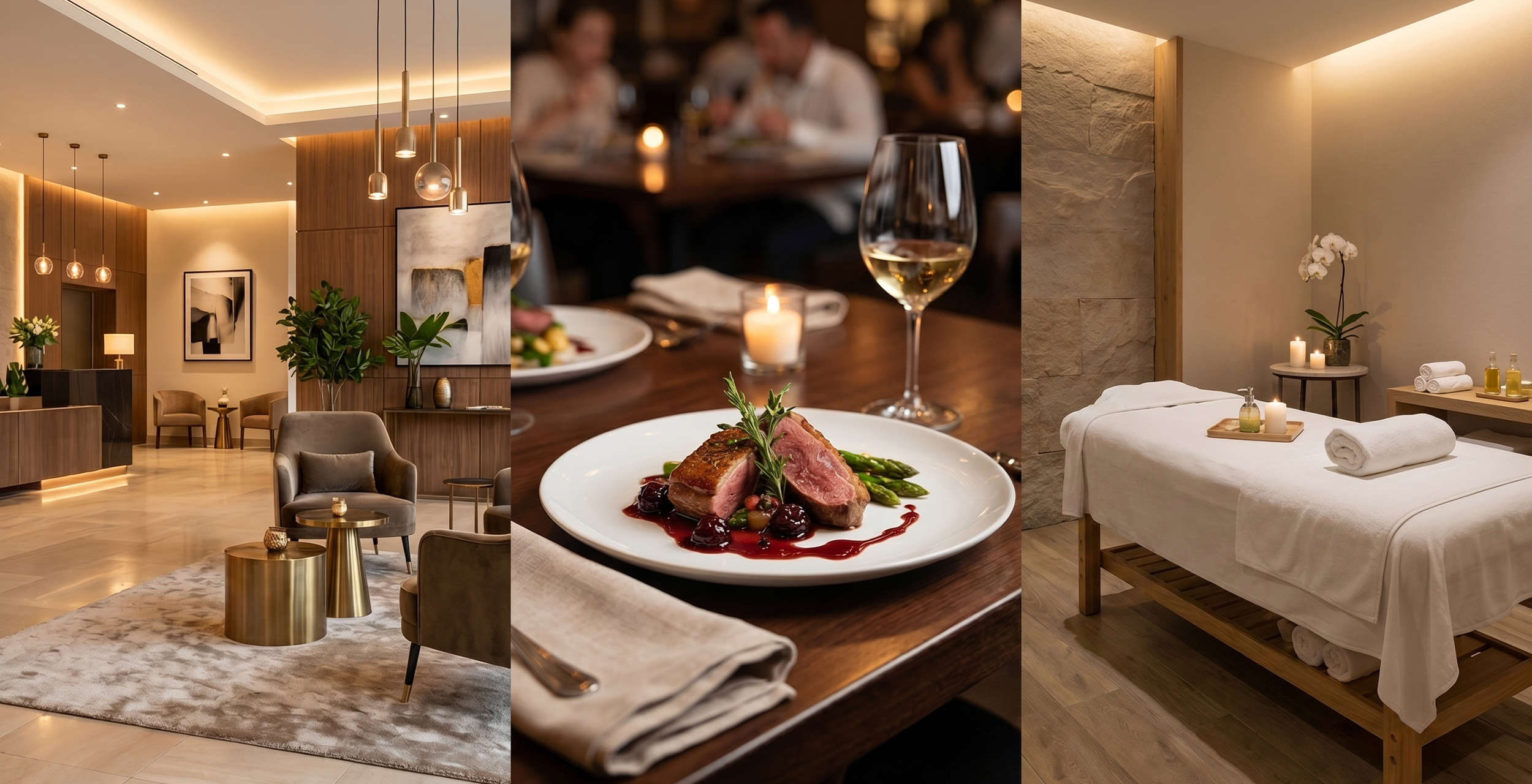
Generally, yes. Wedding or spa-weekend audiences and corporate events audiences look for different things and respond to different proof points. Mixing the messaging tends to dilute both.
Within a few hours during working hours. Corporate bookers often send the same brief to two or three venues, and the first helpful, personal reply usually gets the site visit.