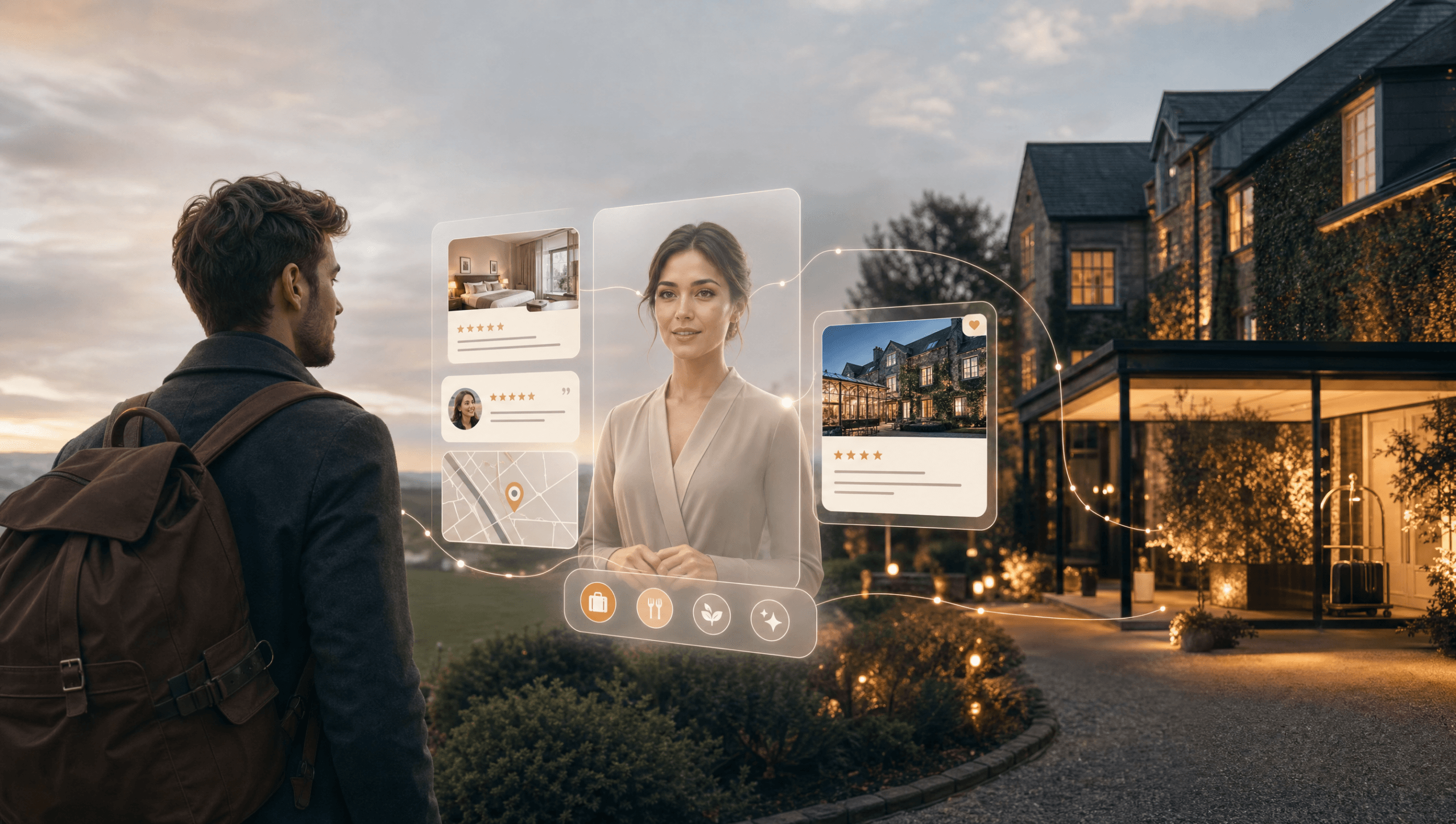
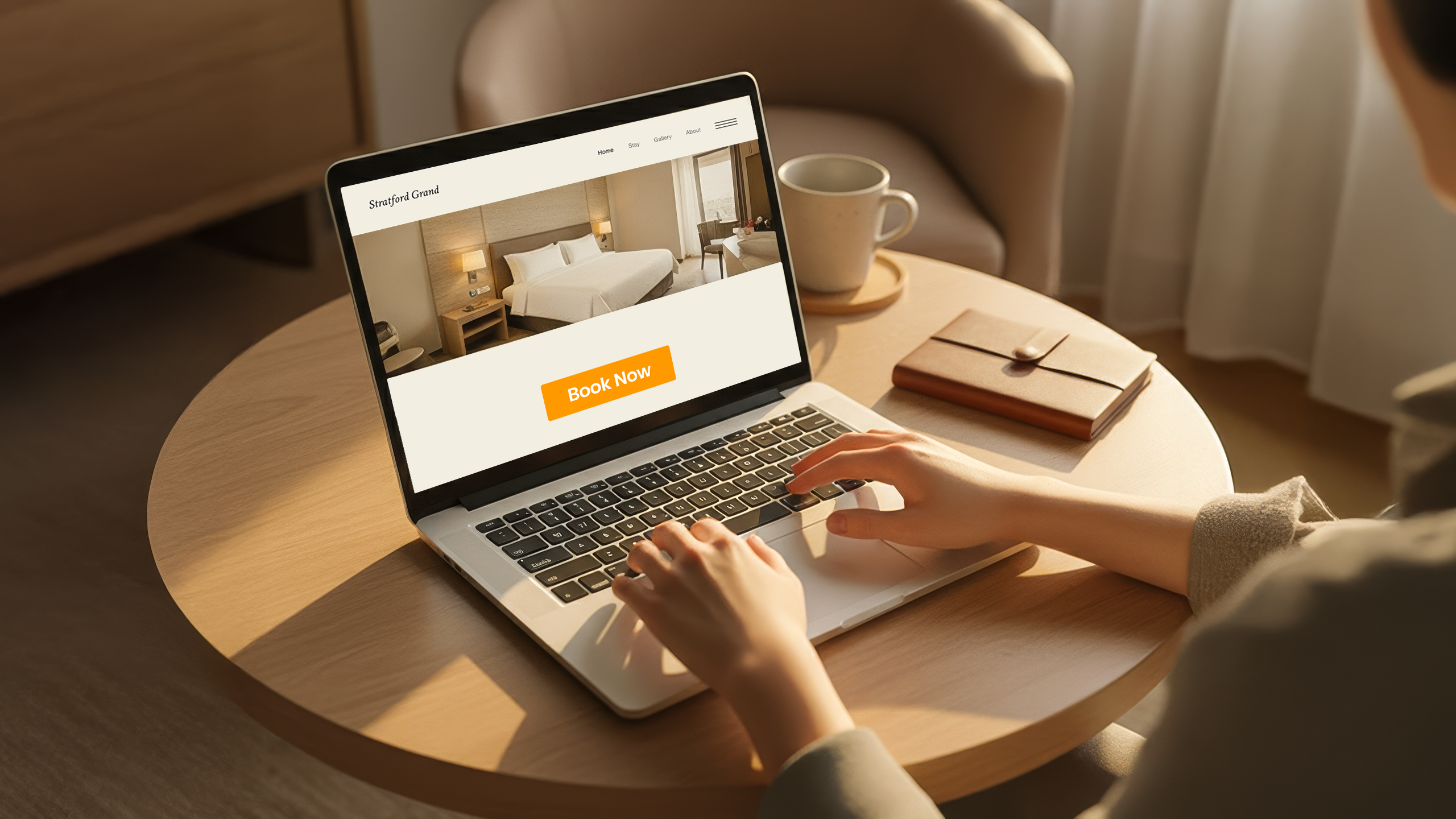
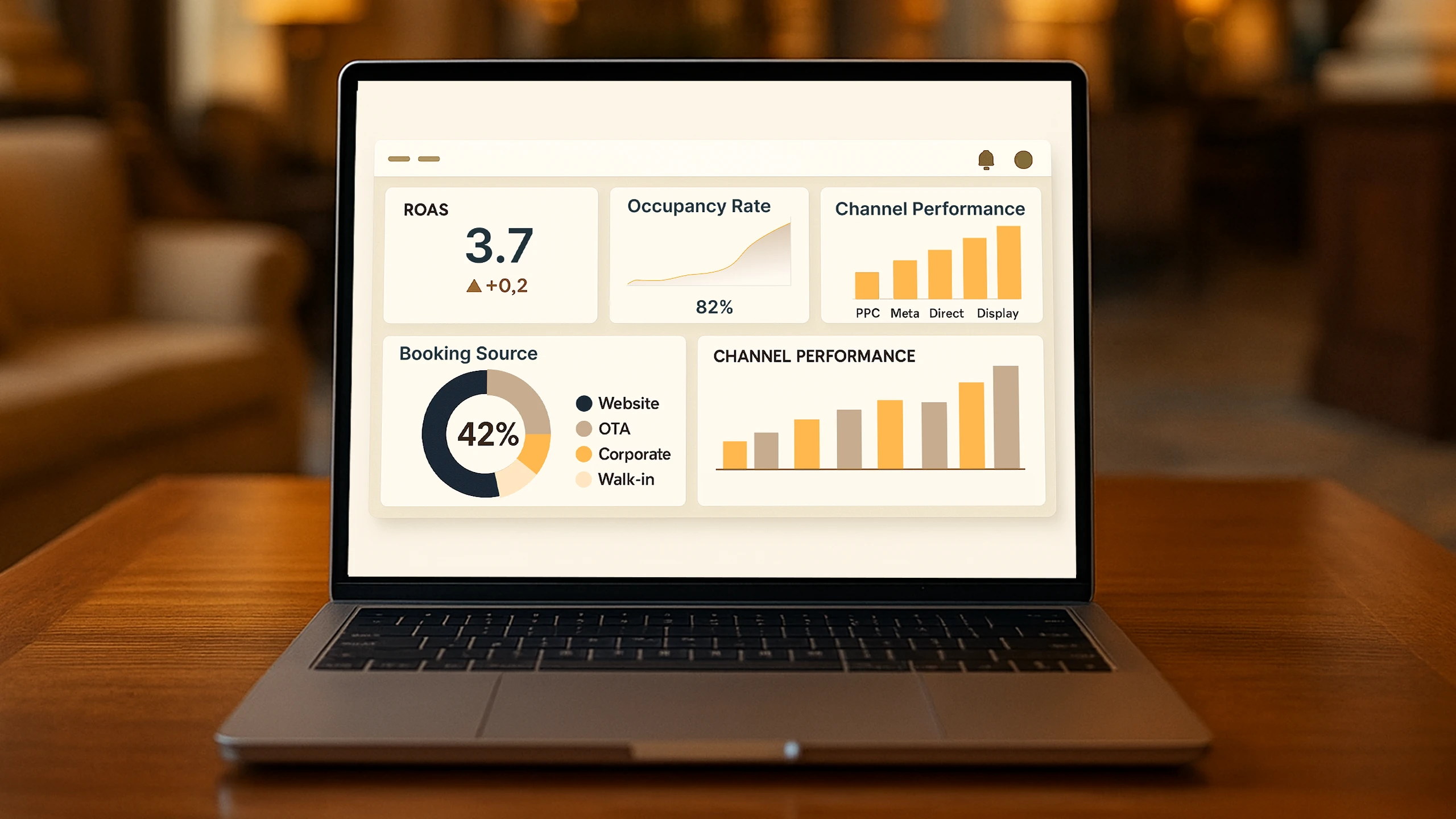
Travellers no longer discover hotels as they used to before the social media era. Today, the discovery begins on the mobile screen with an Instagram Reel, a TikTok room tour, or a saved post of a countryside retreat.
For UK hotels, social media has evolved from being just a branding tool into a powerful discovery channel. In fact, up to 75% of travellers today use social media to decide where to travel (Perk).
Whether it’s a boutique stay in the Cotswolds, a seaside escape to Brighton, or a luxury hotel in London, travellers tend to choose places that look magnificent online.
This whole shift is also changing how hotels compete with OTAs. Instead of relying on third-party booking platforms, hotels can make the most of social media to build direct relationships with travellers, strengthen trust, and drive direct bookings.
For a bonus, mobile-first behaviour is taking this even further. With over 67% of UK online travel bookings now happening through mobile devices (Modor Intelligence).
In this guide, you’ll learn how UK hotels can use social media marketing to increase engagement, attract travellers, and turn their online followers into paying guests.
1. Why social media marketing works differently for hotels
1.1 The emotional discovery process
Hotels sell more than just rooms; they share experiences.
Unlike other industries, hotel bookings are highly influenced by emotions and aspirations. Travellers often imagine and romanticise the experience before hitting “book now,” whether it’s a luxury spa weekend or a city break in London.
This is one of the biggest reasons for social media marketing to work so effectively for hotels. Visual platforms like Instagram and TikTok allow hotels to showcase their atmosphere, experiences, and emotions to people rather than just listing amenities.
Social proof always plays a major role in accommodation decisions. Guest photos, tagged content, reviews, and travel creators help build trust and influence people to go on and book.
The “save for later” feature on platforms like Instagram is also important in the UK staycation market, as a lot of travellers tend to plan their trips weeks or months in advance.
1.2 The UK hotel social media landscape in 2026
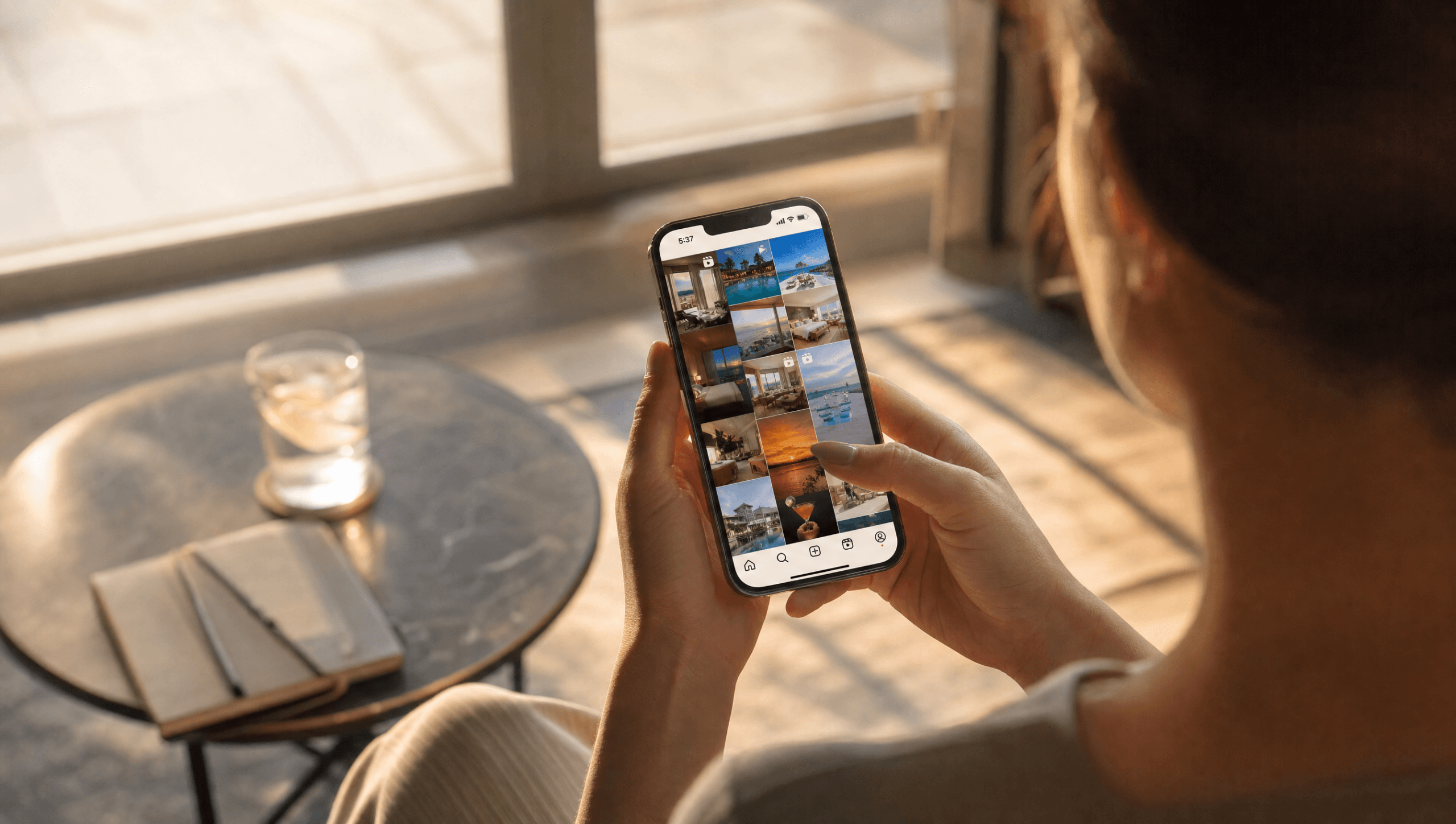
The opportunity in the UK market is significantly growing. TikTok has reached up to 26.8 million UK users through advertising, while Instagram and Facebook continue to handle the largest audience for brand discovery. Research shows that 27.5% of the UK audience uses social media for brand research, and 57.5% research on social media before making a purchase (Datareportal). Such a figure translates directly to hotel booking behaviour.
Mobile-first consumption is the reality today. The majority of social browsing, travel inspiration, and an increasing amount of bookings happen on smartphones. If your hotel publishes any content or landing page that is not optimised for mobile, it is already behind.
1.3 What makes social media different
There are several characteristics that separate hotel social media from other industries, and understanding them before building any strategy is essential.

Long consideration periods:
Guests do not decide on a Thursday night and make a booking on Friday. Researching windows of several days or weeks is common when planning long staycations, special-occasion outings, or family trips. Your social presence needs to be present throughout that entire journey.
High transaction values requiring trust signals:
A £150/night booking demands confidence and trust. Such confidence doesn’t come overnight. Social proof, professional imagery, responsive community management, and consistent brand voice all work together in order to build that confidence over time.

Visual dependency
No other category relies as heavily on imagery and video as hotel social media marketing. A blurry image of a room ruins brand positioning and damages trust. Your social presence gives an effective visual reason for why your hotel is worth staying at.

UK seasonality:
The UK gives reasons for vacations. Bank holidays, school half-terms, the summer staycation surge, Christmas market season, and Valentine’s weekend all make UK hotel booking patterns predictable. A well-planned social calendar allows you to prepare in advance.
2. Setting your hotel social media strategy
2.1 Defining clear goals
A common mistake that hotels make on social media is posting without a strategy. Consistency does not equal strategy. Before creating any piece of content, you and your team should be on the same page regarding the following goals you are actually working towards.
- Brand awareness: Reach new audiences who have never heard of your hotel.
- Direct booking conversion: Turning your social media followers and website visitors into paying guests.
- Guest engagement and loyalty: Keeping past guests connected and loyal to return.
- Reputation management: Shaping public perception of your hotel and responding to feedback.
- Event and package promotion: Driving bookings for specific offers, seasonal periods, or festivals.
Different goals require different content, platforms, and success metrics. Trying to achieve them all while sticking to the same content usually results in achieving none of them.
2.2 Identifying your target audience on social media
The most popular segments for UK properties include:
- Staycationers: They’re the backbone of UK hotel bookings. Weekend breakers, bank holiday planners, and couples looking for an escape without catching flights. Instagram and Facebook are their primary search engines.
- Business travellers: These people are city-centre seekers, conference attendees, and corporate bookers. LinkedIn is the hero here, but a consistent and professional brand presence across all platforms also matters.
- Event planners and wedding parties: People researching venues months or years in advance. Pinterest and Instagram play a vital role in this segment.
- Family holiday planners: This segment is mostly parents who search for school holiday outings. They prioritise clear information about facilities, accessibility, and value. Facebook remains the main character here, especially Facebook groups.
- Luxury and boutique seekers: Experience seekers who strongly resonate with immersive storytelling, behind-the-scenes content, and aspirational aesthetics on Instagram and TikTok.
2.3 Choosing the right platforms for your hotel type
Every platform doesn’t need to be right for your property. Here is a practical guide to platform selection:
a. Instagram
- Instagram is the home for boutique hotels, countryside retreats, and design-led properties.
- Its core strength lies in visual storytelling via Reels, Stories, and Carousel posts.
- The UK audience tilts towards the 18-45 demographic with high engagement with travel content.
b. Facebook
- Facebook remains the largest platform by UK audience size.
- It performs well for family-friendly properties, event venues, and community-focused hotels.
- Its exclusive event features, ad targeting capabilities, and an older demographic (35-65) make it crucial for driving bookings rather than simply spreading awareness.
c. TikTok
- TikTok has evolved beyond an awareness-only channel.
- UK users spend an average of almost 50 hours per month scrolling TikTok (Sprout Social). This is above the global average of 34 hours.
- Boutique hotels and unique properties that have stories to tell have significant opportunities here.
- It’s the best source for reaching the 18-34 demographic.
- Authentic and short-form video content works great.
d. LinkedIn
- LinkedIn matters most for business hotels, conference venues, and properties having strong corporate packages.
- It is the only platform that allows building B2B relationships at scale in the UK market.
e. Pinterest
- Pinterest is often underestimated by hotels, but it’s exceptionally powerful.
- People search for wedding venues, spa properties, and destination hotels.
- Pinterest offers long-term discovery from audiences actively planning high-value stays and events.
For independent UK hotels, the realistic social media path would include Instagram and Facebook as starting points. While TikTok is added eventually, once a rhythm has been established.
3. Content strategies that convert browsers into bookers
3.1 The four content pillars of hotel social media
- Property Showcasing (approximately 40% of content)
- This is the foundational block. Showcase room features, views from the windows, facilities such as pools, spas, restaurants, and bars. Seasonal property transformations are particularly powerful; share Christmas decorations, summer terrace set-ups, and spring gardens. Short-form video content always outperforms static imagery in this category.
- Guest Experiences (approximately 30% of content)
- Your guests are already telling your story for you; just go and amplify it. User-generated content (when reposted with consent) carries the weight of social proof that branded content cannot. 80% of the Gen Z population relies on UGC as an essential resource before making any purchase. Celebrations, anniversaries, family moments, and honeymoon stays – all of them make compelling and authentic content that prospective guests connect with emotionally.
- Local Area and Destination (approximately 20% of content)
- Guests do not just buy a room; they buy access to a place. When the content showcases nearby attractions, local events, hidden gems, and seasonal highlights, it positions your hotel as an expert local guide of the destination. This is
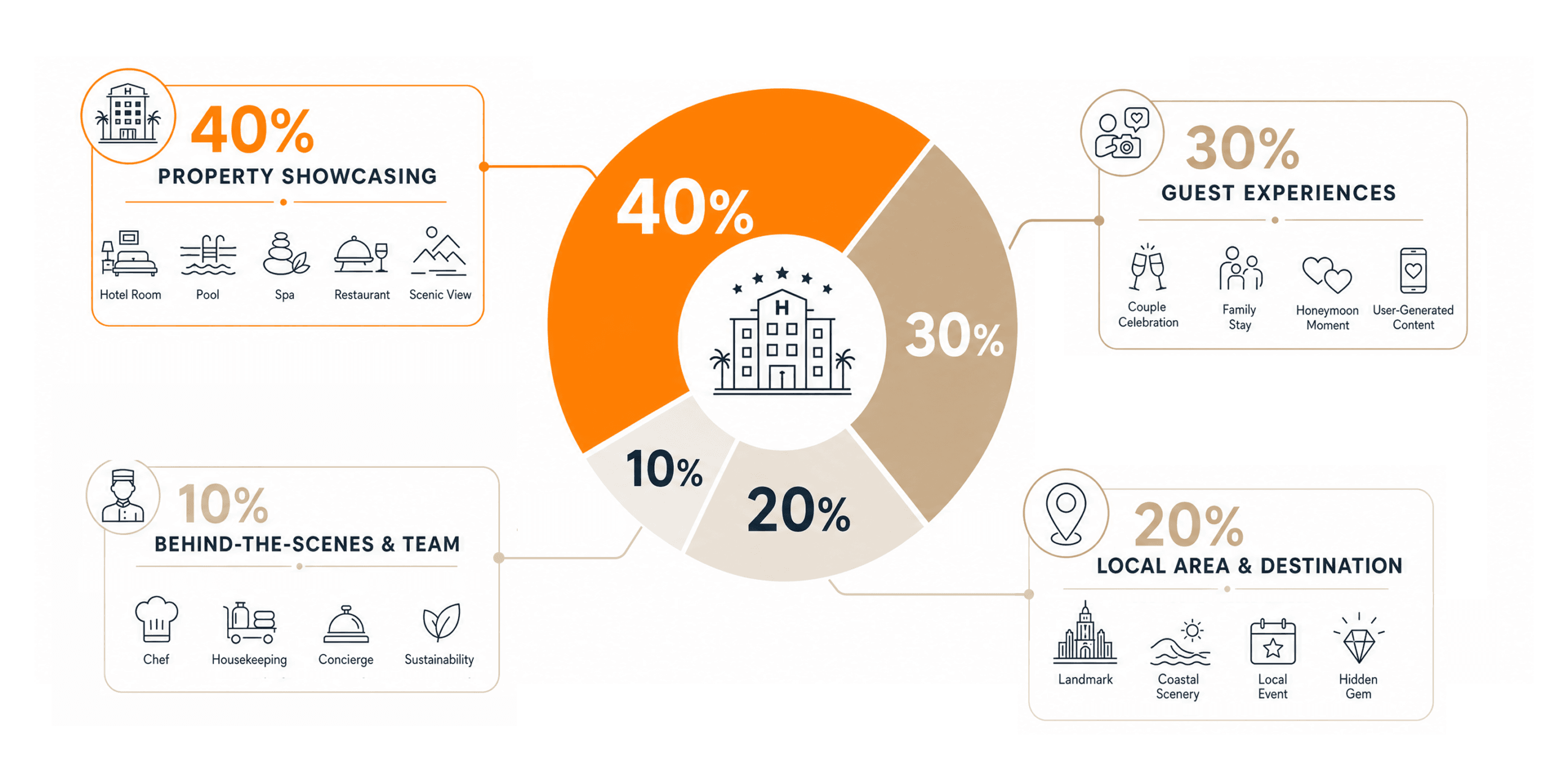
- especially important for rural, coastal, and market town properties where the nearby locations are a significant part of the appeal.
- Behind-the-scenes and team (approximately 10% of content)
- Content that shows the people behind a property builds a human connection that drives loyalty. Chef spotlights, housekeeping routines, concierge recommendations, sustainability initiatives, and fun activities or trends shot with staff all humanise your brand. This category is also the easiest to produce, as it doesn’t require any professional photography equipment.
3.2 Content formats that drive engagement
- Video content is your highest priority: Instagram Reels, TikTok videos, and Facebook video content are consistently outperforming static posts in both reach and engagement. If you capture a 15-30 second room tour as a Reel, it’ll reach significantly more people than just static photographs of the same room. And the entry barrier is much lower than a lot of hoteliers assume it to be. All you need is well-lit and steady smartphone footage with good audio, and that’s enough.
- Carousel posts: Carousels are underused by most UK hotels. A multi-image carousel post showing all room categories or a step-by-step local area guide performs incredibly. The audience keeps swiping and saving for later, which dramatically increases the dwell time, and the algorithm loves that.
- Interactive content: This includes polls, questions, and quizzes in stories. Such interactive content demands that users engage with it, creating a genuine two-way relationship with them. You can ask your followers questions like, “Which of the following local walks should we feature this weekend?” This commands them to invest in your content, which might lead them to come back.
- Posting frequency: Volume matters, but consistency matters more than that. Consider two hotels: Hotel A and Hotel B. Hotel A posts four times a week, every week. Hotel B, on the other hand, posts 15 times in a fortnight, then goes silent for days. In such a scenario, Hotel A will outperform Hotel B. A realistic schedule should look like:
- Instagram: 4-5 posts per week with daily stories
- Facebook: 3-4 posts per week, plus event updates whenever needed
- TikTok: 3-5 videos per week (authenticity matters here)
- LinkedIn: 2-3 posts per week (for business hotels only)
- Pinterest: 5-10 pins per week (specifically for wedding venues)
For UK hotels, optimal post timings are weekday mornings between 7 and 9 am, lunchtimes between 12 and 1 pm, evenings between 7 and 9 pm, and weekend mornings between 10 am and 2 pm.
For a full breakdown of these tactics, check out our guide on 7 content marketing strategies for hotels to boost bookings.
4. Building engagement and community
A hotel with 2000 highly engaged followers is always better than a hotel with 30,000 passive followers. Followers who consistently like, share, comment, and save content can generate more direct bookings than those who ignore your posts. The algorithm always favours content with genuine interaction, which means engagement quality is the key metric that drives organic reach.
Your response speed and quality directly impact booking intent. Guests who ask about availability, parking, or accessibility through comments or DMs are in the consideration phase; they will definitely book if their question is answered promptly and warmly. Try setting a goal to respond within 2 hours during working hours. Use the respective guests’ names wherever possible. Answer booking questions with direct links to your booking engine, and always express your personality while being professional.
Handle negative comments with genuine care in public; this often creates more trust than unchallenged positive reviews. A guest who saw you resolving an issue gracefully will always remember that you cared about getting it right.
Create great conditions for guests to share. Create Instagram-worthy moments in your property, such as a particularly beautiful corner, a uniquely decorated hallway, or a stunning breakfast presentation. Use hotel-specific hashtags like #StayAt[Your hotel name], making UGC easier to find and aggregate. Running a simple monthly giveaway (a complimentary spa treatment or a dinner for two for whoever posts the best tagged photo) can significantly increase the volume of genuine guest content or visits.
Remember to always ask for guests’ explicit permission before reposting any content. This is a good practice and a legal requirement.
Choose micro-influencers over macro-influencers for UK hotel marketing. Micro-influencers are those who have a follower count between 5,000 and 50,000, and they deliver a consistently better engagement rate with more authentic reach. UK travel bloggers, local lifestyle accounts, and family travel creators charge significantly less per campaign while speaking to a genuinely interested and trusting audience.
For boutique and independent hotels, the most beneficial collaboration will be with local businesses. Joint content with nearby restaurants, experience providers, or independent shops creates a sense of relatability and local authenticity that no OTAs can replicate. Produce guides like “A weekend in [town name]” with three or four local partners. This will reach each partner’s audience while positioning your hotel as a natural accommodation choice.
5. Social media advertising for hotels
5.1 Why organic reach is no longer sufficient
Organic reach is great, but it alone cannot carry the hotels’ marketing ambitions in 2026. The algorithm changes across different Meta platforms, meaning only 5-10% of your followers see any given organic post without any paid amplification. Up to 70.4% of UK users say they feel overwhelmed by the volume of ads in their feeds (Meltwater). This makes creative quality and targeting precision more important than ever.
Paid socials do not replace organic content in any way. It simply amplifies what’s already working. It’s also important to learn how to use social media advertising for UK hotels, as nothing too much or too little ever works.
5.2 Campaign types for hotel social media advertising
a. Awareness Campaigns:
- These campaigns introduce your property to new audiences
- Work best with aspirational visuals (sweeping exterior shots, immersive room tours, and stunning local area photography)
- Targeted by location, interests, and behaviours
- A realistic monthly budget for an independent UK hotel could be around £300-£800.
b. Consideration Campaigns:
- Engage potential bookers
- Room tours, amenity highlights, and unique feature-showcasing content perform well here
- Targeting people who’ve searched for hotels in your area or those who follow your competitors is particularly effective
- The budget could be around £500-£1,200 per month
c. Conversion Campaigns:
- These campaigns are built specifically to drive direct bookings
- Limited-time offers, seasonal packages, and clear “Book now” messaging with a direct link to your booking engine are core components
- Budget: £800-£2,000 per month during peak periods
d. Retargeting Campaigns:
- These campaigns are most overlooked, but often the highest-ROI activity for UK hotels
- Target website visitors who browsed your room pages but did not complete booking; they are warm prospects
- Go for a retargeting ad showing those specific rooms with compelling incentives
- Budget could be around £200-£600 pe month
e. Seasonal Event-Based Campaigns:
- They fill rooms during key booking windows
- Valentine’s, Christmas, Easter, Summer, and local events are peak periods
- Increase budgets by 50-100% during such periods
5.3 Platform-specific advertising approaches
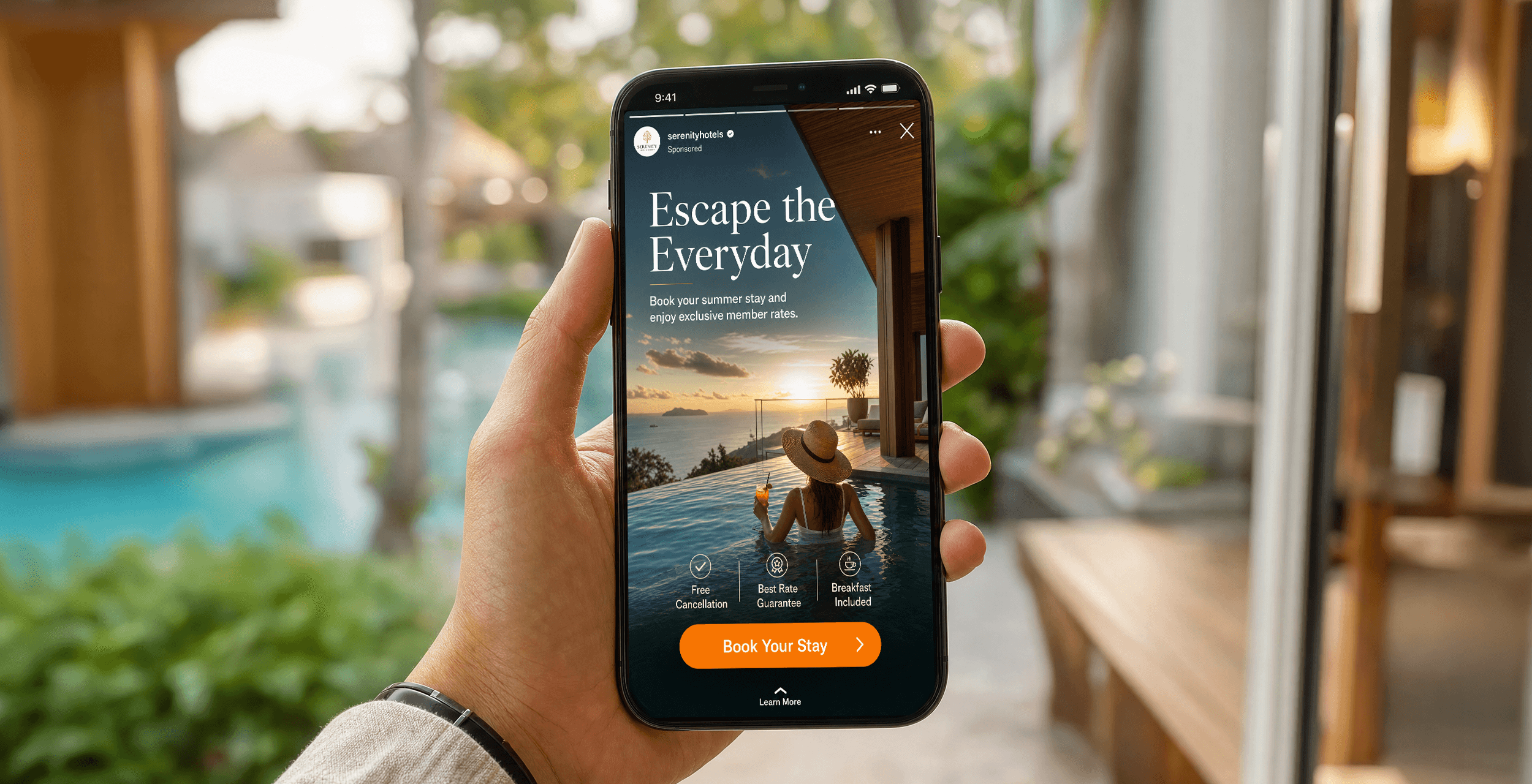
On Instagram, go for Stories ads and Reels ads, as they drive the strongest discovery performance. Full-screen Stories ads with a clear CTA withing he first three seconds are the most effective format compared to others. On Facebook, carousel ads showing multiple room types and packages work best, as it lets the customer choose what they need. Collection ads work particularly well for seasonal packages. On TikTok, the in-feed ads are required to seem native. For TikTok, entertainment and authenticity come first; booking messages come second.
Key performing metrics for UK hotel social advertising:
- Cost per click should range between £0.50 and £1.50
- Click-through rate should be 1.5% or more for Instagram and Facebook
- Conversion rate from ad click to “booking confirmed” should fall between 2% and 5%
Having a structured booking calendar helps hotels stay consistent and visible during the peak booking periods.
Explore ThisRapt’s Hotel Social Media Marketing Guide for planning, inspiration, and hospitality-led marketing insights.
6. Converting social media followers into direct bookings
6.1 The financial case of direct bookings
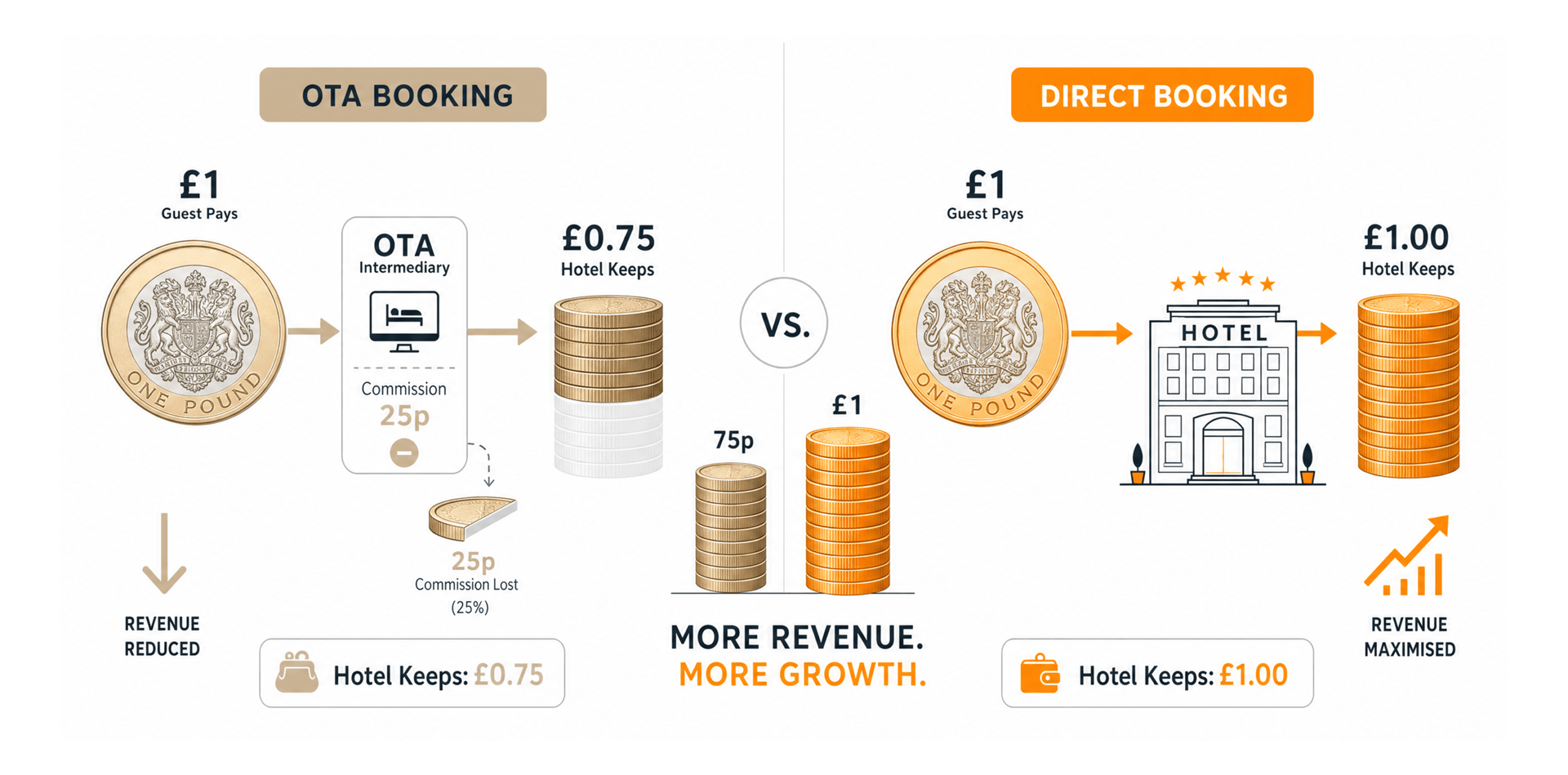
Each booking made directly through your website and not an OTA is worth significantly more. OTA commission rates average between 15% and 30% per booking (Cloudbeds).
Strategically used social media is one of the most effective tools available to shift bookings from OTAs to direct channels. A proven real-world example is how Hotel Villa Baviera increased occupancy by 25% with the implication of a targeted digital strategy combined with a direct booking focus.
6.2 Optimising your social profiles for direct booking
Your social profiles are the key connection between your followers and a direct booking engine. Several optimisations are often overlooked:
- The link in your Instagram or TikTok bio should directly drag the user to the booking page, not the home page.
- “Book Direct” messaging should appear easily in bio text and pinned content.
- Link-in-bio tools allow you to direct followers directly to different seasonal packages without constantly having to update your bio.
- Instagram’s link sticker in Stories is one of the most underused features for direct bookings.
6.3 Creating urgency without appearing desperate
Scarcity and urgency are powerful when used honestly. Statements like “Only three rooms remaining for the bank holiday weekend” are factual and relevant information that motivates booking decisions. You can pair it with a direct-booking incentive, a complimentary bottle of wine, priority check-in, or a best-rate guarantee; all of them create a compelling reason to act right away.
Rewarding your most engaged followers with exclusive offers reinforces the value of following you directly rather than relying on OTA. Pairing such social offers with hotel marketing automation strategies dramatically improves conversion rates.
6.4 Landing page best practices
All your efforts invested in social media advertising and organic content will be wasted if the landing page it directs to is slow, cluttered, or difficult to navigate on a mobile screen. That said, a large majority of traffic arrives via smartphones, making mobile optimisation non-negotiable. Pages should load within 3 seconds or less, pricing and availability should be easily visible, and the booking process should require fewer than three steps. Mandatory trust signals like verified reviews, industry awards, and secure payment indicators should be visible without much navigation.
7. Reputation management in social media
7.1 Monitoring what people are saying about your hotel
You cannot manage what you do not measure. You can set up monitoring for your hotel name, any common variations or nicknames, your hotel’s hashtags, and tagged posts. Social listening tools like HootSuite, Sprout Social, and Mention automate most of this work and send you alerts whenever your property is mentioned. This allows you to respond promptly.
Do not limit monitoring only to the profiles you own. Guests often post about your property without mentioning your profile; these mentions are equally valuable to potential future guests.
7.2 Responding to feedbacks
- Positive reviews:
- Should always be responded to personally, rather than by copying a template
- Reference specific details that the guest mentioned
- Thank them genuinely, and where it’s appropriate
- Invite them to visit again with a direct booking incentive
- Outstanding reviews should be repurposed as content across different social profiles, but only with the guest’s permission
- Negative feedback:
- When handled promptly and publicly, it creates more trust
- The key steps are to acknowledge the issue clearly without defensiveness, take the conversation to private messages if too detailed, offer a genuine resolution, and follow up after the issue is resolved
- Never delete negative feedback; it signals to other guests that you can’t be transparent to trust
- Crisis:
- A serious complaint going viral
- An unexpected operational failure
- A news story mentioning your property
- A prepared response protocol for handling such situations
- Responding quickly and transparently
- Demonstrating genuine accountability
- Avoiding silence or deflection
- Protecting brand reputation through effective crisis communication
- Building social proof at scale:
- Hotels should actively build and authoritatively display their social proof
- Share TripAdvisor ratings and awards, feature guest testimonials regularly in the feed, and celebrate occupancy milestones
Beyond individual review responses, hotels also need to manage their online reputation for people to trust them and their property.
Turn social media into your hotel’s strongest booking channel.
If your guests are discovering, comparing, and choosing hotels on social media, your marketing strategy needs to meet them there. Let’s build a social presence that drives visibility, engagement, and direct bookings.
8. Tools and platforms for hotel social media management
There is a difference between a reactive social presence and a strategic one, and that difference is spotted by the right tools. Here is a practical toolkit for UK hotel teams.
- Canva: This is the industry standard for hotel social graphics. It helps create branded templates, maintain a visual brand kit, and produce everything from Stories to Covers without a designer. You can get the pro plan for consistent brand output.
- Adobe Lightroom: Best for photo editing if you’re looking for a consistent and professional aesthetic. Pick a well-defined Lightroom preset and apply it to all room photography. This creates a visual cohesion that signals a premium property.
- CapCut and InShot: These are free mobile video editing apps ideal for editing Instagram Reels and TikTok content without requiring a desktop.
- Unfold and StoryLuxe: You can edit premium Instagram Stories with inbuilt templates, and you don’t need any design expertise.
- Hootsuite: Offers multi-platform scheduling, analytics, and team management. Suitable for hotel groups managing multiple properties or social media accounts simultaneously.
- Later: Best platform for visual Instagram planning. Has a drag-and-drop grid preview that allows you to plan your feed weeks, and its autopublishing feature removes the need to post manually.
- Buffer: It’s a streamlined scheduling and engagement tracking tool. Suits smaller hotel teams that seek expertise over enterprise features.
- Sprout Social: Offers enterprise-level management, detailed reporting, and social listening. Suitable for larger hotel groups and properties with dedicated marketing resources.
- Instagram Insights: Shows native analytics covering followers, reach, engagement rate, and content performance. Directly available in the app and very essential for understanding what resonates with your audience.
- Facebook Analytics: Allows you to analyse page performance, post reach, demographic data, and ad metrics. It integrates with Meta Ads Manager to give you a complete view of organic and paid performance.
- Google Analytics: Best tool for understanding how social media drives website traffic and direct bookings. Set up UTM parameters on every social link you use, so GA can attribute sessions and booking completions.
- UTM parameters: Tiny additions to your URLs that tell Google Analytics exactly which platform and campaign drove a given visit. Non-negotiable if you’re taking social ROI measurement seriously.
- TINT and Stackla: These platforms aggregate and display UGC from across social platforms, making it easier to identify, manage rights, and repurpose guest content. Always ask for explicit written permission before reposting any guest content across your owned channels.
- Manual Tracking: Never underestimate the value of simply monitoring local competitor accounts weekly and manually. Noting down what content performs well for comparable properties is a free resource for your own content calendar.
- Socialbakers: Helps you benchmark your social performance against local and national competitors.
- Phlanx: Offers engagement rate analysis to assess whether competitor follower counts reflect genuine audience engagement or inflated numbers.
9. Measuring ROI and social media success
9.1 The KPIs that actually matter for UK hotels
Social media measurement is often limited to vanity metrics like follower counts and likes. However, these are not enough; the metrics worth tracking fall under four categories.
- Awareness metrics: These metrics tell you whether your content is reaching a new audience or not. They include follower growth rate, total reach and impressions, brand mention volume, and share of voice against local competitors.
- Engagement metrics: This includes engagement rate (targeting 2-5% as a hospitality industry benchmark), story completion rate, video view duration, and click-through rates on bio links (targeting 3-8% of followers monthly).
- Conversion metrics: Includes website traffic from social media (targeted via Google Analytics), booking conversion rate from social visitors (2-4% for well-optimised properties), direct booking percentage, and revenue attributed to social campaigns.
- Guest retention metrics: Considers repeat follower engagement from returning guests, volume of user-generated content, guest advocacy through tags, mentions, and reviews, and loyalty programme sign-ups from social-referred visitors.
9.2 Solving the attribution challenge
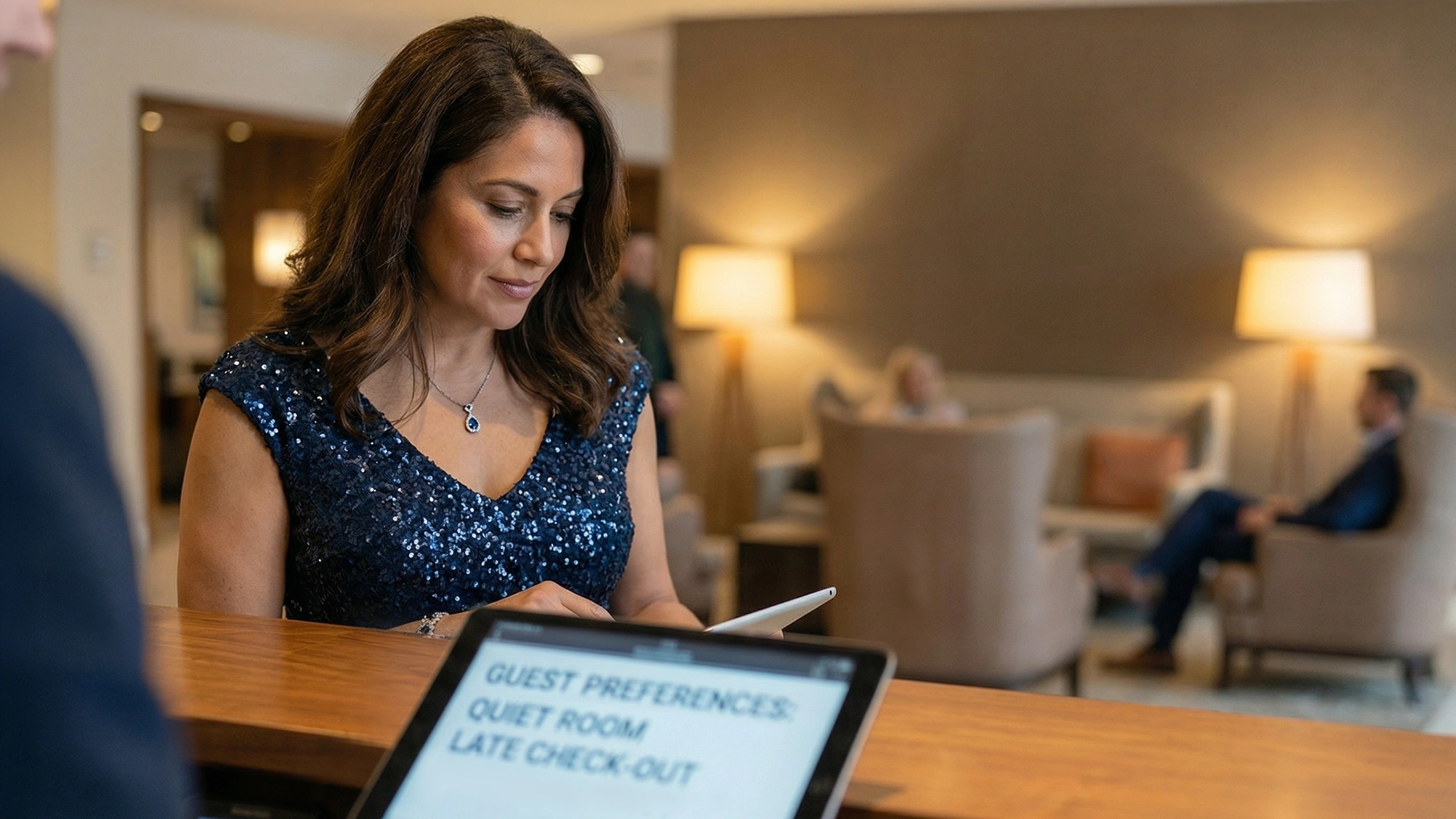
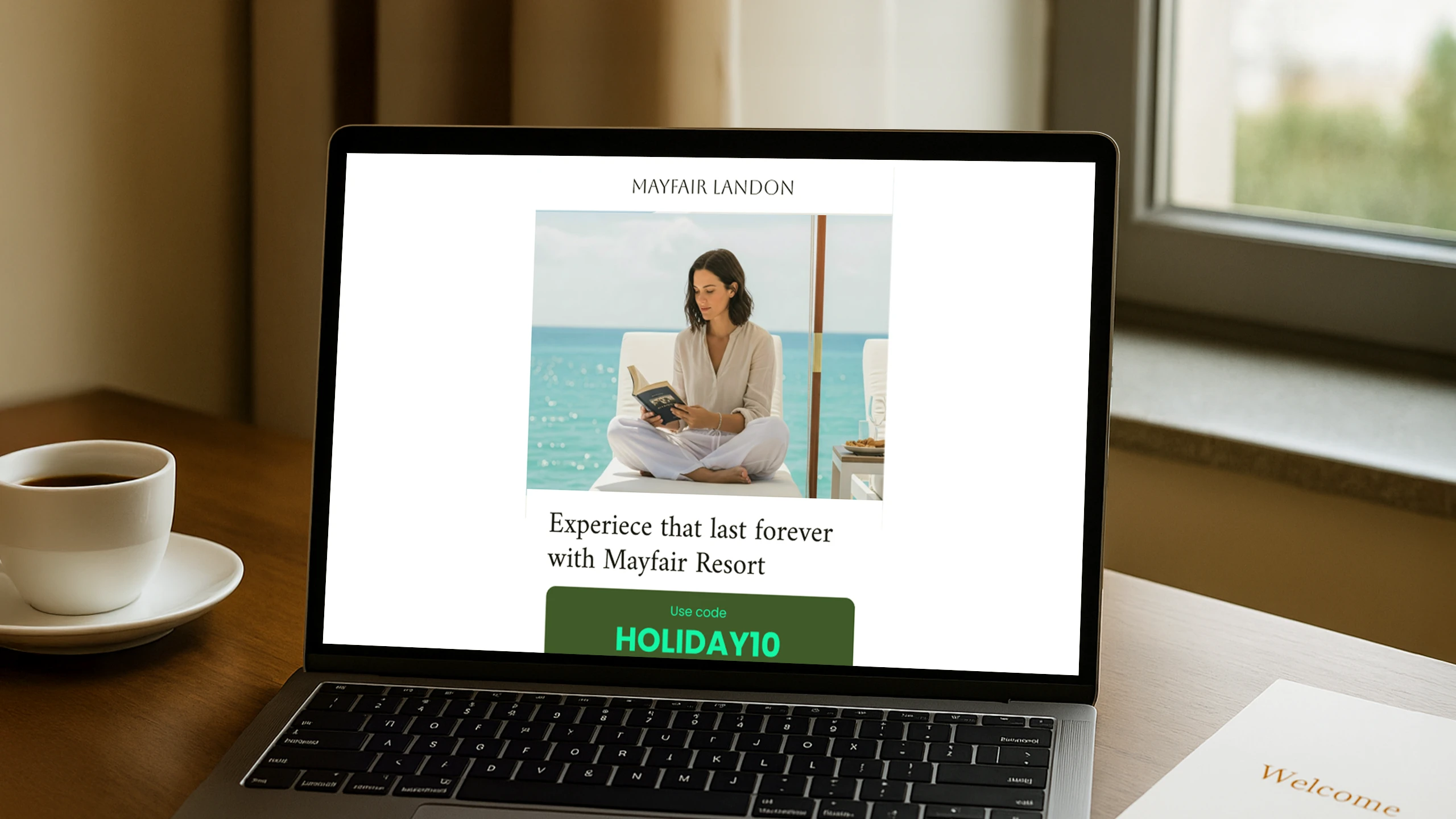
Attributing bookings to specific social activities is difficult, but practical solutions do exist. Setting up UTM parameters on every social link allows GA to track which platform, campaign, or post drove a website session or booking. Unique discount codes, promoted exclusively through social channels to create a clear attribution trail. Asking guests, “How did you hear about us?” at check-in could be the most valuable data collection opportunity available to independent hotels.
Best practices to build a progressively clearer picture of social media’s true commercial contribution are comparing direct booking rates during active social campaigns against baseline periods and tracking booking patterns correlated with specific content pushes. Combine this information with guest data personalisation to close the gap between social discovery and long-term guest lifetime value.
10. Common social media marketing mistakes hotels make
10.1 Content mistakes
- Poor quality photos: Posting dark, blurry, or unedited room pictures not only fails to inspire, the communicate loew standards to prospective guests. Investing in even basic photography improvement delivers a significant return.
- Inconsistent posting: Two weeks of daily content followed by two weeks of dead silence deteriorates the algorithmic momentum you have built and also signals to followers that social is not a priority for you. A consistent schedule that sustains even with low frequency is way better than irregular posting.
- Over-promotional content: If every other post is a variation of “Book Now,” then your content looks salesy, making followers disengage. The 40-30-20-10 content pillar framework mentioned above exists precisely to prevent this.
- Ignoring video content: The hotels that have not committed to posting regular Reels and TikTok content are conceding reach and discovery. Video now holds a dominant share of social engagement; hence, skipping it is not a neutral choice.
- Not showing the local area: Guests want destination details, not just rooms. A hotel whose social feed never shows beyond the property boundary misses a significant part of what drives booking intent.
10.2 Engagement methods
- Not responding to comments and messages
- Deleting negative feedback rather than addressing it publicly
- Ignoring user-generated content opportunities
- Posting without any community interaction
- Automating replies in ways that feel robotic
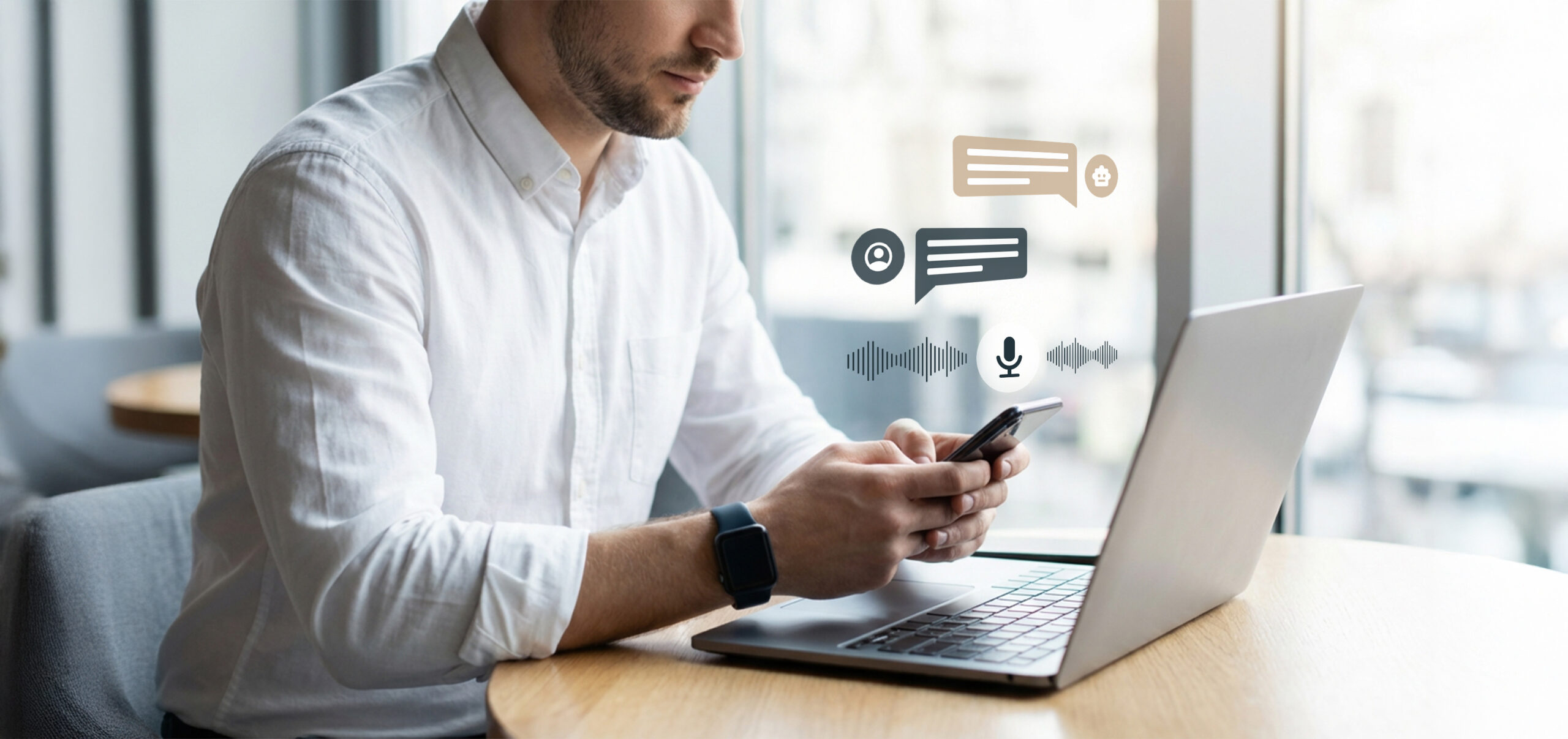
Use hotel chatbots for replying; they can help bridge after-hours response gaps. Additionally, they can be implemented with a voice that feels human.
10.3 Strategy mistakes
- No clear goals or measurement plans
- Trying to be active on every platform and doing none of them well
- Copying competitors instead of finding a unique voice for your brand
- Not using social media analytics to make informed decisions
- Treating social media as an afterthought rather than a key revenue channel.
10.4 Advertising mistakes
- No retargeting strategy means missing 95% of website visitors who leave without booking
- Poor ad targeting wastes budget on the wrong audience
- Weak or unclear CTA
- Not testing creative variations
- Setting up live campaigns but never optimising them
11. Advanced strategies for competitive UK hotel markets
Hyper-local storytelling always outperforms generic “beautiful hotel” content in terms of algorithmic reach and genuine engagement. Here’s what you can try:
- Partner with local businesses for content swaps
- Feature hidden gems and neighbourhood stories that your guests would not find on TripAdvisor
- Create downloadable, area-specific free guides promoted through social media
- Pair this approach with Google My Business optimisation to reinforce your local presence across every discovery channel
The UK hospitality calendar is predictable enough to plan briefly in advance. Some of the foreseeable booking windows are school holiday periods, bank holidays, Valentine’s Day, Mother’s Day, the summer staycation surge, and the Christmas season. Hotels that begin creating content and advertising around these periods, two or three months in advance, successfully outperform those who react in the last moment.
Some key tips:
- Build seasonal content banks
- Shoot batches of photography and video shots specifically for each season
This will remove the pressure of creating content in real time and ensure video quality remains consistent throughout the year.
- Several underserved audience segments represent significant opportunities for UK hotels willing to communicate with them directly.
- Pet-friendly properties that consistently feature four-legged guests tend to attract an extraordinarily loyal following.
- Special accessibility content showing how your property accommodates guests with disabilities serves a frequently overlooked audience.
- Highlight vegan and vegetarian dining, eco-conscious sustainability messaging, and LGBTQ+ welcoming content.
The integration of direct purchase into social platforms is increasing. Instagram Shopping for gift vouchers, Facebook Shops for merchandise and packages, shoppable posts linked to your personal booking engine, and flash sales promoted exclusively to your social followers are accelerating the viability for UK hotels. According to Simon Kucher, over 60% of Gen Z and Millennials now use AI and social media for travel inspiration and itinerary planning. The gap between inspiration and transaction is now narrowing, and hotels should position themselves to capture that intent as soon as it arises.
- Instagram Live Q&As with hotel managers
- Facebook live property tours
- BTS live content during seasonal preparations
- Real-time event coverage (weddings, Christmas lunches, and conference setups)
Live content creates urgency and authenticity that edited content cannot replicate. It also tends to receive preferential algorithmic treatment on both Instagram and Facebook.
12. AI, AEO, and future trends in hotel social media targeting
12.1 How AI is changing hospitality marketing
GenAI tools are increasingly used alongside social platforms for travel research. Up to 56% of travellers used AI for at least one trip in the past 12 months (Phocuswire). In the UK, over one in five travellers were already using AI to plan a trip in the first half of 2025 (Phocuswright).
12.2 Optimising content for AI search and AI overviews
For social media and websites alike, structured and factual answers to specific question-type content perform significantly well.
FAQ-style content like, “What is included in our bed and breakfast rate?”, “Do you accept dogs?”, “What is the nearest train station to your hotel?”, answered with clarity and entity information like hotel name, location, category, and unique features, helps AI systems and human visitors understand exactly what you offer.
Hotels should organise their content around topical authority signals; this helps them become the definitive local resource on their destination through local guides, event managers, and neighbourhood expertise. This approach relates directly to your hospitality SEO strategy.
12.3 Voice search and conversational discovery
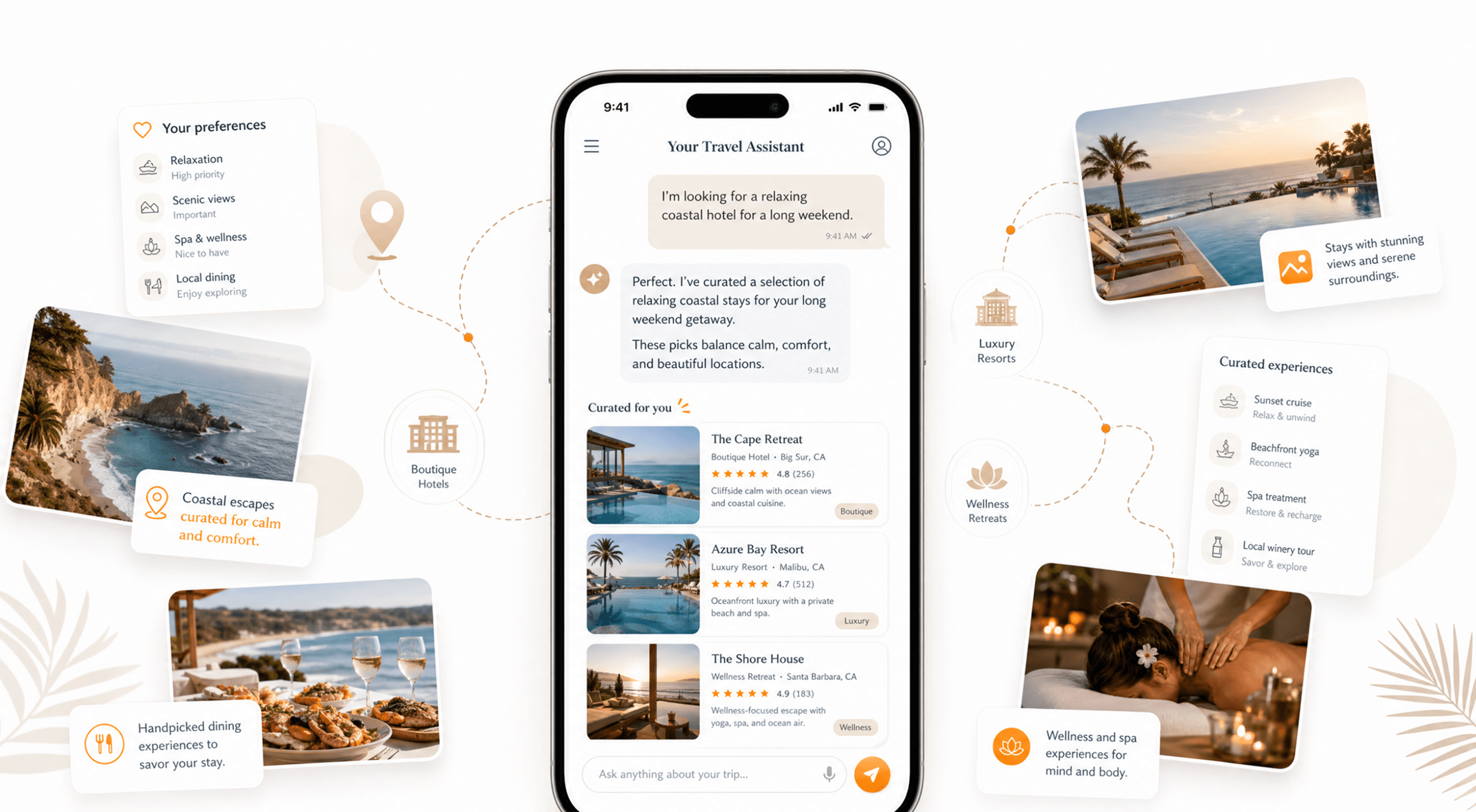
Voice search queries are being handled by the same AI infrastructure that powers tools like ChatGPT and Perplexity. Opting for a natural and conversational language like “What is the best boutique hotel near Edinburgh for a weekend break?” instead of using a keyword-dense copy positions your property to appear in these emerging discovery channels. Understand voice search optimisation for hotels before jumping to conclusions.
12.4 Predictive personalisation in hospitality marketing
Behavioural data is being used increasingly by leading social platforms to show users specific content that they’re likely to book, not just content they’ve engaged with. That said, every piece of content becomes a part of the dataset platforms use to match your property with the right users. Combining social data with a marketing automation strategy allows you to personalise follow-up communications based on what content a prospective guest engaged with.
13. Working with social media marketing specialists
13.1 Signs you need professional support
Managing social media is a real skill set requiring time, creative capability, strategic thinking, and technical advertising knowledge. Indicators that your current approach is not working how it’s supposed to:
- Inconsistent posting because no one has dedicated time to it
- Low engagement despite regular posting might be a strategy problem rather than an execution one
- Paid advertising is not generating a measurable booking return
- Photography and video quality are noticeably low
- You cannot keep up with algorithmic updates
- Social media is treated as an afterthought rather than a key revenue channel
13.2 What to look for in a hotel social media agency
In the hospitality industry, experience is non-negotiable. General digital marketing agencies do not always understand the seasonality, booking psychology, or visual requirements that make hotel social media distinctive. Look specifically for:
- A track record with UK hospitality clients that is easily demonstrable
- In-house content creation capability for photography, video, and copywriting
- Paid advertising expertise across Facebook and Instagram
- Transparent analytics with monthly performance reports
- Integration capability with your hotel’s PMS and booking systems
- The ability to connect your socials with the broad marketing ecosystem
13.3 How ThisRapt’s social media marketing service supports UK hotels
ThisRapt’s Social Media Marketing Service is built specifically for the UK hospitality industry. Our work includes hospitality-specific social strategies, professional content creation and curation, community management and reputation monitoring, paid advertising campaign management, and monthly performance reporting with clear revenue attribution.
Every campaign is integrated with our broader hospitality marketing services, like hospitality SEO, hotel website design, digital PR, hospitality branding, and marketing automation. We ensure that your social presence works as part of a coherent, revenue-generating system, rather than as a standalone channel.
13.4 Investment expectations for UK hotels
DIY approach:
Considering tools and ad spend only; £200-£500 per month
Freelancer support:
Considering content and management; £500-£1,500 per month
Full-service agency partnership:
£1,500-£4,000 per month
Realistic timeline to measurable booking impact:
3-6 months

14. Conclusion – Social media is your hotel’s modern front desk
The front desk is the starting point of any organisation. It’s where the first impression is made, and the guests decide whether they feel welcomed or not. It’s also where the relationship between the hotel and its guests begins. Social media performs this function, often weeks or months before a guest walks through your door.
The hotels winning this social media game in 2026 are the ones who maintain a clear strategy, consistent content quality, genuine community engagement, and a disciplined measurement of what they’re doing over time.
If you’re ready to build a social media presence that reliably generates revenue but feel stuck and are looking for expert guidance? Then ThisRapt’s Social Media Marketing Service for UK Hotels is your call.
15. SMM Hotels FAQs
Instagram and Facebook, as a starting pair, deliver the strongest return. Instagram offers the best visual discovery and reach, and Facebook is great for powerful ad targeting and community features. TikTok is increasingly getting more valuable for boutique and unique properties targeting the 18-34 demographic.
The exact budget depends on your property size, goals, and existing presence. Independent UK hotels typically invest between £500 and £2,000 per month, comprising content creation, management, and advertising. Full-service agency support ranges between £1,500 and £4,000 per month and tends to deliver the most promising results.
Visible engagement improvements can appear within weeks of implementing a consistent and strategic approach. On the other hand, attributable booking impact typically takes three to six months to show visible results.
The most effective approach is mentioning clear “book direct” messaging in bio and content, Instagram Stories link sticker directing to your booking engine, exclusive packages only accessible through your direct website, and retargeting campaigns for website visitors who did not complete a booking.