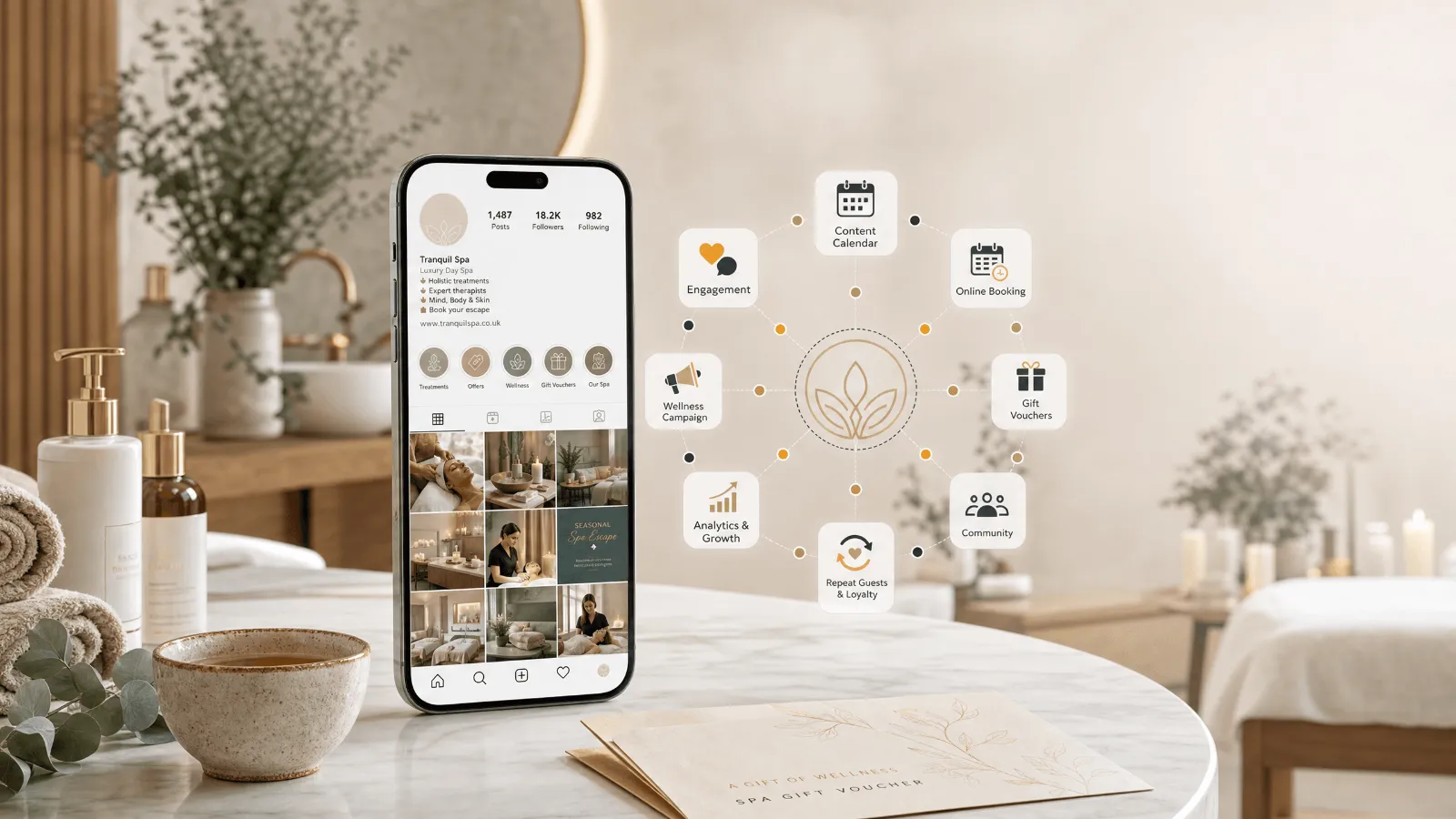
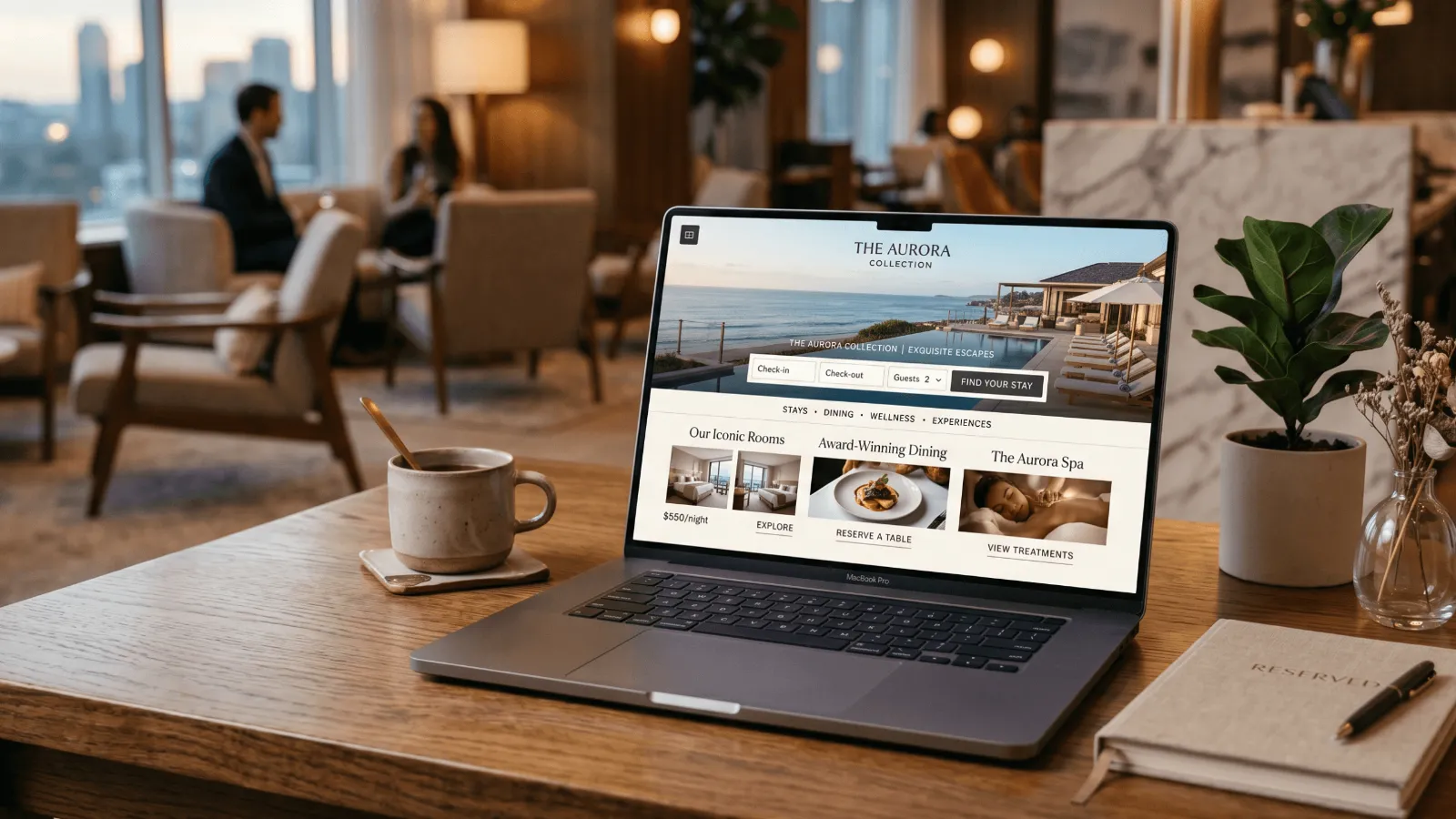
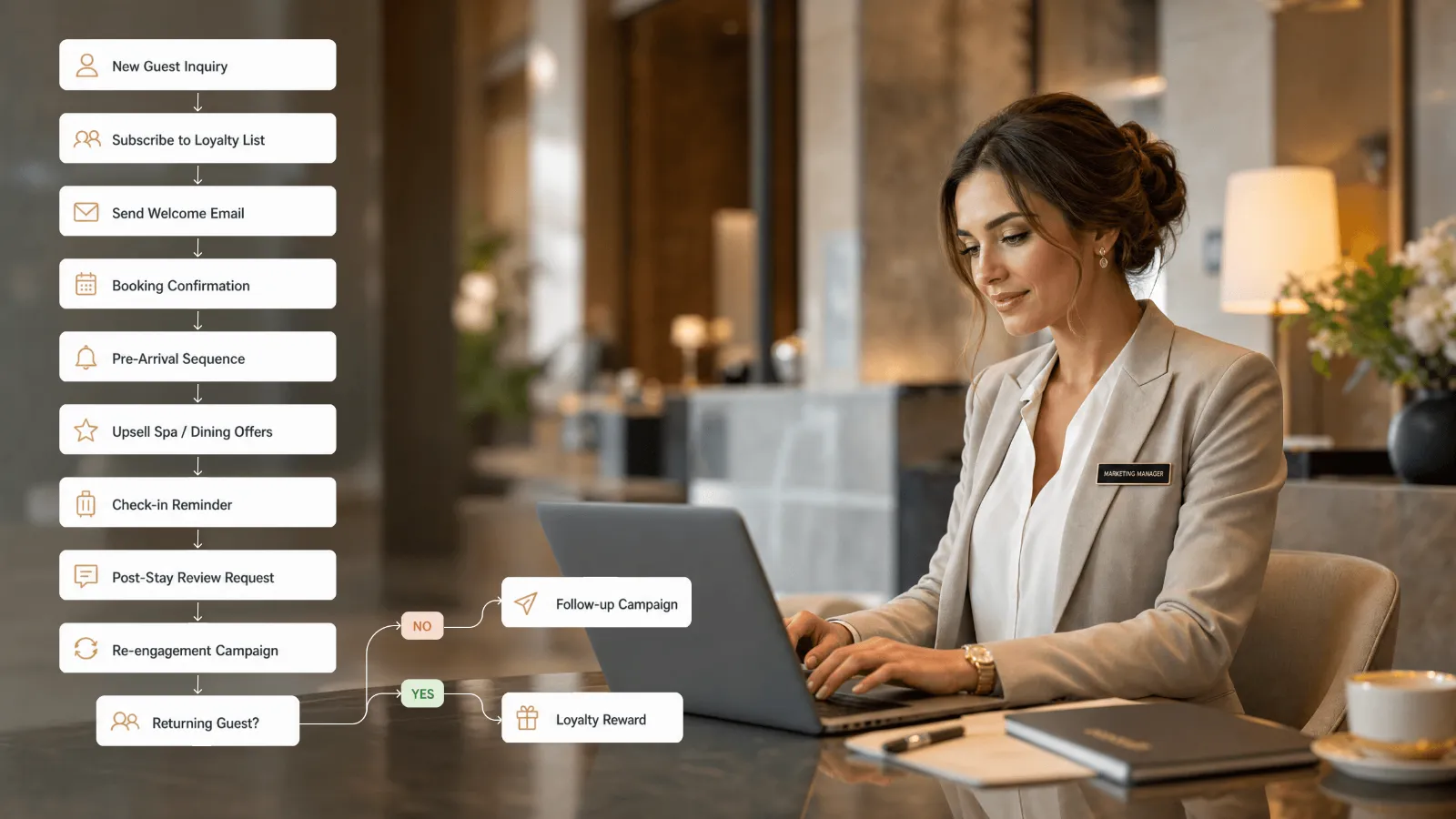
It’s 2026, and everyone is on social media. By everyone, I mean 5.42 billion active users; that makes nearly 63.9% of the world’s population (oyesterlink.com). The hospitality industry isn’t just competing on experience anymore; it’s competing over perception.
As soon as a guest decides to book a hotel, reserve a table, or schedule a spa treatment, they first explore the brand online.
From the visually stunning hotel room interiors to viral food videos from restaurants and calming wellness content from spas, platforms like Instagram, TikTok, and YouTube have become the new search engines for people. What was once promoted by travel agents and word-of-mouth is now influenced by reels, reviews, and real-time engagement. That said, about 35% of travellers now prefer using Instagram and TikTok for inspiration and, hence, hotels that position themselves strategically on social media can see upto 20% more direct reservations(hospitality.today)
This area is where you need hospitality social media marketing – not as a daily posting routine, but as a full-fledged strategy that influences every stage of a guest’s journey.
Having a strong social presence drives direct bookings, increases footfall, and strengthens brand loyalty. Hotels can leverage the benefits of visual storytelling to showcase experiences, restaurants can turn dishes into shareable moments, and spas can build trust through education and transformation-driven content.
The numbers are no joke. 74% of people use social media to decide where to eat, and 54% of diners book restaurants directly from social platforms. For hotels, TikTok alone took half the responsibility and became a solo booking driver. With almost 88% of diners trusting online reviews and 85% sharing their positive dining experiences on social media, your guests are already doing the marketing; the actual question is whether your brand is present enough to benefit from it (Cropink).
From discovery to conversion, this guide covers platform strategies, content frameworks, influencer marketing, paid advertising, analytics, and growth tactics for hotels, restaurants, and spas. We'll unpack: |
|
But the catch is that many hospitality businesses still use social media passively. They post occasionally, follow trends blindly, or focus only on the aesthetics. That’s where the gap lies. However, these businesses have to pay the cost of passivity because 73% of diners actively choose a competitor if a brand stays inconsistent and doesn’t respond to them online (Cropink).
Now, you know the risks of not using social media correctly for your brand, and if you want to start, there’s no better time than now.
No matter if your goal is to increase bookings, attract the right audience, or build a long-term brand presence, this guide is your complete roadmap.
1. What is hospitality social media marketing? (Landscape & Guest Journey)
Hospitality social media marketing is not about posting aesthetic pictures or trending reels; it’s a strategic approach to using social platforms to influence people to discover, evaluate, and ultimately choose a hotel, a restaurant, or a spa.
Hospitality is inherently experience-driven. You’re not selling any random product; you’re selling a feeling, an atmosphere, a memory. Hence, your social media becomes the closest digital representation of that experience.
In other terms, social media marketing is the intersection of visual storytelling, customer psychology, and conversion strategy.
1.1 How social media impacts the guest journey
Social media plays a crucial role at every stage of the hospitality marketing journey.
| Inspiration and Discovery |
A traveller scrolling through places to visit on Instagram, a foodie watching a viral TikTok of the making of a dish, or someone browsing Pinterest for relaxing spa treatments; these moments plant the seed. They explore:
|
| Research and Comparison |
Once the seed of interest is planted, customers begin evaluating options.
They explore:
|
| Booking Decision |
This is where a strong strategy helps you build actual revenue.
A strong social media strategy helps you create:
|
| Post-visit sharing and Advocacy |
The journey doesn’t end after the experience; it actually multiplies.
|
This creates a powerful UGC loop and hence becomes the next wave of discovery for future customers.
1.2 Platform roles in hospitality marketing
There are many social media platforms, and each plays a crucial yet distinct role.
- Instagram: Engagement, visual storytelling, and brand identity.
- Facebook: Events, customer service, and local community building.
- TikTok: Virality, discovery, and reaching younger audiences.
- Pinterest: Inspiration, weddings, travel planning, and experiences.
- YouTube: Spa walkthroughs, chef demos, and long-form video content.
- LinkedIn: B2B hospitality positioning, partnerships, and corporate bookings.
The key is to use every platform mindfully, based on your business type and target audience.
1.3 The real connection between social media and revenue
Social media is not just a branding tool; if used strategically, it directly impacts the following:
- Booking volume
- Table reservations
- Appointment scheduling
- Repeat visits
- Customer life-time value
When you opt for a well-structured strategy, it aligns content, engagement, and paid efforts to turn discovery into conversion.
2. How hospitality social media marketing works
A successful hospitality social media strategy isn’t built on random, occasional posts; it’s built on an intentionally structured system that moves customers from discovery to booking.
The system is powered by its five core components: Content, platforms, paid advertising, influencers, and conversion strategy.
A strategic combination of these five makes social media a revenue-generating channel.
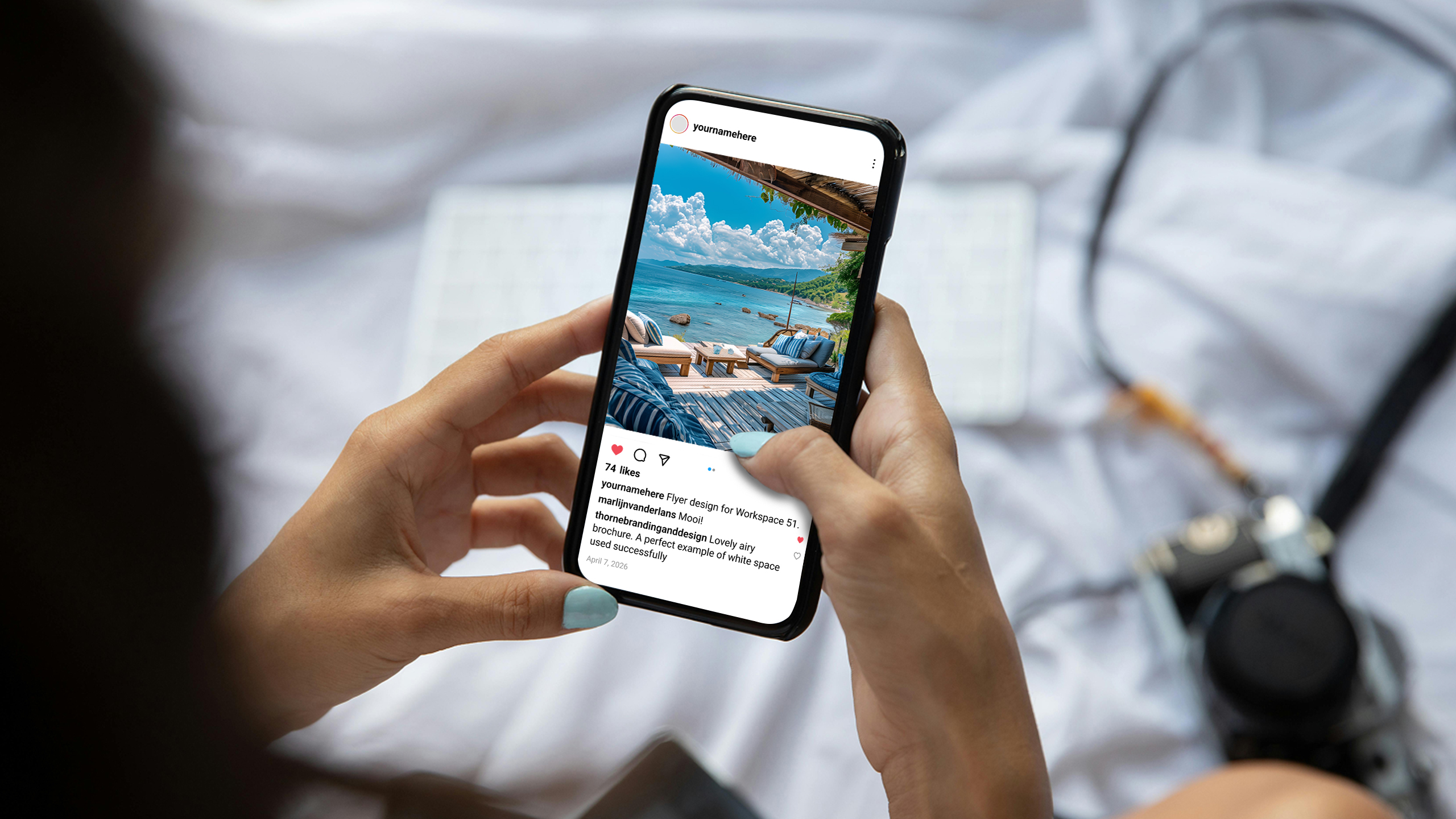
Content is the foundation of marketing. It’s the source that captures attention, builds desire, and communicates the experience before customers even visit.
There are typically a few key formats of content:
- Short-form video (Reels, TikTok): These are the strongest drivers of reach. Content like room tours, food prep, and spa treatments perform exceptionally well.
- User-Generated Content (UGC): Reviews, real experiences, and guest photos build trust faster than any branded content. UGC also strengthens the community.
- Behind-the-scenes and Storytelling: Showing the raw moments like the chefs in the kitchen, staff culture, preparation processes, and making of an experience makes your brand feel human.
A strong content strategy balances inspiration, information, and persuasion.
Every platform must be utilised effectively. However, each of them does not need equal attention. The goal is to prioritise based on impact.
- Instagram: This is the primary platform for most hospitality brands.
- TikTok: Acts as a discovery engine for viral reach and new audiences.
- Facebook: Best for local targeting, ads, and community engagement.
The secondary platforms like YouTube, Pinterest, and LinkedIn support long-form content, inspirational content, and B2B outreach, respectively.
The key is to identify where your audience spends most time.
Organic reach builds awareness and trust, but paid ads drive consistent, scalable results.
Effective ad strategies include:
- Conversion campaigns that focus on bookings, reservations, and enquiries.
- Retarget those users who visited your website or engaged with the content you shared.
- Offer-based promotions like seasonal deals, limited-period packages, or event-based campaigns.
Paid social advertising builds a bridge over the gap between interest and action.
Influencers provide experience-based validation, showing authenticity.
Here are a few key approaches:
- Local influencers are excellent for immediate footfall and regional awareness.
- Micro-creators can help achieve higher engagement and niche audiences.
- Experience Collaborations: Offer comp stays, dining invites, or spa sessions.
The goal here is not just exposure, but creating content that feels organic, relatable, and shareable.
This is where brands fall short.
You can put in numerous efforts for building great content and strong reach, but without a clear path to conversion, your dream results stay superficial.
A strong conversion strategy has the following key elements:
- DM automation streamlines quick responses and enquiries.
- Optimised Link-in-bio for directing users straight to the booking pages.
- Simplified booking journey with fewer clicks and clear CTAs.
Every strong piece of content should lead somewhere, whether it’s a booking page, menu, offer, or an enquiry form.
3. Platform-specific strategies for hospitality
For hotels, restaurants, and spas, platform-specific content strategies mean aligning content formats, audience behaviour, and business goals with the strengths and audiences of each platform.
3.1 Instagram
It’s the primary growth engine. Key strategies include:
- Feed aesthetics and brand consistency: An integrated visual identity built with consistent colours, themes, and editing styles creates a recognisable brand presence.
- Stories for real-time engagement: Take complete benefit of the story feature by posting daily updates, polls, limited-period offers, and BTS content.
- Reels for reach and discovery: Short-form videos are the driving engine for maximum reach. Share room tours, food plating, spa transformations, and quick experiences.
- Instagram shopping: Promote skincare products, gift cards, or merchandise directly within the platform.
3.2 Facebook
Facebook plays a crucial role in the following:
- Local community building: Connect with nearby audiences and repeat visitors.
- Event promotion: Host and promote live events, offers, or seasonal experiences.
- Groups for loyalty: Create exclusive communities for loyal guests and members.
- Messenger for customer service: Handle enquiries, bookings, and quick support.
Facebook is also an excellent platform for paid advertising and retargeting campaigns.
3.3 TikTok
TikTok has transformed the whole visibility game for the hospitality industry.
- Behind-the-scenes content: Shoot kitchen preps, room setups, spa processes, or random fun moments between the staff.
- Trend participation: Adapting viral trends to your brand.
- User-generated content campaigns: Encourage the guests to share their experiences.
TikTok values authenticity over perfection. Following these strategies can rapidly scale organic growth.
3.4 Pinterest
Pinterest is often considered less important, but it’s highly valuable for hospitality, especially in the planning phase.
Use it mindfully for:
- Destination boards for hotels
- Menu inspiration for restaurants
- Wedding and event planning for hotels and spas
- Self-care and wellness ideas for spas
Pinterest acts as a long-term traffic driver.
3.5 YouTube
YouTube is ideal for long-form content like deeper storytelling and high-intent audiences.
Content formats include:
- Virtual tours of properties
- Recipes and chef demonstrations
- Spa treatment walkthroughs
3.6 LinkedIn
LinkedIn is a very powerful platform for:
- Partnerships and corporate bookings
- Event hosting and business positioning
- Brand’s industry presence and credibility
Useful for hotels targeting conferences, events, or corporate clients.
4. Hotel social media strategy
Social media strategy for hotels is a bit different. It’s not just about showcasing rooms but also selling an experience. It starts from the very moment a potential guest discovers your property to the point they book.
A strong social media strategy should look like a balanced combination of visual storytelling, local positioning, and conversion-focused making.

4.1 Content pillars for hotels
- Property showcases: Highlight what makes your space visually appealing, such as rooms, amenities, views, pools, and interiors.
- Local area and destination content: Position your hotel as a part of a larger journey by showing nearby attractions, hidden gems, and cultural experiences.
- Guest appearances and testimonials: Sharing real guest moments, reviews, experiences, and stories builds credibility and trust.
- Staff and culture: Hospitality is human-first; hence, show the people behind the brand.
- Events and special offers: Launch special packages, limited-time deals, and exclusive offers for weddings, festivals, and events.
4.2 Seasonal content strategy
The demands for hotels are constantly fluctuating, so you need to align your content plan with the seasons.
- Peak season: Launch urgency-based offers and showcase premium experiences.
- Off-season: Highlight unique experiences and value-based discounts.
- Holidays and events: Leverage long weekends, festivals, and local events.
This ensures that your content stays relevant throughout the year.
Your 3-Month Free Hotel Content Roadmap Awaits!
Plan a full year of content in minutes with our ready-to-use template – complete with seasonal themes, content ideas, and posting schedules.
4.3 User-generated content (UGC) for hotels
UGC is one of the strongest trust-building tools in hospitality.
Here are some effective strategies:
- Create branded hashtags for guests.
- Feature guest photos and experience videos.
- Show reviews and testimonials.
- Run contests and giveaways.
4.4 Influencer Partnerships
Through their experience-based storytelling, influencers help hospitality reach new audiences exponentially.
Key approaches:
- Micro and Macro Influencers: Micro-influencers are excellent for higher and niche reach. This makes them effective for driving bookings and local visibility. Macro-influencers, on the other hand, give you a wider reach and stronger brand awareness. This genre of influencers works best for luxury or destination-focused properties.
- Travel blogger collaborations: Offers destination visibility through in-depth storytelling across blogs and various photo and video platforms like Instagram and YouTube.
- Press trips and media coverage: Invite creators and offer curated experiences in exchange for high-quality content and broader exposure.
- Local influencer partnerships: excellent for attracting staycations, weekend visitors, and building a regional audience.
4.5 Paid Social Advertising for Hotels
Hotels should leverage paid ads for:
- Retargeting website visitors: Re-engage the users who already explored rooms or pricing.
- Lookalike audiences: Reach a new audience similar to your existing one.
- Seasonal campaigns: Offer special discounts in peak travel periods.
- Direct booking incentives: Highlight the benefits of booking directly.
5. Restaurant social media strategy
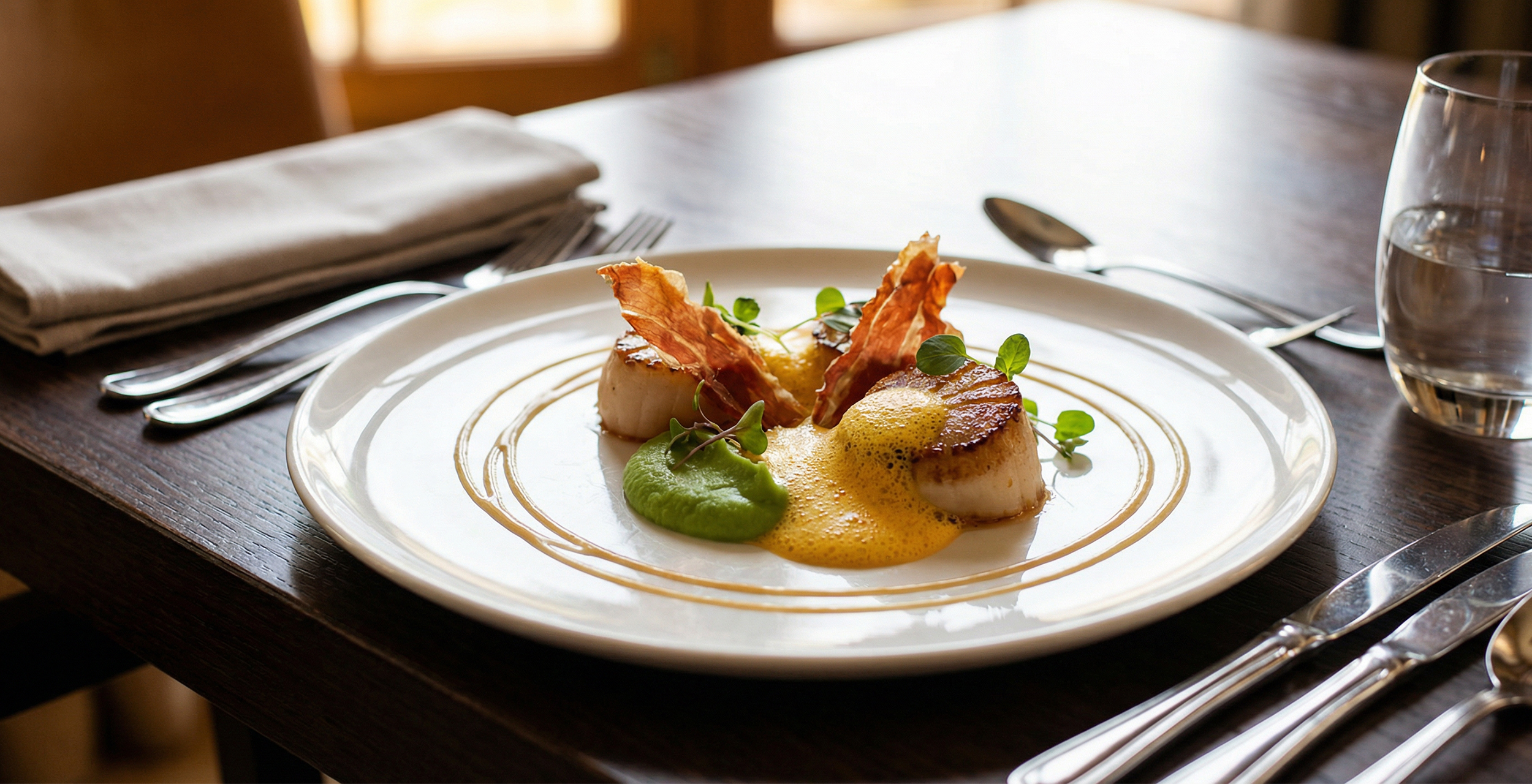
For restaurants, social media is an incredible source of footfall. Unlike hotels, restaurant decisions are often impulsive and visually driven, which makes content quality and consistency very critical.
5.1 Content Pillars of Social Media
- Food photography and videography: Content that tempts people and makes them crave.
- Menu highlights and specials: Highlight new launches, chef specials, and seasonal menus.
- Chef stories and kitchen culture: Chef features, BTS prep, and cooking processes.
- Customer moments and ambience: Show the atmosphere by sharing glimpses of dining experience, crowd, and interiors.
- Behind-the-scenes preparation: Fast-paced, satisfying clips of food being made as short-form videos.
5.2 Platform prioritisation
- Instagram: Treat it as a primary platform for visuals, engagement, and discovery.
- TikTok: Go viral through food trends and short-form content.
- Facebook: Target the local audience and promote events.
5.3 Leveraging food trends
Tap into trends to grow fast.
- Viral formats and trending recipes.
- Interactive content and food challenges.
- Festive offerings and seasonal menus.
Adopt the trends early to boost reach significantly.
Your 3-Month Free Restaurant Content Roadmap Awaits!
Plan a full year of content in minutes with our ready-to-use template - complete with seasonal menus, food trends, and posting schedules.
5.4 User-generated content (UGC)
UGC is essential because people trust real experiences.
- Focus on Instagram-worthy plating.
- Consider Geo-tagging and Location-tagging.
- Repost your customers’ photos and videos.
- Highlight the reviews and testimonials.
5.5 Influencer and local collaboration
- Collaborate with food bloggers and local creators.
- Offer complimentary meals for content.
- Host tasting events.
5.6 Social commerce for restaurants
- Integrate an online ordering system.
- Sell merchandise if applicable.
- Promote vouchers and gift cards.
5.7 Paid social for restaurants
- Use location-based targeting to reach nearby audiences.
- Find lookalike audiences based on your existing customers.
- Promote events, provide offers, and retarget people who engaged but didn’t convert.
6. Spa social media strategy
For spas, social media is more than just posting; it’s about building trust, expertise, and emotional connection. Unlike restaurants and hotel decisions, spa decisions are driven by credibility, comfort, and visible results.
6.1 Core content pillars for spas
- Treatment showcases: Demonstrate services through calming visuals, short clips, and step-by-step pieces while staying within platform guidelines.
- Wellness education and tips: Position your brand as a trusted authority by suggesting skincare routines, self-care practices, and expert advice.
- Product highlights and routines: Feature the best skin-care products, explain ingredients, and show how they fit into a daily routine.
- Relaxation and ambience content: Showcase soft visuals of spa spaces, sounds, and experiences that reflect calm and luxury.
- Practitioner expertise and credentials: Provide certifications and invest in staff knowledge to build credibility.
- Client testimonials and results: Share reviews, feedback, and subtle before and after transitions.
6.2 Navigating platform restrictions
Spa content usually has to follow stricter guidelines, especially for medical or result-driven treatments.
- Don’t mislead before and after claims.
- Make sure your content follows medical spa advertising policies.
- Understanding the distinction between medical spa and day spa marketing strategies is crucial for compliance and positioning. Learn more about the key differences.
- Position your content as educational rather than promotional.
6.3 Educational content strategy
Education plays an integral part in the growth of the spas.
- Share skincare tips and tutorials.
- Explain treatment benefits and processes.
- Highlight the best ingredients.
- Provide research-backed advice for seasonal skincare.
This attracts the right audience, builds trust, and reduces hesitation in booking.
6.4 Building a wellness community
- Organise Q&A sessions and live videos.
- Introduce wellness challenges and routines.
- Share client experiences and journeys.
- Initiate conversations around self-care.
6.5 Pinterest strategy for spas
- Create self-care and wellness, inspiration boards.
- Share pins of wedding and event preparation.
- Design skincare routines and guides.
- Share gift ideas and packages.
6.6 Influencer and ambassador programs
- Collaborate with local wellness influencers.
- Sign up with long-term brand ambassadors.
- Try affiliate partnerships.
6.7 Paid social for spas
- Target audiences who are interested in health and wellness.
- Retarget users who once showed interest.
- Promote seasonal packages and launch the latest offers.
- Focus on high-converting, booking-driven campaigns.

7. Content creation & visual strategy
In terms of hospitality, content holds a different meaning. It’s not just marketing; it is the experience. Before a guest visits, your content has already shaped their expectations, emotions, and decisions.
A strong content and visual strategy can make each of your posts feel intentional, consistent, and aligned with your brand.
7.1 Photography best practices
- Professional vs. smartphone photography: Both work, but quality matters. Modern smartphones, if paired with good lighting and composition, produce excellent results.
- Lighting is everything: Natural lighting works best for visuals of food, rooms, and spas. Avoid overly dim lights and harsh shadows.
- Styling and composition: Focus on highlighting the subject with balanced framing and clean backgrounds.
- Editing consistency: Be consistent with tones, filters, and color grading to maintain the brand’s identity. Try tools like VSCO and Lightroom to standardise visuals.
7.2 Video content strategy
Short-form videos work best for hospitality across all platforms.
- Short-form (Reels, TikTok): Helps with discovery, reach, and engagement.
- Long-form (YouTube): Helps with detailed tutorials, walk-throughs, and trust-building.
High-performing formats include:
- Behind-the-scenes content.
- Customer reviews and testimonials.
- Room tours, food making, and treatment walkthroughs.
- Satisfying process videos.
7.3 Content calendar and planning
Consistency matters, especially on social media.
- Maintain balance between promotional and value-driven content.
- Plan content around seasons, events, and trends.
- Maintain realistic posting frequency across all platforms.
- Batch content to save time and maintain quality.
7.4 Brand voice & messaging
Your brand’s tone should reflect its positioning.
- Luxury Brands: Such brands should sound refined, aspirational, and polished.
- Casual Brands: These brands should sound friendly, conversational, fun, and relatable.
Maintain voice consistency across all platforms while slightly maintaining platform-specific behaviour.
Also consider:
- Multilingual content at times for diverse audiences.
- Clear and concise captions that drive CTAs.
7.5 Accessibility in social content
The best content to improve reach and user experience is inclusive content.
- Add keywords as alt text for images.
- Use meaningful captions for videos.
- Write in clear and inclusive language.
8. Community management & engagement
Creating viral content gets you halfway; in the other half, you have to interact with your audience and build a community.
8.1 Response & communication strategy
- Timely replies: Quick responses help in building trust and increasing the chances of conversion. Make sure you reply to comments and DMs in a timely manner.
- Handling enquiries: Treat your DMs as potential bookings. Ensure your replies are helpful, clear, and prompt.
- Review management: Manage reviews mindfully on social platforms. Acknowledge the positive feedback and calmly resolve concerns.
8.2 Building authentic engagement
- Effectively use polls, ask and handle questions, and share interactive stories.
- Start conversations through captions if applicable.
- Host live sessions and conduct Q&As.
- Feature your community’s spotlights (guests, customers, and their experiences).
Engagement is only real when it’s a two-way interaction.
8.3 Handling negative feedback
- Sometimes the ick is real, but stay calm and reply professionally.
- If needed, take sensitive conversations offline.
- Focus on how you can resolve the issue, rather than defending yourself.
If handled well, negative feedback often strengthens brand perception.
8.4 Encouraging User Participation
- Create engaging hashtag campaigns.
- Organise and run photo contests and giveaways.
- Encourage your guests to share their experiences and tag you.
This actually fuels UGC and expands your brand’s reach organically.
9. Influencer & partnership marketing
Influencer and partnership marketing combine reach, credibility, and experience-driven content.
Unlike traditional ads, these collaborations allow customers to see your brand through a trusted lens.
9.1 Finding the Right Influencer
- Engagement rate over follower count: Even smaller audiences deliver better results than larger audiences if the engagement is strong and active.
- Audience alignment: The interests of your audiences should align with your offerings.
- Local vs. destination influencers: Local influencers are key to immediate visits, while destination influencers build broader visibility.
- Niche vs. broad appeal: Niche-specific creators bring targeted audiences. Broader influencers, on the other hand, increase reach.
9.2 Structuring partnerships
- Compensation models: Offer comp stays, complimentary dining experiences, paid collaborations, or commission-based partnerships.
- Content rights & usage: Ensure that you can reuse the content created by influencers for ads and marketing.
- Disclosure & Compliance: Maintain transparency with content guidelines.
9.3 Types of partnerships
- One-time collaboration for campaigns and launches.
- For long-term consistency, the brand has brand ambassadors.
- Performance-based affiliate programs.
- Partnership with the press and media for wider coverage.
- Destination marketing has tourism boards and DMO collaborations.
- Cross-promotion with complementary businesses like hotels with spas or restaurants.
9.4 Measuring performance
There are some key metrics to measure your social media performance.
- Engagement (likes, comments, shares)
- Impressions and reach
- Clicks and website traffic
- Bookings or conversions
10. Social media advertising for hospitality
Organic content builds awareness and engagement; however, you also need paid social advertising for consistent and scalable growth.
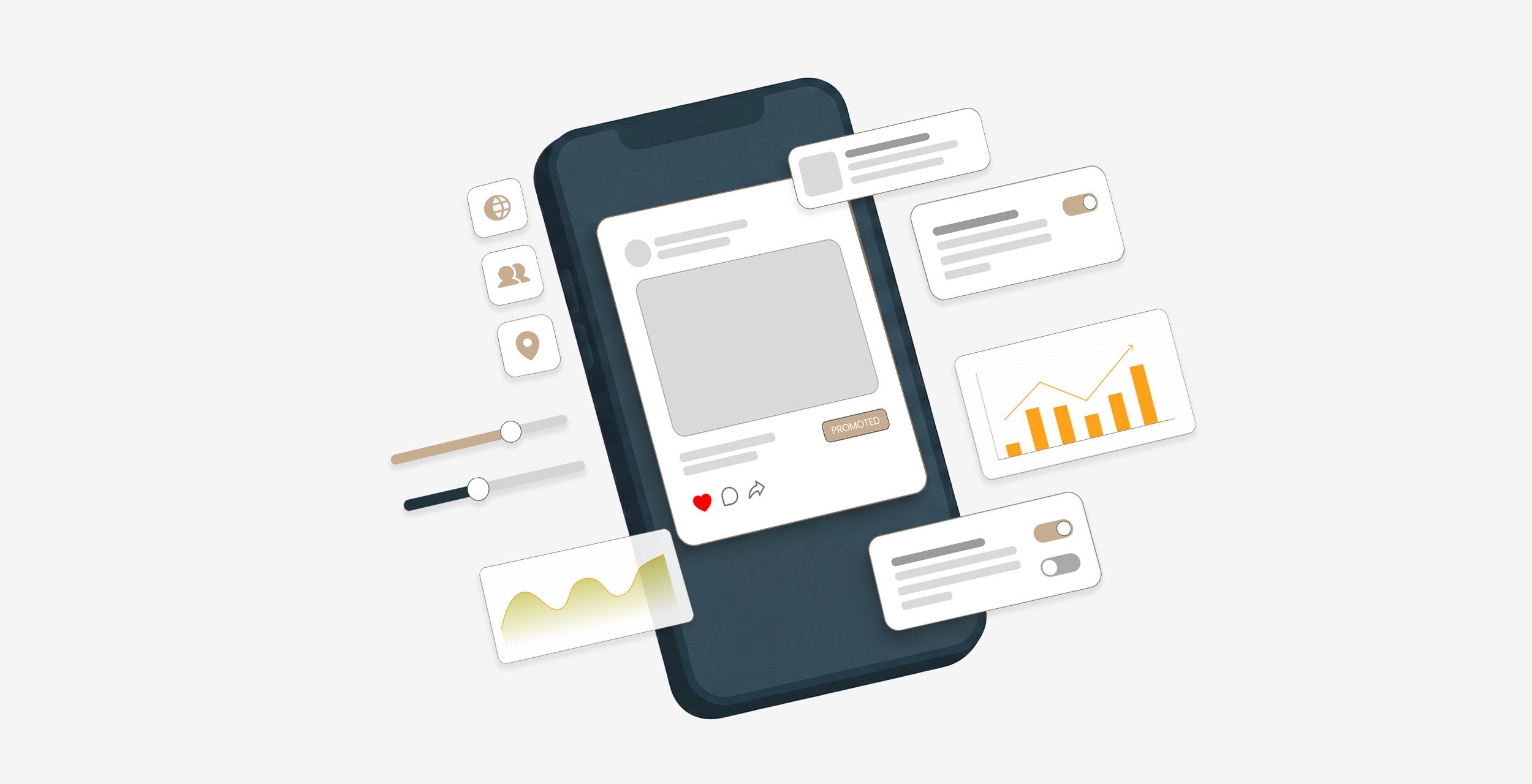
A structured ad strategy ensures that your brand reaches the right audience and converts interest into bookings, reservations, or appointments. Learn more about social media advertising for hospitality here.
10.1 Choosing the right platform
- Facebook & Instagram Ads: streamline conversions, retargeting, and local targeting.
- TikTok Ads: great for discovery and reaching new audiences.
- Pinterest Ads: good for long-term consideration and effective travel planning.
- LinkedIn Ads: great if you’re trying to get corporate bookings and B2B hospitality.
10.2 Campaign objectives
There are different campaigns for varying purposes.
- Brand awareness: Reaching new audiences.
- Engagement: Increasing interaction and visibility.
- Website traffic: Driving users to booking pages.
- Conversions: Focusing on bookings, reservations, or enquiries.
- App installs: Consider if applicable.
10.3 Audience Targeting Strategies
- Targeting based on demographics: age, location, income, etc.
- Targeting based on interest: travel, food, wellness, or luxury.
- Targeting based on behaviour: dining habits, frequent travellers, etc.
- Targeting custom audiences: website visitors or past customers.
- Targeting lookalike audiences: similar to your best existing customers.
10.4 Ad creative best practices
- Carousel ads: with multiple slides, showcase rooms, dishes, or services.
- Video ads: Highlight customer experiences and storytelling.
- Collection ads: Show bundle offers or packages.
- Story ads: Create urgency by showing limited-period deals.
10.5 Budgeting & optimisation
- Test different campaigns and do more of what works.
- Use A/B testing for formats, creatives, and audiences.
- Continuously improve based on performance data.
10.6 Measuring Performance
- Measure click-through rates (CTR).
- Evaluate cost per click (CPC).
- Track conversion rate.
- Measure return on ad spend (ROAS).
11. Analytics and performance measurement
If you’re not tracking performance, then your marketing is solely based on guesswork.
11.1 Key metrics to track
- Reach & Impressions: See how many people watch your content and engage with it.
- Engagement Rate: Count the number of likes, comments, shares, and saves.
- Follower Growth: Expansion of your audience over time.
- Click-through Rate (CTR): Traffic driven to your website through action buttons.
- Conversion Rate: Customers moving towards bookings, reservations, or enquiries.
- Social referral traffic: Visitors coming from your posts on social platforms.
Learn how to analyse your marketing ROI to understand the true impact of these metrics.
11.2 Platform-specific analytics
Each social media platform provides some built-in performance insights.
- Instagram Insights provides a personalised dashboard including your audience’s active times.
- Facebook analytics by Meta Business Suite.
- TikTok analytics provides specific audience retention metrics.
- Pinterest analytics provides granular audience insights and content performance trends.
11.3 Advanced Tracking and Insights
- Use UTM parameters to track traffic from only specific campaigns.
- Social listening tools to track where your brand is mentioned and with what sentiment.
- Competitive benchmarking to compare performance with your competitors.
11.4 Connecting Social Media to Business Outcomes
The real goal is to link your social activity to results.
- Track bookings and enquiries that occurred from various social channels.
- To understand the full customer journey, use multi-touch attribution.
- Measure and see how content and ads contribute to the revenue.
11.5 Reporting & optimisation
- Create monthly reports to track performance.
- Analyse results for campaigns separately.
- Compare year-over-year performance to track growth.
12. Essential social media tools for hospitality
By using the right tools for content creation, you can streamline scheduling, analytics, and overall management.
| Category | Free Tools | Paid Tools |
|---|---|---|
| Content Creation | Canva (free plan), VSCO (basic), Lightroom (mobile free) | Adobe Creative Cloud, Canva Pro, VSCO Premium |
| Video Editing | CapCut, InShot (free version) | InShot Pro, CapCut Pro (advanced features) |
| Instagram Aesthetics & Planning | Unfold (basic), Later (limited free) | Later (premium), Unfold Pro |
| Scheduling & Management | Meta Business Suite, Buffer (free plan), Hootsuite (limited trial) | Hootsuite, Buffer (paid), Sprout Social, Loomly, Planoly, Later |
| Analytics & Insights | Native platform analytics (Instagram, Facebook) | Iconosquare, Sprout Social, Rival IQ, Brandwatch, Mention |
| UGC Tools | Later (hashtag search), manual sourcing | TINT, Stackla, Yotpo, Pixlee |
| Influencer Marketing | BuzzSumo (limited free searches) | AspireIQ, Upfluence, GRIN, Traackr |
| Social Listening | Mention (limited free), basic Hootsuite | Brandwatch, Talkwalker, Sprout Social Listening |
| Review & Reputation | Google Reviews (manual), basic tracking | Birdeye, ReviewTrackers, Reputation.com, Podium |
| Hashtag Research | Hashtagify (limited), RiteTag (limited), Display Purposes, All Hashtags | Hashtagify Pro, RiteTag Pro |
| Link Management | Linktree (free), Lnk.Bio (free) | Linktree Pro, Shorby, Later Linkin.bio |
| AI & Automation | ChatGPT (free), Copy.ai (limited), Jasper (trial) | Jasper, Copy.ai Pro, Lately |
| Stock Content | Unsplash, Pexels | Storyblocks, Canva Pro Library |
13. Common Social Media Mistakes to Avoid
Even if you make the right strategy, your social media game can still fail. To prevent that from happening, avoid making the following mistakes.
- Inconsistent Posting: Irregular posting or abandoned accounts signal inactivity. Consistent posting helps to stay relevant and visible.
- Over-promotional Content: If you constantly post about offers or sales without adding any significant value, your audience can feel disengaged. Balance the promotional content with informative and engaging posts.
- Ignoring comments and messages: If you delay responses or ghost completely, you can miss opportunities and degrade your customer’s experience.
- Poor quality visuals: Hospitality is a visually driven industry; hence, the quality of your visuals matters the most.
- Not leveraging user-generated content: People connect with people. Ignoring UGC can lead your brand to miss out on authentic, trust-building content.
- Buying followers or engagement: Artificial growth can look shiny at the start, but for the long term, it can harm your credibility.
- Ignoring platform-specific strategies: If you post the same content on Instagram and LinkedIn, it will not be relevant to one of the platforms and will reduce its effectiveness.
- Lack of strategy & goals: Posting randomly without a clear plan leads to poor results.
- Not tracking performance: Tracking analytics is crucial; without that, there will be no room for improvement of your strategy.
- Inconsistent brand voice: A mismatched tone causes confusion and degrades brand identity.
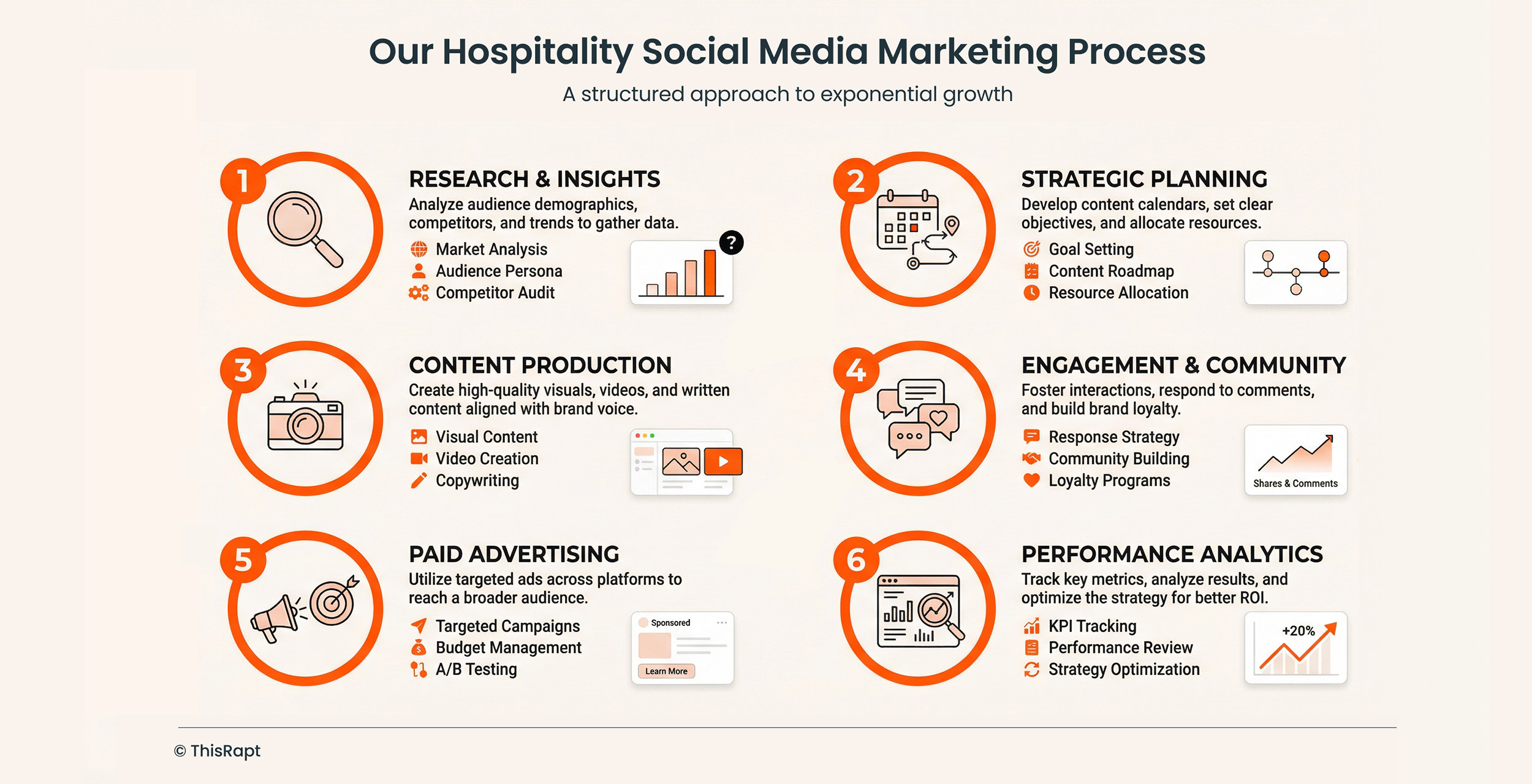
14. Our Hospitality Social Media Marketing Process
A successful social media strategy requires a structured and consistent approach that aligns content with audience and business goals.
14.1 Brand & audience research:
It starts with understanding the business, its target audience, competitors, and market positioning.
Core steps include:
- Analysis of audience behavior and preferences.
- Competitor analysis.
- Analysis of platform and content opportunities.
14.2 Content strategy & planning:
Building a roadmap for content and campaigns with the help of:
- Content pillars and formats
- Platform-specific strategies
- Monthly content calendars
14.3 Content production:
Creating performance-driven content with high-quality:
- Photography and videography
- Short-form and long-form content
- Editing and visual consistency
14.4 Posting & community management:
Strategy making is a critical part, but constant execution is equally important. We ensure constant execution of the strategy by:
- Scheduling posts across platforms
- Managing engagement and response
- Community building
14.5 Paid ads execution:
Conducting targeted campaigns to scale and convert.
- Campaign setup and targeting
- Optimisation and retargeting
- Offer-based promotions
14.6 Performance tracking and optimisation
Gathering data to improve continuously.
- Monitoring key metrics
- Campaign performance analysis
- Strategy refinement and scaling
15. Case studies & proof of results
A well-structured hospitality social media strategy can deliver measurable growth.
15.1 Restaurant growth through social media
A strategy that focused solely on restaurants built around high-quality visuals, trend-driven content, and local influencer collaborations led to:
- Visible increase in footfall and walk-ins.
- Increase in local discoverability and hence, higher engagement.
- More repeat customer visits.
With the mindful combination of consistent content and location-based targeting, social media translated into on-ground traffic.
15.2 Hotel booking growth through campaigns
An ideal content strategy for a hotel must have a balanced combination of campaigns, influencer marketing, and paid ads. This combo results in:
- A 25% increase in occupancy rates.
- Direct bookings are going higher.
- Minimal to no reliance on third-party booking platforms.
15.3 Spa appointment growth through content + ads
A spa leveraged educational content in addition to retargeting campaigns and achieved the following:
- Increasing number of appointment bookings.
- Improved customer engagement and trust.
- Better retention caused by consistent content.
16. Emerging trends in hospitality social media
Social media is constantly evolving, especially in the hospitality industry; hence, the brands that adapt early make the most of their competitive advantage.
AI is transforming content creation and management. Benefits of AI include:
- Faster content production
- Personalised messaging
- Improved efficiency and consistency
Latest technologies like virtual tours and immersive videos allow users to explore hotels, restaurants, and spas before even visiting.
- 360° property tours
- Interactive experience
- Enhanced decision-making for users
Social platforms have become direct shopping channels. Such features include the following:
- In-app bookings and ordering
- Product and gift card purchases
- Seamless transition from discovery to purchase
Short-lived content, like stories that last 24 hours, drives high engagement. You can share:
- Real-time updates
- Limited-period offers
- Behind-the-scene moments
Nowadays, highly polished content is being replaced by raw, relatable, and unfiltered experiences. Some examples include:
- Raw BTS content
- Honest reviews and testimonials
- Creator-style storytelling
Today’s modern audience is more aware and value-driven. The only way to impress them is to show that you add value to society and the environment with the following:
- Eco-friendly practices
- Ethical sourcing
- Sustainable experiences
These initiatives build deeper trust.
Showing off your staff can help you gain traction. Focus on generating content consisting of:
- Team members sharing experiences
- Humanising the brand
- Building authenticity
The most powerful format for reach and engagement is short-form videos. They could be:
- Reels, TikTok, YouTube Shorts
- Quick, engaging, experience-driven content
Social platforms are now used as search engines by most people. In such a scenario, the only way to boost your content is by making it SEO-friendly by:
- Adding optimised captions and keywords
- Hashtags and discoverability
- Location tagging
Brands are shifting their focus from audience-building to community-building. You can build a strong community by
- Sharing interactive content
- Encouraging user participation
- Converting visitors into loyal brand advocates
17 Conclusion & next steps
Social media marketing for hospitality is no longer an option; it’s a part of the core drivers for visibility, engagement, and revenue. Social media shapes how customers perceive a hotel, a restaurant, or a spa.
A successful social media strategy requires a combination of content, platform selection, paid advertising, influencer collaborations, and conversion-focused execution, all working together to guide users through their customer journey.
17.1 Key takeaways
- Every stage of a hospitality customer journey is influenced by social media.
- Maximum engagement is driven by visual content and storytelling.
- Paid ads and conversion strategies turn mere attention into bookings.
- Community building and consistency create sustainable growth.
- Analytics and optimisation ensure constant improvement.
If you’re looking forward to building or improving your social media presence:
- Pick 1-2 core platforms relevant to your business.
- Define clear content elements and posting consistency.
- Focus on short-form videos with high-quality visuals.
- Implement conversion strategies like links, CTAs, and responses.
- Gradually scale with the help of ads, influencers, and advanced tracking.
17.2 Platform Prioritisation
- Hotels: Instagram, Facebook, and YouTube (for long-form content).
- Restaurants: Instagram and TikTok.
- Spas: Instagram and Pinterest.
If you want to move beyond “just posting” and build an effective social media strategy, ThisRapt’s hospitality social media marketing services are designed especially for you.
With your efforts and our guidance, you can:
- Increase bookings and revenue.
- Build a strong and consistent brand presence.
- Execute data campaigns that scale.
18. FAQs
Consistency matters, but it differs from brand to brand. Most hospitality brands benefit from posting 3-5 times per week; for a few, this might not be true. However, it’s necessary to keep posting stories and engaging with your audience regularly.
Instagram is the most important platform for marketing due to its visual nature. TikTok comes second in the list for discovery, followed by Facebook for ads and local engagement.
Yes! When the ads are properly planned and combined with strong content and targeting, they can significantly increase bookings, reservations, and enquiries.
Organic growth typically takes a few months, while paid ads can generate faster results depending on the strategy and budget.
Costs vary based on the type of business and requirements. Basic management can fall under the range of £500-£1,500/month, mid-level, including content and ads, can range between £1,500-£4,000/month, and 360° service can range from £4,000-£10,000/month. Ad spend is typically additional, ranging from £500 to £5,000+ per month, depending on the campaign goals.