

Marketing ROI for hotels isn’t just (Revenue − Cost) ÷ Cost anymore. That formula ignores hotel marketing’s biggest hidden lever: OTA commission savings. A hotel with 70% OTA dependency on £2 million in annual revenue pays roughly £210,000–£350,000 a year in commissions – money you get back the moment a booking shifts from Booking.com to your own site. In 2026, the hoteliers getting real budget decisions right are the ones tracking a “true profit” ROI formula, RevPAR by channel, cancellation rate by channel, and – increasingly – visibility inside AI-generated travel answers, alongside the standard metrics.
1. Why measuring marketing ROI matters more in 2026
Hotel marketing budgets are under real scrutiny. RevPAR growth has returned in 2026 after a flat 2025, but gains are coming from rate rather than occupancy – meaning margin discipline, not just topline growth, is what separates strong
| Think of this as your roadmap to analysing your marketing ROI. Along the way, we’ll explore: |
performers from the rest. At the same time, AI is fundamentally changing how guests research and book: over half of US travellers have used AI for trip planning in the past year, and a meaningful share now use AI tools specifically to compare prices before booking. None of that shows up in a simple ROI formula that only looks at revenue versus spend.
Accurately measuring marketing ROI enables hoteliers to:
- Allocate budgets to genuinely high-performing channels, not just high-visibility ones
- Quantify the commission savings that direct bookings actually generate
- Reduce wasted ad spend on channels with rising costs and flat returns
- Benchmark performance against current UK and global hospitality standards
- Justify budget to ownership with numbers that map to profit, not just engagement
Most marketing agencies still report on impressions, click-through rate, and social engagement — metrics that don’t pay payroll. In hospitality specifically, success is measured by RevPAR growth and commission reduction, not by how many people liked a post.
2. ROI vs. ROAS vs. “True Profit ROI”: The formulas that actually matter
2.1 What is ROI in digital marketing?
ROI (Return on Investment) is the ratio of net profit to total marketing cost:
ROI = (Revenue – Cost of Marketing) ÷ Cost of Marketing × 100
A positive ROI means your campaigns return more than they cost. This is the baseline formula — but for hotels specifically, it’s incomplete.
ROAS: Return on Ad Spend
ROAS isolates paid advertising performance specifically:
ROAS = Revenue from Ads ÷ Cost of Ads
Spend £1,000 on Meta Ads, generate £4,000 in bookings, and your ROAS is 4:1 (400%). For Google Hotel Ads specifically, a ROAS of 3:1 to 5:1 is achievable when your rates and availability feed is accurate — below that range typically signals a rate parity or feed accuracy problem, not a targeting one.
2.2 The metric most hotels are missing: True profit ROI
The standard ROI formula ignores hotel marketing’s single biggest value driver: when a booking shifts from OTA to direct, you don’t just earn the revenue – you also avoid the commission you would otherwise have paid.
True Profit ROI = ((Direct Booking Revenue + Saved OTA Commissions) – Marketing Investment) ÷ Marketing Investment × 100
Worked example: Say a campaign generates £50,000 in new direct bookings that would otherwise have gone through an OTA charging an 18% commission. That’s £9,000 in avoided commission on top of the £50,000 in revenue. Against a £15,000 marketing spend, the standard ROI reads roughly 233% — but True Profit ROI reads closer to 293% once the saved commission is factored in. That gap is the real argument for direct booking investment, and it’s the number that should go in front of ownership, not the standard formula alone.
3. Key metrics every UK hotelier should track in 2026
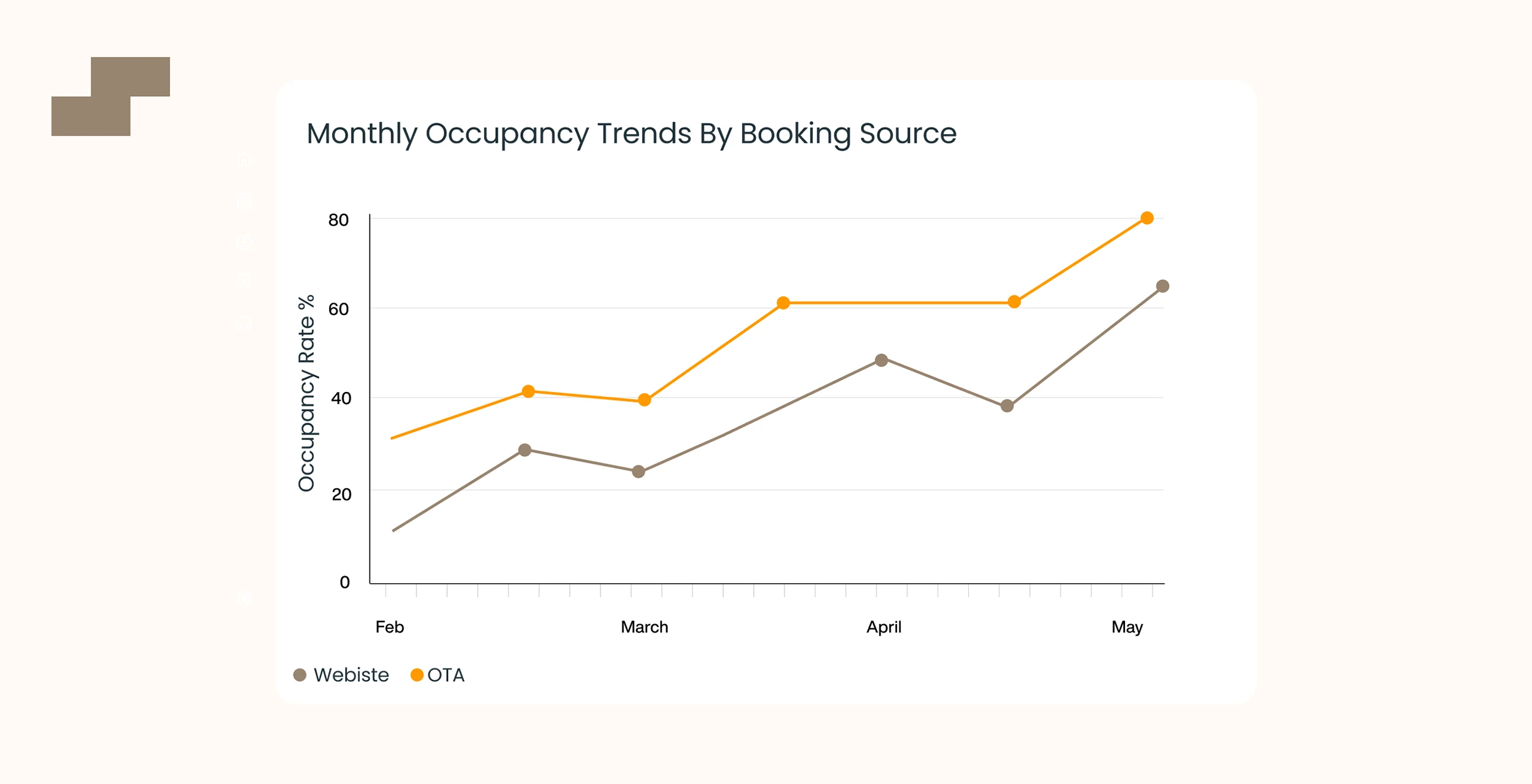
(i). Occupancy Rate (OR)
- What it is: The percentage of available rooms that are occupied over a given period.
- Why it matters: Indicates demand levels and effectiveness of promotional campaigns. A rising OR often signals strong brand visibility and successful seasonal targeting. This foundational KPI reflects demand and marketing impact. A healthy OR (70–80% or more) often results from effective campaigns and seasonal promotions.
- How to use it: Track occupancy by source, e.g., direct bookings, OTAs, or digital ads, to optimise channel strategy.
- What it is: The percentage of available rooms that are occupied over a given period.
(ii). Average Daily Rate (ADR)
- What it is: The average rate paid per occupied room.
- Why it matters: A high ADR signals successful pricing strategies and upselling. Helps hoteliers assess how well pricing and upselling strategies are working. ADR is vital for luxury and boutique properties looking to elevate their positioning. Digital efforts like targeting premium guests through email or retargeting ads often influence ADR.
- How to improve it: Use dynamic pricing, upsell packages via personalised emails, and invest in digital marketing for hotels that emphasise value-added experiences.
- What it is: The average rate paid per occupied room.
(iii). Revenue Per Available Room (RevPAR)
- What it is: ADR × Occupancy Rate = RevPAR.
- Why it matters: It’s the “north star” of hotel performance, combining occupancy and price power. RevPAR offers a holistic snapshot, merging occupancy with pricing efficiency, an essential benchmark in marketing and hospitality planning.
- How to use it: Track RevPAR by campaign. If a marketing channel boosts RevPAR, it’s worth an additional budget.
- What it is: ADR × Occupancy Rate = RevPAR.
(iv). Customer Acquisition Cost (CAC)
- What it is: Total marketing spend divided by the number of new customers.
- Why it matters: Understanding CAC ensures you’re not overspending to gain bookings. A high CAC may require reallocation of ad budgets or a reassessment of campaign content. Lower CAC means higher ROI. Over time, knowing CAC by source (social media, email, SEO) helps prioritise profitable channels.
- How to calculate marketing ROI using CAC:
ROI = (Lifetime Value – CAC) / CAC × 100
- What it is: Total marketing spend divided by the number of new customers.
For UK hoteliers, reducing CAC by optimising ads or using content marketing often improves long-term returns.
(v). Return on Ad Spend (ROAS)
- What it is: Revenue from ads divided by the cost of ads.
- Why it matters: This metric shows how effective your paid campaigns are. A high ROAS reflects efficient campaign targeting and strong content resonance. For hotels using PPC, Meta ads, or programmatic display, ROAS is a must-track KPI.
- What’s a good ROAS? While benchmarks vary, a ROAS of 3:1 or higher is typically considered efficient in the UK hotel industry.
- What it is: Revenue from ads divided by the cost of ads.
(vi). Website traffic & conversion rate
- What it is: The number of users visiting your hotel website and the percentage that completes a booking.
- Why it matters: Your hotel’s website is a 24/7 storefront. A high volume of traffic with a low conversion rate suggests poor UX or irrelevant messaging. Enhancing landing pages and CTAs can boost conversions. Great website traffic without conversions means wasted spend.
- Optimisation tips:
- Improve UX and loading speed
- Use conversion tracking on booking buttons
- Invest in remarketing to bring back abandoned visitors
- Improve UX and loading speed
- What it is: The number of users visiting your hotel website and the percentage that completes a booking.
(vii). Revenue Generation Index (RGI)
- What it is: Compares your hotel’s RevPAR to competitors.
- Why it matters: RGI helps you assess if you’re gaining or losing market share. A low RGI might indicate aggressive pricing by rivals or weak brand appeal. A value above 1.0 means you’re outperforming your comp set.
- Action step: Combine RGI insights with campaign analytics to fine-tune your marketing and hospitality positioning.
- What it is: Compares your hotel’s RevPAR to competitors.
(viii). Digital engagement metrics
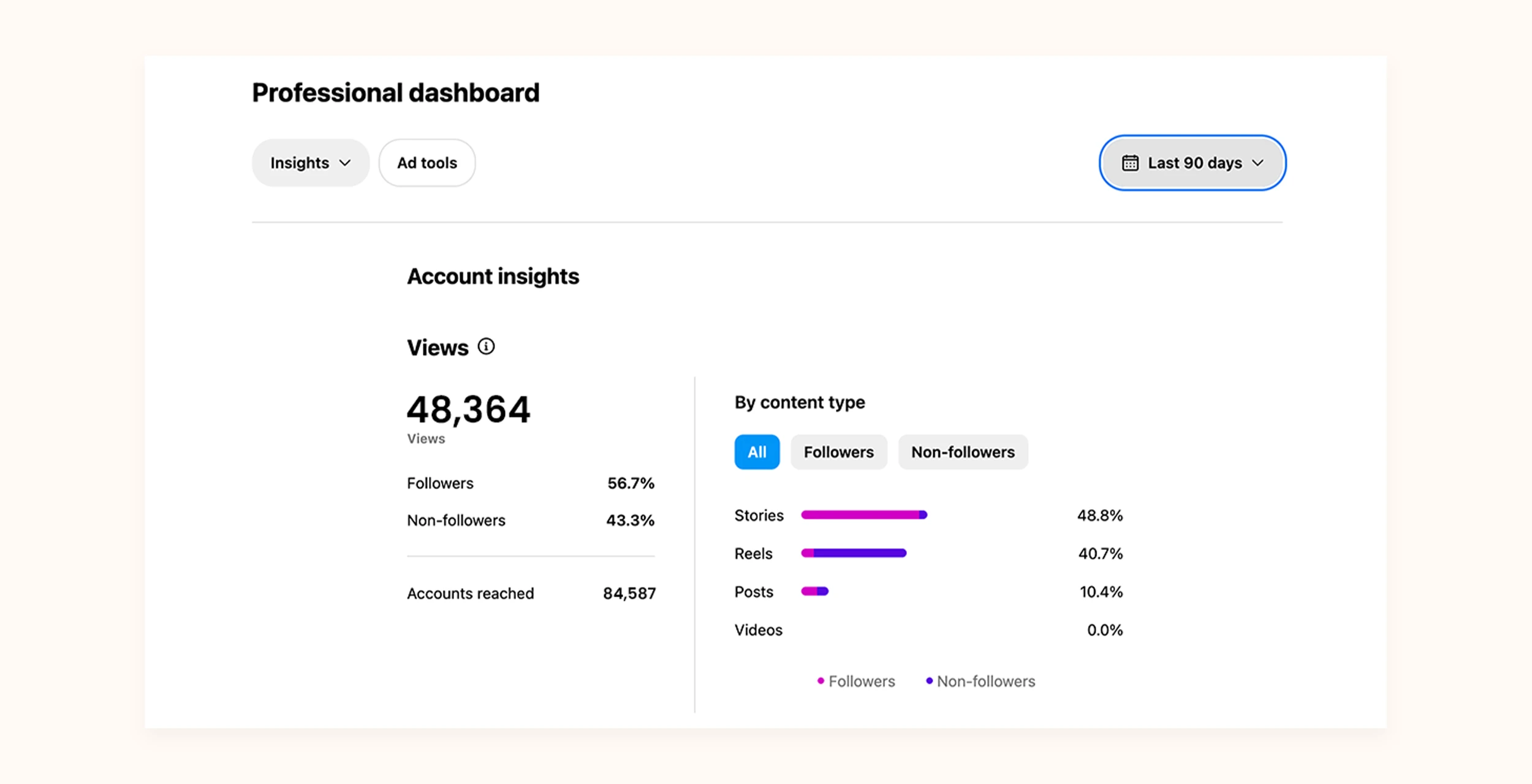
- What it is: Likes, shares, comments, open rates, click-throughs, and video views.
- Why it matters: These are leading indicators of brand awareness and intent. High engagement often precedes increased bookings.
- How to leverage: Engagement shows how well your content resonates with potential guests. Consistent storytelling across channels builds trust and drives return visits. Use engagement data to refine ad creatives, email subject lines, and content formats.
- What it is: Likes, shares, comments, open rates, click-throughs, and video views.
(ix). Cancellation rate by channel
This is one of the most underused KPIs in hotel marketing reporting. OTA bookings cancel at roughly twice the rate of direct bookings – guests hedging across multiple platforms with free cancellation treat the reservation as a placeholder rather than a commitment. This should directly inform inventory allocation: over-relying on OTA channels doesn’t just cost commission; it also inflates your forecasted occupancy with reservations more likely to fall through.
(x). Direct booking share
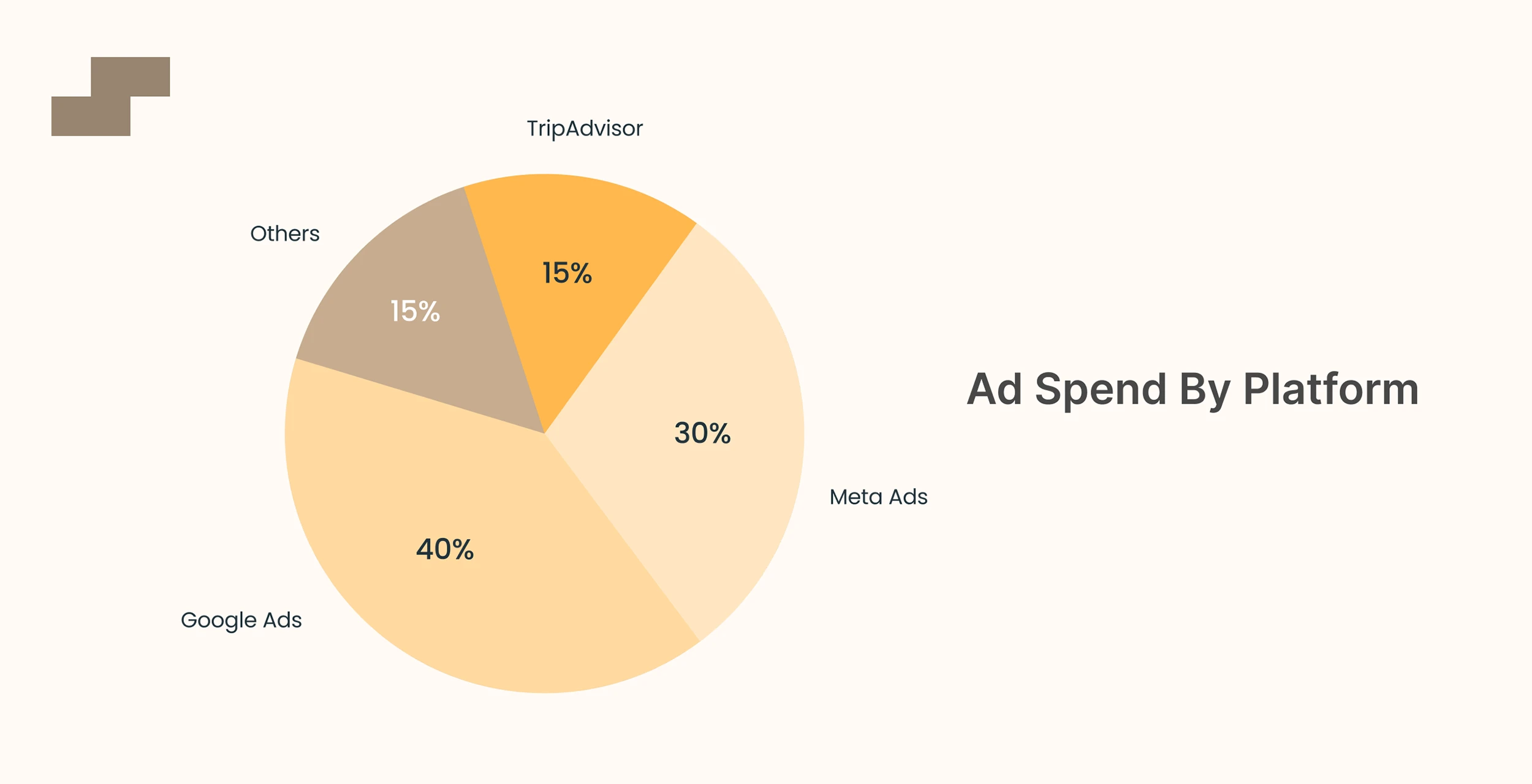
The percentage of total bookings coming through your own channel. Target ranges of 35–50% (with some well-optimised independents reaching higher) are a reasonable 2026 benchmark — but the number matters less in isolation than its trend. Independent hotels ceded a majority of bookings to OTAs in 2025 at commission rates of 15–30%, making this the single metric most directly tied to margin.
(xi). AI visibility & share of voice (The new leading indicator)
This is the metric most 2026 ROI guides still miss entirely. With over half of US travellers now using AI tools for trip planning, and a large share using AI specifically to compare prices, whether your hotel is being surfaced — or cited — in AI-generated travel answers (ChatGPT, Google AI Overviews, AI Mode) is becoming a genuine leading indicator of future direct bookings, the same way organic search rank was a decade ago. Track this via manual query testing and, where available, AI-visibility monitoring tools, alongside traditional keyword rank tracking.
(xii). Digital engagement metrics
Likes, shares, comments, open rates, click-throughs, video views. These remain leading indicators of brand awareness and booking intent, but should never be reported as outcome metrics on their own — pair every engagement number with the booking or revenue metric it’s meant to predict.

Google Analytics 4 (GA4)
website behaviour, goal conversions, revenue attribution; enable Google Signals and enhanced measurement to maintain accuracy as cookie-based tracking degrades

Hotel CRM/PMS systems
(Revinate, Guestline, Cloudbeds) — guest interaction history, stay data, and segmentation for personalised campaigns

Social platform analytics
Meta Business Manager, Instagram Insights, LinkedIn Analytics for channel-level engagement and conversion data

Ad platforms
Google Ads and Meta Ads Manager for ROAS tracking by campaign and audience, ideally fed by server-side conversion tracking

Revenue management software
combines pricing and marketing data to optimise RevPAR and true ROI together rather than in separate spreadsheets
4. Best practices to maximise marketing ROI
a. Invest in multi-touch attribution
Guests rarely book on the first touch — the hospitality path to purchase typically spans multiple sessions and devices. Multi-touch attribution (increasingly AI-assisted, given how fragmented cookie-based tracking has become) shows which combination of touchpoints actually drove the booking, rather than crediting whichever channel happened to be last.
b. Set a direct mix target, not just a revenue target
Rather than a vague “increase direct bookings” goal, set a specific direct-mix percentage target for the next two quarters, and fund the specific channels (SEO, email, retargeting) that move that number. Track weekly against pacing, and reallocate 20–30% of budget monthly toward whatever’s actually working.
c. Continuously test and optimise
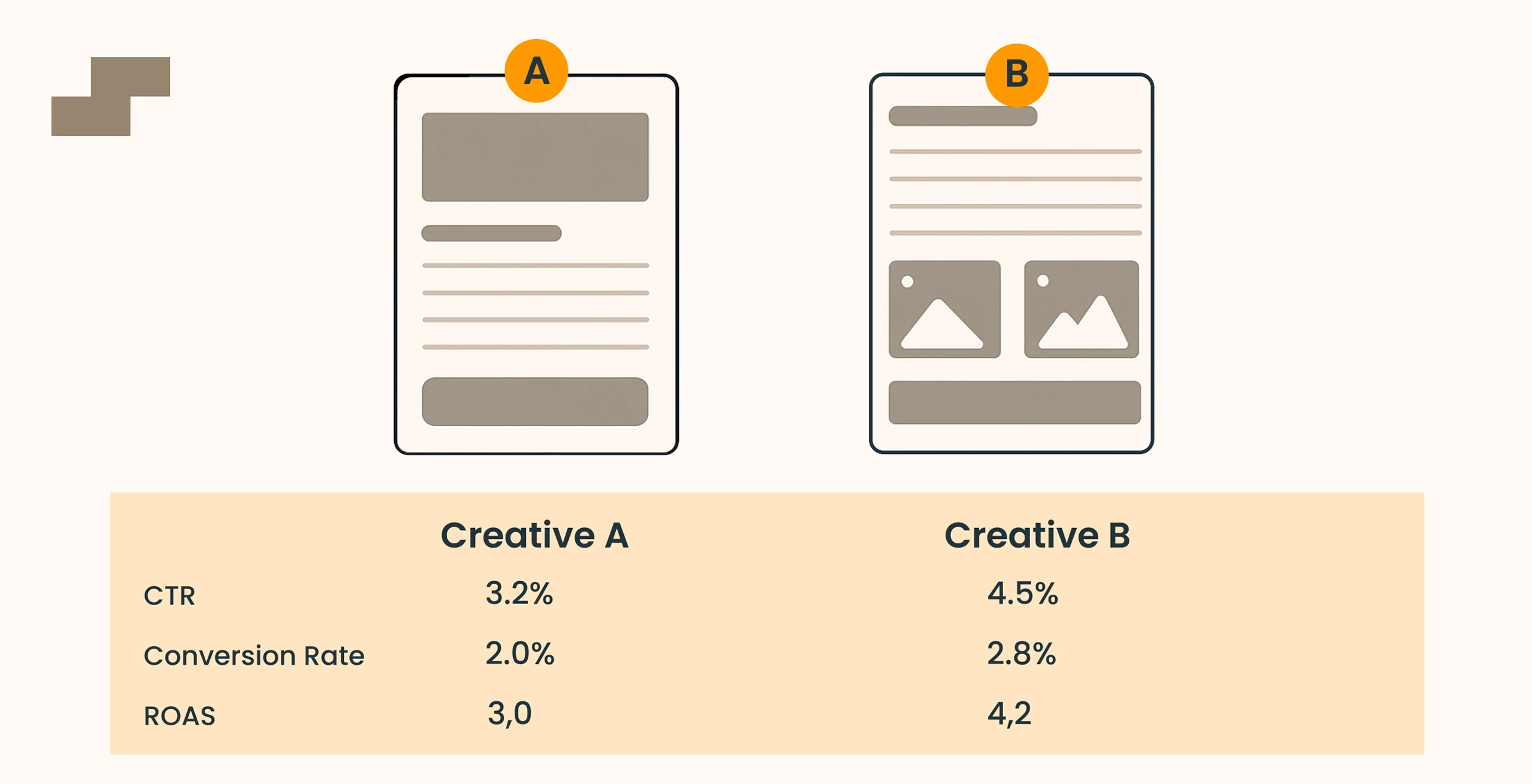
Run structured A/B tests on:
- Ad creatives and imagery
- Landing page layout and CTA placement
- Email subject lines
- Promotional offer framing
Expect incremental gains in the 5–15% range per quarter from disciplined testing — the compounding effect across several quarters is where the real ROI improvement shows up, not in any single test.
d. Work with a specialised hospitality marketing partner
A hospitality-focused marketing agency brings sector-specific benchmarks, attribution expertise, and omnichannel execution that generalist agencies typically lack — and can scale campaigns faster while protecting ROAS, since they’re not learning hotel booking cycles from scratch on your budget.
e. Budget with intention
A standard 2026 hotel marketing budget sits at roughly 4–6% of gross annual revenue, with technology and AI tools (CRM, automated upselling, analytics) now consuming 15–20% of that budget — treat this as a marketing line item, not an IT cost, since it’s what makes personalisation and accurate attribution possible at all.
5. Turning data into strategy
Numbers alone don’t drive results — the value is in the decisions they inform:
- Shift budget toward campaigns that measurably grow direct bookings and RevPAR, not just traffic
- Cut spend on channels with rising CAC and flat or declining ROAS
- Use segmentation to prioritise high-LTV guests over one-time low-value bookers
- Compare offer performance by channel (email vs. paid social vs. PPC) rather than assuming one approach fits all
- Track cancellation rate by channel alongside booking volume — a channel driving high volume but high cancellation isn’t as valuable as the raw numbers suggest
- Begin tracking AI-answer visibility now, even informally, since this is the discovery layer most likely to matter more, not less, over the next few years
6. Conclusion
In a data-rich, increasingly AI-influenced booking environment, measuring marketing ROI properly is no longer optional — and the standard formula most hotels still use quietly understates the value of every direct booking they win. Track RevPAR, direct mix, cancellation rate, and True Profit ROI together, and you get a picture that actually reflects what’s happening to your margin, not just your top line.
With the right KPIs, tools, and a partner who understands hospitality specifically, you can turn marketing data into consistently measurable, defensible returns — not just dashboards nobody outside the marketing team reads.
Ready to turn marketing data into bookings? Build campaigns that convert and scale with confidence.
7. Marketing ROI FAQs
There’s no single universal benchmark, since it depends heavily on property type, market, and channel mix. A more useful approach is tracking True Profit ROI (which includes saved OTA commissions) against your own historical baseline, and aiming for consistent quarter-over-quarter improvement rather than chasing an external number.
Because the standard ROI formula treats a direct booking the same as any other revenue, when in reality it also avoids a 15–30% commission you’d otherwise pay an OTA. Leaving that out significantly understates the real financial impact of direct booking campaigns.
ROI measures overall marketing profitability across all costs and revenue. ROAS measures revenue specifically from paid advertising against ad spend alone. Both matter, but ROAS in isolation can look strong while ignoring other marketing costs (content, staff time, tools) that ROI captures.
A common benchmark is 4–6% of gross annual revenue, with 15–20% of that allocated specifically to technology and AI tools (CRM, personalisation, analytics) rather than advertising alone.
Because a booking that later cancels doesn’t deliver the revenue your ROI calculation assumed. OTA bookings cancel at roughly twice the rate of direct bookings, meaning OTA-driven “wins” often overstate real performance until cancellations are factored in.
Increasingly, yes. With more than half of travellers now using AI tools during trip planning, whether your hotel appears or is cited in AI-generated travel answers is becoming an early indicator of future direct booking performance, similar to how organic search visibility functioned a decade ago.
RevPAR by channel, direct booking share (trend over time, not a snapshot), and True Profit ROI together give the clearest picture of both revenue generation and margin — everything else (engagement, traffic, open rates) should support the story those three numbers tell, not replace it.










Great information!