For most UK restaurants and pubs, six weeks between mid-November and New Year’s Eve decide whether the year ends in profit. The venues that win Christmas don’t have bigger budgets. They start earlier, make booking easy, protect themselves from no-shows and keep selling into January.
This playbook is for independent restaurants, pubs and small groups. It covers the three revenue streams that matter most: Christmas party bookings, festive menus and gift vouchers. You’ll also get a week-by-week timeline you can start using today.
Quick answer: To market a UK restaurant or pub at Christmas, publish your festive menu and party packages by mid-October, take deposits on every group booking, and promote through your Google Business Profile, email list and social channels every week until mid-December. Sell digital gift vouchers from your website right up to Christmas Eve, then use January to turn voucher holders and party guests into repeat customers.
1. Why Christmas 2026 matters more than usual
Last Christmas showed a clear split: pubs grew while restaurants and bars struggled. In the week of 22 to 29 December 2025, managed pubs grew like-for-like sales by 4.8%, while restaurants fell 1.1% and bar groups fell 15.5%, according to the NIQ RSM Hospitality Business Tracker. Across the whole of December, pubs were up 5.1% and restaurants up 0.8% (RSM UK).
Guests are also spending more per visit but going out less often. A VoucherCodes.co.uk forecast, reported by Caterer Licensee, put Christmas 2025 hospitality spend at £12.6bn, up 2.8%, while the number of people visiting venues was expected to fall 1.5%. Fewer, bigger occasions means every booking counts.
Costs are also higher. The National Living Wage rose 4.1% to £12.71 an hour in April 2026 (Restaurant Online), on top of the 2025 rise in employer National Insurance. A cancelled table or an empty Tuesday in December costs more than it did two years ago.
Three things follow for independents:
- Book early and lock it in. Groups that commit in October and November are the most valuable guests of the year. Deposits protect that revenue.
- Sell value, not discounts. Set menus and group packages give guests price certainty and give you predictable margins and prep.
- Make Christmas last into January. Gift vouchers and post-party follow-ups bring guests back in your quietest month.
A practical Christmas playbook for UK restaurants and pubs, from party bookings to January regulars. |
|
2. Your festive marketing timeline
Start in October, not December. Most of the work happens before the first mince pie is served.
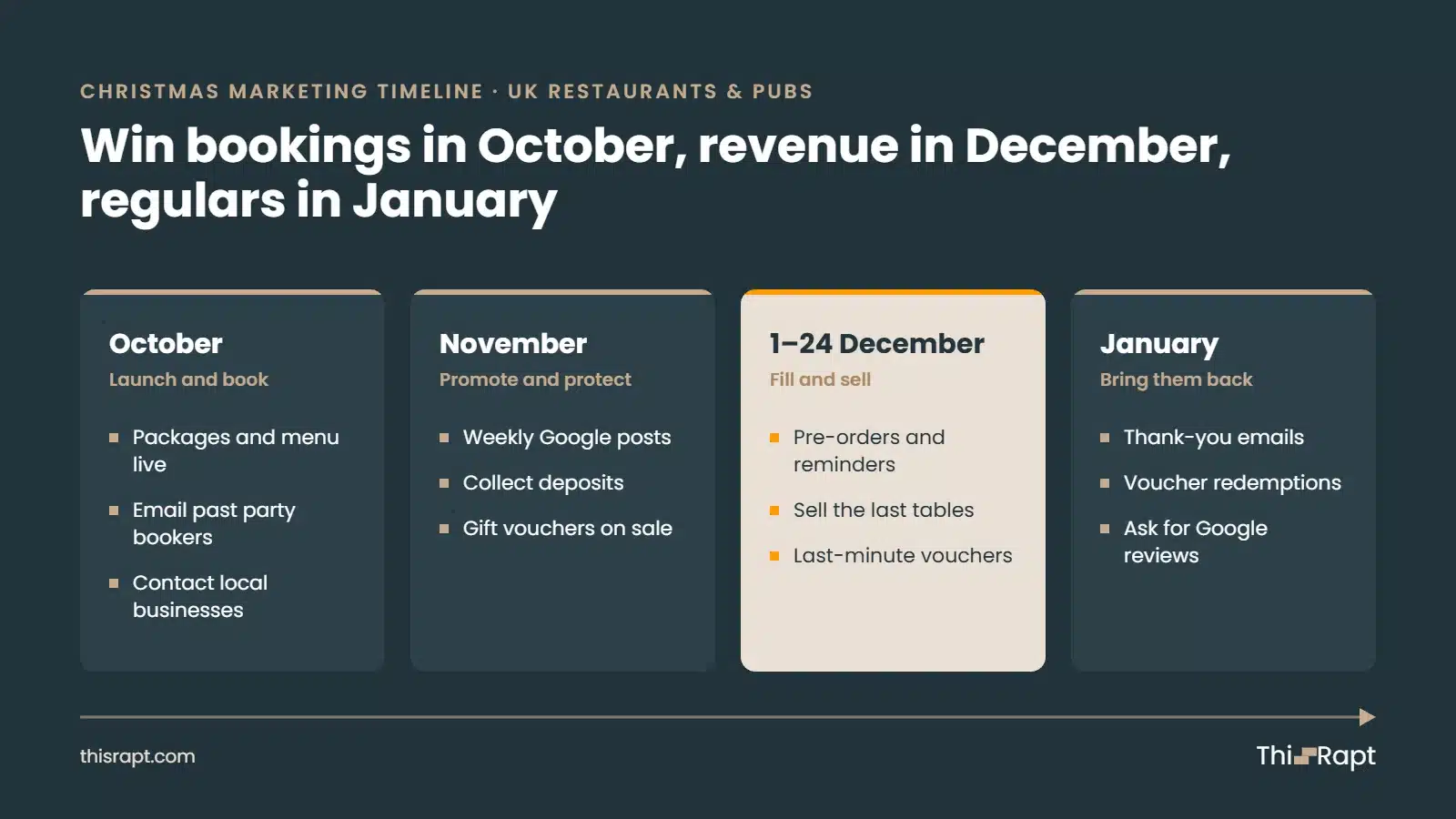
- October: launch and book. Publish your Christmas page with party packages, festive menu, and booking terms. Email last year’s party bookers and contact local businesses. Update your Google Business Profile with the menu and Christmas photos.
- November: promote and protect. Post weekly on Google and social media. Collect deposits and chase unconfirmed groups. Launch gift vouchers on your website by mid-November.
- 1 to 24 December: fill and sell. Collect pre-orders and send automated reminders. Push remaining tables, especially early-week dates. Send last-minute gift voucher emails around 18 December.
- January: bring them back. Thank party organisers and invite them to rebook for next year. Welcome voucher holders with a reason to come in midweek. Ask happy guests for Google reviews.
3. Christmas party bookings: fill the diary early
Group bookings are the highest-value guests of the season, and most are decided by an office manager or a friend organising for others. Your job is to make their decision fast and their booking easy.
3.1 Build packages, not just menus.
Offer two or three clearly priced options so organisers can compare at a glance. For example:
- A two-course set lunch for weekday office groups
- A three-course dinner with a welcome drink for Friday and Saturday groups
- An exclusive-use or private-area package with a minimum spend
Put each one on a dedicated Christmas page on your website with prices, minimum numbers, available dates and a booking button. Organisers often have to send options to colleagues, so a PDF version helps too.
3.2 Go after quiet nights on purpose.
Saturdays in December sell themselves. Mondays to Wednesdays do not. Give early-week dates a reason: a lower minimum spend, a free round of mulled wine, or a lunch package priced for teams. Filling quiet nights is a year-round skill: see how we grew weekday covers by 32% for The Wild Oak.
3.3 Reach the organisers directly.
Email last year’s party bookers in early October. Contact local businesses within a mile or two of your venue, including offices, schools, gyms and clubs. A short, personal note from the manager works better than a flyer.
3.4 Take deposits on every group booking.
No-shows hurt most at Christmas, when every table could have been resold. Estimates collected by Epos Now put the average UK no-show rate at around 1 in 12 bookings, with the cost of a single no-show at around £89. The same roundup reports that deposits combined with automated reminders cut no-shows by roughly two-thirds.
A simple deposit policy for groups:
- Take a deposit per head at the time of booking (many venues use £10 to £20)
- Collect pre-orders two weeks before the date
- Confirm final numbers 72 hours before, with deposits for missing guests kept
- Send automated reminders at 7 days and 24 hours
State the terms clearly on the booking page and in the confirmation email. Most guests accept a fair, clearly explained policy.
4. Festive menus: price for margin, write for bookings
Your festive menu is a sales document as much as a list of dishes. Guests compare it with other venues before they book, so it needs to look good, read well online, and make the price feel fair.
4.1 Keep it short.
Three or four choices per course are enough. A tight menu speeds up service on busy nights, cuts waste and makes pre-orders easier to manage.
4.2 Cost every dish before you price it.
Christmas ingredients such as turkey, beef and seafood move in price late in the year. Check supplier prices in October, build in a buffer, and set a fixed per-head price for set menus so you’re not caught out in December.
4.3 Cover dietary needs on the menu itself.
Include at least one strong vegan and one gluten-free option in each course, and flag allergens clearly. Group organisers will choose the venue that makes life easy for everyone in their party.
4.4 Add easy upsells.
A pre-ordered bottle of fizz, a cheese course or a mince-pie-and-coffee finish can lift spend per head without slowing service. Offer them at the booking or pre-order stage, when guests are planning rather than deciding at the table.
4.5 Make it findable.
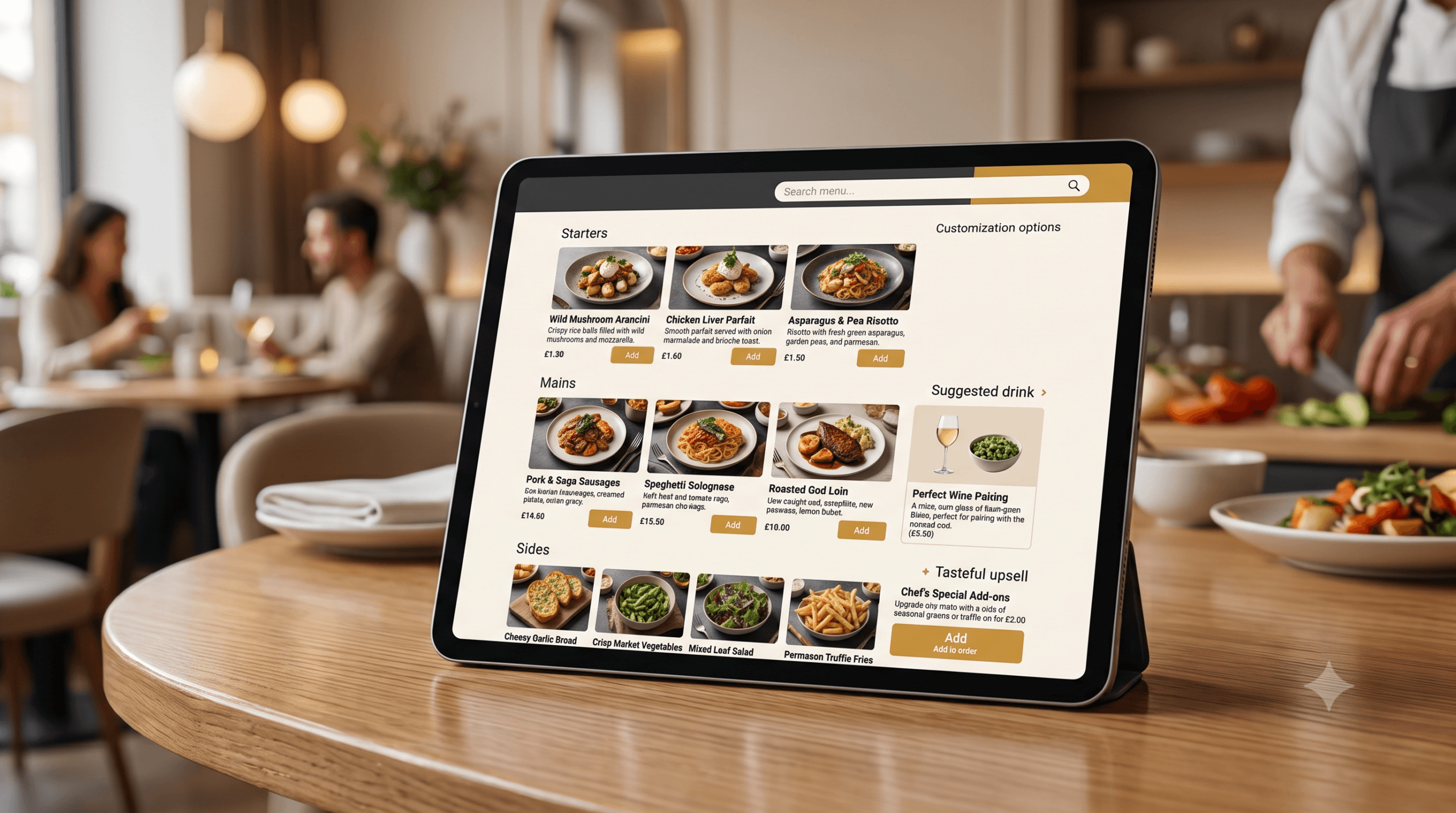
Publish the menu as text on your website, not only as an image or PDF. Search engines and AI tools can read text, which helps you show up for searches like “Christmas menu near me” or “festive set menu [your town]”. Add the same menu to your Google Business Profile. For more on this, see our 7 menu fixes that grow restaurant sales online.
4.6 Use photos that sell.
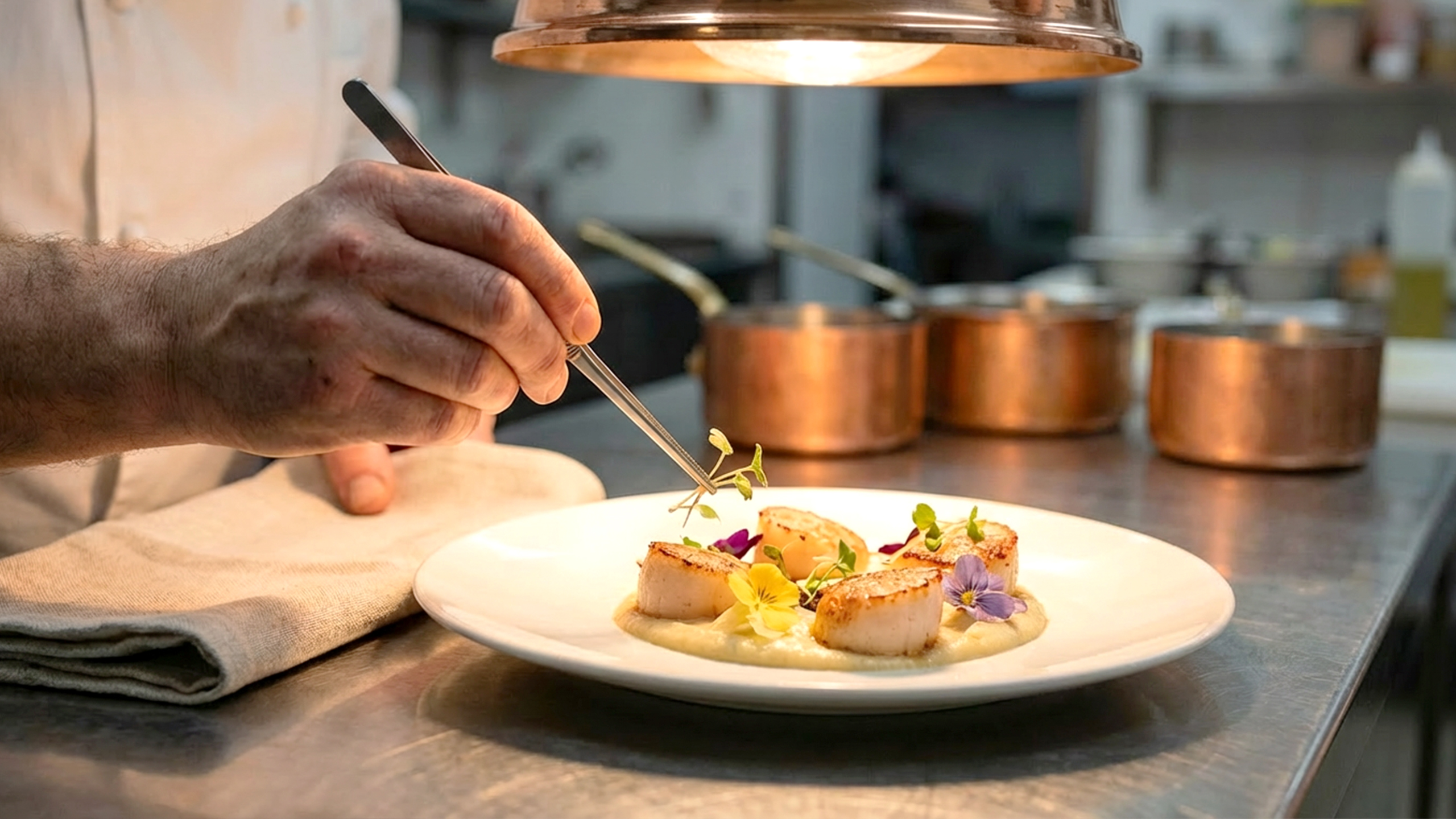
One well-lit photo of your Christmas main course will do more than a page of description. Use it on your Christmas page, your Google Business Profile, social posts, and booking emails.
Plan every festive post in one place
Map your Christmas posts, emails and offers from October to January with our free 90-day restaurant marketing roadmap, so nothing gets left to the last minute.
5. Gift vouchers: cash in December, guests in January
Gift vouchers are the easiest Christmas revenue you can earn. They bring in cash when you need it, they don’t need a table, and many are redeemed in January and February, typically your quietest months. Interest is high: “restaurant gift vouchers” is searched around 540 times a month in the UK (SE Ranking, October 2026).
The GCVA Consumer Report (February 2025) found that 30.1% of UK shoppers planned to buy gift cards to support businesses they like, up from 13.1% a year earlier. That is a strong argument for independents to promote vouchers to their own regulars.
5.1 Sell digital vouchers from your own website.
Guests buying at 10 pm on 23 December want to pay online and receive a voucher by email in seconds. Most booking and EPOS systems offer this, or you can use a dedicated voucher platform. Make sure the voucher can be printed or forwarded as a gift.
5.2 Offer experiences, not just amounts.
A “Sunday lunch for two” or “cocktail masterclass” voucher is more giftable than a plain £50 card, and it steers guests to the occasions you want to fill.
5.3 Put vouchers everywhere guests already are:
- A “Gift vouchers” link in your website menu bar and on your Christmas page
- A Google Business Profile post every week in December
- A dedicated email to your list in late November and again around 18 December, the last-minute gifting window
- A card on every table and a line on every bill
5.4 Plan for redemption.
Show the expiry date and terms clearly at the point of sale, track sales so you can staff January properly, and add a light incentive to come back: for example, a free dessert when the voucher is redeemed on a weekday.
Bonus offer, used carefully. “Buy £50, get £10 for yourself” works well, but put an expiry and a valid-from date on the bonus (for example, valid January to March) so it fills quiet weeks rather than December.
6. The channels that fill festive tables
You don’t need every channel. You need four, used consistently from October to January.
6.1 Google Business Profile.
This is where “Christmas party venue near me” and “festive menu [town]” searches land, and it increasingly feeds AI tools such as Google AI Overviews and ChatGPT. Add your festive menu, post weekly offers (for example, “Six tables left for Friday 11 December”), upload Christmas photos, and add special opening hours for Christmas Eve, Boxing Day and New Year’s Eve. Our restaurant Google Business Profile guide walks through each setting, and our guide to getting found by AI search covers the rest.
6.2 Email.
Your list is your cheapest booking channel because these people already know you. Plan four to six sends between October and December: party launch, menu reveal, last dates available, gift vouchers, last-minute gifts, and a New Year message. See our hospitality email marketing guide for templates and timing.
6.3 Social media.
Use Instagram, Facebook and TikTok to show the experience: the dining room dressed for Christmas, dishes being plated, the team in jumpers. Every post should point to one action: booking or buying a voucher. Our restaurant social media guide covers formats that drive bookings.
6.4 Your website.
One Christmas page should hold everything: packages, menus, prices, dates, booking terms, gift vouchers, and an FAQ. Link to it from your homepage banner and every channel above. Keep the URL the same each year (for example, /christmas/), so it builds search visibility over time.
7. Key takeaways
Christmas rewards the venues that plan early. Get your packages and menu live in October, protect every group booking with a deposit, promote through Google, email and social every week, and sell vouchers right up to Christmas Eve. Then use January to bring those guests back.
You don’t need a big budget to do this well. You need a plan, a clear Christmas page, and the discipline to follow through week by week.
8. Get more Christmas bookings
ThisRapt works with UK independent restaurants, pubs and hospitality SMEs on festive campaigns, Google Business Profile and email marketing that turn December guests into year-round regulars. If you want to know where your Christmas bookings are being lost, book a free audit with our team.
Ready to fill your festive diary?
ThisRapt works exclusively with hospitality SMEs to grow direct bookings through search, email and social.
9. Christmas marketing FAQs
Start in late September or early October. Many offices and groups book their Christmas party in October and early November, so your packages, menu and booking page need to be live before then. Gift voucher promotion can start in November and run until Christmas Eve.
Yes. A deposit per head on group bookings, combined with pre-orders and automated reminders, is the most reliable way to reduce no-shows. Explain the policy clearly at the time of booking and in the confirmation email.
Cost every dish at current supplier prices, add a buffer for late-year price rises, then set a fixed per-head price that hits your target gross margin. Check what similar venues nearby charge so your price feels fair for the experience you offer.
Create two or three clearly priced party packages, publish them on a dedicated Christmas page, and contact last year’s bookers and local businesses directly in October. Use lower minimum spends or added extras to fill Monday to Wednesday dates.
Yes. Digital vouchers bring in cash in December, can be bought at any hour right up to Christmas Eve, and often bring guests back in January and February. Most booking and EPOS systems can sell them from your website.
Keep your Google Business Profile up to date with your festive menu, Christmas photos, special opening hours and weekly posts. Publish your menu as text on a dedicated Christmas page on your website, using your town or area name.