

The hospitality industry is one of the most competitive and experience-driven sectors in the world. Hotels, restaurants, and spas are no longer chosen based on service alone; they are selected on perception, trust, and the overall experience they promise.
This is where a robust hospitality branding guide becomes essential. Branding defines how your business is positioned, how consistently that promise is delivered, and how guests feel at every touchpoint along the journey.
The numbers make this clear:
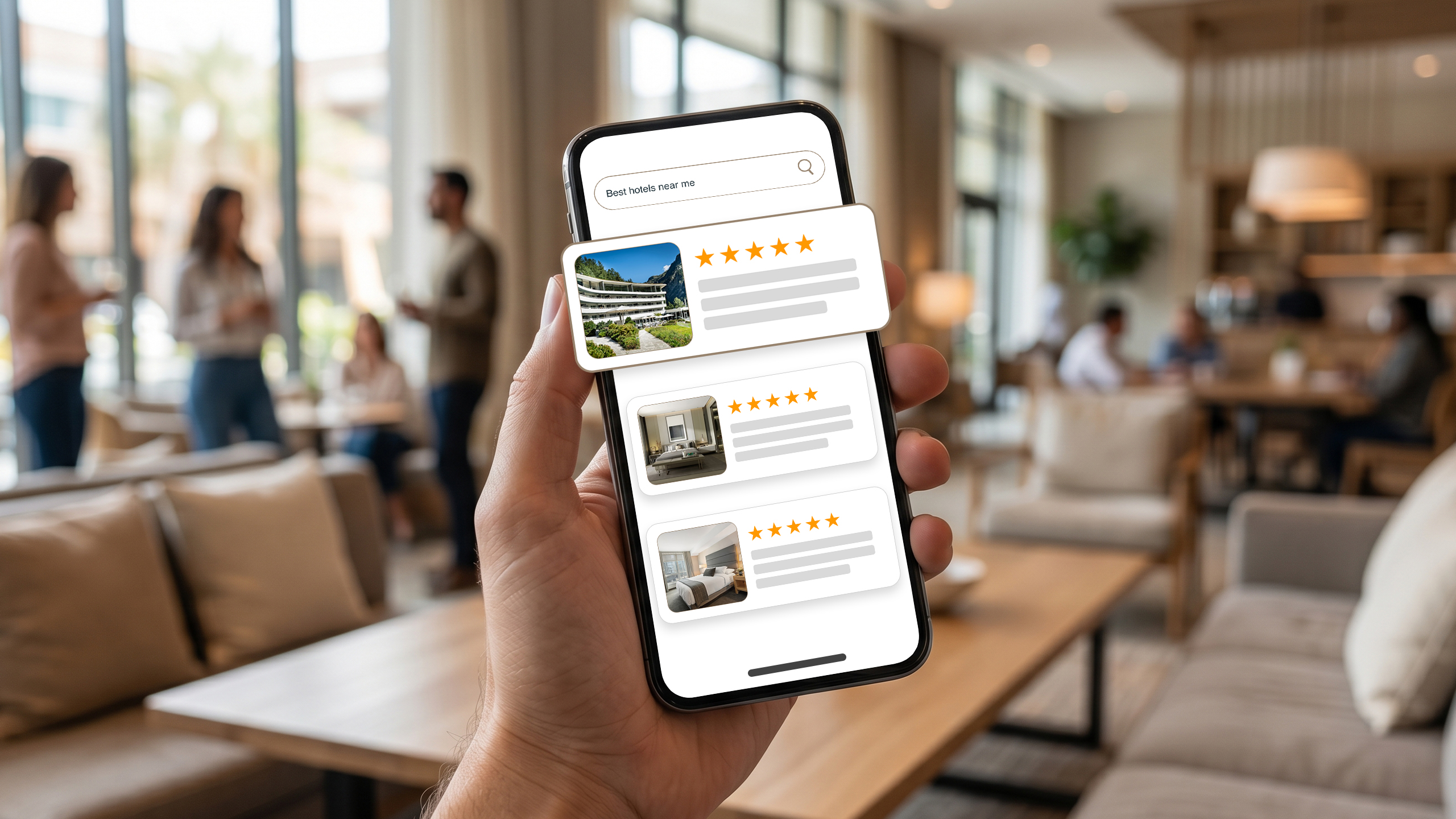
- Around 81% of travelers read reviews before booking
- 79% read multiple reviews before making a final decision
- Travelers pay up to 35% more for higher-rated hotels
- 9 out of 10 travelers say online reviews influence their decisions
Strong brands also build loyalty. A consistent and reliable brand experience creates familiarity, which drives repeat visits, positive reviews, and word-of-mouth referrals.
1. Understanding hospitality branding fundamentals
1.1 What is hospitality branding?
Hospitality branding is often reduced to logos and colour palettes. In reality, it is a comprehensive system that shapes how your business is perceived across every stage of the guest journey.
It defines not only how your brand looks, but how it feels, operates, and delivers value consistently and across all touchpoints.
From concept to execution, this guide breaks down how to build a distinctive hospitality brand that attracts guests, elevates experiences, and drives loyalty. We'll unpack: |
|
A complete hospitality brand development approach covers:
- Website and booking journey
- Physical environment and interior design
- Staff behaviour and service standards
- Sensory experience across sight, sound, scent, and touch
- Post-visit communication and engagement
In hospitality, branding and experience are inseparable. Every interaction contributes to how guests perceive and remember your business.
1.2 Emotional connection and guest perception
Branding in hospitality is built on how guests feel. Emotional connection is what drives reviews, repeat visits, and referrals, not just the quality of a meal or the comfort of a bed.
These emotional responses are shaped by service consistency, attention to detail, ambience, and the overall experience from first impression to departure.
1.3 Brand vs Identity vs Reputation
Understanding the distinction between these three elements is essential for clarity:
- Brand → The promise you make to your guests
- Identity → How you visually and verbally communicate that promise
- Reputation → How guests actually experience and talk about your brand
In hospitality, these three must align closely. Any gap between the promise and the delivery quickly damages trust, online ratings, and long-term perception.
1.4 Why branding matters in hospitality
Clear branding plays a critical role across every area of the business. It helps you:
- Stand out in competitive markets through differentiation
- Attract and retain the right customer segments
- Support premium pricing through perceived value
- Build guest loyalty and encourage repeat visits
- Drive referrals and word-of-mouth advocacy
- Strengthen internal culture and team alignment
Strong branding also improves employee performance. When service expectations are clearly defined and culturally embedded, teams deliver more consistent results.
1.5 Unique challenges in hospitality branding
Hospitality branding comes with a distinct set of challenges that product-based industries do not face:
- You are selling an intangible experience rather than a physical product
- Guest perception shifts based on expectation and personal context
- Consistency must be maintained across multiple channels and locations
- Online reviews instantly alter brand standing
- Heritage and modernity must often be balanced carefully
For multi-location businesses, maintaining brand coherence while allowing local adaptation becomes a critical operational challenge.

1.6 The hospitality brand hierarchy
Most hospitality businesses operate within a layered brand structure. Understanding this hierarchy helps prevent dilution and maintain clarity at every level:
- Corporate or parent brand
- Property or location-specific brands
- F&B outlet brands
- Spa and wellness sub-brands
- Brand extensions and seasonal concepts
A well-managed hierarchy allows businesses to scale without losing the clarity and consistency that guests rely on.
2. Elements of a strong hospitality brand
2.1 Brand strategy foundation
Every strong hospitality brand begins with strategic clarity. Without a clear direction, even the most visually appealing brands struggle to perform or scale.
Your strategy foundation must define:
- Brand purpose and mission
- Vision and long-term goals
- Core values that guide decisions
- Target audience definition and segmentation
- Competitive positioning in the market
- A clear brand promise
- A compelling unique value proposition
This foundation ensures that every decision from design to service to digital presence is aligned with your overall brand direction.
2.2 Visual and verbal identity
Your hospitality visual identity is often the first element guests encounter. It shapes initial perception and sets expectations before the experience even begins.
Core visual identity elements include:
- Logo design and brand mark
- Colour palette and visual system
- Typography and font hierarchy
- Photography style and composition standards
- Signage and wayfinding systems
- Branded collateral and materials
Visual identity alone, however, is not enough. Your verbal identity defines how the brand communicates across every platform and interaction.
This includes:
- Tone of voice and communication style
- Messaging framework and language
- Brand storytelling approach and key narratives
Consistency between your visual and verbal identity creates a recognisable, trustworthy, and coherent brand presence across all channels.
2.3 Sensory and experience design
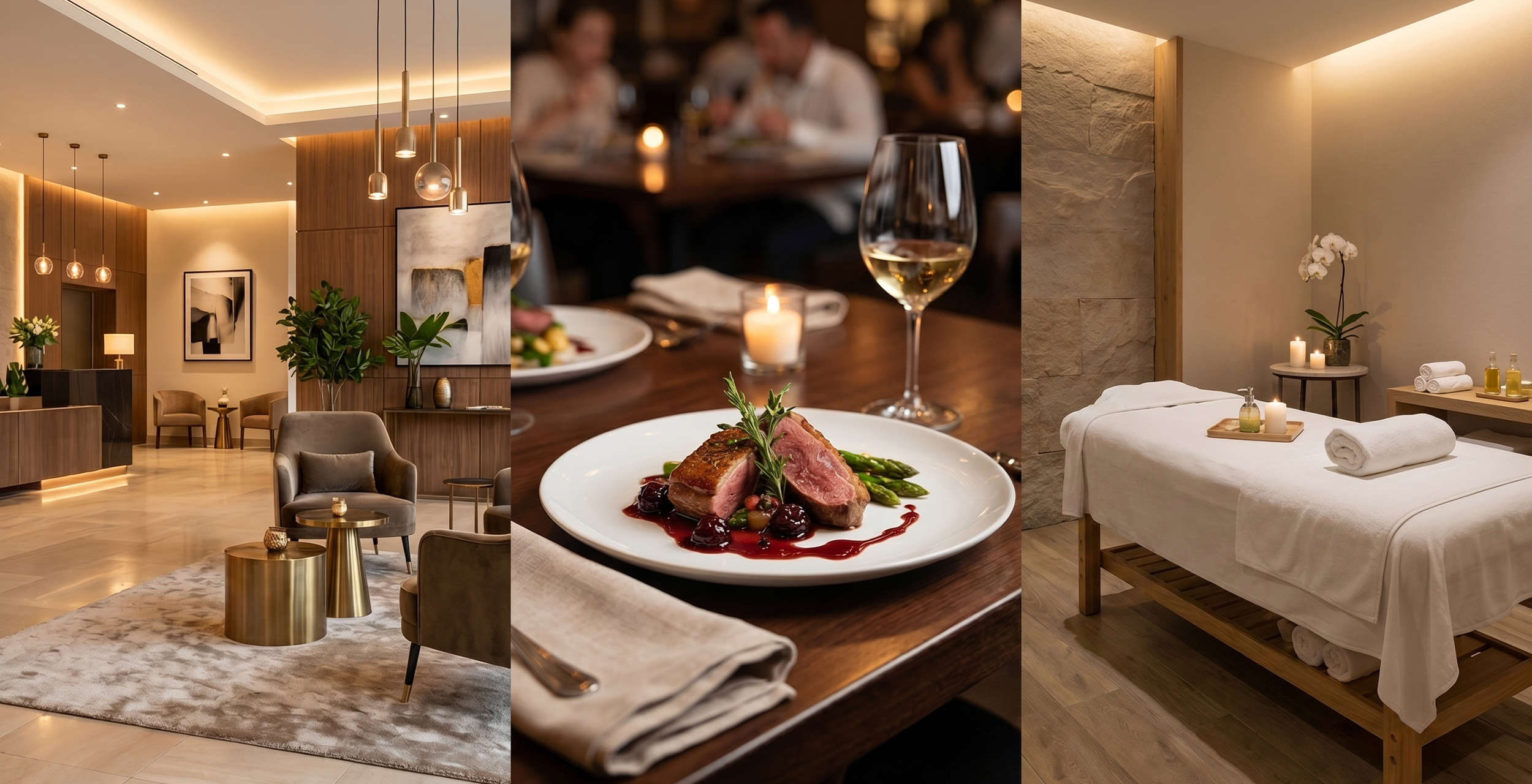
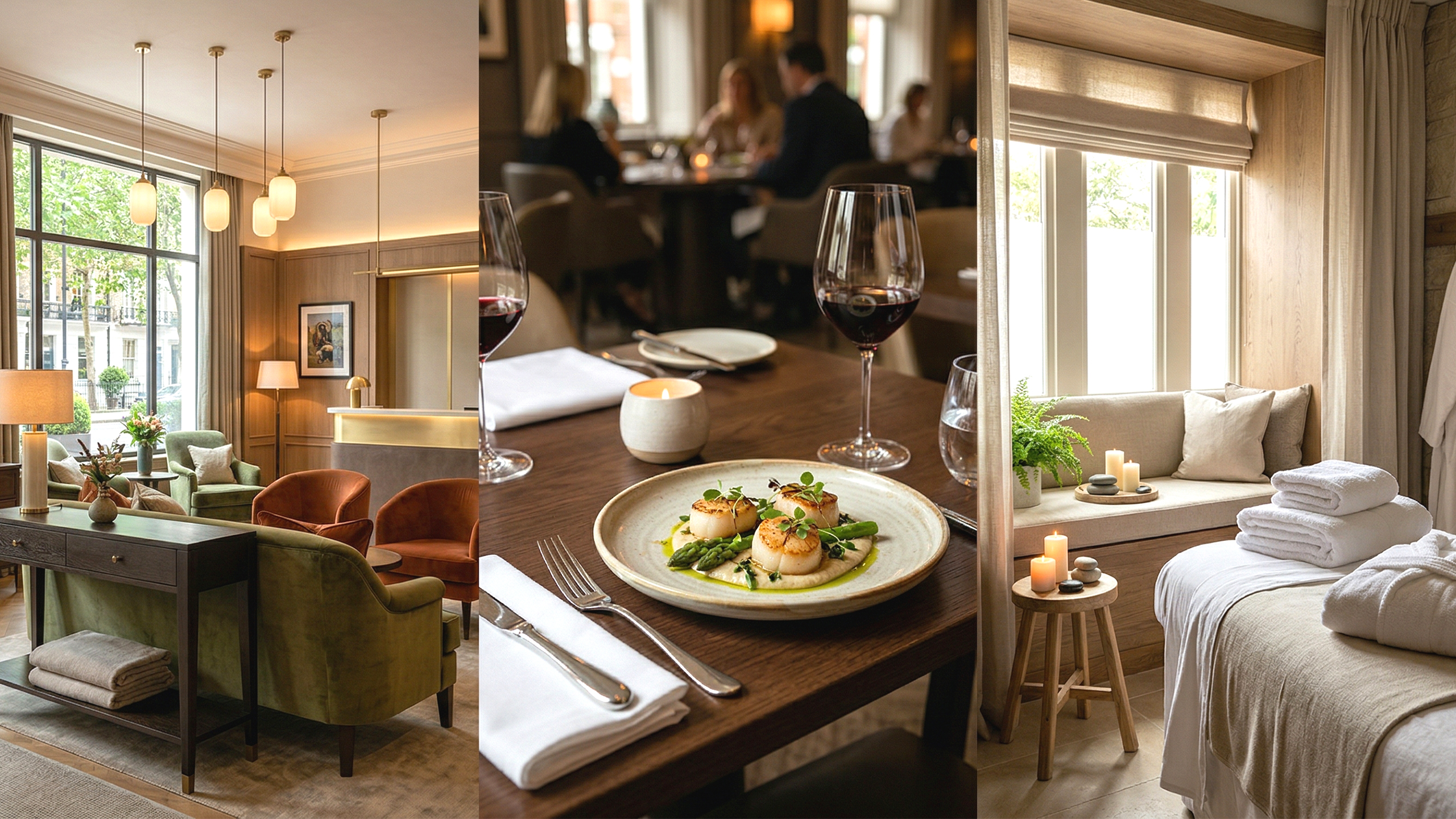
A memorable hotel brand experience goes beyond what guests see. It is shaped by what they hear, smell, feel, and taste throughout their stay.
Sensory elements that reinforce brand identity include:
- Lighting design and spatial atmosphere
- Music curation and soundscape
- Signature scent and aroma strategy
- Material textures and tactile details
- F&B presentation and taste experience
Behavioural identity, how staff interact, respond, and communicate, and environmental design, including interiors and spatial layout, further reinforce the brand at a physical and emotional level.
2.4 Brand personality, story, and positioning
Your brand’s personality gives it a distinct character that guests can emotionally connect with. Whether your brand is refined, contemporary, heritage-led, or playful, that personality must remain consistent across every touchpoint.
A compelling brand narrative adds depth and meaning beyond the service offering. It may include:
- The origin or founding story
- Founder, chef, or creator narrative
- Brand evolution and heritage
- Future vision and direction
- Guest success stories and transformation experiences
In luxury hospitality branding, storytelling often becomes the primary differentiator that justifies premium pricing and builds long-term loyalty.
A strong positioning framework ensures your brand stands out clearly in the market by defining:
- Your category and segment
- Your point of difference
- Your reason to believe
- Your target audience alignment
- Your competitive advantages
Bringing all these elements together creates a brand that is strategically grounded, emotionally engaging, and consistently delivered.
3. Branding by business type
Not all hospitality brands are built the same way. While core branding principles remain consistent, their application varies significantly based on business model, audience, and the type of experience being delivered.
3.1 Hotel branding strategy
A strong hotel branding strategy is essential in one of the most segmented and competitive markets in hospitality. Hotels today compete not only on location or amenities, but on the stories they tell and the emotions they create.
a. Hotel brand types and positioning
Different hotel formats require distinct branding approaches:
- Luxury and ultra-luxury branding: Built on exclusivity, prestige, and bespoke personalised service
- Boutique hotel branding: Centred on individuality, design-led experiences, and strong local character
- Lifestyle hotels: Driven by culture, community, and modern aesthetics
- Business hotels: Focused on efficiency, reliability, and convenience
- Budget and economy hotels: Centred on value, consistency, and trust
- Resort and destination hotels: Designed around immersive, place-led experiences
- Extended stay hotels: Built for long-term comfort and functional living
Each positioning type influences pricing strategy, communication style, and guest expectations from the first interaction.

b. Defining your hotel’s identity
Your hotel’s brand identity should be built around:
- Location and destination integration
- Architecture and design philosophy
- Target guest profiling and segmentation
- Service style and operational standards
- Amenity differentiation and signature offerings
These elements form the foundation of your hotel brand positioning and define how you are perceived in the market.
c. Visual identity for hotels
Strong hospitality visual identity must remain consistent across all brand touchpoints, including:
- Logo and brand mark design
- Colour psychology aligned with your positioning
- Typography selection and hierarchy
- Photography style and visual standards
- Signage, wayfinding, and environmental graphics
- Branded collateral and printed materials
d. Creating signature experiences
The most memorable hotel brands focus on defining moments that guests associate with the property long after checkout:
- Arrival and check-in rituals that set the emotional tone
- In-room experience branding through details and presentation
- F&B concept integration that reflects brand identity
- Curated amenity branding and packaging
- Departure moments and thoughtful farewell gestures
- Post-visit follow-up communication and loyalty engagement
Ready to transform your hotel's brand strategy?
From positioning and visual identity to service standards and digital presence, we turn your brand vision into a performance-driven reality.
e. Multi-property and rebranding strategies
For hotel groups, maintaining coherence across locations requires clear portfolio architecture defining when to use a master brand versus individual property identities alongside brand consistency guidelines and local adaptation frameworks.
Hotel rebranding becomes necessary when positioning shifts, perception becomes outdated, or market conditions change significantly. Successful rebrands require stakeholder alignment, phased rollout planning, clear communication strategies, and defined success metrics.
3.2 Restaurant branding strategy
A strong restaurant brand identity shapes perception before a guest even engages with the food. In a saturated dining market, branding is often what determines footfall, drives first impressions, and builds lasting recall.
a. Restaurant brand types and positioning
Restaurants operate across a wide range of formats, each requiring a unique brand approach:
- Fine dining: Focused on exclusivity, theatre, and elevated experience
- Casual dining: Centred on accessibility, comfort, and consistency
- Fast-casual: Balancing speed, quality, and a distinct identity
- QSR: Built on efficiency, reliability, and mass recognition
- Food trucks and pop-ups: Driven by personality, concept, and flexibility
- Ghost kitchens: Designed for delivery-first audiences and digital discoverability
- Multi-concept restaurant groups: Managing multiple distinct identities under one ownership
b. Core restaurant brand elements
A compelling restaurant brand is built on a clear set of defining elements:
- Cuisine philosophy and culinary point of view
- Chef as brand ambassador and storyteller
- Sourcing, provenance, and sustainability narrative
- Dining experience definition from service style to pacing
- Ambience, atmosphere, and spatial personality
- Hospitality approach and guest interaction style
c. Visual identity and F&B branding touchpoints
F&B branding must translate consistently across physical and digital environments:
- Logo and brand mark design
- Colour palette and visual tone
- Menu design, typography, and layout
- Packaging and takeaway presentation
- Interior design integration and signage
- Uniforms and staff appearance
Every F&B touchpoint contributes to brand perception. This includes:
- Menu as a storytelling and positioning tool
- Plating, presentation, and food photography style
- Glassware, tableware, and linen selection
- Music curation and soundscape
- Scent, aroma, and sensory environment
- Table setting and spatial detail
d. Naming and multi-location strategy
Your restaurant name is one of the most critical brand decisions you will make. It must:
- Align with your concept and positioning
- Be culturally and linguistically relevant
- Clear trademark and legal checks
- Be available as a domain and social handle
- Be memorable and easy to pronounce
As restaurants scale, consistent restaurant brand guidelines, local adaptation strategies, franchise branding systems, and quality control frameworks become essential for maintaining brand integrity across locations.
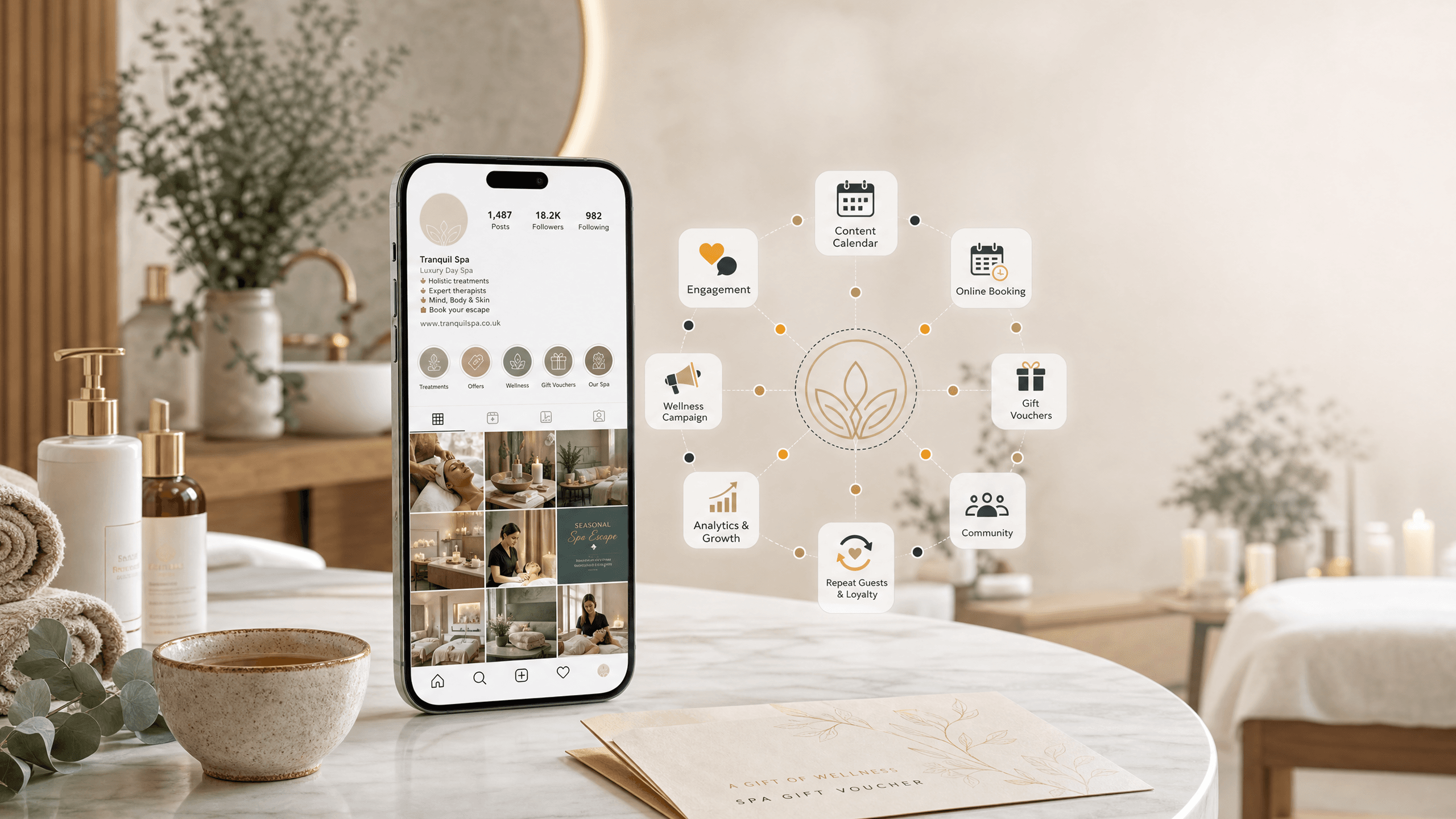
3.3 Spa and wellness branding strategy
A strong spa branding design is built on three pillars: trust, calm, and transformation. Unlike other hospitality segments, wellness branding must create emotional comfort before the experience even begins.
a. Spa brand types and positioning
Spa and wellness brands span a wide range of positioning categories:
- Day spas: Focused on accessibility, convenience, and relaxation
- Destination spas: Offering immersive, multi-day wellness experiences
- Medical spas: Combining clinical expertise with aesthetic luxury
- Hotel spa branding: Aligned with the broader hospitality experience
- Salon and hybrid concepts: Blending beauty, wellness, and lifestyle
- Wellness retreats and holistic centres: Centred on deep transformation
Each category requires a different tone, level of clinical credibility, and approach to experience design. Learn more about the difference between a medical spa and a day spa marketing here.
b. Core spa brand elements and visual identity
A clear spa brand strategy is built on:
- Treatment philosophy and approach
- Practitioner expertise, credentials, and trust signals
- Product line, retail strategy, and take-home experience
- Wellness education mission and content approach
- Facility design, atmosphere, and spatial identity
- Service rituals, protocols, and guest journey design
Visual identity for spas relies on:
- Calming and therapeutic colour psychology
- Natural, organic, and tactile design elements
- Consistent treatment room and retail space presentation
- Relaxation and transition space design
- Packaging that extends the brand experience at home
c. Sensory branding and storytelling
Sensory experience is central to spa brand delivery. Key elements include:
- Signature scent development and diffusion
- Sound curation and ambient music programming
- Tactile details, linens, robes, surfaces, and materials
- Lighting design and ambiance management
- Beverage, refreshment, and ritual offerings
Effective spa brand strategy storytelling communicates transformation, not just services. This involves:
- Sharing holistic health philosophy and approach
- Blending traditional practices with modern science
- Highlighting sustainability and natural ingredient sourcing
- Featuring practitioner bios, credentials, and expertise
- Sharing client transformation and outcome stories
Medical spas face an additional challenge: balancing clinical credibility with luxury experience, maintaining regulatory compliance in messaging, and creating an environment of discretion and professional trust.
4. Brand development process
Building a strong hospitality brand is not a single activity. It is a structured, multi-phase process that requires clarity, collaboration, and strategic thinking at every stage.
Phase 1: Discovery and Research
This phase forms the foundation for all future decisions. Key activities include:
- Stakeholder interviews to align vision, goals, and expectations
- Customer research and behaviour analysis
- Competitive analysis to identify benchmarks and gaps
- Market opportunity assessment
- Brand audit for businesses considering a rebrand
Without thorough discovery, branding decisions rest on assumptions rather than insight.
Phase 2: Strategy development
Research informs strategic direction. This phase defines:
- Brand positioning through structured workshops
- Target audience refinement and segmentation
- Unique value proposition and brand promise
- Messaging framework and communication pillars
- Brand architecture decisions for multi-location businesses
This phase acts as the blueprint. Every design and operational decision that follows should trace back to it.
Phase 3: Creative development
Strategy is translated into tangible brand elements:
- Mood boards and visual direction
- Logo concepts and iterative design refinement
- Full visual identity system: colour, typography, and imagery
- Photography standards and content guidelines
- Verbal identity; tone of voice and key messaging
- Comprehensive brand guidelines documentation
Phase 4: Implementation and rollout
Execution involves bringing the brand to life across every channel:
- Full touchpoint inventory across digital, physical, and service interactions
- Phased rollout planning for smooth execution
- Website and digital experience launch
- Interior, signage, and environmental branding
- Staff training aligned with brand values and standards
- Vendor and partner coordination
- Launch strategy, communication, and timing
Strong implementation ensures the brand is experienced as intended, not just documented.
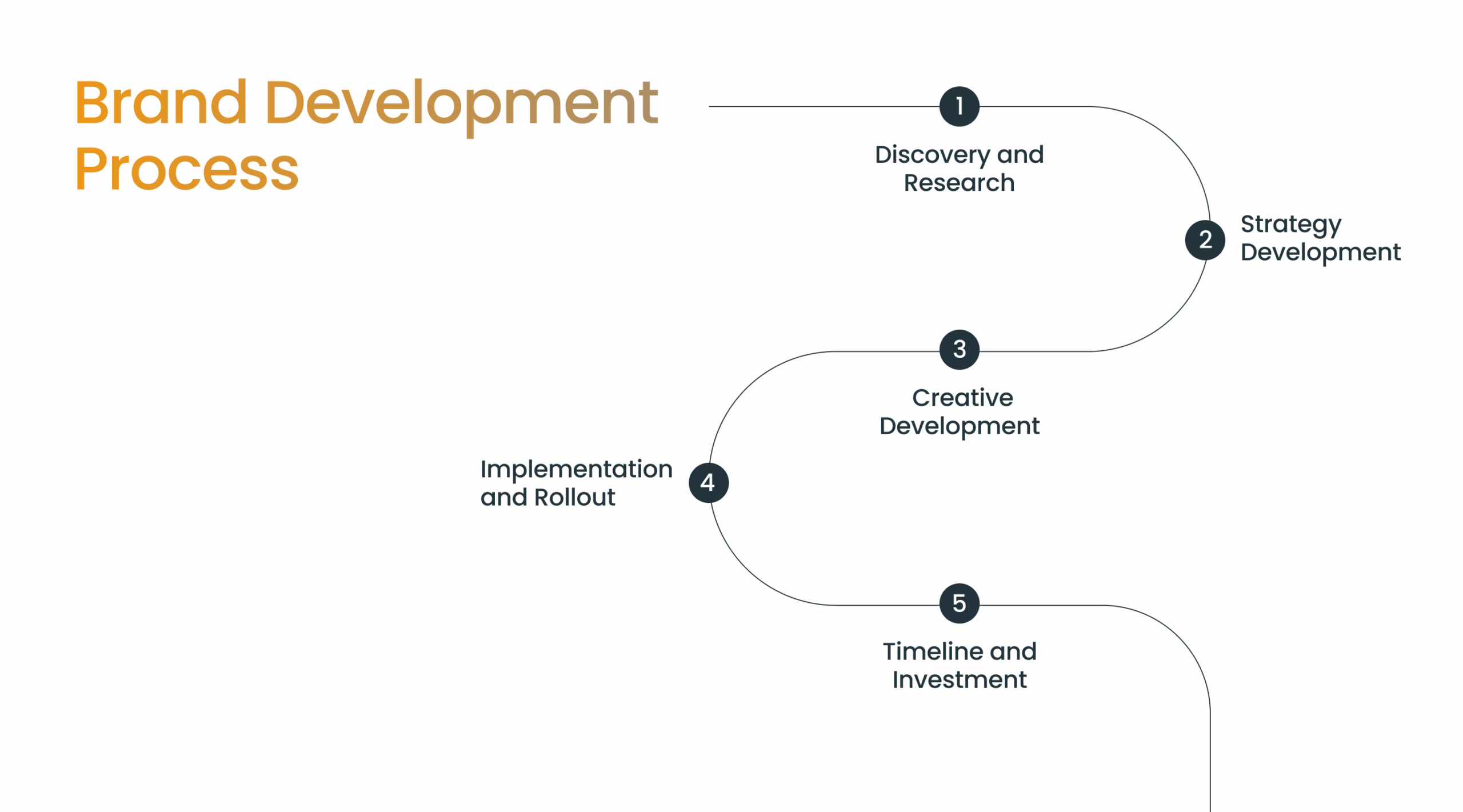
Phase 5: Timeline and investment
Scope and complexity determine both project duration and budget allocation. Key considerations include:
- Resource planning across internal teams and external partners
- Phasing strategies to manage budget constraints without compromising integrity
- Long-term thinking over short-term cost-cutting
Skipping phases or rushing decisions leads to inconsistent branding, operational inefficiencies, and missed opportunities, affecting long-term performance.
5. Brand guidelines and standards
Brand guidelines transform branding from a one-time project into an operational system. Without them, even well-developed brands become fragmented across teams, channels, and locations.
5.1 Why guidelines matter
They serve four critical functions:
- Maintaining consistency across all touchpoints
- Empowering internal teams and external partners
- Protecting long-term brand equity
- Streamlining onboarding for new stakeholders
5.2 Essential guideline components
A comprehensive brand guidelines document should include:
- Brand story and strategy summary
- Logo usage, variations, clear space, and incorrect usage
- Colour specifications for both print and digital
- Typography system with hierarchy and usage rules
- Photography and imagery style standards
- Voice and tone guidelines for all communication
- Messaging pillars, taglines, and key phrases
- Application examples with clear dos and don’ts
5.3 Digital and physical standards
Digital standards should cover website design principles, social media templates, email signature formats, and advertising specifications.
Physical standards must address signage systems, collateral templates, packaging guidelines, uniform and apparel standards, and environmental graphics across interiors and spaces.
5.4 Maintaining brand consistency
Creating guidelines is only the beginning. Ongoing management requires:
- Defined approval processes for all brand usage
- Clear brand guardianship roles within the business
- Regular audits and updates to reflect evolution
- Training programs for staff, partners, and new hires
These systems ensure the brand grows and adapts without losing the core identity that guests recognise and trust.
6. Guest experience and brand delivery
In hospitality, your brand is only as strong as the experience you deliver. Branding is not just communicated, it is lived through every interaction, shaping perception and long-term loyalty across the entire guest journey.
6.1 Mapping the guest journey
The guest journey includes several key stages, each presenting an opportunity to reinforce your brand:
- Pre-arrival: Online discovery, research, and social media exploration
- Booking and confirmation: Clarity, ease, and trust through communication
- Arrival and first impressions: Emotional tone-setting and welcome experience
- On-property experience: Service, environment, amenities, and atmosphere
- Departure: Final impression and brand memory creation
- Post-visit engagement: Follow-up, reviews, and loyalty communication
- Return visits: Driven by consistent experience and emotional connection
Any inconsistency across these stages weakens trust and damages overall perception.
6.2 Brand touchpoint optimisation
Effective brand delivery requires consistency across four types of touchpoints:
- Physical touchpoints: Signage, interiors, spatial design, and collateral
- Digital touchpoints: Website, booking platform, apps, and social media
- Human touchpoints: Staff interactions, service behaviour, and communication
- Sensory touchpoints: Scent, sound, lighting, taste, and texture
All four must work together as a unified system, not as separate experiences.
6.3 Service standards as brand delivery
Service is one of the most critical expressions of your brand. It translates strategy into a real, lived guest experience.
Strong service standards require:
- Clearly defined service behaviours aligned with brand values
- Structured training and continuous staff development
- Empowerment to personalise guest interactions authentically
- Quality assurance programs and performance benchmarks
- Mystery shopping and regular audits
- Feedback integration to continuously improve delivery
6.4 Creating memorable brand moments
Memorable brands are defined by distinctive experiences that guests carry with them long after checkout:
- Signature arrival and welcome rituals
- Unexpected in-stay delights and personalised surprises
- Personalisation based on guest preferences and history
- Thoughtful farewell gestures and departure experiences
- Post-visit communication that feels personal, not automated
These moments transform routine service into meaningful experiences that guests share and return for.
6.5 Staff as brand ambassadors
Your team is the most critical and human expression of your brand. Even the strongest strategy can fail if service does not reflect the intended experience.
Key areas of focus include:
- Onboarding and training aligned with brand values and culture
- Appearance standards that reflect brand identity
- Empowerment to communicate and personalise the brand story
- Internal culture built on accountability and consistency
- Recognition and rewards that reinforce brand-aligned behaviours
When employees genuinely understand and embody the brand, they deliver it authentically, and that authenticity is what guests remember most.
7. Digital brand presence
Your digital presence is often the very first interaction guests have with your brand. Before visiting or booking, most customers explore your website, social media profiles, and reviews to evaluate credibility and trust.
A weak or inconsistent digital presence creates doubt. A strong one builds confidence, strengthens positioning, and directly improves conversion rates.
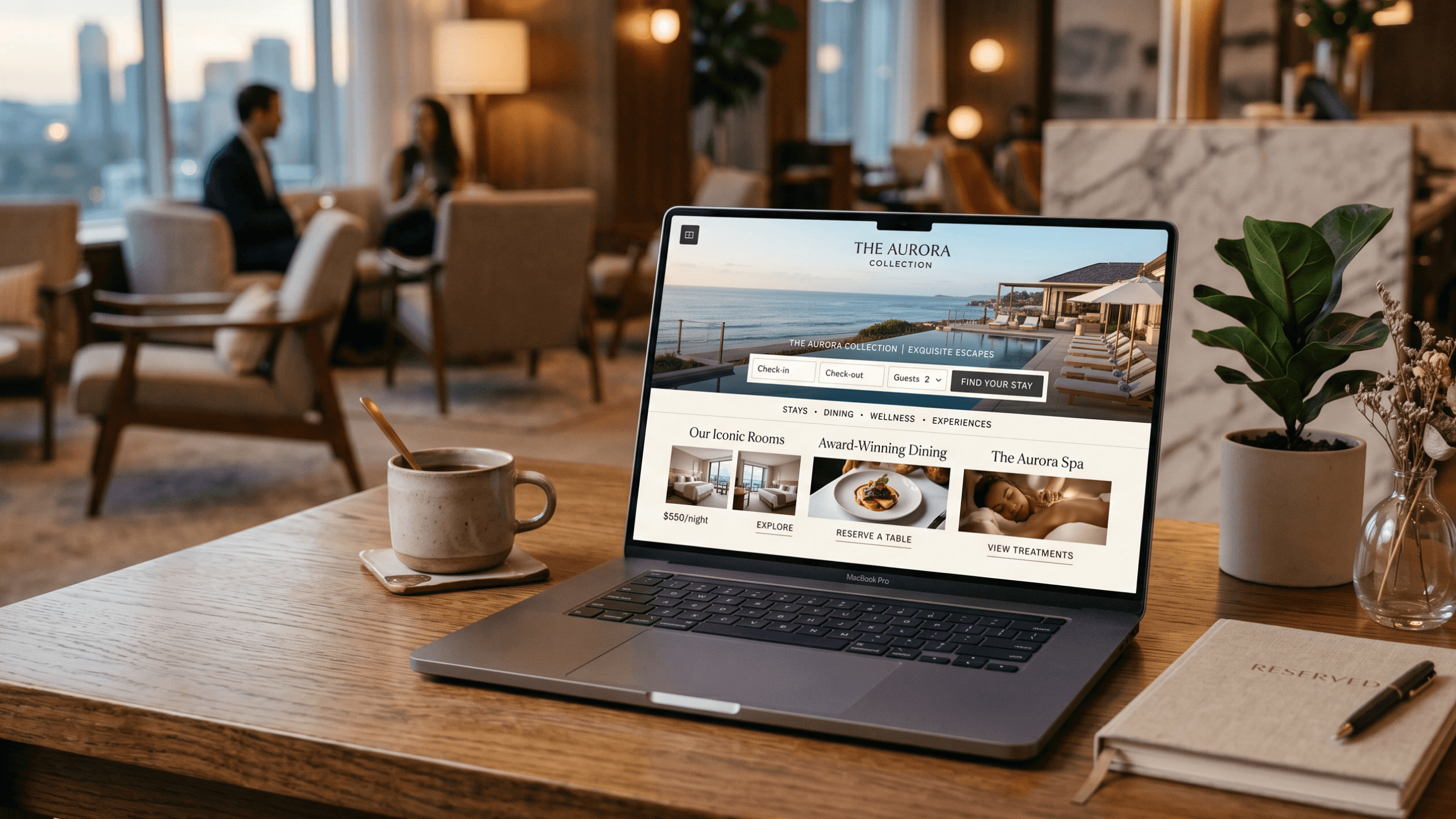
Is your website converting browsers into bookers?
Your website is the first touchpoint most guests experience—and the last chance to convert interest into bookings. We design hospitality websites that balance stunning visuals with seamless functionality, turning your digital presence into your most powerful revenue driver.
Your website is the central hub of your digital brand identity. It is where guests form structured impressions and make booking decisions.
It must balance visual appeal with performance and functionality:
- User experience and navigation with a clear, intuitive structure
- Visual design consistency aligned with your full brand identity
- Compelling content and storytelling that communicate value
- Seamless booking integration for frictionless conversion
- Full mobile responsiveness across all devices and behaviours
A well-designed website turns brand perception into action, connecting discovery with bookings.
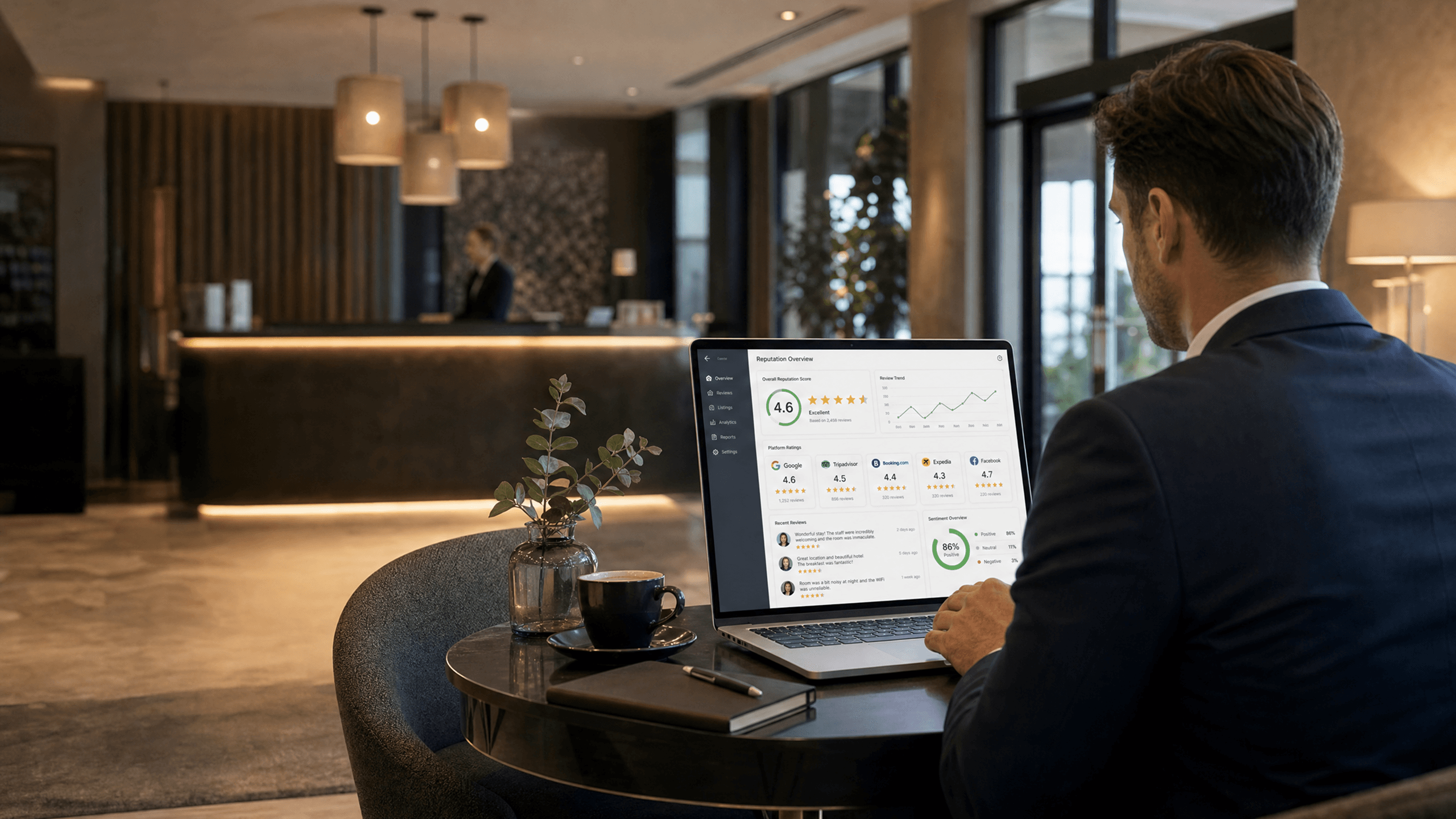
Reviews play a decisive role in shaping perception and influencing booking decisions. Guests rely heavily on feedback to validate their expectations before committing.
A strong reputation strategy includes:
- Continuous monitoring across all review platforms
- Structured response strategy for both positive and negative feedback
- Addressing brand inconsistencies that surface in guest reviews
- Leveraging positive feedback as a credibility and marketing asset
How your brand responds to reviews often impacts perception as much as the reviews themselves.
Digital advertising must remain consistent with your overall brand identity:
- Display ad standards aligned with visual identity
- Social ad creative guidelines for visual and tonal consistency
- Search ad messaging that reflects your brand positioning
- Retargeting strategies that maintain continuity across the customer journey
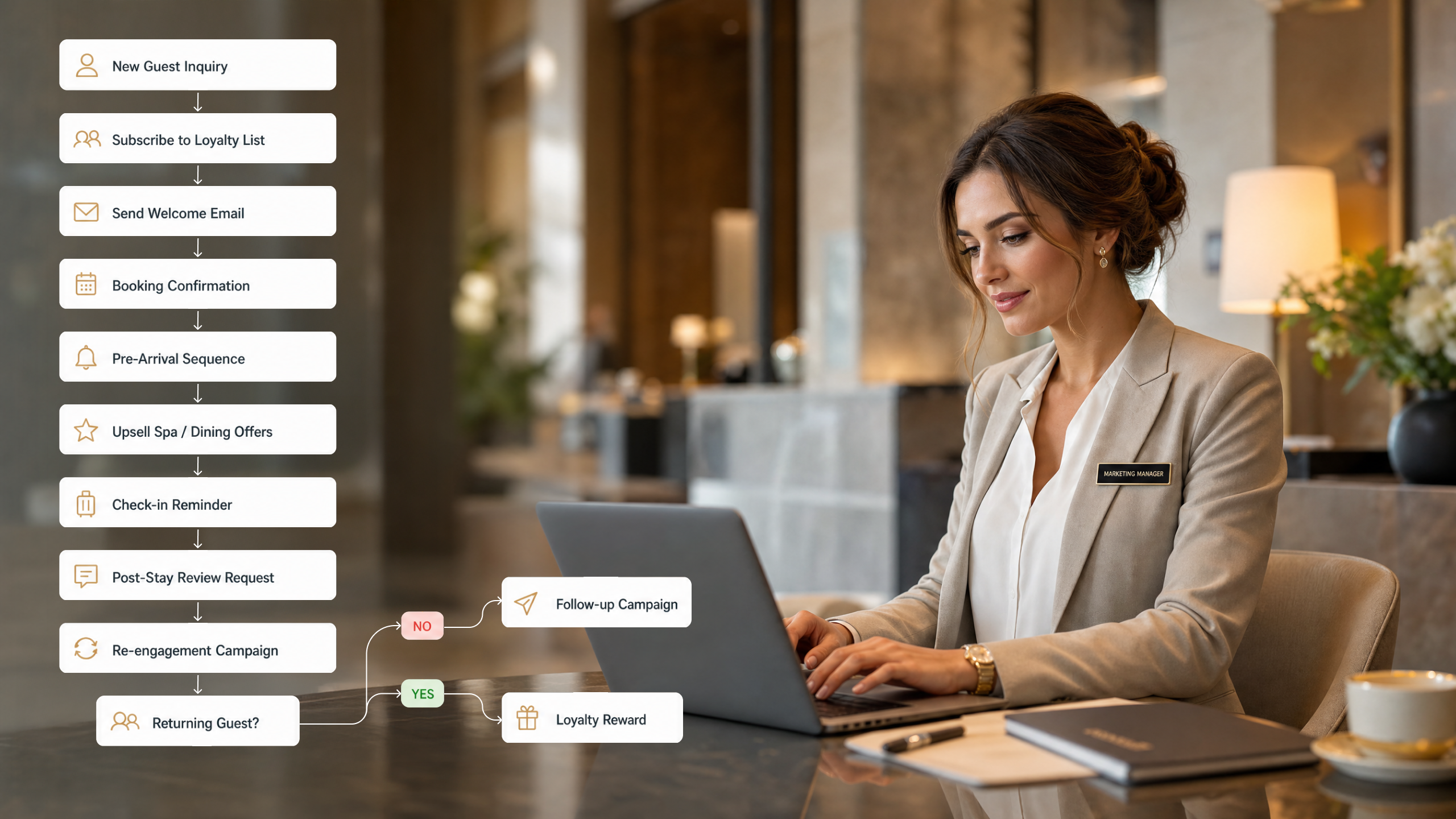
Email remains a key communication channel for hospitality brand development:
- Template design aligned with brand identity
- Consistent tone and messaging across all communication types
- Clear visual hierarchy for easy readability
- Standardised signatures and footer elements
Consistency across all digital channels; website, social, reviews, advertising, and email ensures guests experience the same brand at every interaction point.
8. Brand partnerships and collaborations
Strategic partnerships can significantly strengthen a hospitality brand when they align with your positioning, values, and guest experience. Poorly aligned collaborations, however, can confuse your audience and dilute your brand identity.
8.1 Strategic partnership opportunities
Common and effective partnership types include:
- Complementary brand alignment with lifestyle, wellness, or luxury brands
- Co-branding experiences that create shared and unique offerings
- Sponsorships and events that increase visibility and credibility
- Product collaborations that extend the brand into new formats
- Cross-promotion strategies that expand reach across new audiences
- Influencer and celebrity partnerships that build awareness authentically
Each partnership should feel like a natural, seamless extension of your brand.
8.2 Choosing the right partner
Selecting the right collaborator is critical to maintaining brand clarity and consistency. Every partnership should be evaluated against:
- Brand fit based on shared values, audience, and positioning
- Clear contracts covering usage rights and brand standards
- Content co-creation opportunities that feel authentic and aligned
- The ability to maintain authenticity throughout the collaboration
8.3 Local and community integration
Local partnerships add genuine authenticity and strengthen your connection to the destination. They also deepen the guest experience by making it feel more culturally relevant and rooted.
Opportunities include:
- Local artisan collaborations that showcase regional craftsmanship
- Community event participation to build local brand presence
- Destination marketing collaborations with regional stakeholders
- Tourism board relationships that support visibility and positioning
8.4 Protecting brand equity in partnerships
All partnerships must be managed carefully to prevent brand dilution:
- Clear partnership guidelines defining usage and expectations
- Structured approval processes for all collaborative content
- Quality control to ensure touchpoint consistency
- Defined exit strategies to manage transitions professionally
Well-executed partnerships increase credibility, expand reach, and create differentiated guest experiences that strengthen both brand perception and business performance.
9. Measuring brand success
Branding is not just a creative exercise. It is a measurable business function that directly influences perception, pricing, guest loyalty, and long-term revenue performance.
Without clear measurement, it becomes impossible to identify strengths, spot gaps, or make confident strategic decisions.
9.1
Brand awareness metrics
- Unaided and aided brand awareness levels
- Share of voice across digital and traditional channels
- Search volume and trends for branded queries
- Social media reach, impressions, and brand mentions
- PR coverage volume and sentiment
9.2
Brand perception metrics
- Net Promoter Score (NPS) to measure guest advocacy
- Customer satisfaction scores across key touchpoints
- Review ratings and sentiment analysis across platforms
- Brand attribute tracking, associations like quality, service, or value
- Brand health tracking studies conducted over time
9.3
Brand equity metrics
- Ability to achieve premium pricing without losing demand
- Customer lifetime value across guest segments
- Repeat visit rates and guest retention levels
- Referral and word-of-mouth contribution to acquisition
- Overall brand valuation as a business asset
9.4
Brand audit framework
- Consistency across all physical and digital touchpoints
- Competitive positioning relative to the current market
- Stakeholder perception across guests, staff, and partners
- Touchpoint effectiveness across the full guest journey
A data-driven approach to measurement ensures branding decisions are intentional, aligned with business goals, and continuously improving over time.
10. Essential branding tools and resources
The right tools significantly improve efficiency, maintain consistency, and support scalability across every phase of brand development.
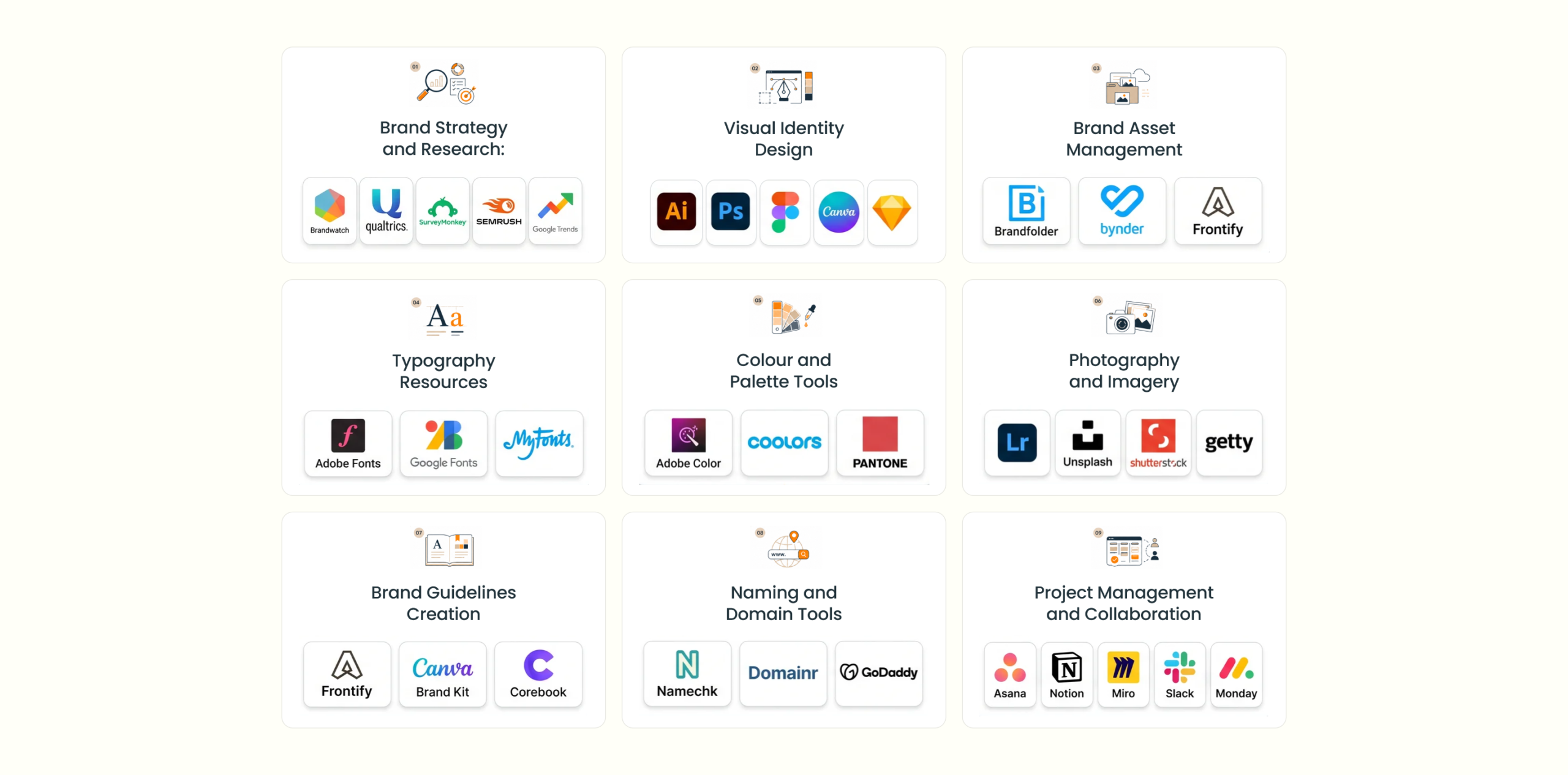
- Brand Strategy and Research: Brandwatch, Qualtrics, SurveyMonkey, SEMrush, Google Trends, Mention
- Visual Identity Design: Adobe Creative Cloud (Illustrator, Photoshop, InDesign), Figma, Canva, Sketch, Affinity Designer, Procreate
- Brand Asset Management: Brandfolder, Bynder, Frontify, Canto, Air
- Typography Resources: Adobe Fonts, Google Fonts, MyFonts, Font Squirrel, Fontspring
- Colour and Palette Tools: Adobe Color, Coolors, Pantone Connect, ColorHunt
- Photography and Imagery: Adobe Lightroom, Unsplash, Pexels, Shutterstock, Getty Images
- Brand Guidelines Creation: Frontify, Canva Brand Kit, Lucidpress, Corebook, Adobe InDesign
- Naming and Domain Tools: Namechk, Domainr, GoDaddy, USPTO, Wordoid
- Brand Testing and Validation: UsabilityHub, PickFu, UserTesting, Hotjar
- Project Management and Collaboration: Asana, Monday.com, Notion, Miro, Slack
10.1 Recommended tool combinations by phase:
| Phase | Recommended Tools |
|---|---|
| Discovery | Qualtrics, Brandwatch, Google Trends |
| Strategy | Miro, Notion, positioning frameworks |
| Design | Adobe Creative Cloud, Figma, Adobe Fonts |
| Guidelines | Frontify, Canva Brand Kit, InDesign |
| Management | Brandfolder, Bynder, Asana |
11. Brand evolution and rebranding
No hospitality brand remains static. As guest expectations shift, competition intensifies, and businesses expand, your brand must evolve to stay relevant and competitive in a changing market.
Rebranding is not about change for its own sake. It is a strategic decision that, when executed well, strengthens perception and unlocks new growth.
11.1 When to consider rebranding
Common triggers for hotel rebranding or a restaurant concept pivot include:
- Market repositioning is needed due to shifting competition or audience
- Mergers or acquisitions requiring brand realignment
- Outdated perception that no longer reflects current standards
- Expansion into new markets or customer segments
- Reputation challenges affecting trust and credibility
- Leadership or ownership changes that shift strategic direction
- Anniversary or milestone moments that signal transformation
Timing is critical. Acting too late reduces relevance; acting too early creates unnecessary confusion.
11.2 Types of rebranding
Rebranding can range significantly in scope:
- Brand refresh: Minor updates to visual identity, tone, or messaging
- Partial rebrand: Selective changes to positioning, audience, or specific touchpoints
- Complete rebrand: Full transformation of identity, positioning, and guest experience
- Name change: Signalling a new direction or market entry
- Visual identity update: Modernising or realigning perception without changing positioning
- Repositioning strategy: Targeting a new segment, category, or competitive space
Choosing the right approach ensures change is proportionate and aligned with business objectives.
11.3 Rebranding process and managing transitions
Successful rebranding requires careful planning across multiple dimensions:
- Stakeholder buy-in across leadership, teams, and partners
- A clear customer communication strategy to manage expectations
- Phased rollout planning based on scale and operational complexity
- Budget allocation and resource management
- Legal and trademark considerations for brand protection
- Transition period management to ensure consistency throughout
Execution quality matters as much as strategy. Important transition elements include:
- A clear announcement strategy to introduce the new brand
- Gradual versus immediate rollout decisions based on scale
- Legacy brand handling to maintain continuity where needed
- Staff preparation and brand training before public launch
- Customer reassurance to build confidence through the change
Well-managed rebrands consistently improve perception, attract new audiences, and unlock significant growth when aligned with clear strategic intent.
12. Common branding mistakes to avoid
Even well-established hospitality brands can be undermined by common branding mistakes. These issues usually arise from a lack of clarity, inconsistent execution, or a gap between the brand promise and the actual guest experience.
The 12 most common hospitality branding mistakes:
1. Copying competitors instead of building a distinct, differentiated position
2. Inconsistent brand application across visuals, messaging, and service delivery
3. Ignoring customer feedback from reviews and direct guest interactions
4. Over-promising and under-delivering on the actual guest experience
5. Neglecting internal branding, staff must understand and embody the brand
6. Trying to appeal to everyone instead of maintaining a focused positioning
7. Sacrificing brand for short-term promotions or discount-led strategies
8. Poor implementation of restaurant brand guidelines or hotel brand positioning standards
9. Ignoring the need for brand evolution as markets and expectations shift
10. Underestimating the investment required for consistent, long-term branding
11. Not protecting intellectual property: names, logos, and visual assets
12. Failing to train staff to deliver the brand consistently through every interaction
Each mistake creates a visible gap between what your brand communicates and what guests actually experience.
The result is a confused market perception, reduced guest trust, lower repeat visit rates, and weaker word-of-mouth, all of which directly affect revenue and long-term growth.
13. The future of hospitality branding
The hospitality industry is evolving faster than ever. Changing guest expectations, digital transformation, and global cultural shifts are reshaping how brands connect with audiences and deliver meaningful experiences.
Brands that fail to adapt risk becoming irrelevant. Those that evolve with intention will strengthen their market position and deepen guest loyalty.
13.1 Key trends shaping the future
- Sustainability as a Core Brand Value: Guests increasingly expect ethical, environmentally responsible operations, and brands that make sustainability central to their identity will earn stronger loyalty and preference.
- Authentic and Transparent Storytelling: Guests are drawn to brands that communicate honestly and share genuine stories. Manufactured or performative narratives are quickly identified and dismissed.
- Hyper-Personalisation: Data-driven personalisation is becoming a baseline expectation. Brands that tailor experiences, communications, and offers to individual preferences will lead in loyalty and conversion.
- Technology Integration: From AI-powered booking to smart in-room experiences, technology is becoming a seamless part of the brand experience, not an add-on feature.
- Purpose-Driven Branding: Guests are increasingly choosing brands that align with their values, social, cultural, and environmental. Purpose is becoming a genuine competitive differentiator.
- Community and Local Integration: Brands that feel rooted in their destination and community create richer, more authentic experiences that resonate with modern travelers.
- Experiential and Immersive Branding: Memorable, shareable, and sensory-rich experiences are replacing transactional hospitality as the primary brand differentiator.
- Wellness and Wellbeing as Core Offerings: Wellness is no longer a spa amenity; it is becoming a central pillar of the hotel brand experience across all categories and segments.
- Cultural Sensitivity and Inclusivity: Brands that authentically reflect diversity and cultural awareness will connect more broadly with global guest audiences.
- Digital-First Brand Experiences: As discovery and decision-making shift further online, brands must lead with exceptional digital presence and storytelling before the physical experience begins.
- Flexible and Adaptive Brand Systems: Brand systems must be built to evolve and respond to market changes without losing their core identity and consistency.
Brands that combine clear positioning, consistent delivery, and forward-thinking strategy will be best equipped to drive long-term growth, guest loyalty, and competitive advantage.
14. Conclusion & next steps
A strong hospitality branding guide brings together positioning, consistency, and experience into a single, coherent system. It ensures your brand is not only visible but also trusted, remembered, and chosen at every stage of the guest journey.
Effective hospitality brand development rests on a clear set of principles that must work together:
- Clear and differentiated positioning
- Consistent visual and verbal identity
- Experience-led delivery across every touchpoint
- Strong internal alignment and brand culture
- Ongoing refinement based on measurement and feedback
Getting started requires a structured approach. Define your audience, sharpen your positioning, build your identity, and align your teams around clear standards. This creates the foundation for every future decision from design to service to digital presence.
Businesses can develop branding capabilities in-house or partner with external specialists. In-house efforts offer control and proximity, while external expertise brings strategic clarity, speed, and scalability.
Either way, branding is a long-term investment, one that directly impacts how guests perceive you, how much they are willing to pay, and how often they return.
If you want a hospitality brand that drives bookings, commands premium pricing, and scales with confidence, ThisRapt can help you build it. With a structured, performance-focused approach to hospitality brand development, we turn your positioning into a consistent, high-impact brand system that delivers measurable business growth.
15. Hospitality branding FAQs
Hospitality branding defines how your hotel, restaurant, or spa is perceived through design, experience, and communication. It is important because it differentiates your business, attracts the right audience, builds trust, and drives repeat bookings over the long term.
A strong hotel branding strategy starts with clear positioning, a well-defined target audience, and a consistent visual and verbal identity. Aligning service standards, design, and messaging ensures your brand stands out in a competitive market and builds long-term guest loyalty.
A strong restaurant brand identity includes visual design, menu presentation, ambience, service style, and brand storytelling. These elements work together to shape guest perception and create a cohesive dining experience that encourages repeat visits and positive word-of-mouth.
Effective hospitality brand development builds trust, enhances the guest experience, and strengthens your online reputation. This leads to higher conversion rates, more repeat customers, and the ability to command premium pricing, all of which drive measurable revenue growth.
Hiring a restaurant branding agency or hospitality branding specialist provides strategic expertise, industry insight, and faster execution. While in-house teams offer proximity and control, agencies ensure your brand is professionally positioned, operationally consistent, and built to scale with your business.



Nice write-up! Nano Banana is another great resource I’ve been using alongside tools like these.