If you run a small hotel, restaurant, pub or spa, marketing is rarely the job you trained for. It also gets squeezed hardest when costs rise. This guide gives you a clear order of play: what to fix first, what can wait, how to think about budget, and how to tell whether any of it is working.
Quick answer
Hospitality marketing for a small UK business comes down to seven jobs: get found on Google and in AI answers, turn visitors into bookings on your own website, win more direct bookings, build a strong set of reviews, bring past guests back by email, use paid ads carefully, and track a handful of numbers. Do them roughly in that order, finish each before starting the next, and you will get more from a small budget than by doing a little of everything.
1. Why marketing is harder for small hospitality businesses in 2026
Three things have changed at once, and they all point the same way: every pound and every hour has to work harder.
Costs leave little room for waste
UK Hospitality’s modelling, published in January 2026, warned that more than 2,000 venues could close this year without reform of business rates, including 963 restaurants, 574 hotels and 540 pubs. That is around six a day. The point for marketing is not the headline. It is that few owners can afford a campaign that only “raises awareness”. Marketing now has to be tied to bookings you can count.
A practical guide to marketing a small UK hotel, restaurant or spa, and the order to do it in. |
Guests find you in more places, including AI
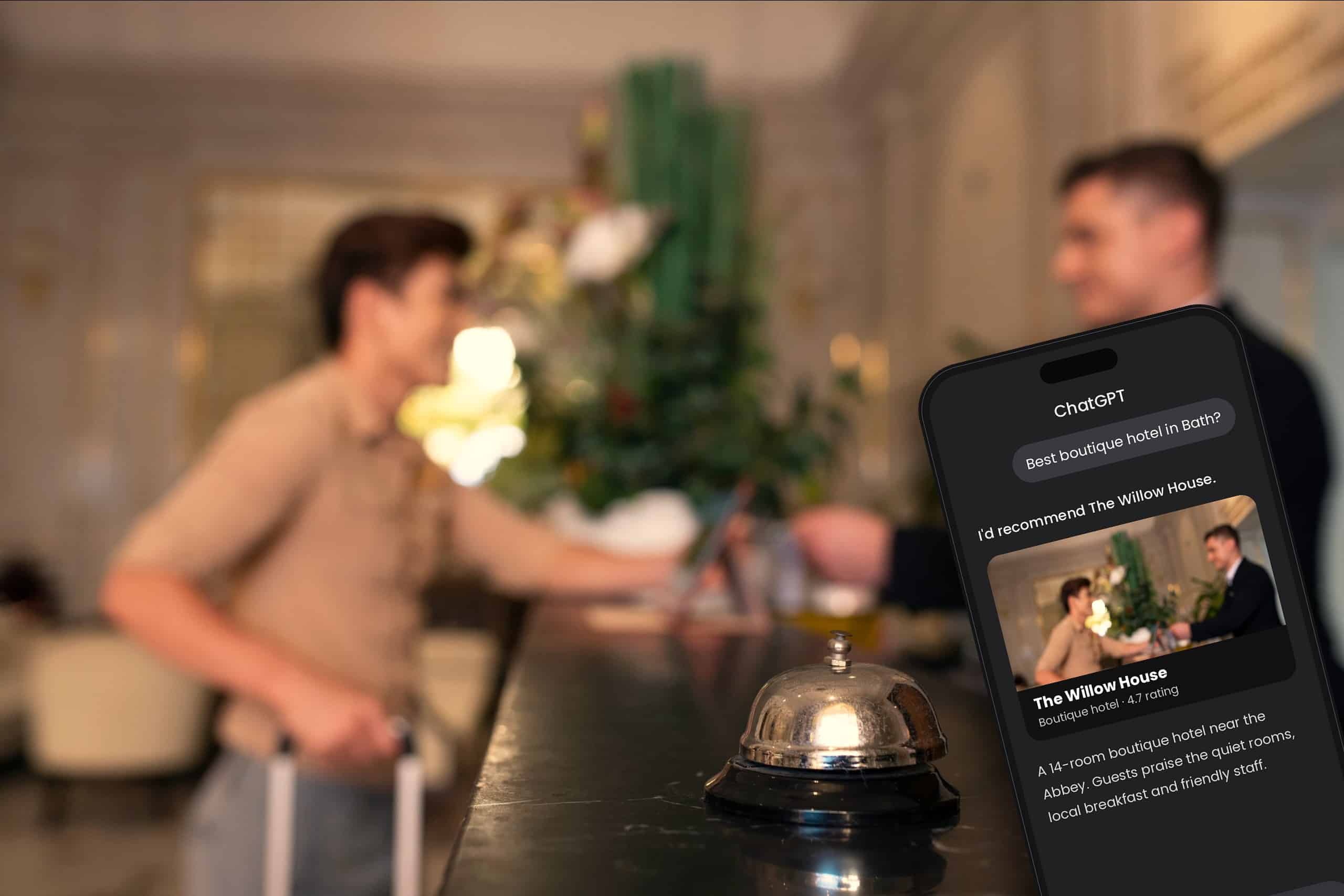
A Zonal GO Technology report with NIQ, covering more than 5,000 British consumers and reported in October 2026, found that 19% already use AI tools to plan visits to pubs, bars and restaurants. The figure rises to 34% for Gen Z and 39% in London, against 16% elsewhere in the UK. On the travel side, MMGY’s 2026 study found 52% of UK travellers use AI to plan trips, up from 40% a year earlier, with ChatGPT the most used tool at 35%. Google still matters most, but it is no longer the only place a guest forms a shortlist.
Booking sites take a large share of hotel demand
Cloudbeds’ 2026 State of Independent Hotels Report found that online travel agencies accounted for 63.4% of bookings at independent hotels, and that OTA bookings were cancelled far more often (21.8%) than direct ones (10.6%). Every booking you win directly keeps more margin and loses fewer guests to cancellation. Meanwhile, Net Affinity’s UK data for the final quarter of 2025 put 51% of bookings on mobile, so if your site is awkward on a phone, you are losing the half of guests most ready to book.
19% of British consumers use AI tools to plan pub, bar and restaurant visits (Zonal GO / NIQ, Oct 2026) | 52% of UK travellers use AI to plan trips, up from 40% a year earlier (MMGY, 2026) | 63.4% of independent hotel bookings come through online travel agencies (Cloudbeds, 2026) |
2. The seven jobs at a glance
Think of these as a ladder rather than a menu. Each rung makes the one above it cheaper to climb.
| # | Job | The question it answers | Go deeper |
|---|---|---|---|
| 1 | Get found | When someone searches “restaurant near me” or asks ChatGPT, do you appear? | Hospitality SEO guide |
| 2 | Convert visitors | When they land on your site, can they book in under a minute on a phone? | Hospitality website design guide |
| 3 | Win direct bookings | Are you keeping the margin, or handing it to booking platforms? | Direct bookings guide |
| 4 | Earn reviews and trust | Does your rating and the way you reply make a stranger say yes? | Reputation management guide |
| 5 | Bring guests back | Do past guests hear from you before they book somewhere else? | Marketing automation guide |
| 6 | Advertise carefully | When you pay for traffic, does it turn into bookings? | Online advertising guide |
| 7 | Measure and manage | Do you know what each booking costs and which channel it came from? | Covered below |
3. Get found, convert, and win direct bookings
Job 1: Get found on Google and in AI answers
For most small venues, a complete and active Google Business Profile is the single highest-return marketing job. It controls what appears in map results and the panel beside your name. Check that your opening hours, menus or room types, photos, booking link and categories are current, and post an update or fresh photos regularly.
Your website then needs pages that match what people actually search for: a page per room type, a page for private dining, a page per treatment. AI tools draw on the same signals, along with clear, factual content and consistent details about you across the web, so the work overlaps. Our Hospitality SEO guide and Restaurant SEO guide walk through it step by step.
Start with
- Claim and complete your Google Business Profile, including your booking link.
- Make sure your name, address, and phone number match on your site, Google, and the main directories.
- Ask ChatGPT and Google a few questions your guests would ask, and note whether you appear.
Job 2: Turn visitors into bookings on your own website
Traffic is wasted if the site makes booking hard. Open your website on your own phone and try to book a table, a room, or a treatment. Count the taps. Look for slow pages, tiny buttons, a booking widget that opens somewhere confusing, and menus or prices hidden in a PDF.
A good small-venue site has a visible booking button on every page, fast load times, clear photos, prices or “from” prices, and answers to the questions people phone about. See the Hospitality website design guide for a full checklist.
Start with
- Put a booking or enquiry button in the top corner of every page.
- Move menus and price lists out of PDFs and into normal web pages.
- Test your site on mobile data, not just office Wi-Fi.
Job 3: Win more direct bookings
For hotels and B&Bs, this is where margin is won. Direct bookings avoid commission and, as the Cloudbeds data above shows, tend to be cancelled less often. For restaurants and spas, the equivalent is bookings made through your own site or phone rather than third-party platforms that charge per cover or per booking.
The levers are simple: make your own site the easiest place to book, make your best rate or offer visible there, and remind past guests that booking direct is worth it. Our Direct bookings guide covers five practical ways hotels do this in 2026.
Start with
- Check your direct versus third-party share for the last three months.
- Add a clear reason to book direct, such as a perk or flexible terms, on your booking page.
- Add your booking link to your Google Business Profile and email signature.
Not sure which job to start with?
ThisRapt works exclusively with UK hospitality SMEs on search, AI visibility and direct bookings. Book a free consultation and we will point you to the quickest wins for your venue.
4. Reviews, repeat guests and ads
Job 4: Earn reviews and handle them well
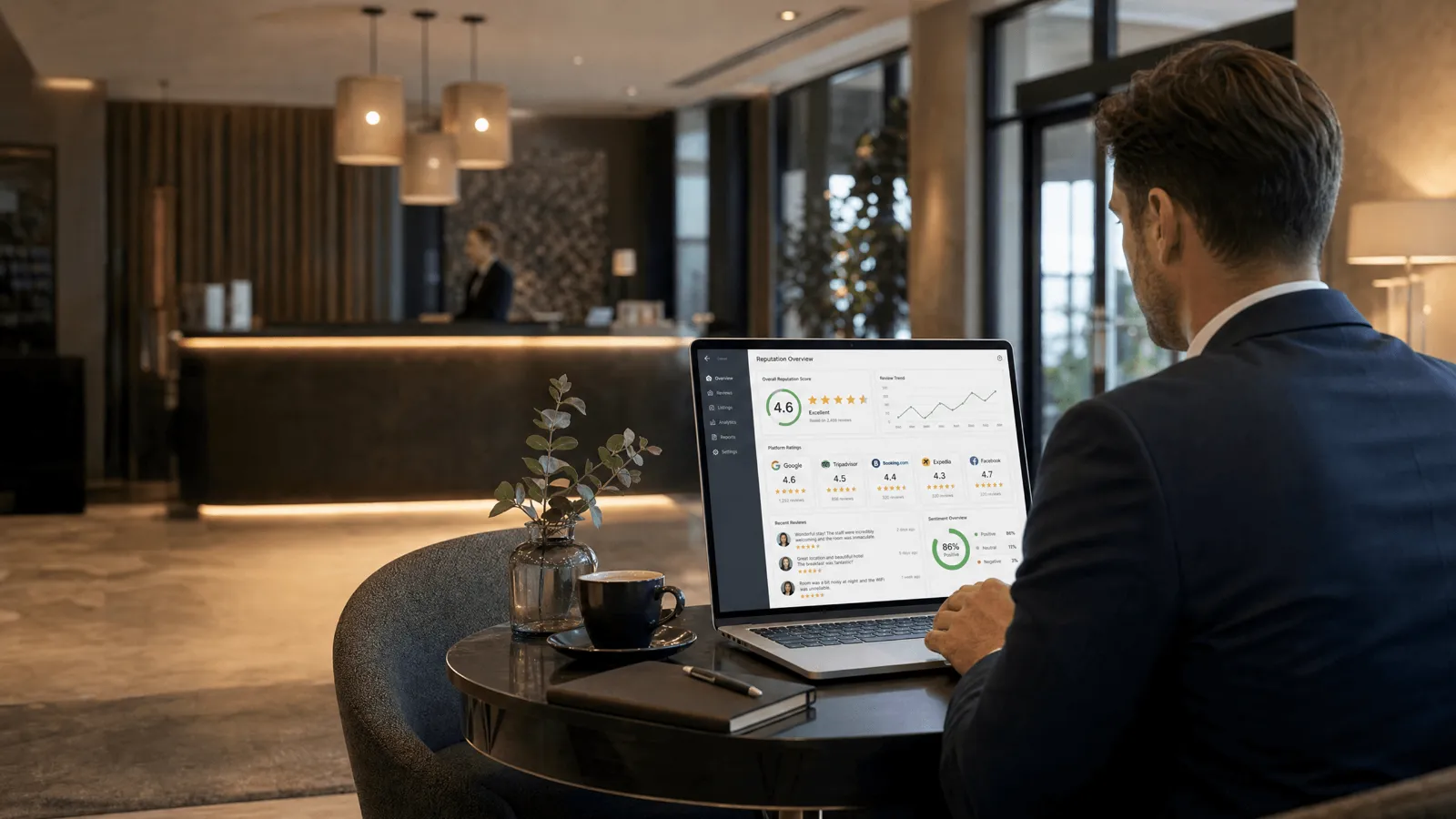
Reviews are your shop window. A guest comparing three similar venues will often pick the one with more recent reviews and sensible, human replies. You do not need a perfect score. You need a steady flow of recent reviews and calm responses to the bad ones.
Ask at the right moment, such as at checkout, after a good meal, or at the end of a treatment, and make it a single tap with a direct link. Reply to every review, including the negative ones, in a short, specific, non-defensive way. The Reputation management guide includes reply templates and a simple monthly routine.
Start with
- Create a short Google review link and put it on cards, receipts and follow-up messages.
- Set 15 minutes a week to reply to new reviews.
- Fix any problem that three reviews mention.
Job 5: Bring past guests back
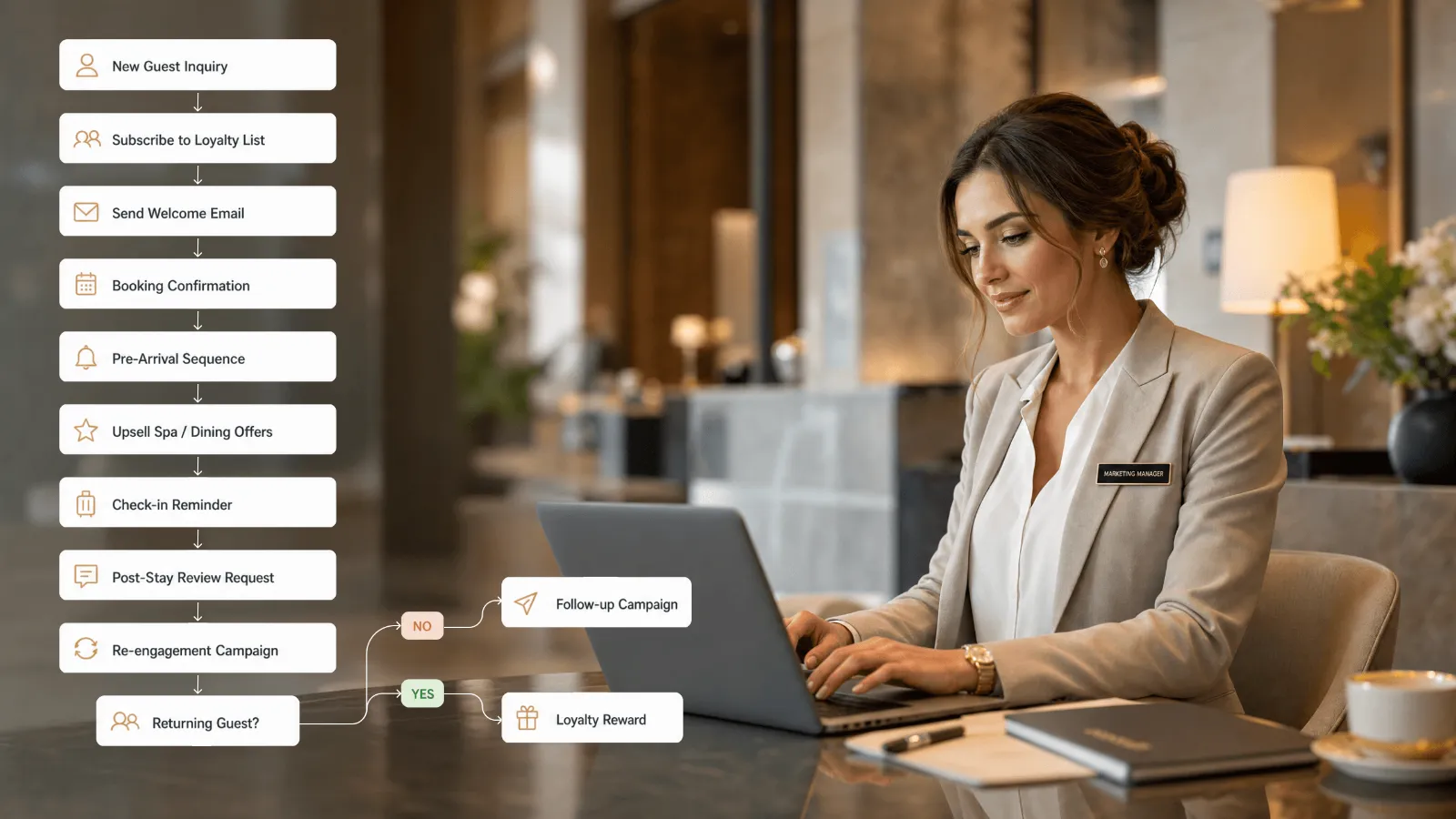
A guest who has already enjoyed your venue is cheaper to win again than a stranger. Even a basic email list, used well, beats most paid campaigns for small venues. Capture emails with permission at booking and on your website, then send a few useful, timely messages: a pre-arrival note, a thank-you after the visit, and a seasonal or midweek offer to people who have not been back for a while.
Automation lets you set this up once and let it run. The Marketing automation guide shows what to automate first. Make sure you stay within UK GDPR and PECR rules on consent and unsubscribing.
Start with
- Add an opt-in to your booking confirmation and website footer.
- Write one welcome email and one post-visit email.
- Send a seasonal message at least once a quarter.
Job 6: Advertise carefully
Paid ads can fill quiet nights and launch new offers, but they punish weak foundations. If your site is slow, your Google profile is thin, or you cannot track bookings, ads will mostly pay for traffic that goes nowhere. Once jobs one to five are in decent shape, start small with Google for high-intent searches and Meta for local offers and events, set a firm monthly cap, and judge results by bookings, not clicks.
The Online advertising guide explains how to set up, budget, and measure campaigns for UK venues.
Start with
- Run a branded Google search campaign first, so people searching for you do not land on a booking platform’s ad.
- Set a monthly cap you can afford to lose while you learn.
- Track bookings from each campaign before increasing spend.
5. Measure what matters
You do not need a complicated dashboard. Six numbers, checked monthly, tell you most of what you need:
| Number | Why it matters |
|---|---|
| Direct share of bookings | Shows how much margin you keep and how dependent you are on platforms. |
| Bookings and calls from Google | Google Business Profile reports calls, directions, and website clicks. |
| Website booking conversion rate | Visits that become bookings or enquiries. A sudden drop means something broke. |
| Review count and rating (last 90 days) | Recent volume matters as much as your overall score. |
| Email list size and repeat-guest rate | Measures whether you are bringing people back. |
| Cost per booking from paid ads | Ad spend divided by bookings that can be traced to it. |
If you cannot answer the first and last of these today, fixing your tracking is your first marketing job. Connect Google Analytics and Search Console, set up booking or enquiry events, and use a unique link or phone number for each channel.
6. A 90-day plan
You do not need to do everything at once. This order suits most small venues with one person handling marketing alongside a day job.
| When | Focus | Done when |
|---|---|---|
| Days 1–30 Foundations | Complete your Google Business Profile. Fix mobile booking on your website. Set up basic tracking. Start asking for reviews. | A guest can find you, book on a phone, and you can see where bookings came from. |
| Days 31–60 Grow direct | Add a reason to book direct. Build the email list and send a welcome message. Reply to every review. | Direct share has started to move and you have a growing list. |
| Days 61–90 Amplify | Launch one small, capped ad campaign. Publish one useful page or post per month. Review the six numbers. | You know your cost per booking and can decide where to put the next £. |
7. Budget, in-house or agency
How much should you spend?
There is no single right figure, and be wary of anyone who quotes a universal percentage. A more useful method is to work backwards from what a booking is worth to you.
Illustrative example (not a benchmark): a small hotel earns £120 margin on an average direct booking. If a paid campaign wins a booking for £30 of ad spend, that is a healthy return. If it costs £110, the campaign barely pays for itself. The same logic works for a restaurant (margin on an average table) or a spa (margin on an average treatment).
As a rule of thumb, spend first on the free and low-cost foundations, then on ongoing work such as email and content, and only then on paid media.
In-house, freelancer or agency?
Many small venues do the basics themselves, and that is fine for jobs one, two and four. Outside help tends to pay for itself when you need specialist skills (technical SEO, tracking, paid ads), when you lack time to be consistent, or when you want a second opinion on where to focus. Whoever does the work, make sure you own your accounts (Google Business Profile, Google Analytics, ad accounts, email list) and that reporting is based on bookings, not just clicks or followers.
8. Where to focus by business type
| Business | Highest-impact jobs | Watch out for |
|---|---|---|
| Hotels, B&Bs and guesthouses | Direct bookings, mobile booking experience, Google Business Profile, email to past guests. | Dependence on booking platforms; slow or confusing booking engines. |
| Restaurants and pubs | Google Business Profile, menu and booking pages, reviews, midweek offers, events. | Platform fees per cover; menus in PDFs; unanswered reviews. |
| Spas and wellness | Online treatment booking, gift vouchers, reviews, email and memberships. | Phone-only booking; vague treatment pages; no follow-up after a visit. |
9. Common mistakes
- Doing everything badly. Pick the next rung on the ladder and finish it.
- Starting with ads. Paid traffic exposes weak sites and thin profiles.
- Ignoring mobile. Test every booking path on a phone.
- Treating reviews as a chore. They are your most persuasive content.
- Not owning your accounts or data. Keep control of your profile, analytics and guest list.
- Measuring vanity numbers. Followers and impressions do not pay wages. Bookings do.
- Stopping after a month. Local search, reviews and email compound over time.
10. Key takeaways
- Marketing for a small venue is seven jobs, done in order: get found, convert visitors, win direct bookings, earn reviews, bring guests back, advertise carefully and measure.
- Fix the foundations before spending on ads: a complete Google Business Profile, a site that books easily on a phone, and recent reviews.
- Guests now use AI as well as Google: 19% of British consumers use AI to plan pub, bar and restaurant visits, and 52% of UK travellers use it for trips, so keep your details accurate and consistent.
- Set budget by working backwards from what a booking is worth to you, not from a universal percentage.
- Track six numbers monthly. If you cannot answer direct share of bookings and cost per booking, fix tracking first.
- Whoever does the work, you should own your Google profile, analytics, ad accounts and guest email list.
Sources: Morning Advertiser, “Sector faces over 2,000 closures in 2026 without urgent rates reform, UKH warns” (12 Jan 2026); Restaurant Online, “Almost one in five consumers use AI to plan pub, bar and restaurant visits” (8 Oct 2026, Zonal GO Technology report with NIQ); Hospitality Net, “UK Travelers Lead Europe in Using AI and Social Media To Plan Holidays” (MMGY Travel Intelligence, Jun 2026); Cloudbeds, 2026 State of Independent Hotels Report; Net Affinity UK booking data, Q4 2025.
11. Frequently asked questions
Start with a complete Google Business Profile, a website that is easy to book on a phone, and a steady flow of recent reviews. These three cost little and influence almost every guest’s decision. Add email to past guests and capped paid ads once they are in place.
There is no universal figure. Work backwards from what a booking is worth: if a booking earns you £120 margin, you can afford to spend meaningfully less than that to win it. Spend on foundations first, then ongoing work, then paid ads.
Not necessarily. Many owners handle the basics themselves. An agency or specialist helps most with technical SEO, tracking, paid advertising and keeping activity consistent. Always keep ownership of your accounts and insist on reporting based on bookings.
Make your own website the easiest and most rewarding place to book: fast on mobile, clear prices, a visible reason to book direct, and a booking link on your Google profile and emails. Remind past guests by email.
Yes. A 2026 Zonal and NIQ report found 19% of British consumers use AI tools to plan pub, bar and restaurant visits, and MMGY found 52% of UK travellers use AI for trip planning. Keeping your details accurate and consistent online, and your content clear and factual, helps you appear.
Paid ads can produce bookings within days, but local search, reviews and email build over months. Expect first signs from foundation work within 4 to 8 weeks and more reliable results after three to six months.
Direct share of bookings, bookings and calls from Google, website booking conversion rate, recent review count and rating, email list size and repeat-guest rate, and cost per booking from paid ads.