

The Booking Battlefield of 2026
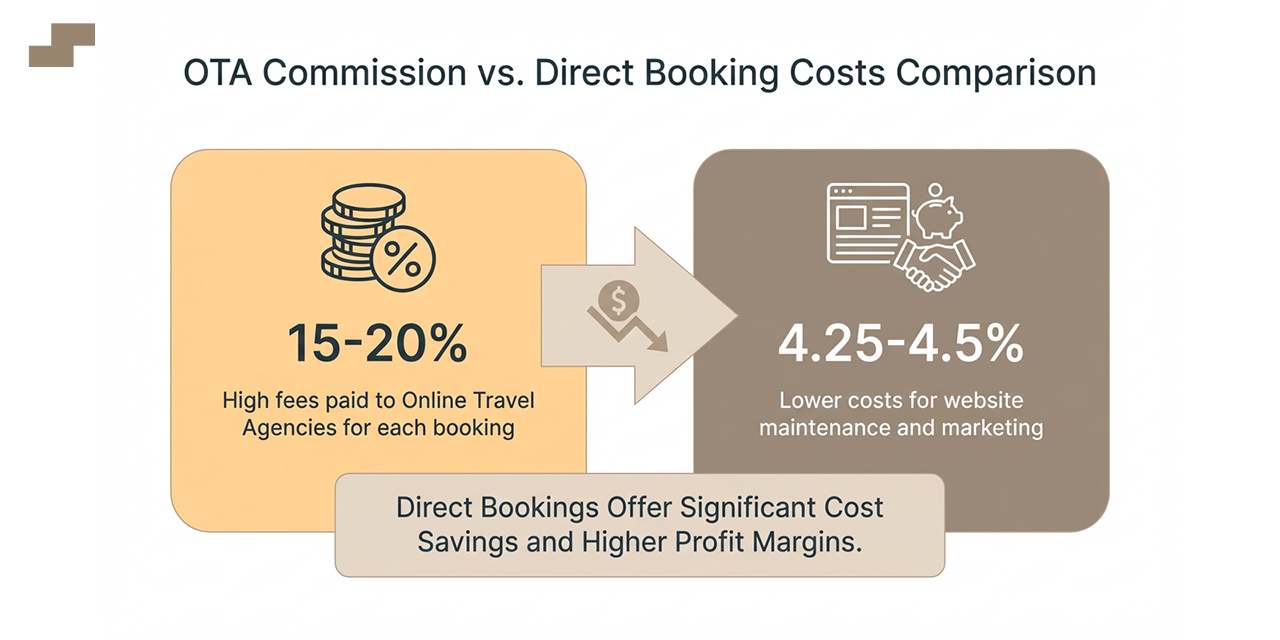
OTAs now take 15–25% commission (often 25–30% effective with promotional placements), while unified direct booking typically costs 5–12% once all channels are accounted for. Beyond cost, direct bookings run 51.3% longer booking windows, 45.2% longer stays, and cancel at half the rate of OTA bookings. The 2026 shift that changes the playbook: Google is testing AI Mode booking links that surface hotel websites directly inside AI conversations — meaning your data infrastructure, not just your marketing, now determines whether AI agents recommend you at all.
Independent hotels lost ground to OTAs in 2025 — OTA share of bookings rose to 63.4%, reaching nearly 80% in some markets, according to Cloudbeds’ 2026 State of Independent Hotels Report. At the same time, AI is reshaping how guests discover and book: over a third of US searches now end without a click to any website, and Google is actively testing letting AI agents complete hotel bookings on a traveller’s behalf. Winning direct bookings in 2026 isn’t about fighting OTAs — it’s about building infrastructure clean enough for both guests and AI systems to choose you.
1. The real cost of each channel: A numbers breakdown
Most articles quote a single OTA commission figure and move on. The real picture is more useful:
| Your complete guide to increase direct bookings for hotels starts here. An overview of what you will learn here is: |
| Channel | Headline Cost | True Cost (All Fees Included) |
| OTA (Booking.com, Expedia, Agoda) | 15–18% base commission | 25–30% effective, once promotional/preferred placement fees and commission-on-upsells are added |
| Direct booking (unified systems) | “Free” (no commission) | 5–12% of booking value (booking engine fees, paid media, parity monitoring, staff time) |
| Direct booking (fragmented systems) | “Free” (no commission) | 8–15% — disconnected tools erase much of the theoretical savings |
The takeaway: direct bookings are genuinely cheaper, but only if your booking engine, channel manager, and marketing attribution are connected. A 100-room hotel at $150 ADR with 55% OTA share pays roughly $450,000/year in commissions — which is exactly why closing the infrastructure gap matters more than the headline commission percentage.
2. Why OTA bookings are canceled twice as often as direct ones
This is one of the most useful — and least discussed — arguments for direct booking investment. According to Cloudbeds’ 2026 State of Independent Hotels Report, OTA bookings cancel at 21.8%, more than double the 10.6% cancellation rate for direct bookings.
The reason isn’t guest disloyalty — it’s the booking experience itself. When a guest can compare five slightly different prices across five platforms with free cancellation on all of them, the reservation becomes a placeholder rather than a commitment. Direct guests, by contrast, tend to book with more intent and fewer parallel holds.
What this means for your strategy: every OTA booking you convert to direct isn’t just commission saved — it’s a materially more reliable reservation for forecasting occupancy and staffing.
3. The AI booking shift: What Google’s agentic push means for your hotel
This is the development most 2026 hotel marketing guides still haven’t caught up to.
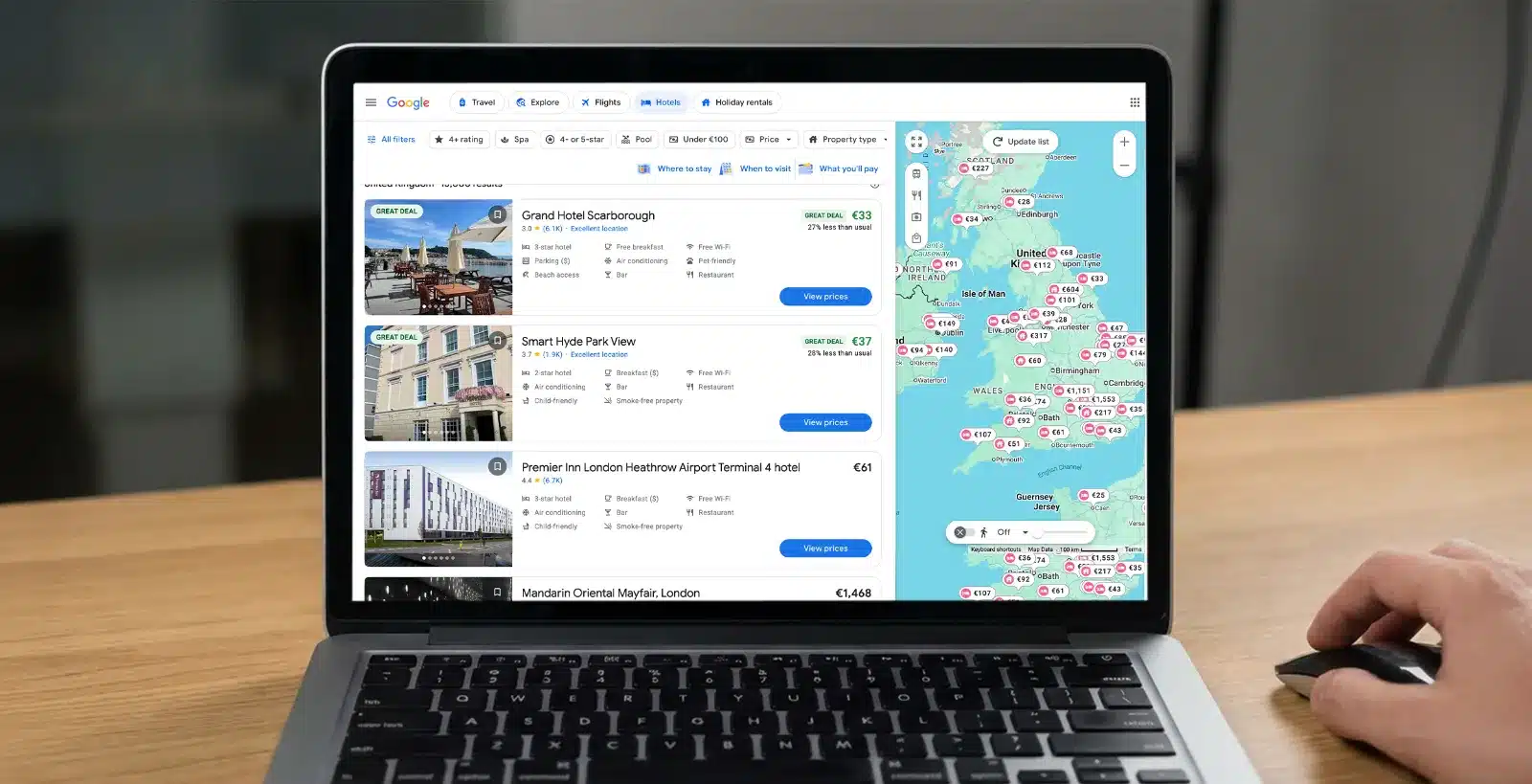
At Google Marketing Live 2026, Google confirmed it’s moving from answering travel questions to completing travel bookings through AI. As of May 2026, early testing shows Google surfacing direct hotel booking links — with live pricing — inside AI Mode responses, rather than defaulting to OTA aggregators. This runs on Google’s Universal Commerce Protocol (UCP), an open standard connecting AI agents, booking engines, and payment systems.
What determines whether your hotel shows up in these AI-generated answers:
- An active Google Hotel Ads feed pushes live rates and availability; without it, there’s no booking card to display, regardless of your SEO
- A complete, accurate Google Business Profile supplies entity attributes and reviews that the AI reads
- Structured data on your own website – confirms property details AI systems cross-reference
Remove any one of these three, and the booking card either doesn’t appear or appears incomplete. This is also why AI Mode optimisation behaves differently from traditional SEO: there’s no position 1 through 10 — either your property is selected as the answer, or it isn’t. Google separately confirmed it’s expanding AI Max ads into AI Overviews and AI Mode, meaning paid placement inside AI conversations is also becoming available, alongside ChatGPT’s own self-serve advertising platform launched in May 2026.
Practical priority for 2026: connect (or verify) your Google Hotel Ads feed through a certified connectivity partner before investing further in traditional SEO or paid search — this is the mechanism, not the content, that determines AI Mode eligibility.
4. Zero-Click search and what it means for direct bookings
Over 58% of US search queries now end without a click to any external website, as AI-generated answers satisfy the query directly. Combined with the AI Mode shift above, this means “rank #1 on Google” is becoming a less reliable proxy for “guest lands on your website.”
The practical implication: structure content so it can be the cited source inside an AI answer, not just a link in a results list. FAQ-formatted content, structured data, and clear factual statements (prices, policies, distances) are what AI systems extract and attribute — which is exactly why the FAQ section below is schema-marked rather than left as plain text.
5. Strategic framework: Five ways to increase direct bookings in 2026
(ii) Social media storytelling & user-generated content
Booking is as emotional as it is transactional. Turn social channels into a genuine discovery-to-booking pipeline.
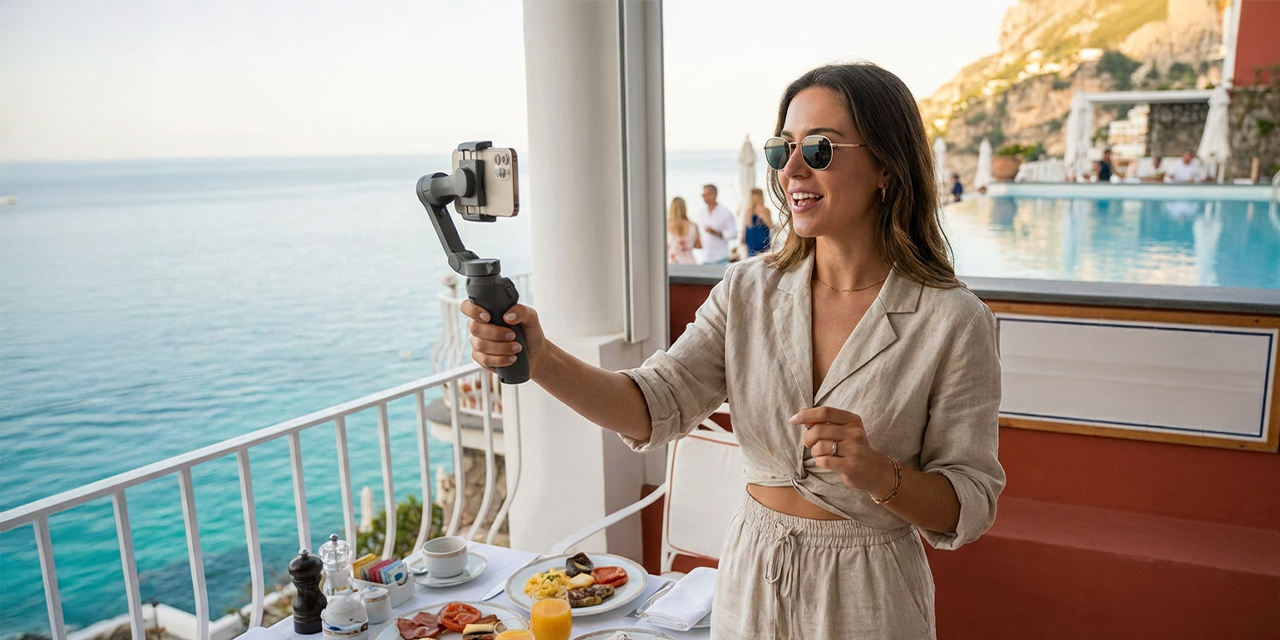
- Use Instagram, TikTok, and YouTube Shorts for behind-the-scenes and guest-experience content
- Enable direct booking features and run retargeting campaigns based on social engagement
- Encourage and repost user-generated content (with permission) as social proof
- Partner with niche-relevant creators for authentic reach
(iii) Dominate search – Traditional SEO and AI answer engines together
Guests in 2026 research deeply and expect transparency before OTAs even enter the picture.
- Build dedicated local landing pages targeting “hotels near [landmark]” and “direct hotel booking UK”–style queries
- Fully optimise your Google Business Profile — photos, Q&A, reviews, structured amenities
- Publish content that captures inspiration-phase intent (“things to do in [city]”, “family-friendly hotel breaks UK”)
- Structure FAQ content in natural, conversational language and mark it up with schema — this is now feeding both traditional Featured Snippets and AI Mode answers
- Add descriptive alt text to images
(iv) Focus on direct bookings & channel management
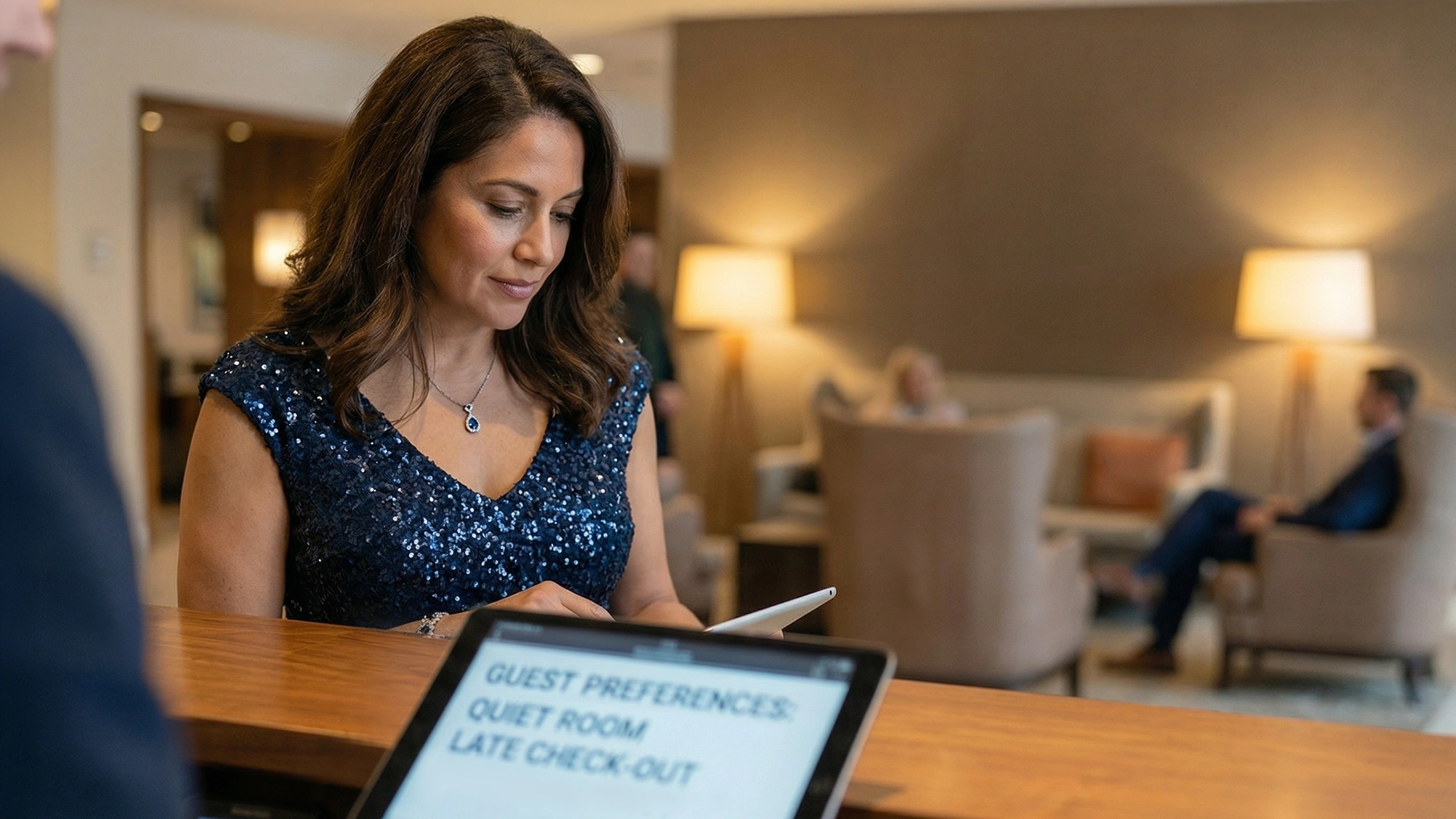
- Make “book direct” value clear: best-rate guarantee, complimentary breakfast, flexible cancellation, early check-in/late check-out, loyalty credit
- Manage OTA vs. direct strategically — add value through perks rather than undercutting on price, and tighten OTA availability during peak periods
- Run dynamic retargeting ads across Google, Facebook, and Instagram
- Use 360° tours and interactive maps to extend engagement on your own site
(v) Master paid advertising across a changing landscape
Google’s commission-based Hotel Ads bidding is now fully phased out — reconciliation for legacy commission-per-stay campaigns ended November 30, 2025. Current models are CPC, Enhanced CPC, Target ROAS, and Performance Max for travel goals, alongside newly expanding AI Max placements inside AI Overviews and AI Mode.
- Retarget website visitors who viewed rooms but didn’t complete a booking
- Use metasearch (Google Hotel Ads, TripAdvisor, Trivago) optimised for CPC or ROAS rather than commission
- Bid on your own brand terms so OTAs can’t outbid you for your hotel’s name
- Evaluate early access to ChatGPT’s self-serve advertising platform (launched May 2026) as an emerging, still-uncrowded channel
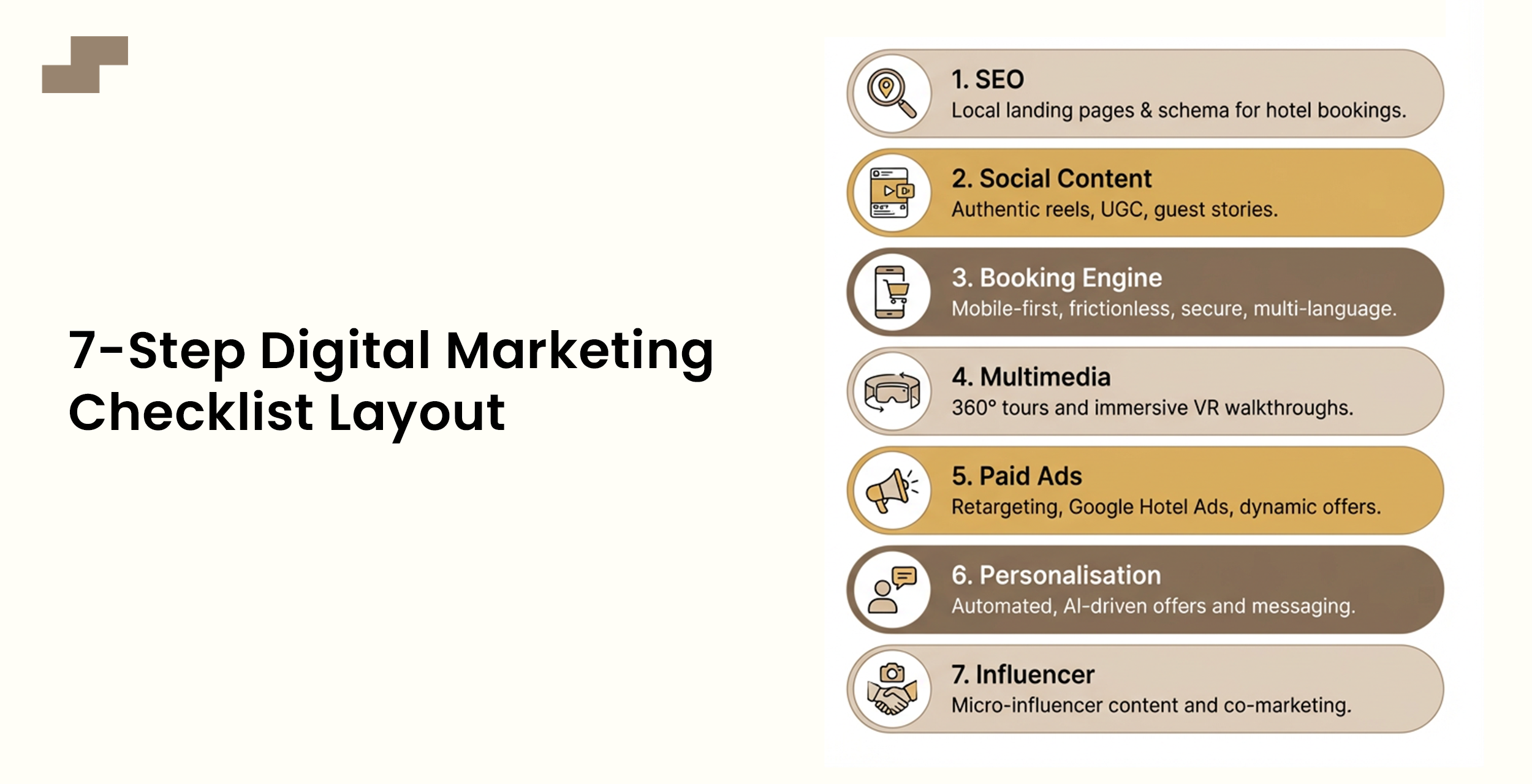
7. 2026 Digital marketing execution checklist
- SEO + GEO: Local landing pages, FAQ schema, structured data for bookings and reviews
- AI infrastructure: Verified Google Hotel Ads feed, complete Google Business Profile, structured website data
- Social content: Authentic reels, UGC, retargeting from social engagement
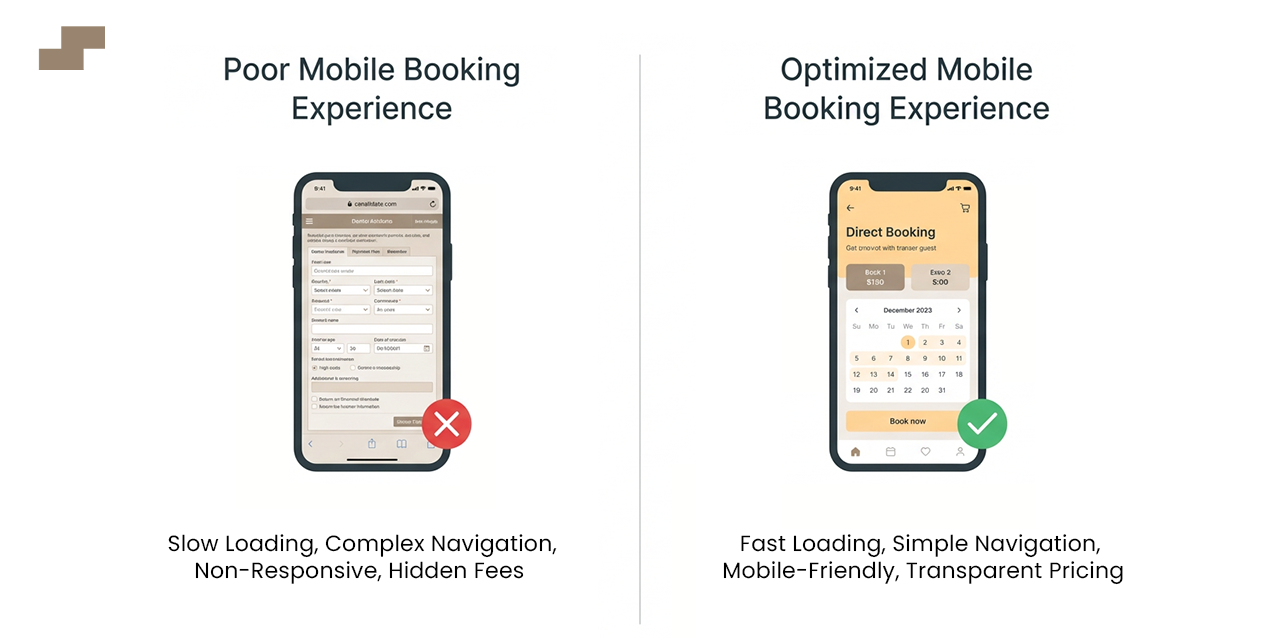
- Booking engine: Mobile-first, frictionless, PMS/CRM-integrated
- Paid ads: CPC/ROAS-based Hotel Ads, retargeting, early ChatGPT ads testing
- Personalisation: Automated, data-driven offers by guest segment
- Measurement: Track direct booking share, cancellation rate by channel, and true acquisition cost per channel — not just commission percentage
8. Final thoughts
The hospitality landscape in 2026 rewards properties that embrace technology whilst maintaining genuine human connection. Success isn’t about implementing every tactic at once – it’s about understanding your audience, testing strategically, and optimising based on data.
The properties that thrive won’t simply adopt technology—they’ll use it to create memorable experiences that guests want to book again and again.
Ready to transform your hospitality marketing strategy? At ThisRapt, a leading digital marketing agency in the UK, specialising in strategic digital marketing in the hospitality industry to increase direct bookings.
9. Hotel Direct Booking FAQs
Focus on optimising your mobile booking experience and implementing a strong strategy to increase direct bookings. These deliver the highest ROI with relatively low investment. Start with exclusive perks and ensure your website loads quickly on all devices.
Direct bookings for hotels come via your own website, call centre, or walk-in. OTA bookings come via third-party platforms (e.g., Booking.com, Expedia), where you pay commission and may have less control over the guest relationship. A balanced strategy helps increase direct bookings for hotels through digital marketing while reducing OTA dependency. Direct bookings mean better margin, guest data, and brand control.
No. Use OTAs strategically for brand visibility. The key is to use an effective hospitality booking strategy to make your direct channel more appealing. The most successful properties maintain OTA presence whilst creating compelling reasons to book directly through added value and perks.
Some tactics deliver immediate results (paid advertising, direct-only offers) whilst others require 3-6 months (SEO, content marketing). Implement quick wins first, then build long-term strategies in parallel.
There’s no one-size-fits-all. SEO (organic) and content-driven inbound marketing often provide longer-term, sustainable ROI. Paid search/metasearch gives faster results, but the cost is higher. The key is a balanced hospitality digital strategy for 2026 and data-driven optimisation.
Absolutely – the tools and tactics are increasingly accessible and scalable. Smaller properties can benefit simply by improving mobile UX, offering direct-booking value, using simple automation, and leveraging local SEO. Budget can scale as you grow.
Small hotels must leverage authentic storytelling, tailored SEO strategies, and immersive content (like 360° tours) to stand out. Focus on localised KWs and highlight unique experiences unavailable at chains.
Regularly update your Google Business Profile, use local landing pages, and incorporate local search KWs. Request guest reviews tied to the location for added SEO weight.





Your blog has helped me become a better version of myself Your words have inspired me to make positive changes in my life
What topics would you like to see covered in future posts? Let us know in the comments.
Your writing style is so engaging and easy to read It makes it a pleasure to read your blog and I always look forward to your new posts