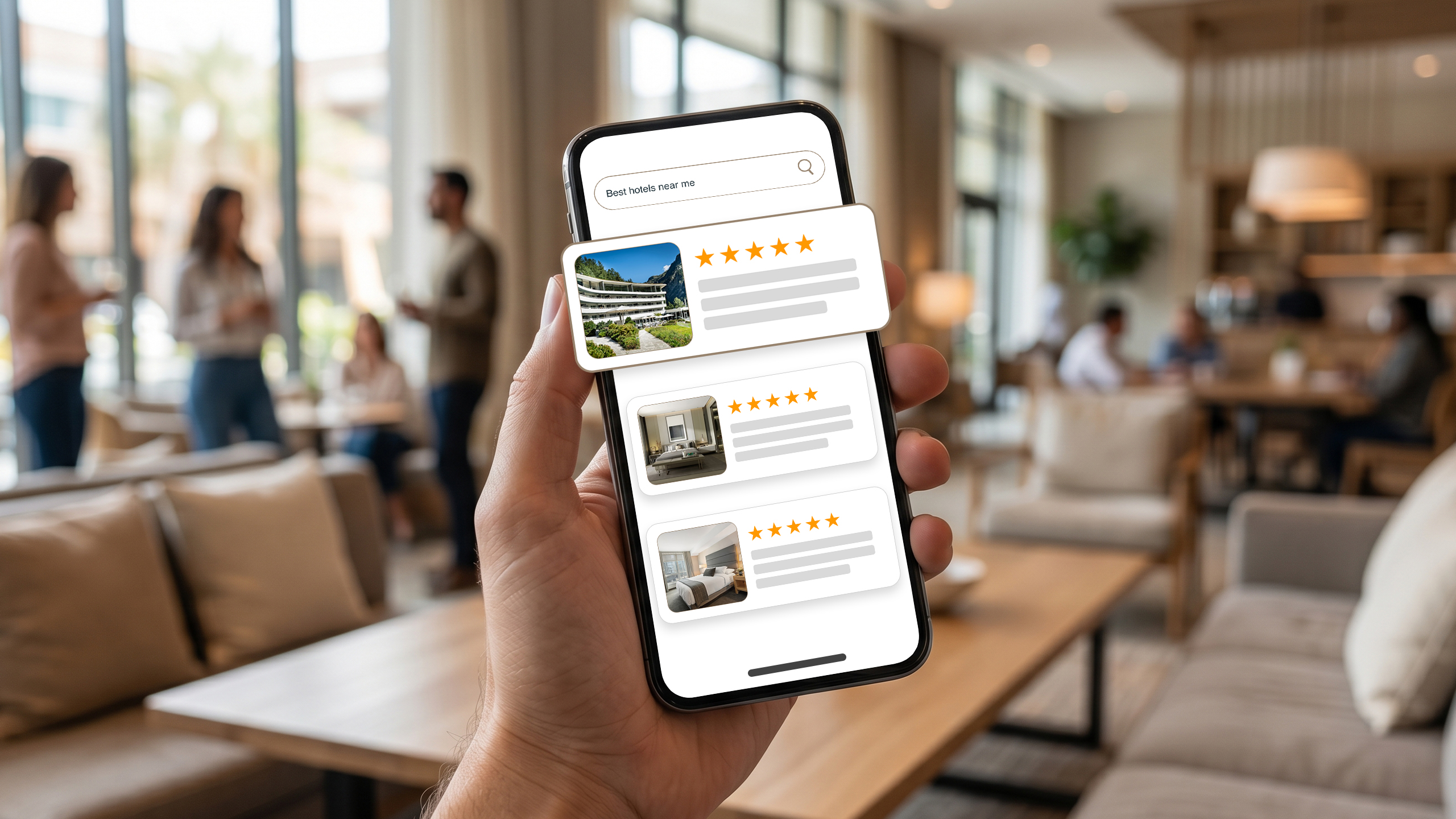
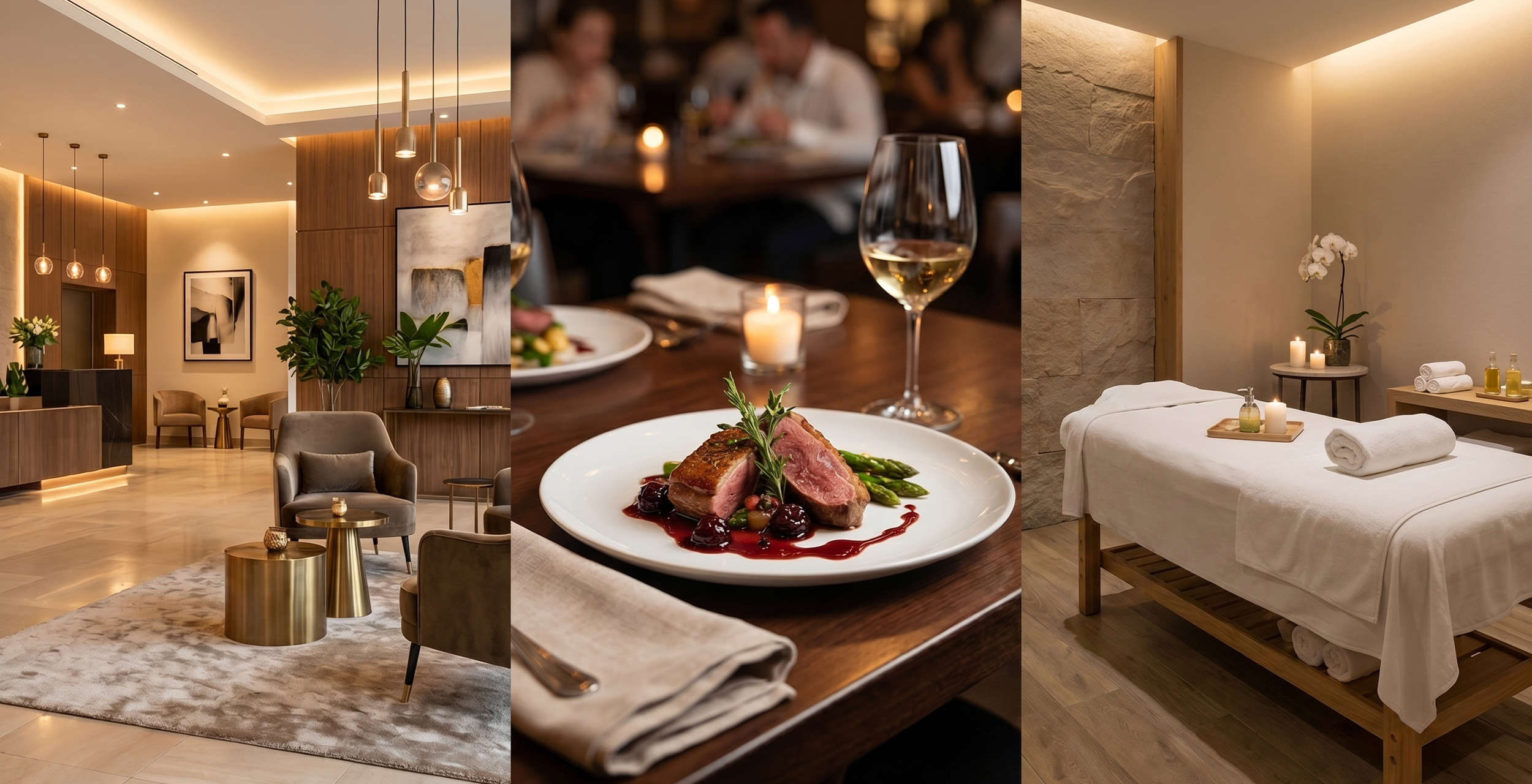
Every hospitality marketer hits the same wall eventually: another room tour, another breakfast buffet photo, another generic ‘book now’ post. The service hasn’t changed, so the content starts to feel like it’s on a loop — and followers notice long before the analytics confirm it.
The way out isn’t posting more often or investing in better photography. It’s zooming out from the service itself to the experiences and people around it. This article sets out eight content approaches that keep working long after the obvious ideas have been used up, along with why several of them also happen to help UK hospitality businesses show up in local and AI-powered search.
Quick answer: Hospitality content runs dry when it stays focused on the service itself – room tours, breakfast spreads, spa menus – rather than the experiences and people around it. Fresh, sustainable content ideas come from shifting toward storytelling: local guides with a genuine point of view, staff-led behind-the-scenes content, process-driven food and drink content, wellness micro-moments, locals’ recommendations, real guest stories, and place-based history. Several of these formats also happen to perform well in AI-generated search results, because they naturally answer the specific, conversational questions people ask.
1. Local guides with a genuine point of view
A generic ‘what’s nearby’ post says very little about your brand. A themed local guide says a great deal more — think ‘the best spots for a morning run near us’ or ‘three quiet cafes for working remotely nearby’. The location content is the same raw material every hospitality business has access to; the difference is choosing an angle that reflects a specific type of guest, rather than trying to cover everything at once. Done well, these guides also support your hospitality local SEO, because they tell search engines exactly where you are and what is nearby.
Eight fresh content ideas for UK hotels, restaurants and spas, from local guides to guest stories, plus how to repurpose each one. |
|
2. A day in the life – Let your team be the content
Your front desk team, housekeeping staff, and chefs are a content source most hospitality brands barely touch. A short piece following a member of staff through part of their day – what a chef preps before service, what housekeeping actually involves, how a front desk team handles an unusual request – is far more relatable than another polished property shot, and it tends to do double duty: guests connect with the people behind the brand, and staff feel genuinely seen.
3. Show the process, not just the plate
A static photo of a finished dish has a ceiling on how interesting it can be, however good the plating. A short clip of how a signature cocktail is built, a quick conversation with your head chef about where an ingredient comes from, or a ‘behind the menu’ story about a dish’s origin gives guests something a plated photo never can: a reason to care about what they’re about to order, not just what it looks like.
4. Wellness micro-moments – Even without a spa
Wellness travel continues to grow as a search and booking category, and you don’t need a spa to take advantage of the trend. A quiet corner of the building worth knowing about, a staff member’s own approach to unwinding after a shift, or a five-minute guide for a long journey all borrow from the wellness mood without needing new facilities — they simply reframe what’s already there.
5. Ask the locals – and why it works especially well for AI search
Some of the most engaging travel content simply asks people who live locally where they’d go – the best cappuccino, the best plate of pasta, the best Sunday walk. It’s simple to produce as a short video or a quick written piece, and it holds up well repurposed as a blog post or email.
There’s a second reason this format is worth prioritising in 2026: it mirrors, almost word for word, the kind of specific, conversational questions people now ask AI tools like ChatGPT or Google’s AI Overviews – ‘where’s the best coffee near me’, ‘best Sunday roast nearby’. Content built around exactly those questions has a genuine chance of being pulled into an AI-generated answer, not just a traditional search result. If you are planning video, our guide covers how often hotels should post reels and what to film. If you do run a spa, see how to approach day spa marketing. To be the business those tools recommend, start with our guide to GEO for hotels.
6. Real guest stories, told like stories
A generic testimonial – ‘lovely stay, would come again – ‘barely registers with a new reader. A proposal that happened on your terrace, a guest who reconnected with family after years apart during their stay, or a chance meeting between two guests who later became business partners are genuine stories, and stories hold attention in a way a star rating never will. With permission, these can be told properly – with detail, a beginning and an end – rather than compressed into a single quoted line. For more on why this works, read our guide to storytelling in hospitality marketing. Real guest stories also strengthen your hotel review management, because they give happy guests something specific to say in a review.
7. Local lore and place-based storytelling
Every location has stories attached to it that have nothing directly to do with your business – a long-standing local character, an interesting piece of history, an unusual local event. Covering these, even briefly, positions your brand as genuinely embedded in the area rather than just operating in it, and it gives you a content well that has very little to do with occupancy rates or covers, so it never runs dry.
8. Let your audience tell you what they want
When even these angles start to feel thin, ask directly. A simple social media poll, framed around making your content more useful (not just a popularity contest), tends to get a genuinely positive response and gives you a shortlist of ideas straight from the people you’re trying to reach, rather than another round of guessing.
Make each idea work harder: Repurpose across formats
None of these eight ideas need to live in a single format. A locals’ recommendation piece filmed as a short video can become a blog post, a newsletter feature, and a handful of individual social captions, all from one afternoon of filming. A guest story can run as a long-form blog post first, then be trimmed into a short video and a quote graphic later. Treating one good idea as raw material for several pieces of content, rather than a single post, often fixes running out of ideas—the well isn’t as empty as it feels; it’s just being used inefficiently.
A practical example
Consider a small UK hotel that had been posting the same rotation of room photos and breakfast shots for months, with engagement quietly declining. Shifting just two of those weekly posts – one to a staff-led behind-the-scenes clip, one to a locals’ recommendation for the best coffee nearby – didn’t require new equipment or a bigger budget, only a different lens on the same location and the same team. The room photos didn’t disappear; they simply stopped being the only thing being said.
Key takeaways
- Content burnout usually comes from staying focused on the service itself; shifting to the people and experiences around it opens up far more material
- Staff-led content and process-driven food and drink content both consistently outperform static, polished shots
- Wellness-themed content doesn’t require a spa — it only requires reframing what’s already part of your property
- Locals’ recommendation content is genuinely well suited to how people now search using AI tools, not just traditional search
- Real, detailed guest stories build more trust than compressed testimonials
- Asking your own audience what they want to see is a legitimate, underused way to keep a content calendar full
Where ThisRapt fits in
Turning these ideas into content that also performs in local and AI search – not just social engagement – is exactly where we help UK hospitality businesses. If you’d like a content plan built around what’s actually being searched for in your area, it’s worth a conversation. It is also a practical way to build hospitality branding that guests remember. Pair the answers with a plan for your hospitality social media marketing so the ideas actually get published. Our hotel content marketing guide has more formats worth reusing, and a good story also makes a strong lead for hospitality email marketing. Start with our hospitality SEO guide.
Want content ideas built around what people are actually searching for?
ThisRapt works exclusively with hospitality SMEs on content and search visibility strategy.
FAQs
There’s no fixed rule, but rotating through two or three of these approaches alongside your usual service content tends to keep a content calendar feeling fresh without overwhelming a small team.
No – a phone camera and a few minutes during a normal shift is usually enough. The value in this content comes from authenticity, not production quality.
Never make it compulsory. Ask for volunteers, keep the first few attempts low-pressure, and let confidence build naturally – forced participation tends to show on camera and undermines the authenticity that makes this content work.
Yes – local guides, locals’ recommendations, and guest stories all translate directly into blog content, and often perform well there because they give search engines and AI tools more detailed, specific text to work with than a caption alone.
Start with whichever feels easiest to produce with your current team and equipment – for most hospitality businesses, that’s either a staff-led day-in-the-life piece or a locals’ recommendation post, since both need very little beyond a phone and a willing participant.