In today’s hyper-competitive hospitality industry, where personalisation drives performance, customer segmentation marketing is more than just a tactic; it’s a strategic imperative. From boutique hotels in the Cotswolds to bustling conference venues in London, every hospitality brand is competing not just for bookings, but for loyalty and lasting guest relationships.
This is where a data-driven customer segmentation strategy becomes invaluable. By understanding exactly who your customers are, how they behave, and what they value, hotels can build targeted campaigns that maximize relevance, reduce acquisition costs, and improve conversion rates.
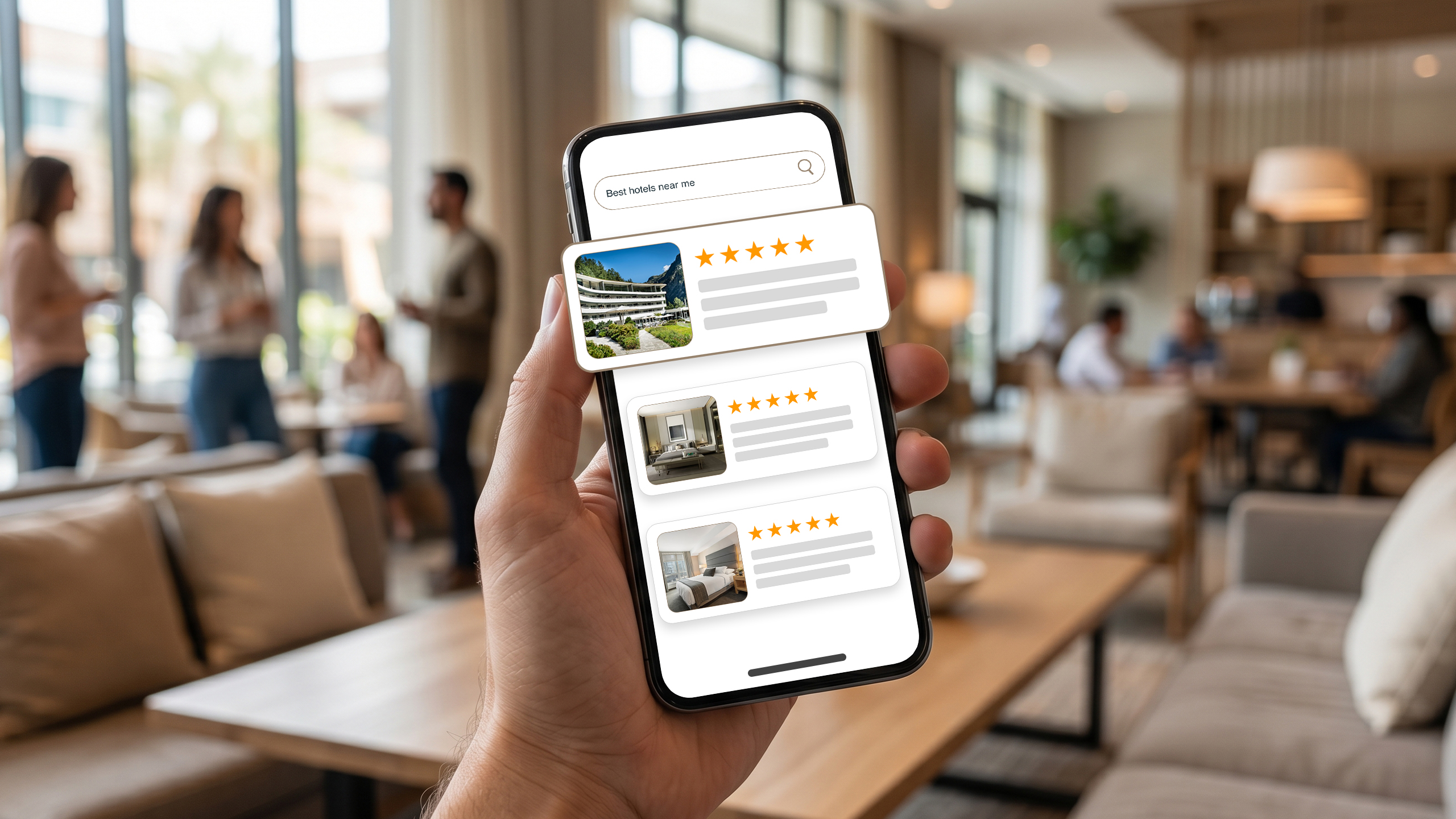
A family of four lands on your homepage after searching “kid-friendly hotels with a pool.” Thirty seconds later, a solo business traveller arrives searching “quiet hotel with fast WiFi near the conference centre.” If both see the same hero image, the same headline, the same offer – you’re not really segmenting anyone. You’re speaking to everyone, which in 2026 means speaking to no one.
That’s the shift most hospitality segmentation content hasn’t caught up to yet. The old model – sort guests into a handful of fixed personas, message each bucket differently – still works better than generic blasting, but it’s no longer the ceiling. AI now lets hotels build a dynamic profile per guest, updated in real time, rather than permanently filing someone into “Business Traveller” the moment they book once. This guide covers both: the segmentation fundamentals that still matter, and what’s actually changed.
| Unlock the full blueprint of the importance of customer segmentation in hospitality marketing. Inside, you'll discover: |
|
Whether you’re working with a leading hospitality marketing agency or running your strategy in-house, segmenting your audience is essential for optimizing marketing outcomes and standing out in a crowded market.
1. What is customer segmentation marketing?
Customer segmentation marketing is the process of dividing a broad audience into smaller, more defined groups based on shared characteristics. These segments can be based on:
- Demographics (age, gender, income)
- Behaviour (booking frequency, loyalty)
- Psychographics (values, interests, lifestyles)
- Geography (country, region, urban vs. rural)
- Booking patterns (last-minute vs. early bookers)
- Demographics (age, gender, income)
In the context of customer segmentation in hospitality, the goal is to create personalized marketing messages and experiences that resonate with each specific group.
2. Why customer segmentation matters in hospitality marketing
The importance of customer segmentation in hospitality lies in its direct link to business performance. Generic marketing fails to speak to the diverse needs of modern travelers. Segmenting customers allows for precision targeting, enhancing guest satisfaction while improving key marketing KPIs like click-through rates, engagement, and conversion.
Key benefits include:
- Improved marketing efficiency – Targeted campaigns are more likely to convert, improving ROI.
- Stronger guest loyalty – Personalised experiences boost satisfaction and repeat business.
- Better resource allocation – Understanding high-value segments helps allocate the budget effectively.
- Competitive edge – In a saturated market, tailored messages stand out more than generic ones.
- Improved marketing efficiency – Targeted campaigns are more likely to convert, improving ROI.

3. The four core segmentation types

Demographic Segmentation
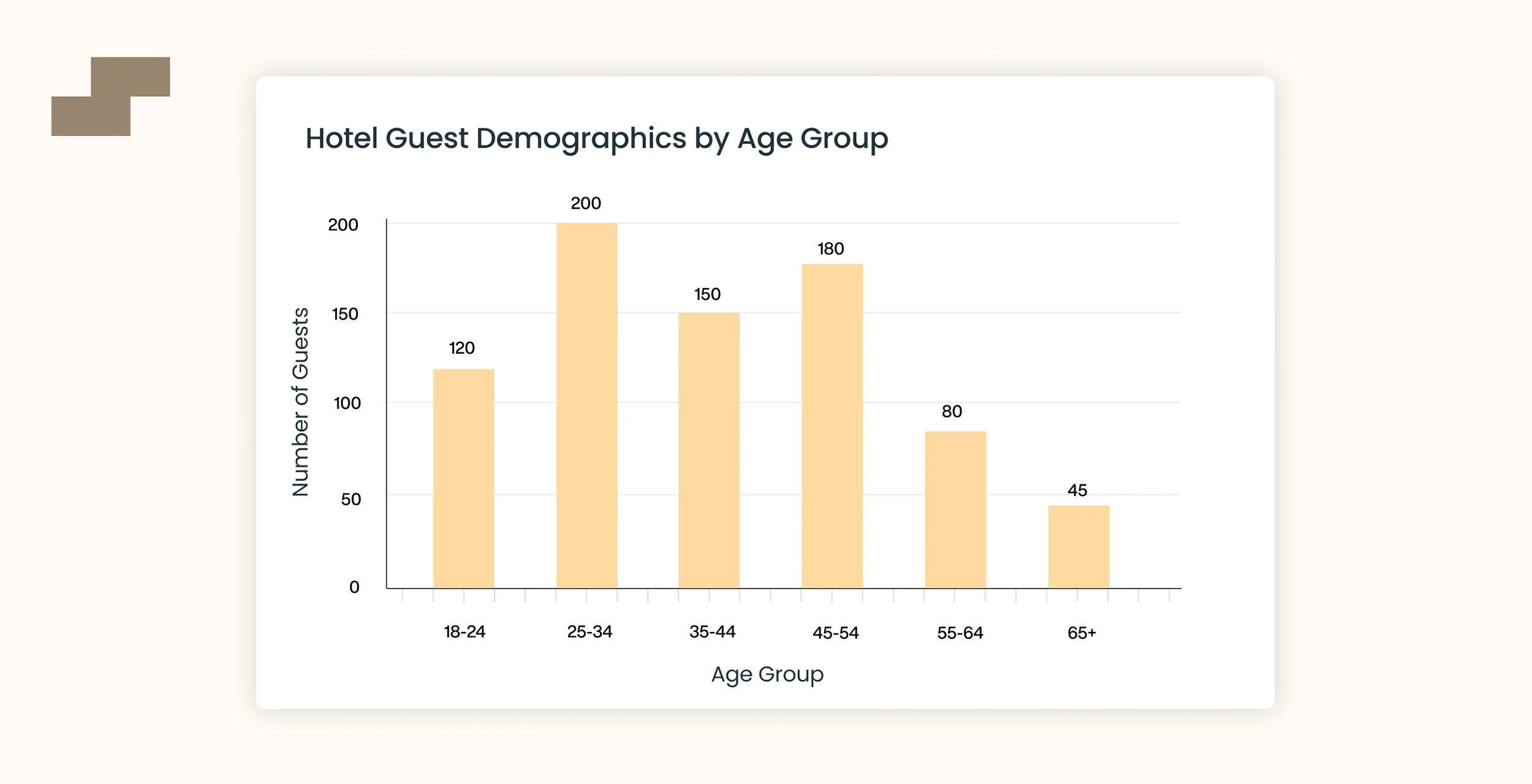
Age, income, family status, occupation. A luxury resort might target high-income travellers for premium suites, while a budget city hotel focuses on young professionals and backpackers - shaping both the offer (honeymoon packages vs. group discounts) and the platform (email vs. TikTok).
Behavioural Segmentation
Booking frequency, room type history, travel companions, loyalty tier, booking channel (OTA vs. direct). Behaviour reveals intent more reliably than demographics alone - a repeat direct booker and a first-time OTA booker warrant genuinely different messaging, not just a different name field.

Psychographic Segmentation
Values, lifestyle, and travel motivation. A wellness retreat might segment health-conscious travellers specifically, offering tailored detox or yoga-focused itineraries built around what they actually care about, not just what they can afford.

Geographic Segmentation
Domestic vs. international, regional travel patterns, seasonal demand shifts. Useful for staycation offers to local guests during off-peak periods, or flight-inclusive packages targeted at international travellers during your shoulder season.
4. Building guest personas – And their limits
Personas remain a useful communication tool for aligning marketing, sales, and guest services around a shared understanding of who you’re serving:
Last-Minute Lucy – books 48–72 hours out, responds to flash sales and SMS, high engagement but low loyalty.
Wellness William – books longer stays with spa add-ons, prefers email and inspirational content, high lifetime value and referral potential
Personas are genuinely useful for internal alignment – they humanise data in a way a spreadsheet segment never does. But treat them as a starting scaffold, not the finished system. The limitation worth naming: a fixed persona assumes Lucy behaves like “Lucy” on every visit. Increasingly, she doesn’t – and the more valuable systems now track her actual behaviour continuously rather than locking her into a label from her first booking.
5. The 2026 shift: From segmentation to individualisation
This is the addition most hospitality segmentation content is missing, and it changes the practical implementation more than any other trend in this space.
Large language models can now analyse booking intent, behavioural signals, and loyalty data in real time and generate genuinely individual messaging at scale – content specific enough to read as if written for one guest, even though it’s produced automatically for thousands. What feels like hyper-personalised, human-written communication is increasingly segmentation executed by AI, invisibly, underneath.
What this looks like in practice:
- AI models predict room type, dining, and activity preferences from past behaviour, without a human manually assigning the guest to a bucket first
- Systems flag early churn signals (a lapsing loyalty member, a guest who hasn’t opened recent emails) and trigger targeted win-back offers automatically before the relationship goes cold
- Send-time personalisation adjusts when each guest receives an email based on their own historical open patterns, not a single blanket send time for the whole list
- Marketing teams increasingly work by reviewing AI-generated micro-segment hypotheses (“guests with 2+ stays in the last 18 months show above-average rebook likelihood if offered X within 30 days”) and approving or rejecting them, rather than building segments manually from scratch
The properties adopting this well aren’t replacing the persona model – they’re using it as the starting framework while letting AI continuously refine and individualise within it. AI-driven segmentation and automation platforms tied to your CRM and PMS are what make this operationally realistic; see our guest data personalisation guide and marketing automation guide for the practical build-out.
6. Segmentation without compromising guest privacy
Personalisation doesn’t require collecting sensitive personal data, and treating privacy as a constraint to work around rather than a design principle tends to backfire on trust. The stronger approach: build segmentation from behavioural signals (cart abandonment, app usage patterns, on-site browsing behaviour) and genuine zero-party data – information guests actively volunteer through preference centres, booking-flow questions, or opt-in surveys – rather than defaulting to invasive tracking.
This connects directly to the broader shift covered in our tracking and automation tools guide as third-party cookies disappear; first-party, consented data isn’t just the compliant choice under GDPR — it’s becoming the more accurate input for segmentation, since it reflects what a guest actually tells you rather than what a fragmented cookie trail infers.
7. How to implement a segmentation strategy
Step 1: Collect the right data
Consolidate from CRM (booking history, loyalty status), PMS (stay patterns, service usage), website/social analytics, email performance, and direct guest feedback. Without real data, segmentation is guesswork dressed up as strategy.
Step 2: Choose segmentation variables
Not every property needs every dimension. A wellness resort prioritises psychographic data; an airport business hotel prioritises booking frequency and stay patterns. Match variables to what actually predicts revenue for your specific property type.
Step 3: Build guest personas (As a starting point, not an end state)
Use personas to align teams and shape initial messaging – then let behavioural and AI-driven signals refine and individualise from there, rather than treating the persona as a permanent, static label.
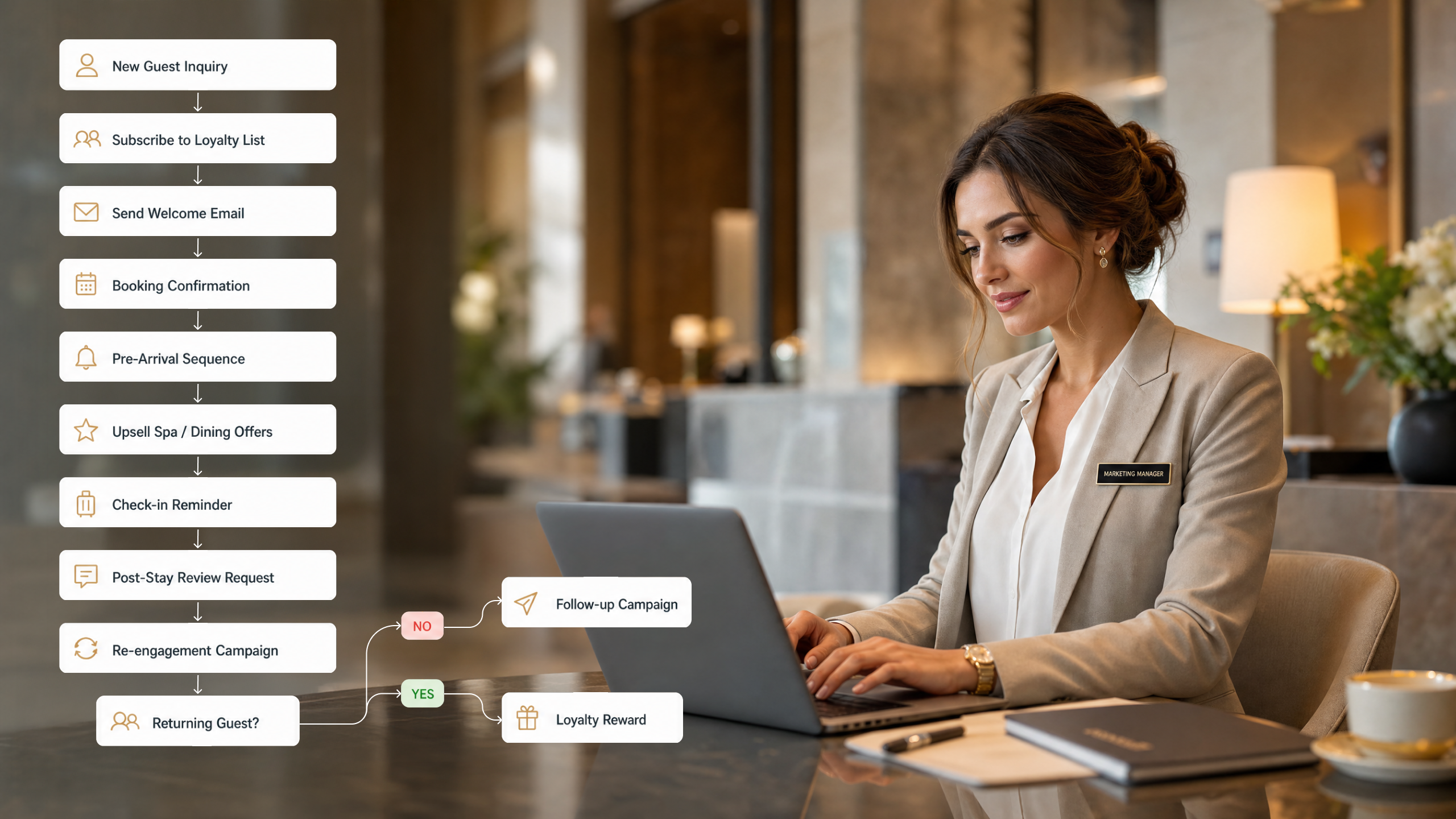
Step 4: Personalise across every touchpoint
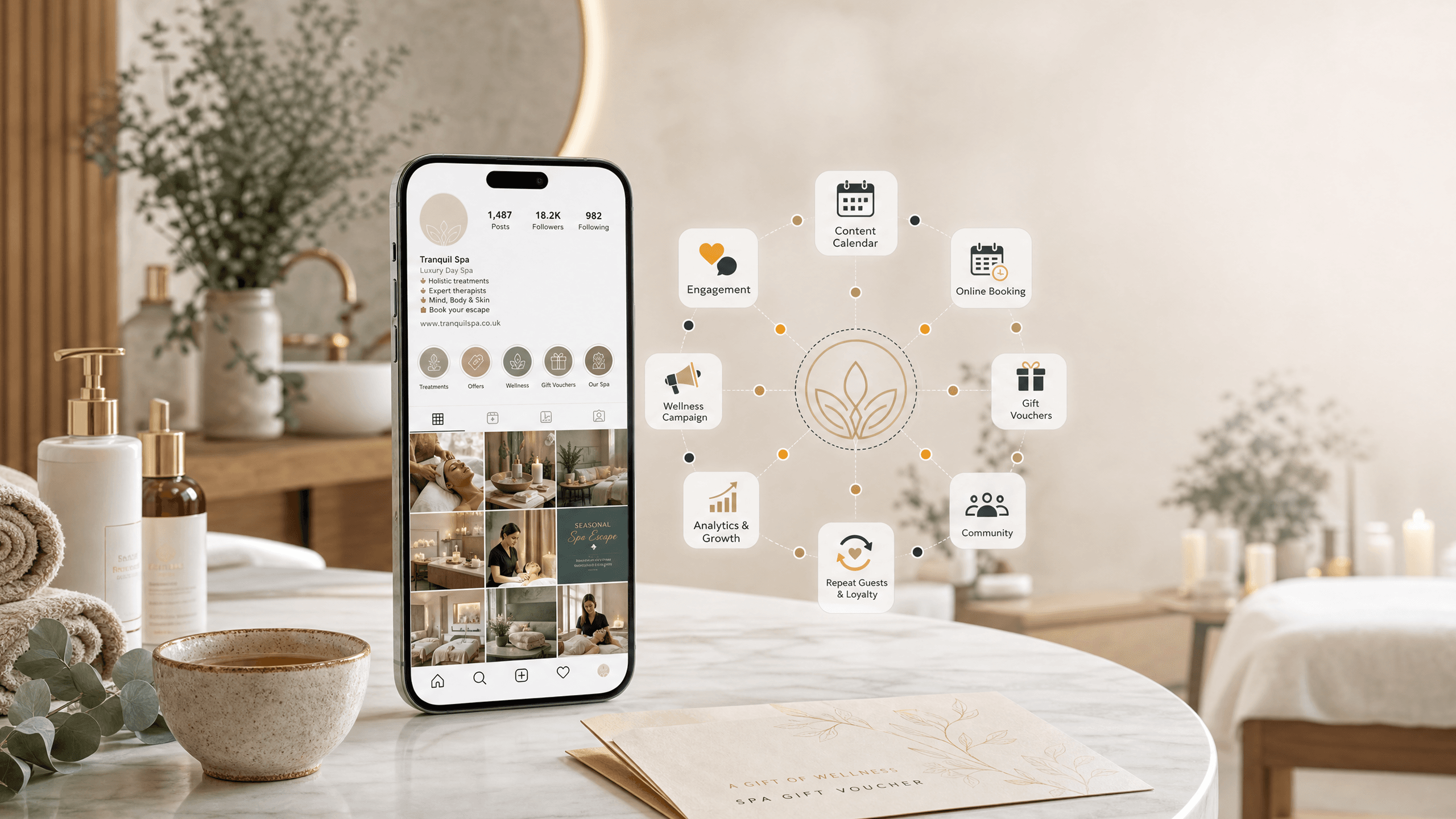
- Email automation – tailored offers by segment, increasingly with AI-optimised send timing per guest
- Retargeting – segment-specific ads for visitors who didn’t convert (a 24-hour urgency offer for “Last-Minute Lucy” behaviour, a considered package for a longer-research-window guest)
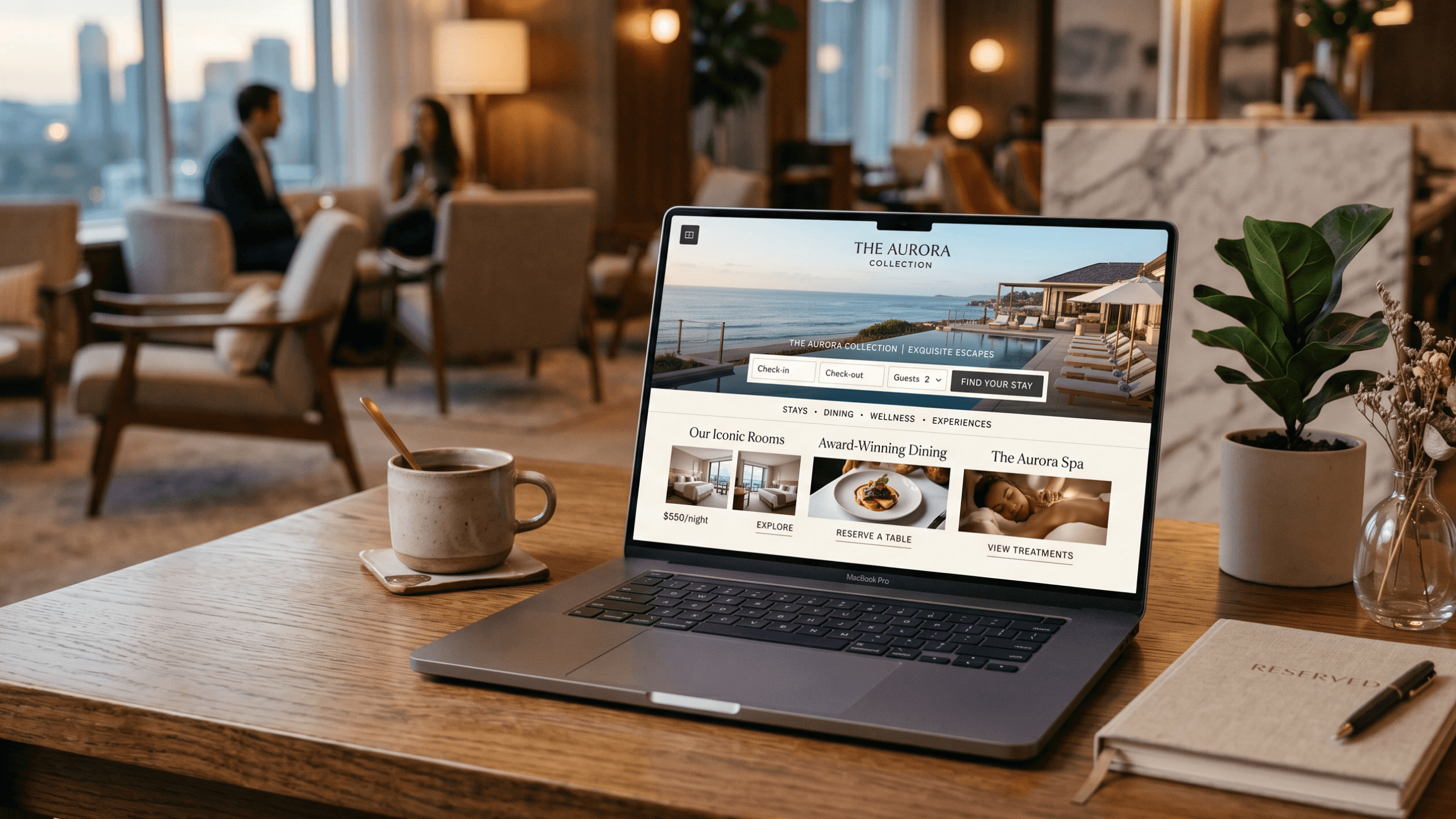
- Dynamic landing pages – content that shifts based on referral source or on-site behaviour, showing family packages to one visitor and co-working amenities to another on the same page template
8. Measuring success of your segmentation strategy
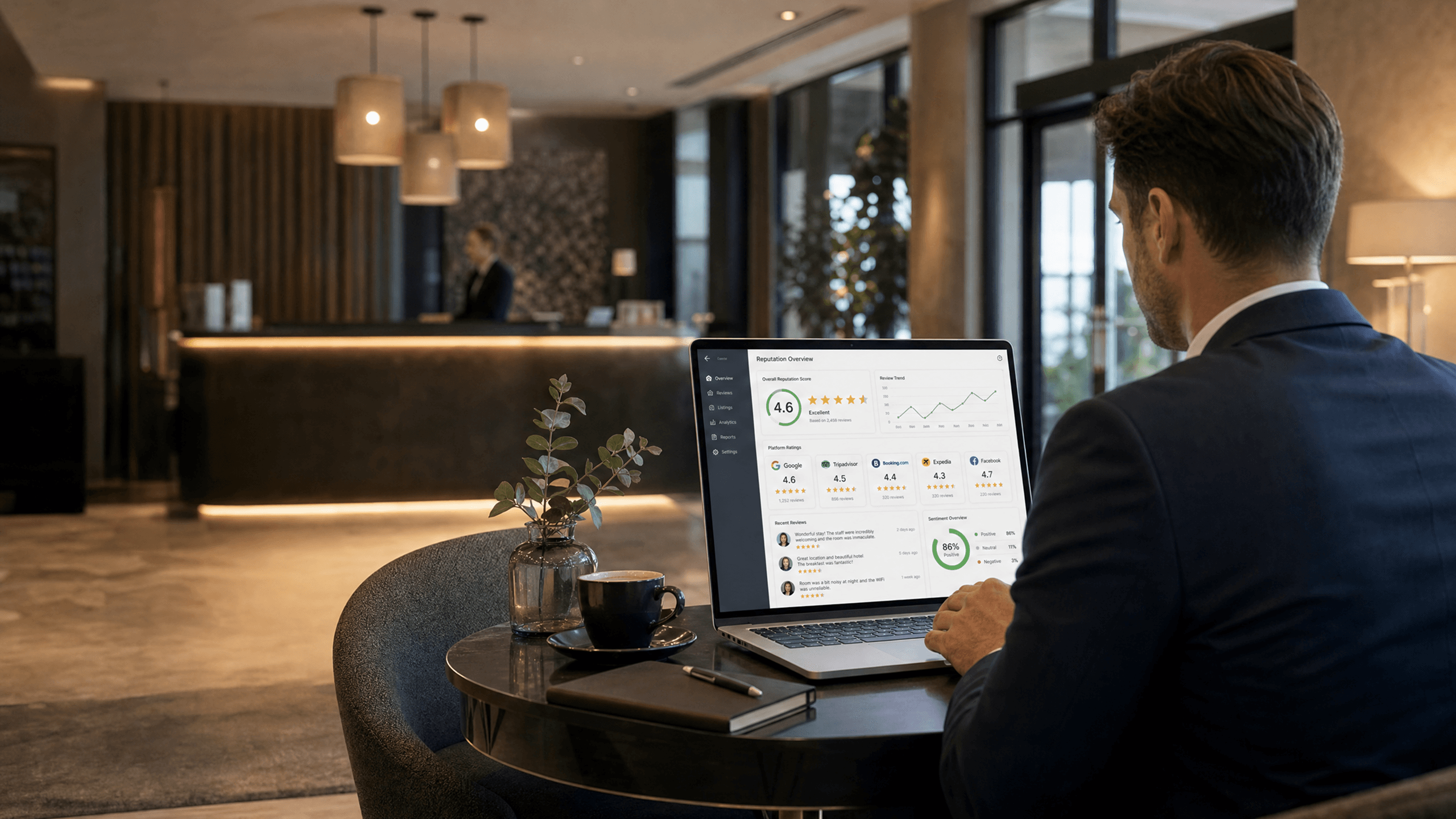
Once your customer segmentation marketing strategy is live, measuring its impact is essential. The right KPIs will help you understand how each segment responds and where to refine your approach.
Key Metrics to Track:
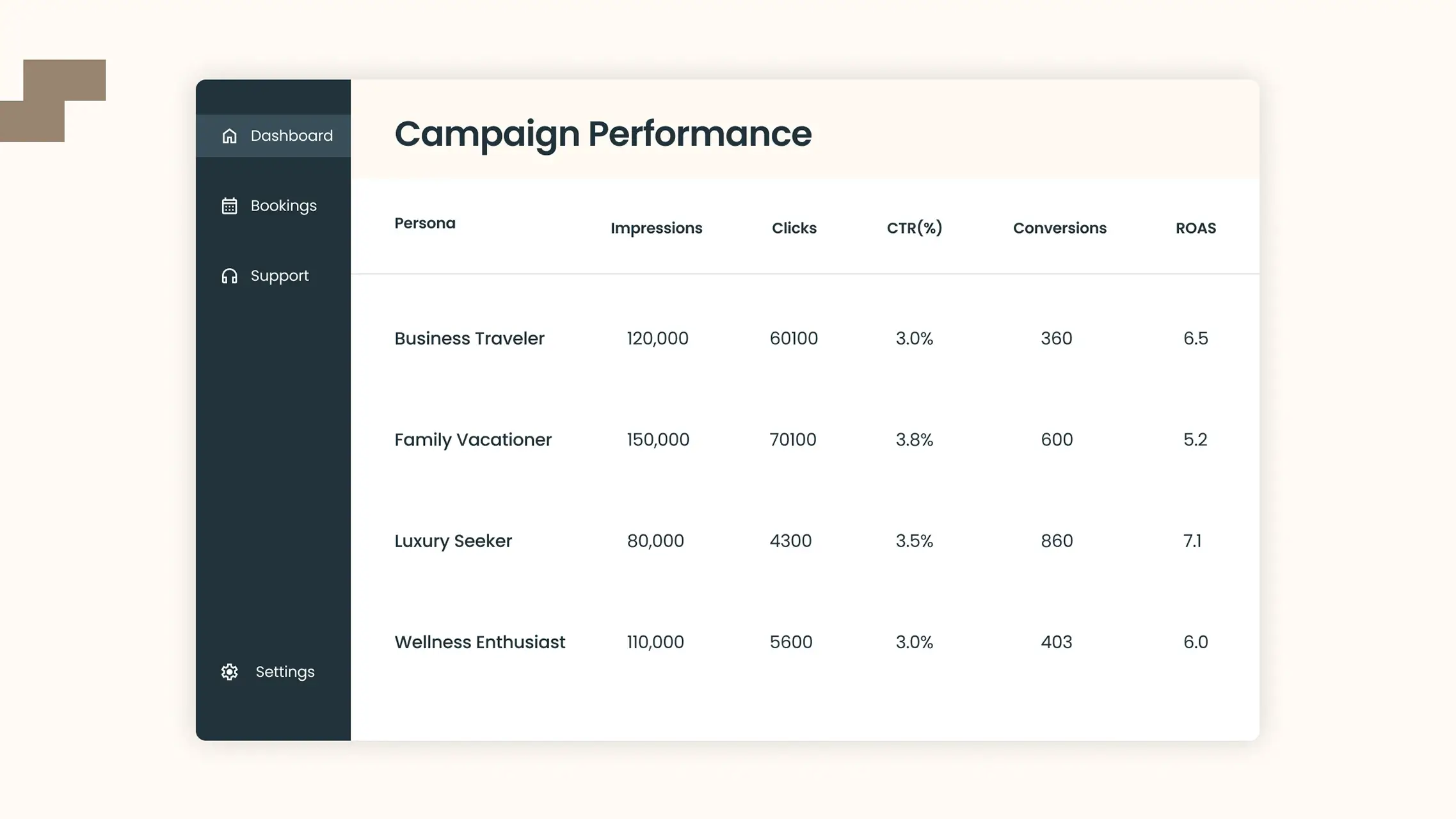
- Conversion Rate by Persona
Measure how many visitors in each segment complete bookings, inquiries, or other goals. - Email Open & Click-Through Rates by Segment
Segmented email campaigns should see significantly higher engagement rates than generic ones. - Revenue per Campaign per Segment
Track revenue generated by each marketing campaign per audience. Use this to adjust budget allocation. - Customer Lifetime Value (CLV) by Segment
Some guests may cost more to acquire but bring greater long-term value. Focus on retaining these segments. - ROAS (Return on Ad Spend) by Behavior or Demographics
Analyse which guest behaviors yield the best ROI. For example, retargeting frequent visitors may bring a higher ROAS, an essential metric in evaluating ROI in digital marketing.
- Conversion Rate by Persona
Tools: GA4 with audience segmentation, CRM platforms with reporting (Revinate, Salesforce), email platforms (Mailchimp, HubSpot), and increasingly AI-native guest intelligence platforms that surface micro-segments automatically rather than requiring manual analysis.
9. Conclusion: The future of personalisation in hospitality
In an age where travelers expect brands to “know them,” delivering personalised experiences isn’t optional; it’s a competitive requirement. A well-executed customer segmentation marketing approach allows hospitality brands to move from one-size-fits-all communication to targeted, relevant engagement at every stage of the guest journey.
Key Takeaways:
- Customer segmentation in hospitality enables tailored messaging, improved guest satisfaction, and stronger loyalty.
- Using data to build meaningful personas enhances both acquisition and retention.
- A segmentation strategy, when backed by robust analytics, drives a measurable increase in marketing ROI.
- Working with a data-savvy hospitality marketing agency ensures your segmentation evolves as guest preferences and booking trends change.
Whether you’re a boutique hotel crafting experiential packages or a corporate chain optimising loyalty campaigns, segmentation is your secret weapon. By investing in smarter targeting now, you’re setting the foundation for scalable, sustainable growth.
If you’re looking to improve your marketing precision, increase ROI, and deliver unforgettable guest experiences, it’s time to invest in customer segmentation marketing. Whether you need help defining your customer segments, building behavior-based personas, or launching personalised campaigns, our team is here to support you every step of the way.
Let’s turn your guest insights into profitable action.
Reach out to us today to discuss your segmentation goals and start crafting campaigns that truly convert.
10. Customer Segmentation FAQs
Segmentation groups guests into shared categories for targeted messaging; personalisation tailors the experience to an individual guest specifically. In 2026, AI increasingly blurs the line – segmentation executed by AI at scale can feel like true one-to-one personalisation even though it’s still running on underlying behavioural groupings.
Current hospitality data points to meaningful gains — properties using intelligent segmentation systems report roughly 40% higher direct booking rates and 23% stronger repeat guest retention compared to generic, unsegmented marketing.
It can be, and should be built that way from the start — using consented, first-party behavioural data and zero-party information guests actively share, rather than invasive third-party tracking. Privacy-respecting segmentation is not only compliant but often more accurate, since it reflects genuine guest input.
No – basic segmentation (persona-building, behavioural grouping from CRM/PMS data) delivers real value on its own. AI becomes most valuable at scale, when the volume of guest data and messaging makes manual segmentation impractical, but a small property can start with the fundamentals and layer in AI-assisted tools as data volume grows.
CRM booking history, PMS stay and service-usage data, and direct guest feedback tend to be the most reliable foundation – richer and more actionable than website analytics alone, since they reflect actual guest behaviour rather than inferred browsing intent.
The shift is from fixed, permanent personas toward dynamic, continuously updated individual profiles – AI systems now re-evaluate guest behaviour in real time rather than locking someone into a single segment from their first booking onward.