Restaurants no longer rely only on walk-ins, word-of-mouth referrals, or newspaper advertisements. Today, most diners discover restaurants online before deciding where to eat.
In the UK, platforms like Instagram, Facebook, TikTok, and Google Business Profile have become major drivers of restaurant discovery, customer engagement, and direct table bookings. Diners now scroll through food photos, watch Reels, compare ambience, read reviews, and explore menus before they ever visit a restaurant.
For modern restaurants, social media marketing is no longer optional. It is one of the most important marketing channels for visibility, trust, and long-term growth.
According to recent restaurant and local review research:
- 68% of diners check a restaurant’s social media before deciding to visit.
- 55% of consumers look for menu information, while 54% check opening hours when reviewing local businesses online.
- 41% of 18–24-year-olds use TikTok most often to discover new restaurants.
- 57% of diners say pictures of food influence their decision to visit a restaurant.
At the same time, UK restaurants face:
- Rising labour costs
- Increasing ingredient prices
- Delivery platform commissions
- Stronger local competition
- Higher customer expectations
Many delivery platforms now take between 25–35% commission per order, making direct customer relationships more valuable than ever.
This opens up a big opportunity for restaurants.
Restaurants with strong social media marketing strategies can:
- Increase direct reservations
- Reduce dependency on delivery apps
- Fill tables during quieter periods
- Build loyal local communities
- Promote seasonal menus instantly
- Improve repeat customer rates
- Strengthen brand recognition
- Generate long-term profitability
A Manchester brunch cafe, for example, increased weekday bookings after consistently posting chef-special Reels and behind-the-scenes kitchen content. A London steakhouse reduced its reliance on delivery platforms by promoting reservation-only offers through Instagram Stories and Facebook retargeting campaigns.
This guide covers everything UK restaurants need to know about social media marketing in 2026, including restaurant Instagram marketing, TikTok marketing for restaurants, food photography marketing, influencer collaborations, paid advertising, customer engagement, AI search optimisation, and converting followers into real bookings.
1. Why social media marketing is essential for UK restaurants
1.1 The modern diner’s discovery journey
The way customers choose restaurants has changed completely.
Instead of relying only on recommendations or walking through busy streets, diners now research restaurants online before making decisions.
Social media now acts as the online shopfront for restaurants.
Most customers now interact with multiple platforms before booking:
- Instagram for food visuals and ambience
- Facebook for reviews and events
- TikTok for trending food experiences
- Google for local search and directions
This shift has made hospitality social media marketing one of the biggest growth drivers in the restaurant industry.
A common mistake is relying only on delivery apps, rather than building your own audience through social media and direct bookings.
Restaurants that invest in long-term audience building tend to achieve more predictable growth over time.
Effective social media marketing for restaurants helps businesses stay visible throughout the entire customer decision-making journey, from discovery and menu research to bookings and repeat visits.
1.2 How UK diners use social media

Instagram Discovery
Instagram remains one of the strongest platforms for restaurant Instagram marketing because food is naturally visual.
Potential diners use Instagram to:
- Browse food photography
- Evaluate ambience
- Compare dining experiences
- Discover trending dishes
- Save restaurants for later visits
Restaurants that post attractive photos often spark instant interest from potential diners.

Facebook Research
Facebook still plays a major role in restaurant marketing UK strategies, especially for:
- Family restaurants
- Community dining venues
- Local cafes
- Event-driven restaurants
Customers use Facebook to:
- Read reviews
- Explore menus
- Check opening hours
- Discover local events
- Contact businesses directly
Facebook is still very useful for helping local restaurants get noticed.

Instagram Discovery
TikTok marketing for restaurants has grown rapidly because short-form video creates fast emotional engagement.
Food content performs especially well because:
- Cooking videos are highly visual
- “Satisfying” clips hold attention
- Viral dishes spread quickly
- Authentic content feels trustworthy
If your restaurant wants to reach younger people, TikTok should be a top priority in your social media plan.
2. The UK restaurant landscape in 2026
The UK restaurant market is more competitive than ever.
There are now more than 150,000 eating establishments across the UK competing for attention.
At the same time:
- Rent continues rising
- Labour shortages remain challenging
- Ingredient costs fluctuate
- Competition increases across local markets
Restaurants that rely only on delivery apps or review platforms often struggle to build long-term customer loyalty.
Social media helps restaurants regain control by:
- Building owned audiences
- Increasing direct reservations
- Creating repeat customers
- Strengthening restaurant branding on social media
- Improving local awareness
Instead of competing only on price or convenience, restaurants can build memorable brands that customers actively seek out.
3. What social media solves for restaurants
| Restaurant Challenge | Social Media Solution |
| Empty weekday tables | Targeted promotions |
| Heavy delivery commissions | Direct reservations |
| Low awareness | Local visibility |
| Weak loyalty | Community building |
| High competition | Strong brand positioning |
| Poor repeat business | Engagement campaigns |
4. Defining your restaurant’s social media strategy
A restaurant social media strategy doesn’t need to be a 40-page document. It requires understanding your customers, choosing the right platforms, creating engaging content, and aligning social media efforts with real business goals, such as bookings and repeat visits.
You just need to answer these five questions clearly:
4.1 What do you want more of?
Pick one or two goals with numbers attached, such as “20 more Tuesday covers a week” or “double private dining enquiries by Christmas”. “More followers” is not a goal.

For New Restaurants
New restaurants should focus on:
- Building awareness
- Creating launch buzz
- Attracting first-time diners
- Establishing visual identity
- Building trust quickly
At this point, it’s more important to get noticed than to push for sales.
For Established Restaurants
Established restaurants often focus more on:
- Repeat visits
- Filling off-peak periods
- Private dining bookings
- Event promotion
- Loyalty building
- Direct ordering
Restaurant customer engagement becomes especially important during this stage
4.2 Who are you trying to reach?
Most restaurants serve three groups:
- local regulars, who want what’s new
- occasion diners (birthdays, date nights, groups), who want proof it’s special
- visitors, who want to know you’re worth the detour
4.3 Which platforms?
Choose two using the table below: Point 5.
4.4 What will you post, and who will post it?
Set a weekly rhythm (see the plan below) and give one named person ownership. When social media is “everyone’s job”, it becomes no one’s.
4.5 How will you know it’s working?
Decide upfront which booking numbers you’ll check each month (see Measuring results).
Turn Social Media Followers into Restaurant Guests.
Your next customers are discovering where to eat on Instagram, Google, and social media every day. Build a strategy that increases visibility, attracts diners, and keeps tables full.
5. Choosing the right platforms for restaurants
Not every social media platform works equally well for every restaurant.
The right platform mix depends on your audience, restaurant concept, content style, and marketing goals.
| Platform | UK adult ad reach | Best for | What to post |
| 62.6% (35.5m) | Most restaurants: discovery, menu preview, bookings | Reels of dishes, carousels of the menu, Stories for tonight’s availability | |
| 69.9% (38.8m) | Pubs, family restaurants, over-35s, events | Events, offers, local group shares, reviews | |
| TikTok | 48.4% (26.8m) | Under-35s, buzzy concepts, street food, cocktail bars | Behind-the-pass video, trends, “what £30 gets you” |
| Google Business Profile | — | Every restaurant: “near me” searches and Maps | Weekly updates, menu, photos, opening hours, booking link |
Reach figures: DataReportal, Digital 2026 UK, late 2025 ad-tool data.
Rule of thumb: Instagram plus one more platform, with Google Business Profile kept current. A small team that posts consistently on two platforms will beat one that posts now and then on five.
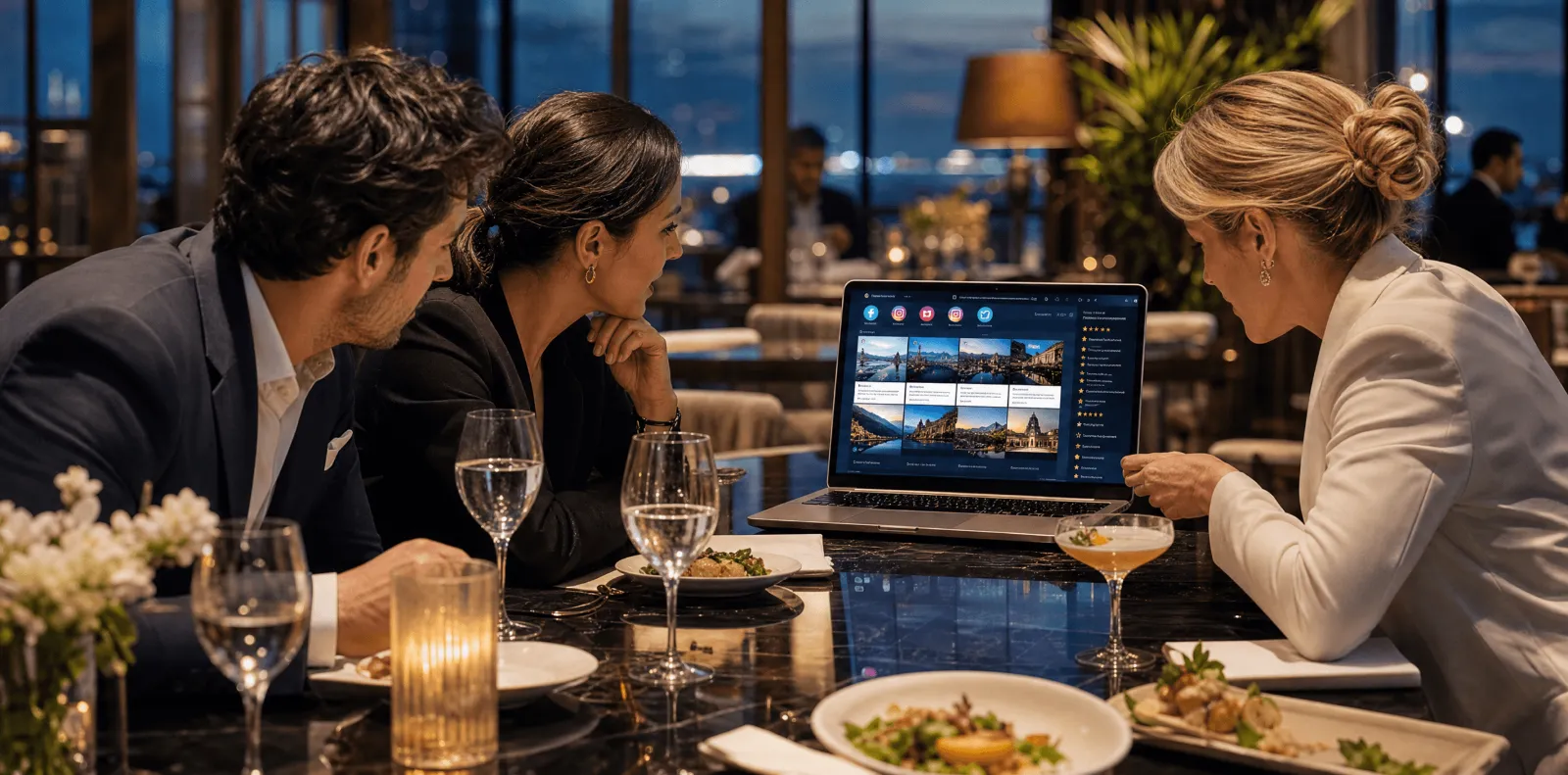
Many restaurants also invest in local SEO services for restaurants to improve Maps visibility and local rankings.
6. Content strategy that fills tables
Many restaurants fail because they only post promotional content.
The strongest restaurant content marketing strategies balance:
- Entertainment
- Emotion
- Trust
- Community
- Conversion
Restaurants that constantly post “Book Now” offers often reduce engagement over time.
People follow restaurants for inspiration and experiences, not just advertisements.
Strong content remains one of the most important parts of successful social media marketing for restaurants because it directly influences visibility, engagement, customer trust, and bookings.
7. What to post: restaurant content ideas that fill tables
The best-performing restaurant content is built on four pillars. Use the share of posts as a guide, not a rule.
| Pillar (share of posts) | Content type | What to post | How to do it well |
| Food and drink (~50%) | Signature dishes and specials | New menu items, seasonal specials, a dish being plated, the cheese pull or the pour, “what £30 gets you” | Show the dish in the first second. Put the dish name and price on screen |
| Food and drink (~50%) | Video | 7–30 second vertical clips of plating, pouring and sizzling | Shoot on a phone in natural light. Add on-screen text because most people watch muted. Batch-film in one quiet afternoon and post through the week |
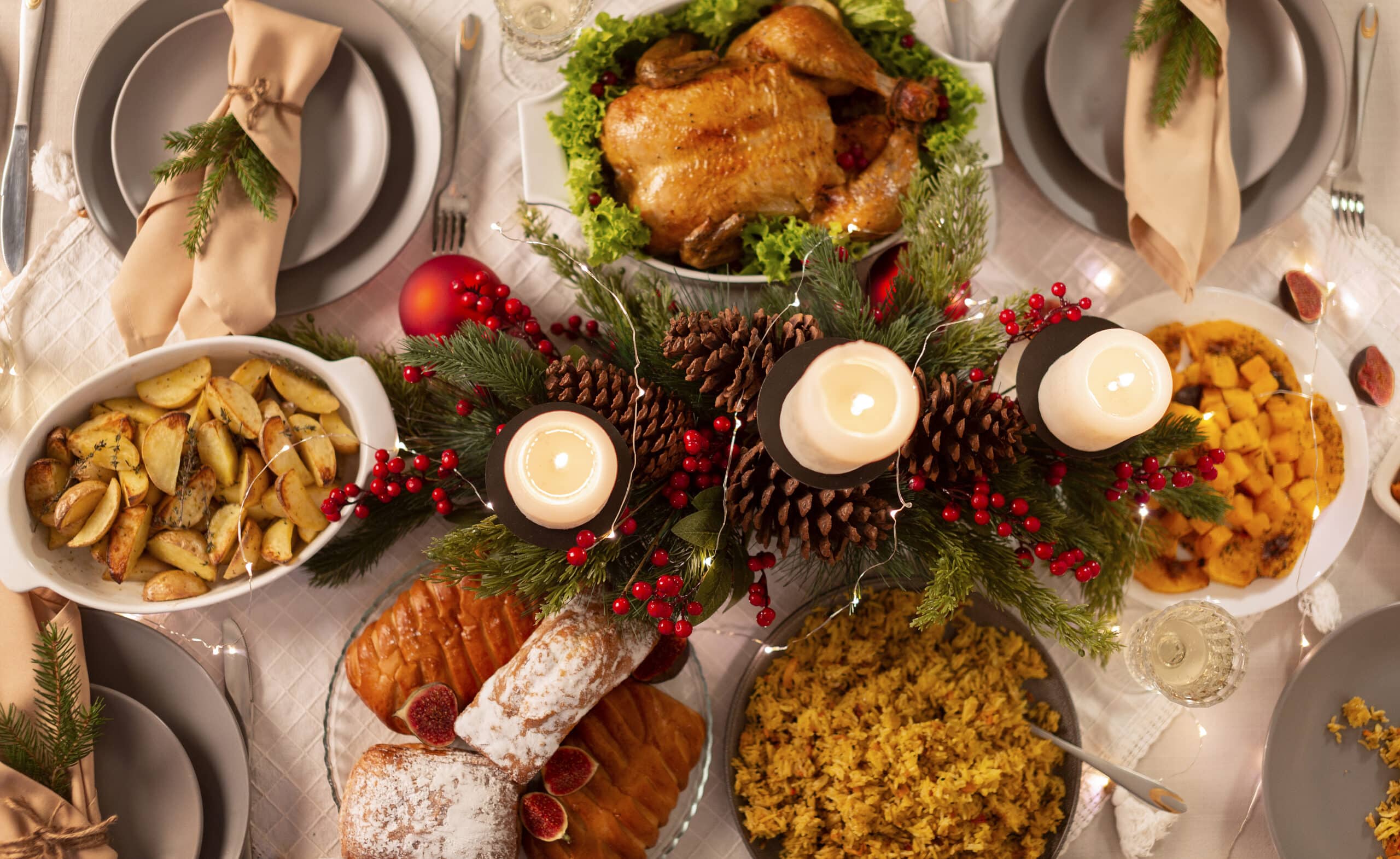
| Food and drink (~50%) | Photography | Hero shots of signature dishes and drinks | 45° for burgers, stacks and drinks, overhead for pizzas, boards and full tables. Use window light and no flash. Keep backgrounds simple and show a hand reaching in |
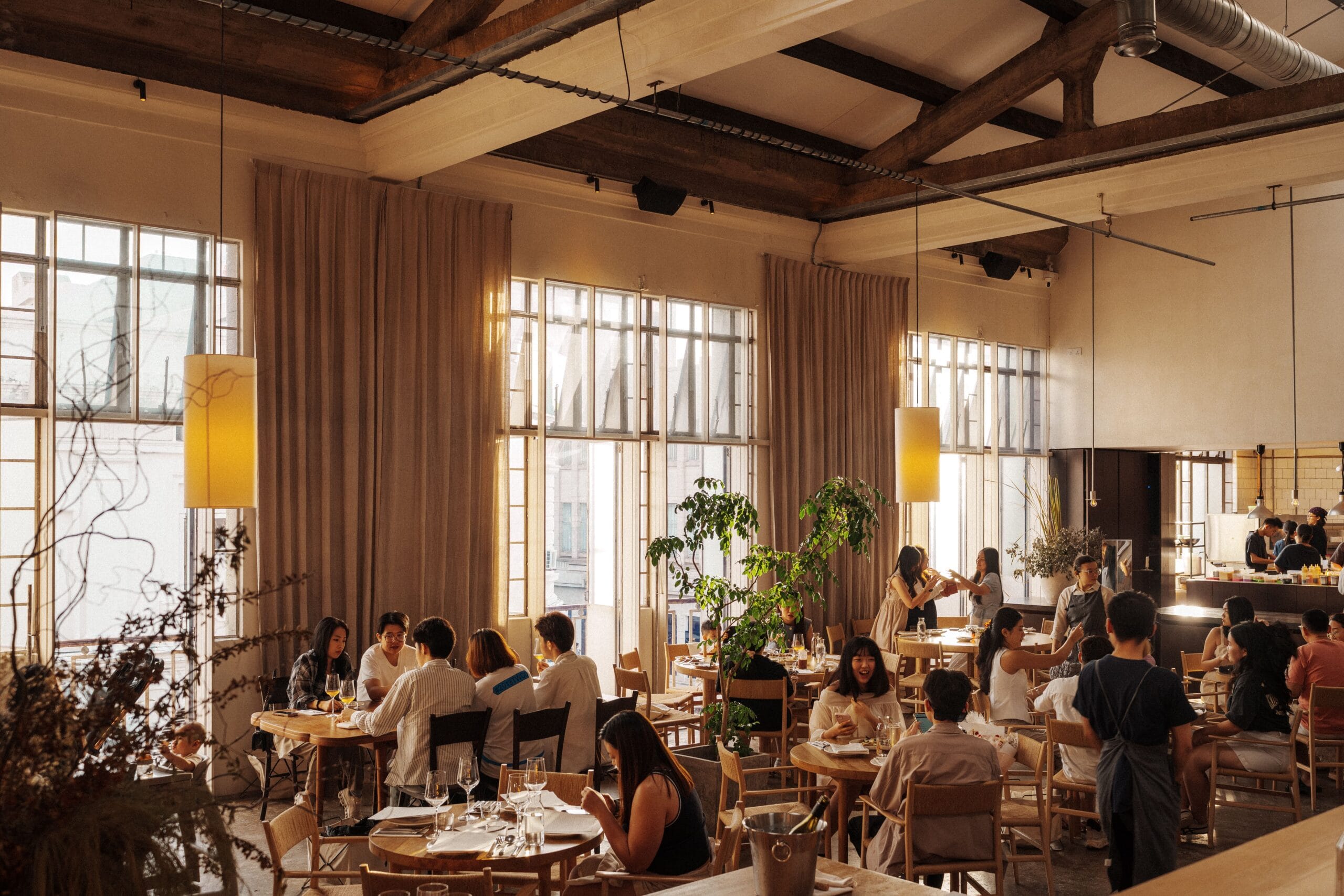
| Atmosphere and experience (~25%) | Ambience | Room filling up at 7 pm, terrace at golden hour, candlelit corners, live music clips | Film at your busiest moment so the room looks alive. Match posts to the occasion (date night, groups, brunch) |
| Atmosphere and experience (~25%) | Guest experience | Table set for a birthday, a tasting menu course by course, private dining set-up | Show what a special occasion with you looks like. Link these posts to your events and private dining enquiry page |
| Behind the scenes (~15%) | Team and culture | Staff introductions, front-of-house favourites, team milestones | Name your people. Faces build loyalty and help hiring too |
| Behind the scenes (~15%) | Kitchen and preparation | Prep at 10 am, the chef on sourcing, supplier and farm visits | Tell the story behind one ingredient. This was The Wild Oak’s best-performing theme |
| Community (~10%) | Local partnerships and influencers | Brewery tap takeovers, florist or bakery collaborations, micro-creator preview nights | Invite 3–4 local micro-creators (about 5,000–50,000 followers) rather than one big account. Gifted or paid posts must be labelled “#ad” under ASA rules |
| Community (~10%) | Customer appreciation and guest content | Reshared guest photos and reviews, a “guest post of the month”, thank-you posts, charity nights | Put your handle on menus and receipts, and create a photogenic corner. Ask permission before resharing (UK GDPR) and credit the guest |
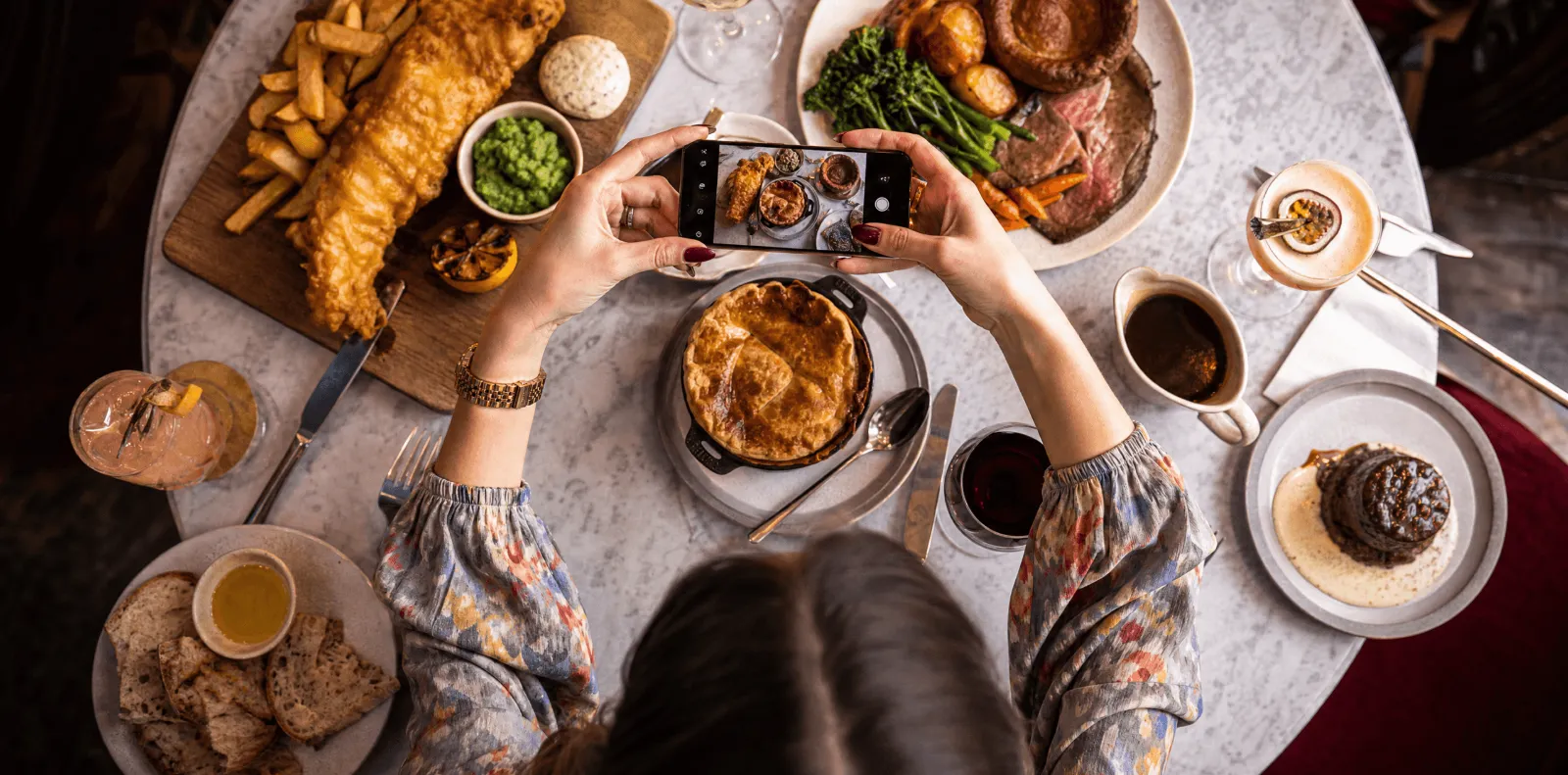
Grow Your Hospitality Brand With Strategic Social Media Marketing
From increasing brand awareness to driving direct enquiries and bookings, our social media strategies help hotels, restaurants, and hospitality brands connect with the right audience and turn engagement into revenue.
8. Recommended posting frequency
| Platform | Recommended Posting Frequency |
| 5–7 feed posts weekly + daily Stories | |
| 4–5 posts weekly | |
| TikTok | 3–5 videos weekly |
| Google Business Profile | 2–3 updates weekly |
9. Best posting times for UK restaurant audiences
| Campaign Type | Best Posting Time |
| Breakfast/Brunch | 7 am – 9 am |
| Lunch Promotions | 11 am – 12 pm |
| Dinner Promotions | 4 pm – 6 pm |
| Weekend Brunch | Sat 9–11 am / Sun 8–10 am |
| Event Promotions | Tue–Thu evenings |
10. Best food photography angles
Macro-style close-ups often perform especially well on Instagram and TikTok because they create stronger sensory reactions.
High-performing restaurant video ideas

Cooking Process Videos
Pasta preparation
Steak searing
Cocktail mixing
Dessert assembly
Bread baking

Dish Reveal Videos
Show preparation
Build anticipation
Reveal final plating
End with close-up details
Overhead (Flat Lay)
Full table spreads
45-Degree
Burgers, pasta, layered dishes
Eye-Level
Cocktails, cakes, burgers
Close-Up
Texture and detail shots

“Satisfying” Food Moments
Cheese pulls
Sauce pours
Steam shots
Crispy textures
Cake slicing

Video Best Practices
Hook viewers within 3 seconds
Keep videos under 30 seconds
Add captions
Use movement naturally
Include trending audio
Maintain consistent branding
11. User-generated content strategy
User-generated content (UGC) is one of the strongest forms of restaurant social proof.
People trust customer experiences more than branded advertisements.
11.1 Encouraging customer content
Restaurants can encourage guest content by:
- Creating Instagram-worthy plating
- Designing photo-friendly interiors
- Using branded hashtags
- Encouraging Story tags
- Offering small incentives
Simple signage like:
“Tag us on Instagram to be featured” can significantly increase customer-generated content.
11.2 Benefits of user-generated content
UGC helps restaurants:
- Build trust
- Increase reach
- Generate free content
- Strengthen community
- Improve authenticity
- Encourage repeat engagement
Restaurants that actively encourage customer content usually create stronger emotional loyalty over time.
12. Building engagement and community
Engagement is what transforms social media followers into loyal customers. Restaurants that consistently interact with their audiences usually build stronger local communities, better word-of-mouth visibility, and higher repeat visit rates.
Follower count alone does not grow restaurants.
Engagement is what turns followers into paying customers.
Restaurants that consistently interact with audiences usually see:
- Higher loyalty
- Better repeat visitation
- Stronger community trust
- Improved word-of-mouth
12.1 Engagement tactics that work
Examples:
- “Which dessert should we return next month?”
- “Pizza or pasta tonight?”
- “Which cocktail should we bring back?”
Polls increase interaction while also giving restaurants valuable customer insights.
Restaurant promotions and social media campaigns perform especially well with giveaways.
Popular formats:
- “Tag 2 friends to win dinner for 2”
- “Share this Story to win cocktails”
- “Best food photo wins a £50 voucher”
Keep contests:
- Simple
- Short
- Easy to enter
Best-performing Story tools:
- Countdown stickers
- Polls
- Booking reminders
- Flash offers
- Last-minute availability
Stories often create urgency more effectively than standard feed posts.
13. Influencer and food blogger collaborations
Restaurant influencer marketing continues to grow rapidly across the UK hospitality industry.
Local creators now influence dining decisions more than many traditional advertisements.
13.1 Why micro-influencers usually perform better
For restaurants, micro-influencers often deliver stronger ROI than celebrity creators.
Micro-influencers typically offer:
- Higher engagement rates
- Stronger local trust
- More relevant audiences
- Better authenticity
Local relevance matters far more than massive follower counts in restaurant marketing.
13.2 Best influencers for restaurants
Restaurants can collaborate with:
- Food bloggers
- Lifestyle creators
- Date-night influencers
- Cocktail creators
- Local travel influencers
- Parent creators
Restaurant Instagram marketing campaigns usually perform strongest when creators already have local audience trust.
13.3 Influencer collaboration ideas
Popular restaurant influencer marketing campaigns include:
- Complimentary dining experiences
- Seasonal menu launches
- Soft openings
- Chef tasting nights
- Behind-the-scenes experiences
Authenticity performs much better than overly scripted promotions.
A Birmingham cafe, for example, generated over 40,000 local video views after inviting three micro-food creators to preview a seasonal brunch launch.
14. Social media advertising for restaurants
Organic posts build trust with people who already follow you. Paid ads reach the people nearby who don’t follow you yet. For most independents, a small, tightly targeted budget works better than big bursts.
- Target your slowest nights. Run ads Monday to Thursday, not Friday and Saturday when you’re already full.
- Keep the radius tight. Target 3–5 miles for neighbourhood restaurants. Widen it only for destination venues.
- Use one message and one button. For example, “Two courses for £22, Tuesday to Thursday – book direct”, linking to your booking page.
- Retarget. Show a second ad to people who visited your booking page but didn’t book.
- Rotate creative weekly. The same video shown to the same people stops working within a couple of weeks.
- Start small. A test of £5–£15 a day for two to four weeks will show you what works before you scale.
If you promote drinks, check the CAP Code rules on alcohol. Ads mustn’t be aimed at under-18s, and they mustn’t link drinking to social or sexual success.
In ThisRapt’s work with The Copper Fig, a 60-cover independent, Meta ads were geo-targeted to a 5-mile radius and combined with retargeting and Google Ads. Over six months, paid cost per booking fell from about £38 to £22, and direct reservations rose from 28% to 50% of covers.

Food

Ambience

Prices

Reviews

Experiences

Offers
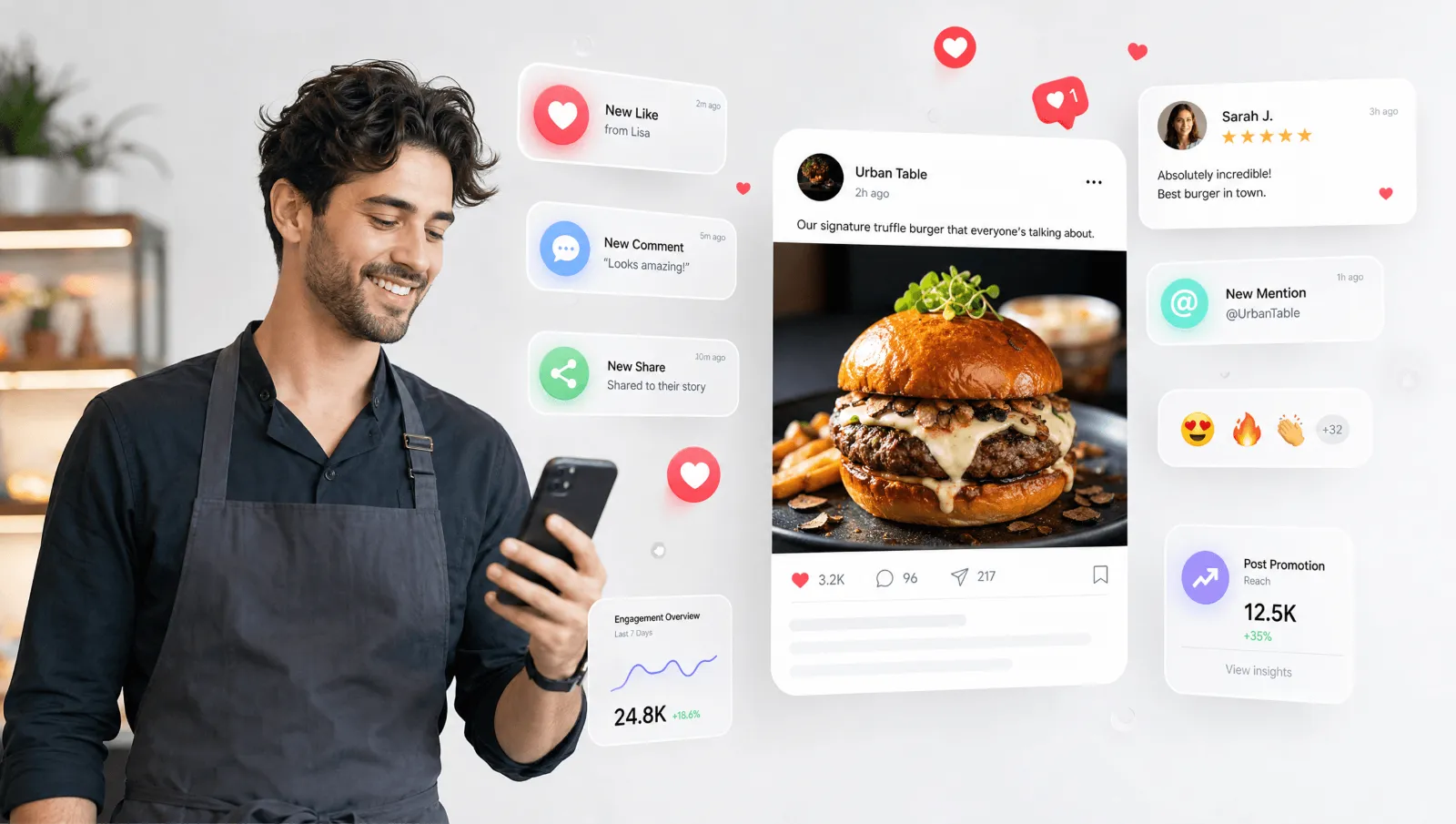
Make Every Reel a Growth Opportunity for Your Brand
Reels are no longer just entertainment—they’re one of the fastest ways to increase visibility, build trust, and attract new customers. Create a content strategy that turns short videos into long-term business growth.
15. Turning followers into direct bookings
Likes don’t pay rent. Make it easy to go from a post to a booked table:
- One booking link. Put your direct booking page in every bio, and use the Instagram “Reserve” button or link sticker. Don’t send people to a homepage.
- A fast booking page. It should load in under three seconds on mobile and take no more than three taps to confirm.
- A reason to book direct. For example, a free glass of fizz, priority for the window table, or early access to new menus.
- Stories that create urgency. “6 tables left for Saturday”, with a link sticker and countdown, on the days you know you’ll have gaps.
- Events and private dining. Give tasting menus, supper clubs and festive parties their own posts and their own enquiry links.
Your social profiles should function like conversion-focused landing pages.
Every profile should immediately communicate:
- What your restaurant offers
- Why should people visit
- How to book quickly
Every restaurant Instagram profile should include:
- A direct booking link
- Menu access
- Contact buttons
- Accurate address
- Story Highlights
- Clear bio description
- Menu
- Reviews
- Events
- Specials
- Behind the scenes
- Cocktails
- Private dining
Restaurants with incomplete profiles often lose bookings before customers even visit the website.
Restaurants should ensure:
- Opening hours stay updated
- Menus remain accurate
- Booking buttons function properly
- Reviews are monitored actively
- Events are posted regularly
An outdated Facebook page immediately reduces trust.
Stories remain one of the strongest tools for restaurant customer engagement because they feel immediate and personal.
High-performing Story tactics include:
- Countdown stickers
- Booking reminders
- Flash promotions
- Last-minute availability
- Polls
- Limited-time offers
Stories often create urgency more effectively than static posts.
Example:
A Liverpool cocktail bar increased Thursday bookings after running weekly “Last Tables Available” Stories with countdown stickers and direct booking links.
16. Managing your restaurant’s online reputation
Online reputation now plays a major role in restaurant discovery and customer trust. Reviews, tagged content, and social conversations can directly influence whether potential diners choose your restaurant or a competitor.
Online reputation directly impacts bookings.
Most diners now read reviews before deciding where to eat.
Strong online reputation improves:
- Trust
- Conversion rates
- Repeat visits
- Local SEO visibility
- Social proof
17. Tools and resources for restaurant social media
Managing restaurant social media consistently becomes much easier with the right systems and tools.
Restaurants that streamline content creation often achieve:
- Better consistency
- Faster publishing
- Higher quality visuals
- Stronger engagement
- More measurable ROI
17.1 Best content creation tools
Photo Editing Tools
- Lightroom Mobile
- VSCO
- Snapseed
Video Editing Tools
- CapCut
- InShot
Design Tools
- Canva
18. Best scheduling tools
| Tool | Best For |
| Later | Instagram scheduling |
| Buffer | Simple scheduling |
| Hootsuite | Multi-platform management |
| Planoly | Feed planning |
| Meta Business Suite | Facebook & Instagram management |
19. Measuring social media ROI for restaurants
One of the biggest challenges in restaurant social media marketing is proving measurable business impact. Tracking the right KPIs helps restaurants understand which content and campaigns actually drive revenue.
Many restaurants focus too heavily on vanity metrics.
Likes alone do not grow revenue.
Restaurants should focus on business-driven KPIs tied directly to:
- Reservations
- Revenue
- Repeat customers
- Customer lifetime value
Restaurants that treat social media marketing for restaurants as a measurable business growth channel usually achieve stronger long-term ROI and more predictable customer acquisition.
19.1 Important restaurant social media KPIs

Awareness Metrics
- Reach
- Impressions
- Follower growth
- Brand mentions

Conversion Metrics
- Table bookings
- Website visits
- Phone calls
- Direction requests
- Online orders

Engagement Metrics
- Comments
- Shares
- Saves
- Story replies
- Video watch time

Revenue Metrics
- Revenue from social bookings
- Average spend
- Repeat visit rate
- Event inquiries
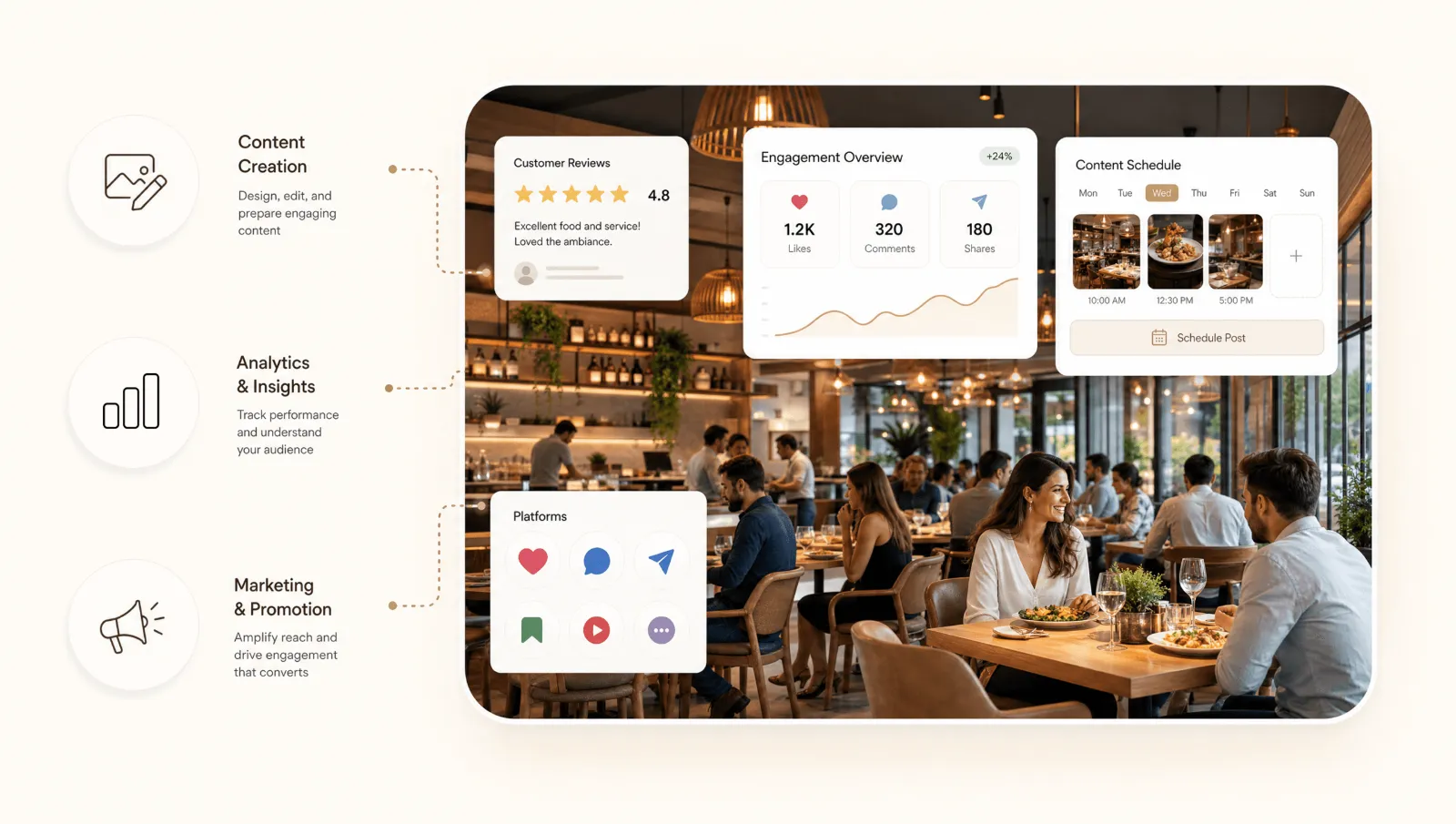
Turn Social Media Engagement Into More Diners
Your next customers are scrolling right now. A strategic social media presence helps your restaurant stand out, build loyalty, and drive more reservations and walk-ins.
20. Realistic benchmarks for restaurants
| Metric | New Accounts | Established Accounts |
| Engagement Rate | 1–3% | 3–6% |
| Monthly Followers | 100–300 | 5–10% monthly growth |
| Social Bookings | 5–15 monthly | 20–50+ monthly |
TikTok engagement rates often outperform Instagram because discovery is more algorithm-driven.
20.1 Attribution strategies
Restaurants should combine:
- Direct attribution
- Indirect attribution
20.2 Direct attribution examples
- Discount codes
- Booking links
- Reservation surveys
- Campaign landing pages
20.3 Indirect attribution examples
- Walk-in increases
- Brand search growth
- Repeat customer increases
- Booking spikes during campaigns
Not every customer converts immediately after seeing content.
21. Common social media marketing mistakes restaurants make
Many restaurants waste budget and time because of avoidable mistakes.
- Posting only when it’s quiet, then going silent for weeks.
- Using stock photos or over-edited shots that don’t match what arrives at the table.
- Ignoring comments and DMs. Reply within a day, and that includes complaints.
- Promoting offers on nights you’re already full.
- Sending people to a homepage instead of a booking page.
- Boosting random posts instead of running a proper campaign with a goal.
For reviews and complaints, see our guide to online reputation management. For getting recommended by ChatGPT and Google’s AI answers, see GEO for restaurants.
22. Advanced strategies for competitive restaurant markets
Restaurants in competitive UK cities need stronger differentiation strategies.
Generic content rarely stands out anymore.
Hyper-Local Content Strategy
Restaurants should showcase:
- Neighbourhood culture
- Local events
- Area partnerships
- Community stories
- Supplier relationships
This strengthens local restaurant marketing visibility and community trust.
Seasonal Ingredient Storytelling
Restaurants should showcase:
- Farm partnerships
- Seasonal menus
- Ingredient sourcing
- “Farm-to-table” content
This improves both engagement and brand perception.
Dietary-Specific Content
Restaurants should create dedicated content for:
- Vegan diners
- Gluten-free audiences
- Vegetarian customers
- Allergy-conscious diners
Clear dietary communication builds trust and expands audience reach.
Experience-Based Marketing
Restaurants should market experiences, not just meals.
- Date nights
- Celebration packages
- Bottomless brunches
- Pet-friendly dining
- Chef experiences
Emotional positioning usually performs better than feature-focused marketing.
Live Content and Real-Time Engagement

Instagram & Facebook Live
Restaurants can stream:
- Cooking demos
- Kitchen tours
- Chef Q&As
- Event previews
- Live music
Live content creates immediacy and authenticity.

Real-Time Story Content
Stories work especially well for:
- Daily specials
- Last-minute tables
- Kitchen activity
- Team updates
- Flash promotions
This keeps restaurant accounts active and up to date.
23. Working with restaurant social media specialists
As restaurant marketing becomes more competitive and content-heavy, many hospitality businesses struggle to maintain consistent social media performance without professional support.
Many restaurant owners struggle to manage social media consistently while also running their businesses daily.
Professional support often becomes necessary when:
- Posting becomes inconsistent
- Engagement remains low
- Advertising underperforms
- Content quality suffers
- Teams lack time
23.1 What to look for in a restaurant marketing agency
Industry Experience
Look for agencies with:
- Hospitality expertise
- UK market knowledge
- Restaurant case studies
- Food photography experience
Hospitality marketing requires a specialised creative strategy.
Service Capabilities
Restaurant marketing agencies should offer:
- Content creation
- Food photography
- Video production
- Paid advertising
- Community management
- Analytics reporting
Integrated services usually produce better long-term results.
Proven Results
Restaurants should ask for:
- Booking growth examples
- Engagement improvements
- ROI reporting
- Client testimonials
- Case studies
Results matter far more than vanity metrics.
24. How ThisRapt supports UK restaurants
ThisRapt helps restaurants grow through:
- Restaurant-specific social media strategies
- Professional food photography
- Video production
- Paid advertising
- Community management
- Local SEO support
- Brand positioning
- Performance tracking
The goal is not just engagement, but measurable bookings and sustainable growth.
Expected Timeline
| Months 1–2 | Months 3–4 | Months 5–6 | Months 6+ |
|
|
|
|
In 2026, successful social media marketing for restaurants is no longer only about posting food photos. It is about building visibility, trust, local authority, customer loyalty, and measurable business growth.
Your future customers are already scrolling, searching, watching food videos, and deciding where to eat next.
The question is whether your restaurant will stand out when they do.
Explore ThisRapt’s Social Media Marketing services to build a table-filling social presence for your UK restaurant.
25. SMM Restaurants FAQs
Social media marketing for restaurants involves using platforms like Instagram, Facebook, TikTok, and Google to attract diners, improve visibility, increase bookings, strengthen customer engagement, and drive long-term growth for restaurants online.
Social media marketing helps restaurants increase visibility, attract local customers, improve engagement, promote menus, and generate direct bookings through Instagram, Facebook, TikTok, and Google.
Instagram is usually the most important platform because food content performs extremely well visually. Facebook remains highly valuable for local engagement, while TikTok continues to grow rapidly for restaurant discovery.
Most restaurants should aim to post:
- Instagram: 5–7 times weekly
- Facebook: 4–5 times weekly
- TikTok: 3–5 videos weekly
- Daily Stories across platforms
Consistency matters more than volume.
The highest-performing restaurant content usually includes:
- Food photography
- Reels and TikTok videos
- Behind-the-scenes footage
- Guest experiences
- Seasonal dishes
- User-generated content
- Chef storytelling
Restaurants can improve bookings by:
- Using booking links in bio
- Running targeted ads
- Posting strong visuals
- Sharing customer reviews
- Using Stories with booking CTAs
- Promoting limited-time offers
Yes. Restaurant Facebook ads can effectively target local diners, promote events, fill off-peak tables, and retarget previous visitors. Well-managed campaigns often generate strong ROI.
Independent restaurants often start with £200–£ 1,000 per month, depending on location, competition, and growth goals.
Most restaurants begin seeing measurable improvements within 3–6 months when posting consistently, engaging actively, and using targeted advertising.
Restaurants often benefit from agency support when they lack time, struggle with consistency, or want professional photography, advertising management, and measurable booking growth.