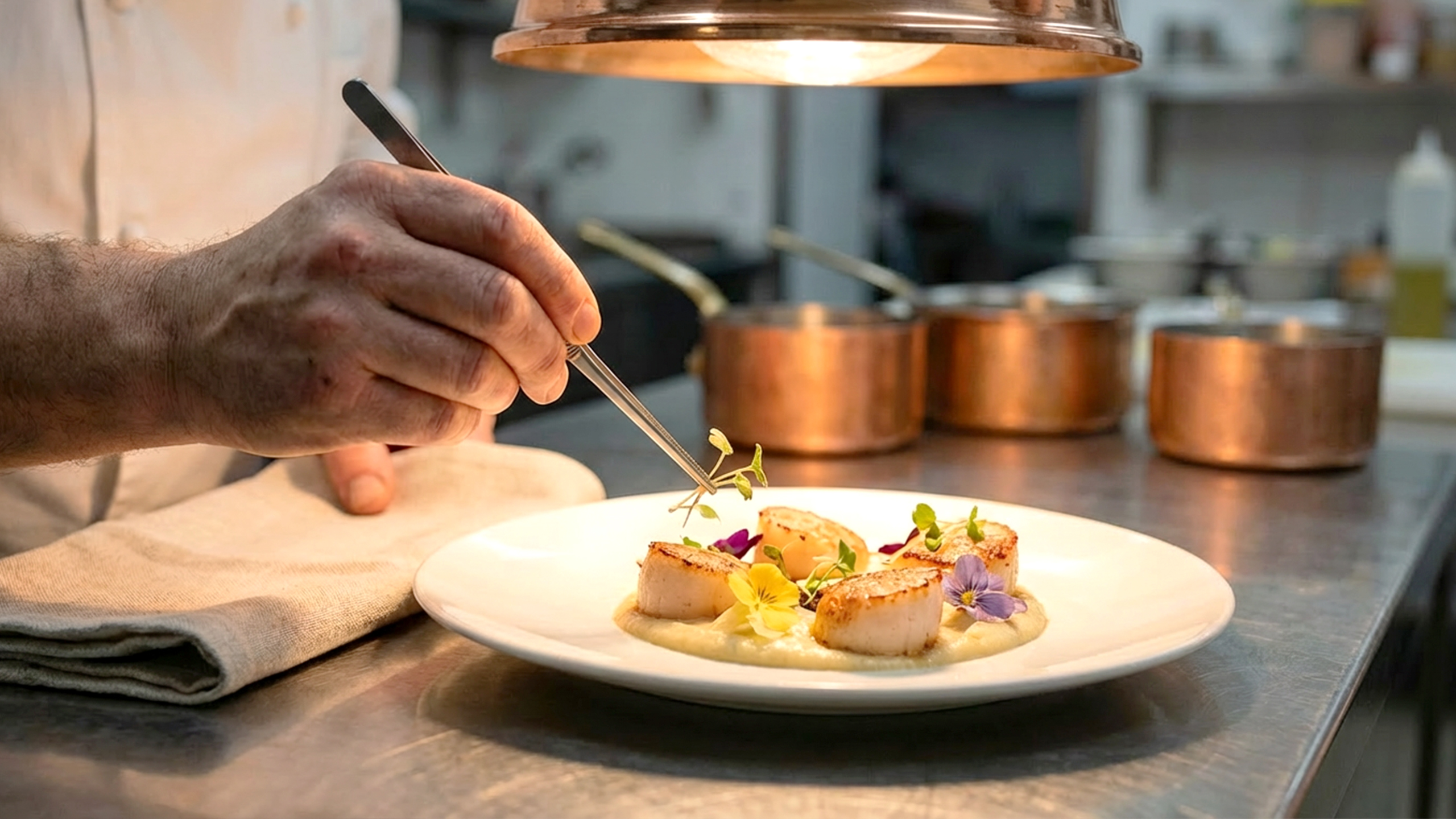
Restaurants no longer rely only on walk-ins, word-of-mouth referrals, or newspaper advertisements. Today, most diners discover restaurants online before deciding where to eat.
In the UK, platforms like Instagram, Facebook, TikTok, and Google Business Profile have become major drivers of restaurant discovery, customer engagement, and direct table bookings. Diners now scroll through food photos, watch Reels, compare ambience, read reviews, and explore menus before they ever visit a restaurant.
For modern restaurants, social media marketing is no longer optional. It is one of the most important marketing channels for visibility, trust, and long-term growth.
According to recent restaurant and local review research:
- 68% of diners check a restaurant’s social media before deciding to visit.
- 55% of consumers look for menu information, while 54% check opening hours when reviewing local businesses online.
- 41% of 18–24-year-olds use TikTok most often to discover new restaurants.
- 57% of diners say pictures of food influence their decision to visit a restaurant.
At the same time, UK restaurants face:
- Rising labour costs
- Increasing ingredient prices
- Delivery platform commissions
- Stronger local competition
- Higher customer expectations
Many delivery platforms now take between 25–35% commission per order, making direct customer relationships more valuable than ever.
This opens up a big opportunity for restaurants.
Restaurants with strong social media marketing strategies can:
- Increase direct reservations
- Reduce dependency on delivery apps
- Fill tables during quieter periods
- Build loyal local communities
- Promote seasonal menus instantly
- Improve repeat customer rates
- Strengthen brand recognition
- Generate long-term profitability
A Manchester brunch cafe, for example, increased weekday bookings after consistently posting chef-special Reels and behind-the-scenes kitchen content. A London steakhouse reduced its reliance on delivery platforms by promoting reservation-only offers through Instagram Stories and Facebook retargeting campaigns.
This guide covers everything UK restaurants need to know about social media marketing in 2026, including restaurant Instagram marketing, TikTok marketing for restaurants, food photography marketing, influencer collaborations, paid advertising, customer engagement, AI search optimisation, and converting followers into real bookings.
1. Why social media marketing is essential for UK restaurants
1.1 The modern diner’s discovery journey
The way customers choose restaurants has changed completely.
Instead of relying only on recommendations or walking through busy streets, diners now research restaurants online before making decisions.
Social media now acts as the online shopfront for restaurants.
Most customers now interact with multiple platforms before booking:
- Instagram for food visuals and ambience
- Facebook for reviews and events
- TikTok for trending food experiences
- Google for local search and directions
This shift has made hospitality social media marketing one of the biggest growth drivers in the restaurant industry.
A common mistake is relying only on delivery apps, rather than building your own audience through social media and direct bookings.
Restaurants that invest in long-term audience building tend to achieve more predictable growth over time.
Effective social media marketing for restaurants helps businesses stay visible throughout the entire customer decision-making journey, from discovery and menu research to bookings and repeat visits.
1.2 How UK diners use social media

Instagram Discovery
Instagram remains one of the strongest platforms for restaurant Instagram marketing because food is naturally visual.
Potential diners use Instagram to:
- Browse food photography
- Evaluate ambience
- Compare dining experiences
- Discover trending dishes
- Save restaurants for later visits
Restaurants that post attractive photos often spark instant interest from potential diners.

Facebook Research
Facebook still plays a major role in restaurant marketing UK strategies, especially for:
- Family restaurants
- Community dining venues
- Local cafes
- Event-driven restaurants
Customers use Facebook to:
- Read reviews
- Explore menus
- Check opening hours
- Discover local events
- Contact businesses directly
Facebook is still very useful for helping local restaurants get noticed.

Instagram Discovery
TikTok marketing for restaurants has grown rapidly because short-form video creates fast emotional engagement.
Food content performs especially well because:
- Cooking videos are highly visual
- “Satisfying” clips hold attention
- Viral dishes spread quickly
- Authentic content feels trustworthy
If your restaurant wants to reach younger people, TikTok should be a top priority in your social media plan.
2. The UK restaurant landscape in 2026
The UK restaurant market is more competitive than ever.
There are now more than 150,000 eating establishments across the UK competing for attention.
At the same time:
- Rent continues rising
- Labour shortages remain challenging
- Ingredient costs fluctuate
- Competition increases across local markets
Restaurants that rely only on delivery apps or review platforms often struggle to build long-term customer loyalty.
Social media helps restaurants regain control by:
- Building owned audiences
- Increasing direct reservations
- Creating repeat customers
- Strengthening restaurant branding on social media
- Improving local awareness
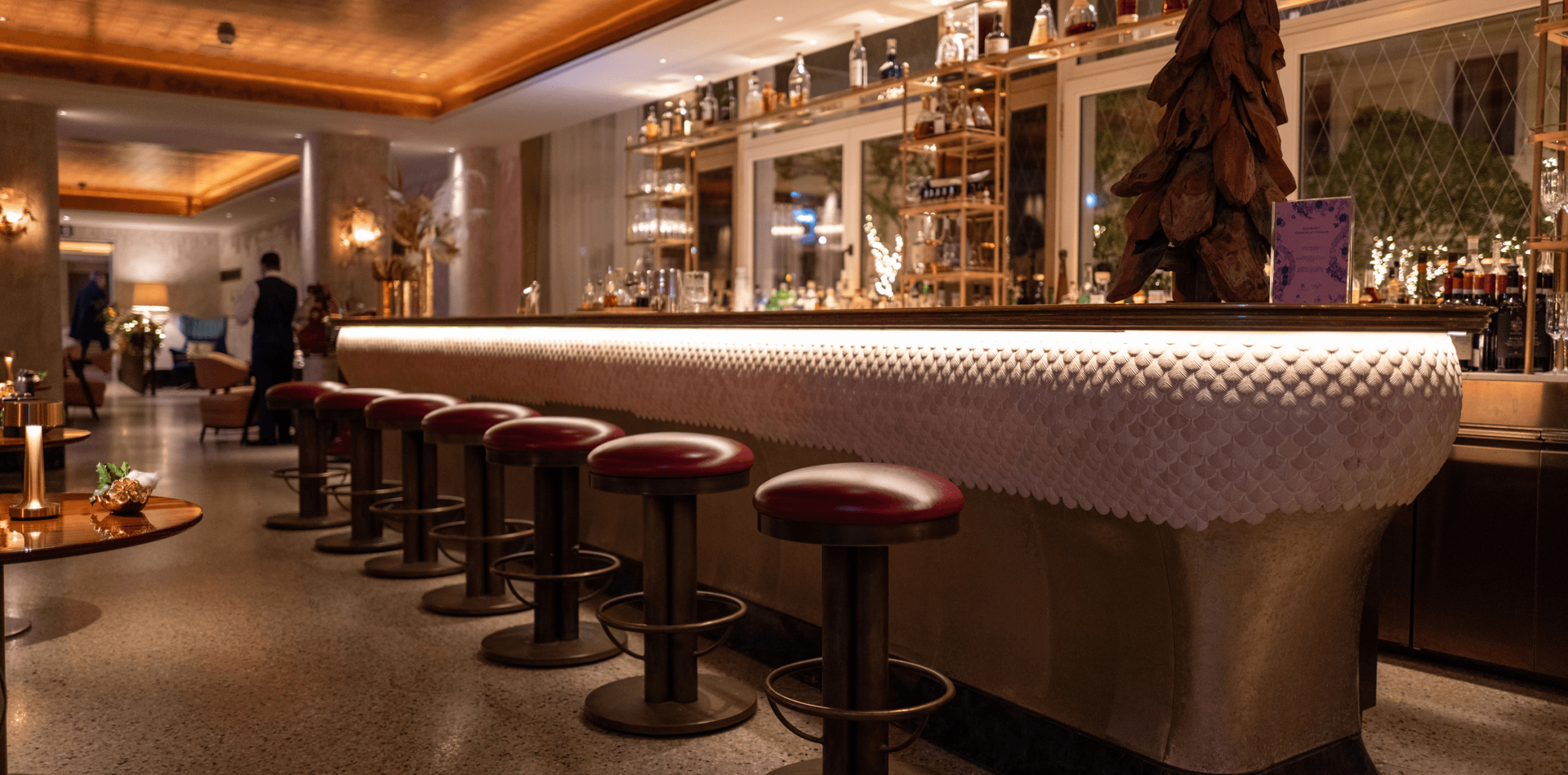
Instead of competing only on price or convenience, restaurants can build memorable brands that customers actively seek out.
3. What social media solves for restaurants
| Restaurant Challenge | Social Media Solution |
| Empty weekday tables | Targeted promotions |
| Heavy delivery commissions | Direct reservations |
| Low awareness | Local visibility |
| Weak loyalty | Community building |
| High competition | Strong brand positioning |
| Poor repeat business | Engagement campaigns |
4. Defining your restaurant’s social media strategy
A successful restaurant social media strategy is not just about posting food photos consistently. It requires understanding your customers, choosing the right platforms, creating engaging content, and aligning social media efforts with real business goals, such as bookings and repeat visits.
Many restaurants struggle because they post randomly without clear goals.
Successful restaurant social media marketing starts with understanding:
- Business objectives
- Ideal customers
- Brand identity
- Customer journey
- Platform strengths
- Conversion goals
Even great photos won’t deliver steady results if you don’t have a clear strategy.
The best social media marketing for restaurants combines branding, customer engagement, content strategy, and conversion optimisation to support measurable restaurant growth.
Strong restaurant branding services help restaurants create memorable customer experiences across every platform.
4.1 Setting clear social media goals
Different restaurants need different goals depending on their growth stage.

For New Restaurants
New restaurants should focus on:
- Building awareness
- Creating launch buzz
- Attracting first-time diners
- Establishing visual identity
- Building trust quickly
At this point, it’s more important to get noticed than to push for sales.

For Established Restaurants
Established restaurants often focus more on:
- Repeat visits
- Filling off-peak periods
- Private dining bookings
- Event promotion
- Loyalty building
- Direct ordering
Restaurant customer engagement becomes especially important during this stage
Turn Social Media Followers into Restaurant Guests.
Your next customers are discovering where to eat on Instagram, Google, and social media every day. Build a strategy that increases visibility, attracts diners, and keeps tables full.
4.2 Understanding your target diner
Occasion Diners
These customers typically book for:
- Birthdays
- Anniversaries
- Celebrations
- Date nights
- Valentine’s Day
They respond strongly to:
- Ambience photography
- Emotional storytelling
- Elegant plating
- Experience-focused visuals
Best platforms: Instagram and Facebook
Local Regulars
These customers prioritise:
- Convenience
- Familiarity
- Community connection
They engage strongly with:
- Daily specials
- Lunch deals
- Loyalty offers
- Behind-the-scenes content
Best platforms: Facebook and Instagram
Tourists and Visitors
Tourists heavily rely on:
- Google searches
- Reviews
- Instagram discovery
- “Near me” searches
They look for:
- Signature dishes
- Trust signals
- Authentic experiences
- Convenient locations
Best platforms: Google Business Profile and Instagram.
Learn more about improving restaurant visibility with this hospitality SEO guide.
4.3 Foodies and experience seekers
These diners actively seek:
- Chef-led experiences
- Seasonal menus
- Unique concepts
- Viral food moments
They engage heavily with:
- Reels
- TikTok videos
- Ingredient sourcing stories
- Chef content
Best platforms: Instagram and TikTok
5. Choosing the right platforms for restaurants
Not every social media platform works equally well for every restaurant.
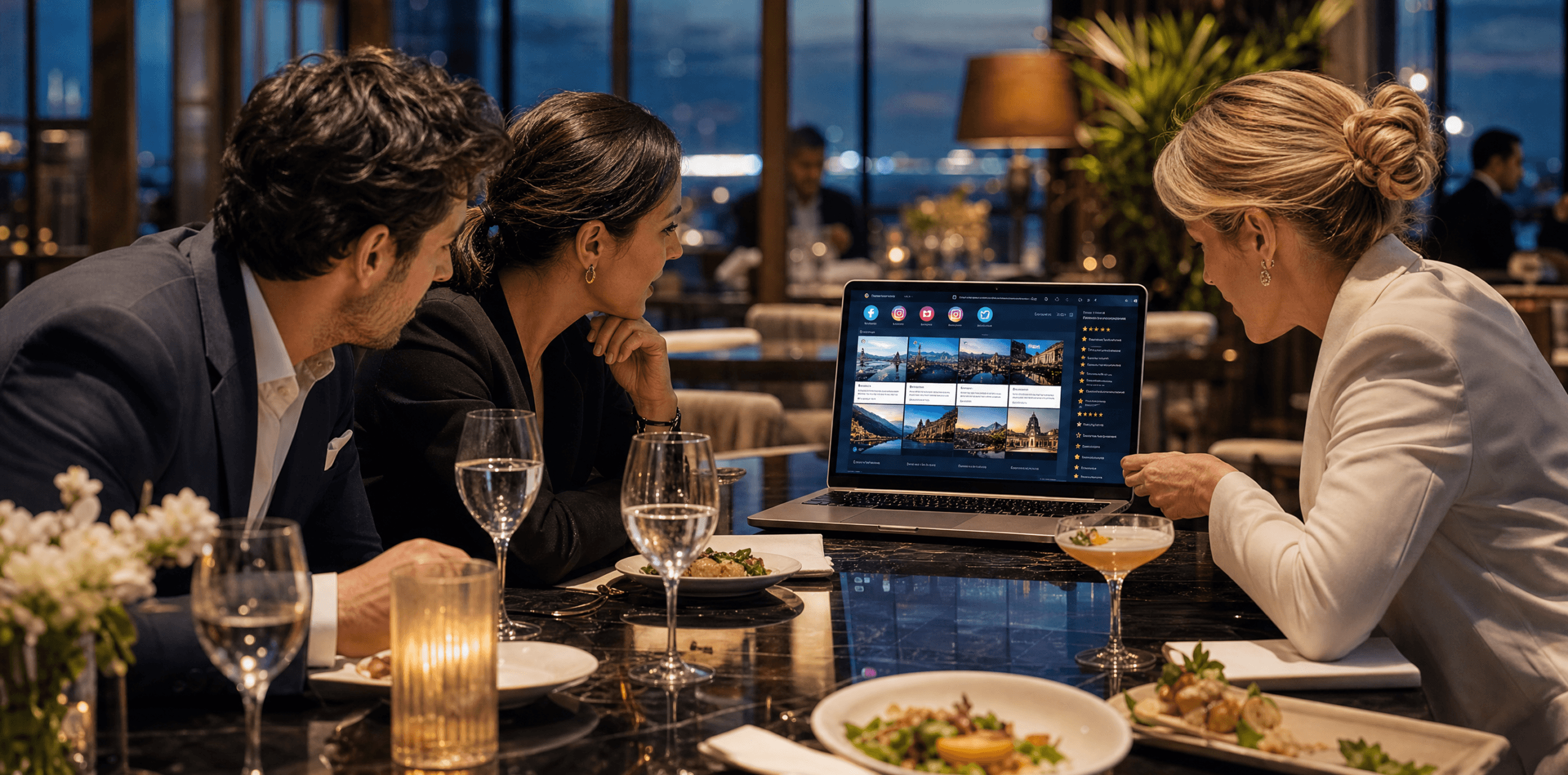
The right platform mix depends on your audience, restaurant concept, content style, and marketing goals.
| Platform | Best For | Main Strength |
| Most restaurants | Visual discovery | |
| Local community restaurants | Reviews & events | |
| TikTok | Trendy concepts | Viral discovery |
| Google Business Profile | All restaurants | Local SEO visibility |
| YouTube | Chef-led brands | Long-form storytelling |
Instagram (Priority Platform for Restaurants)
Instagram remains essential for restaurant branding social media strategies because it combines:
- Food photography
- Video content
- Storytelling
- Discovery algorithms
- Influencer reach
Best-performing content includes:
- Reels
- Stories
- Atmosphere visuals
- Dish reveals
- Behind-the-scenes footage
If you skip short-form video, you’re missing out on big chances to get noticed.
Facebook (Still Highly Valuable)
Facebook performs especially well for:
- Family-focused restaurants
- Community engagement
- Local events
- Older demographics
- Group dining
Some restaurants overlook Facebook because Instagram seems newer, but Facebook still brings in a lot of local engagement and helps promote events in the UK.
TikTok (Fastest-Growing Discovery Platform)
TikTok works best for:
- Trendy concepts
- Viral dishes
- Casual dining
- Younger demographics
The platform rewards:
- Authenticity
- Personality
- Entertainment
- Fast storytelling
Highly polished content often performs worse than natural, personality-driven videos.
Google Business Profile (Critical for Local Discovery)
Although not technically social media, Google Business Profile is essential for restaurant local SEO.
It directly influences:
- Google Maps visibility
- “Restaurant near me” searches
- Calls and directions
- Review trust
- Local rankings
Restaurants should regularly update:
- Photos
- Menus
- Opening hours
- Events
- Promotions
A fully optimised Google Business Profile often becomes one of the highest-converting restaurant marketing assets.
Many restaurants also invest in local SEO services for restaurants to improve Maps visibility and local rankings.
6. Content strategy that fills tables
Many restaurants fail because they only post promotional content.
The strongest restaurant content marketing strategies balance:
- Entertainment
- Emotion
- Trust
- Community
- Conversion
Restaurants that constantly post “Book Now” offers often reduce engagement over time.
People follow restaurants for inspiration and experiences, not just advertisements.
Strong content remains one of the most important parts of successful social media marketing for restaurants because it directly influences visibility, engagement, customer trust, and bookings.
7. The four restaurant content pillars
7.1 Food and Drink content (50%)
Food content remains the foundation of restaurant social media ideas because it directly influences cravings and booking decisions.
Best-performing food content includes:
- Signature dishes
- Seasonal specials
- Cocktails
- Desserts
- Chef recommendations
- Ingredient close-ups
- Dietary-friendly options
Food remains one of the strongest engagement drivers across every major social platform.
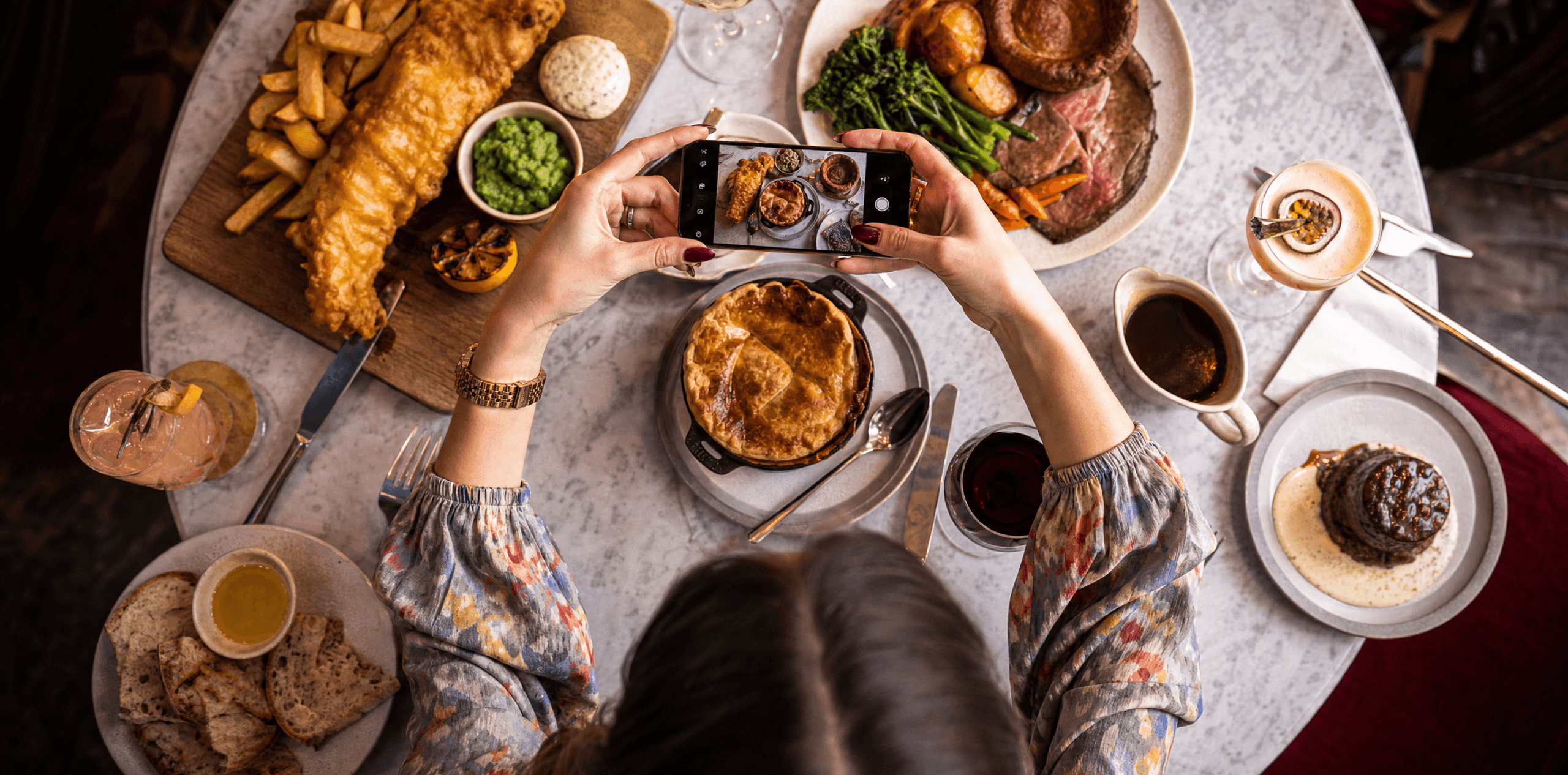
7.2 Food photography best practices
Strong food photography marketing depends heavily on:
- Lighting
- Composition
- Colour consistency
- Styling
- Editing
Best practices include:
- Natural lighting whenever possible
- Warm colour tones
- Minimal clutter
- Clean plating
- Multiple angles
- Consistent editing
Restaurants should aim for a recognisable visual style that strengthens brand identity.
7.3 Video food content (Highest engagement)
Short-form video now outperforms static photography on most platforms.
Top-performing restaurant videos include:
- Cheese pulls
- Dessert reveals
- Cocktail pouring
- Cooking footage
- Dish plating
- Kitchen action
Restaurant Instagram marketing strategies should strongly prioritise Reels because they currently receive significantly higher reach than standard photo posts.
Grow Your Hospitality Brand With Strategic Social Media Marketing
From increasing brand awareness to driving direct enquiries and bookings, our social media strategies help hotels, restaurants, and hospitality brands connect with the right audience and turn engagement into revenue.
7.4 Atmosphere and experience content (25%)
Diners do not only pay for food.
They pay for:
- Atmosphere
- Emotions
- Celebrations
- Experiences
- Social moments
A restaurant’s ambience strongly influences whether someone decides to book a table, especially for:
- Date nights
- Birthdays
- Weekend outings
- Group dinners
- Business meals
This is why atmosphere-focused content performs extremely well in restaurant social media marketing.
Restaurants that successfully market experiences, not just dishes, usually build stronger emotional connections with customers.
Restaurants should regularly showcase:
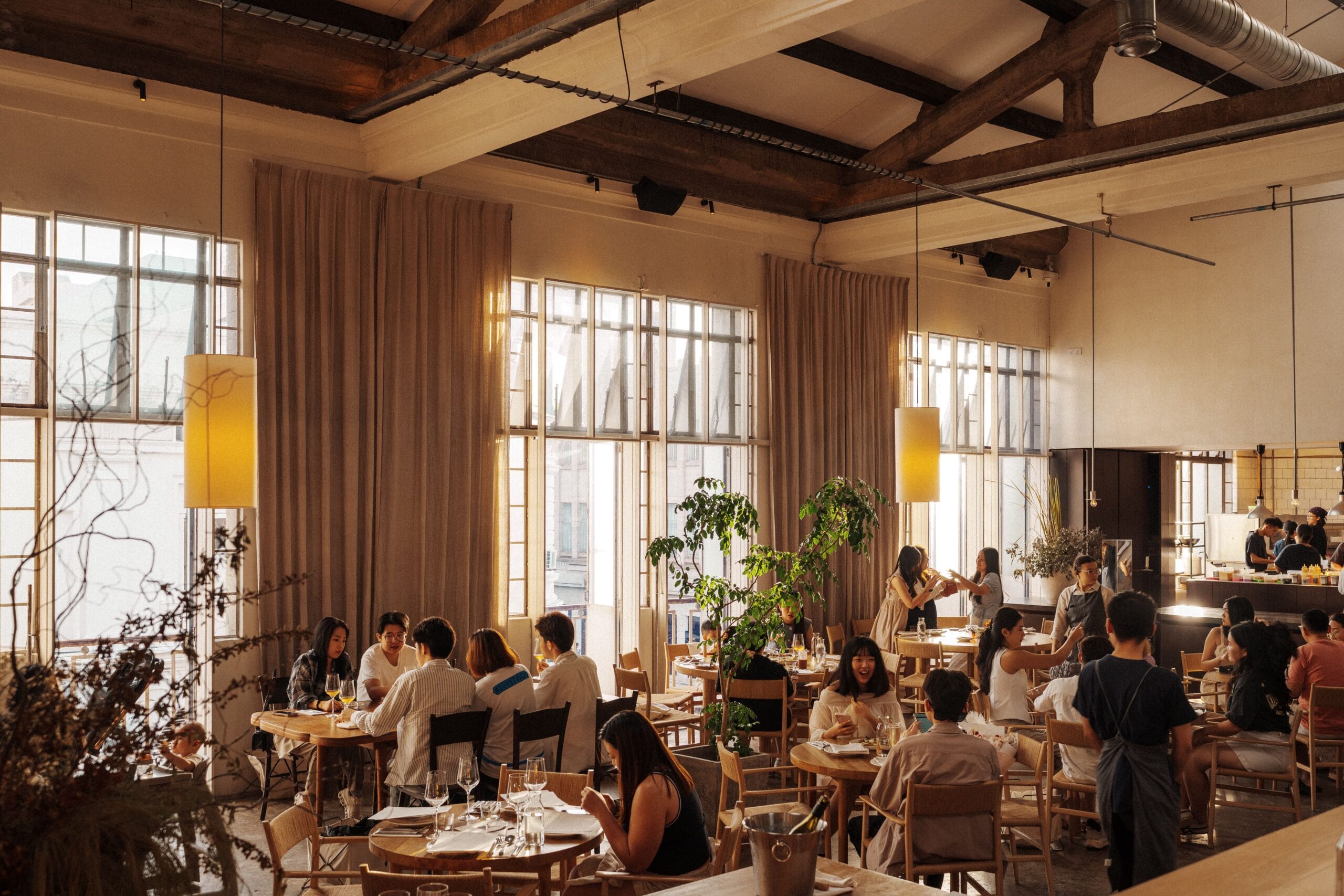
- Interior design
- Lighting and mood
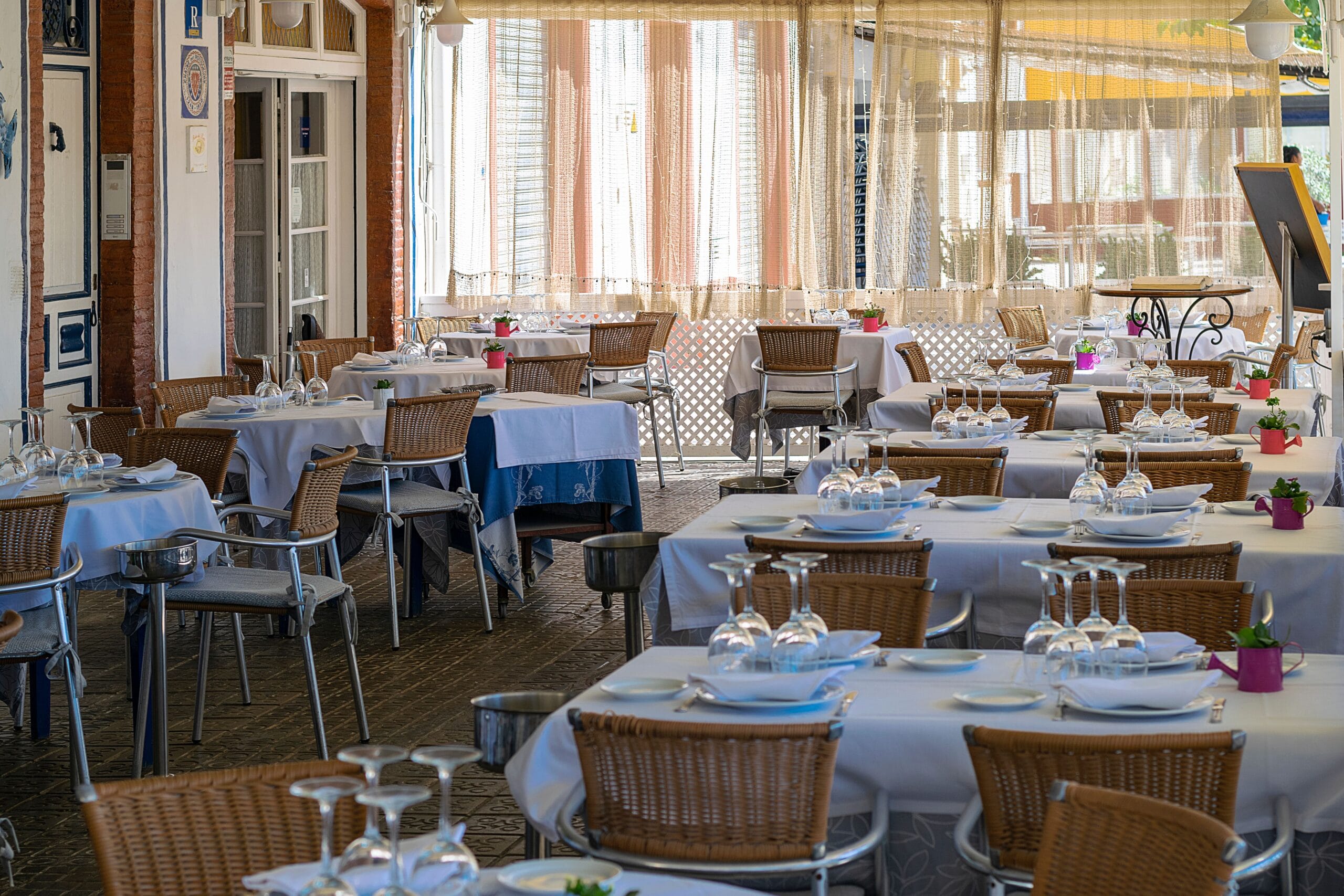
- Outdoor seating
- Table styling
- Seasonal decor
- Cocktail bars
- Open kitchens
- Live music setups
Combining social proof with strategic digital PR for restaurants can significantly improve online visibility and authority.
This type of content helps diners imagine themselves inside the restaurant before they even visit.
Examples:
- A cosy candlelit dining room performs well for romantic dining audiences
- Bright brunch interiors attract lifestyle-focused diners
- Energetic cocktail bar footage works well for nightlife marketing
A London rooftop restaurant, for example, increased weekend reservations after consistently posting sunset dining videos and rooftop ambience Reels during summer evenings.
People trust people.
Showing real guests enjoying the experience creates authenticity and emotional connection.
Effective guest experience content includes:
- Birthday celebrations
- Group dinners
- Anniversary moments
- Family dining
- Corporate bookings
Always ask permission before reposting customer content publicly.
Restaurants that actively feature real customers often significantly improve customer engagement because followers connect more strongly with authentic experiences than polished advertisements.
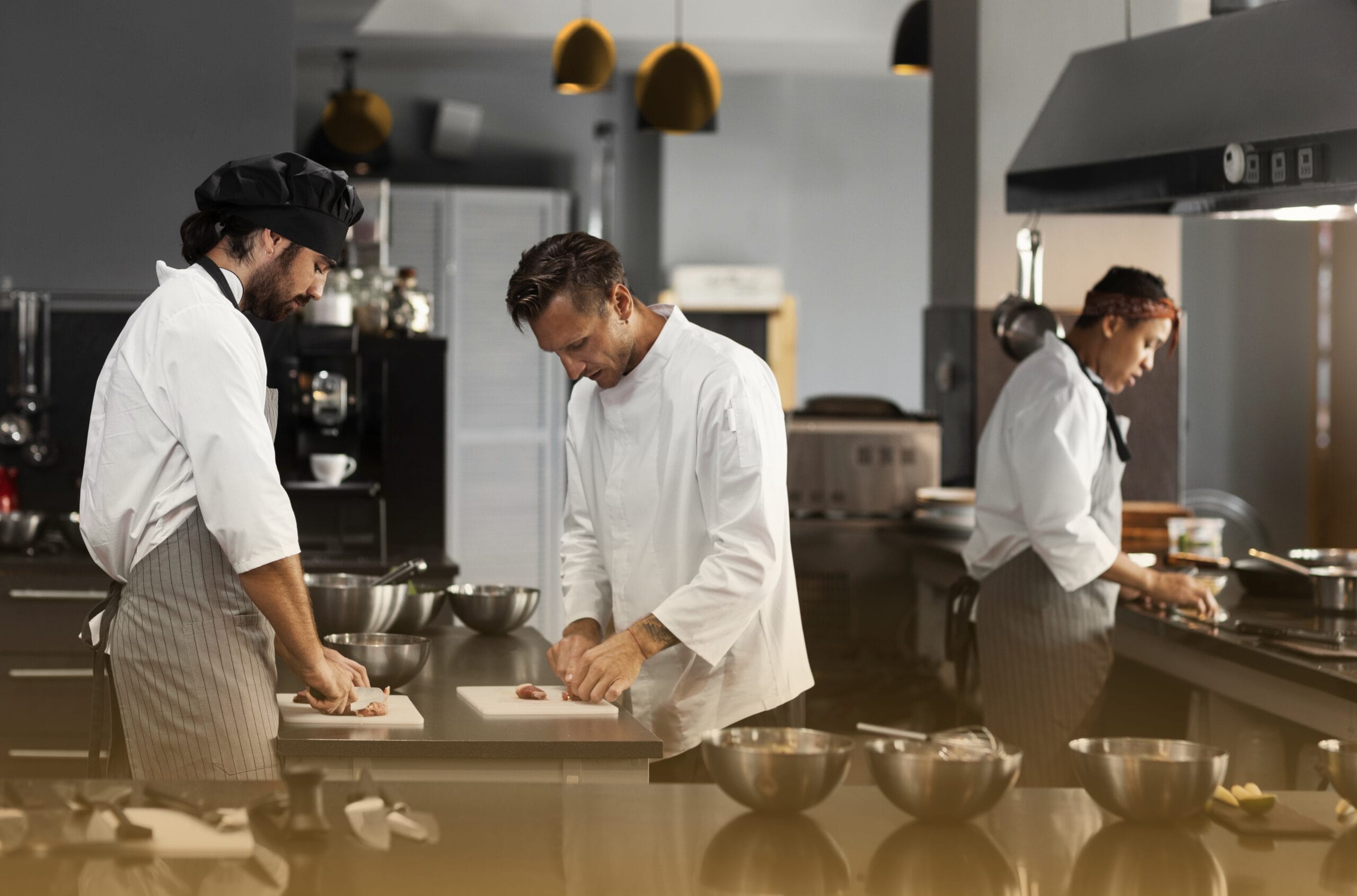
Behind-the-scenes content humanises restaurants and builds trust.
Customers love seeing:
- Chef personalities
- Kitchen preparation
- Ingredient sourcing
- Team culture
- Restaurant operations
This type of hospitality social media marketing content makes restaurants feel more approachable and authentic.
Restaurants can feature:
- Chef introductions
- Staff spotlights
- “Day in the life” videos
- Team celebrations
- Employee milestones
- Kitchen teamwork
Strong restaurant branding social media strategies focus heavily on personality and culture.
People often become emotionally connected to restaurant teams, not just menus.
Popular behind-the-scenes content includes:
- Morning prep routines
- Bread baking
- Pasta preparation
- Sauce creation
- Ingredient deliveries
- Plating precision
This content builds perceived quality and trust.
One of the biggest reasons behind-the-scenes content performs so well is that it makes craftsmanship visible. Customers feel more emotionally invested when they see the care behind the dining experience.
Restaurants that become active parts of their local communities often build much stronger long-term loyalty.
Community-led restaurant marketing UK strategies help businesses:
- Improve repeat visits
- Build emotional loyalty
- Increase local visibility
- Strengthen word-of-mouth
- Differentiate from competitors
Restaurants can collaborate with:
- Local farms
- Breweries
- Bakeries
- Butchers
- Hotels
- Event venues
- Theatres
Examples include:
- Joint giveaways
- Supplier spotlights
- Community events
- Local dining guides
- Seasonal collaborations
This type of content improves local restaurant marketing visibility while also expanding reach to new audiences.
Restaurants should regularly celebrate customers by:
- Reposting user-generated content
- Sharing testimonials
- Featuring loyal diners
- Celebrating milestones
- Thanking followers publicly
Restaurants that consistently acknowledge their audience usually build stronger local communities over time.
8. Recommended posting frequency
| Platform | Recommended Posting Frequency |
| 5–7 feed posts weekly + daily Stories | |
| 4–5 posts weekly | |
| TikTok | 3–5 videos weekly |
| Google Business Profile | 2–3 updates weekly |
9. Best posting times for UK restaurant audiences
| Campaign Type | Best Posting Time |
| Breakfast/Brunch | 7 am – 9 am |
| Lunch Promotions | 11 am – 12 pm |
| Dinner Promotions | 4 pm – 6 pm |
| Weekend Brunch | Sat 9–11 am / Sun 8–10 am |
| Event Promotions | Tue–Thu evenings |
10. Food photography and video that convert
In restaurant marketing, visuals directly influence customer decisions. High-quality food photography and engaging video content help restaurants stand out in crowded social feeds and create stronger emotional reactions that drive bookings.
In restaurant marketing UK campaigns, visuals often determine whether someone keeps scrolling or decides to book.
Strong visuals create:
- Appetite appeal
- Emotional reactions
- Cravings
- Trust
- Curiosity
Weak visuals instantly reduce perceived quality.
10.1 Food photography essentials
a. Lighting (Most important factor)
Lighting can completely change how food appears online.
Best practices:
- Use natural light whenever possible
- Avoid harsh yellow restaurant lighting
- Use soft diffused lighting
- Avoid direct flash photography
- Use ring lights when needed
Poor lighting is one of the most common reasons restaurant content underperforms.
b. Composition and styling
Good composition improves perceived quality immediately.
Best practices include:
- Rule of thirds
- Negative space
- Balanced props
- Consistent colour palettes
- Clean backgrounds
Restaurants should also include:
- Glassware
- Ingredients
- Human interaction
- Cutlery
- Napkins
These details make visuals feel more immersive and premium.
11. Best food photography angles
Macro-style close-ups often perform especially well on Instagram and TikTok because they create stronger sensory reactions.
High-performing restaurant video ideas

Cooking Process Videos
Pasta preparation
Steak searing
Cocktail mixing
Dessert assembly
Bread baking

Dish Reveal Videos
Show preparation
Build anticipation
Reveal final plating
End with close-up details
Overhead (Flat Lay)
Full table spreads
45-Degree
Burgers, pasta, layered dishes
Eye-Level
Cocktails, cakes, burgers
Close-Up
Texture and detail shots

“Satisfying” Food Moments
Cheese pulls
Sauce pours
Steam shots
Crispy textures
Cake slicing

Video Best Practices
Hook viewers within 3 seconds
Keep videos under 30 seconds
Add captions
Use movement naturally
Include trending audio
Maintain consistent branding
12. User-generated content strategy
User-generated content (UGC) is one of the strongest forms of restaurant social proof.
People trust customer experiences more than branded advertisements.
12.1 Encouraging customer content
Restaurants can encourage guest content by:
- Creating Instagram-worthy plating
- Designing photo-friendly interiors
- Using branded hashtags
- Encouraging Story tags
- Offering small incentives
Simple signage like:
“Tag us on Instagram to be featured” can significantly increase customer-generated content.
12.2 Benefits of user-generated content
UGC helps restaurants:
- Build trust
- Increase reach
- Generate free content
- Strengthen community
- Improve authenticity
- Encourage repeat engagement
Restaurants that actively encourage customer content usually create stronger emotional loyalty over time.
13. Building engagement and community
Engagement is what transforms social media followers into loyal customers. Restaurants that consistently interact with their audiences usually build stronger local communities, better word-of-mouth visibility, and higher repeat visit rates.
Follower count alone does not grow restaurants.
Engagement is what turns followers into paying customers.
Restaurants that consistently interact with audiences usually see:
- Higher loyalty
- Better repeat visitation
- Stronger community trust
- Improved word-of-mouth
13.1 Engagement tactics that work
Examples:
- “Which dessert should we return next month?”
- “Pizza or pasta tonight?”
- “Which cocktail should we bring back?”
Polls increase interaction while also giving restaurants valuable customer insights.
Restaurant promotions and social media campaigns perform especially well with giveaways.
Popular formats:
- “Tag 2 friends to win dinner for 2”
- “Share this Story to win cocktails”
- “Best food photo wins a £50 voucher”
Keep contests:
- Simple
- Short
- Easy to enter
Best-performing Story tools:
- Countdown stickers
- Polls
- Booking reminders
- Flash offers
- Last-minute availability
Stories often create urgency more effectively than standard feed posts.
14. Influencer and food blogger collaborations
Restaurant influencer marketing continues to grow rapidly across the UK hospitality industry.
Local creators now influence dining decisions more than many traditional advertisements.
14.1 Why micro-influencers usually perform better
For restaurants, micro-influencers often deliver stronger ROI than celebrity creators.
Micro-influencers typically offer:
- Higher engagement rates
- Stronger local trust
- More relevant audiences
- Better authenticity
Local relevance matters far more than massive follower counts in restaurant marketing.
14.2 Best influencers for restaurants
Restaurants can collaborate with:
- Food bloggers
- Lifestyle creators
- Date-night influencers
- Cocktail creators
- Local travel influencers
- Parent creators
Restaurant Instagram marketing campaigns usually perform strongest when creators already have local audience trust.
14.3 Influencer collaboration ideas
Popular restaurant influencer marketing campaigns include:
- Complimentary dining experiences
- Seasonal menu launches
- Soft openings
- Chef tasting nights
- Behind-the-scenes experiences
Authenticity performs much better than overly scripted promotions.
A Birmingham cafe, for example, generated over 40,000 local video views after inviting three micro-food creators to preview a seasonal brunch launch.
15. Social media advertising for restaurants
Organic content helps restaurants build awareness and community, but paid advertising is often necessary to reach larger local audiences consistently and drive measurable reservations.
Organic reach alone is no longer enough for most restaurants.
Social platforms now consistently show unpaid posts to only a small percentage of followers.
Paid social media advertising for restaurants helps businesses:
- Reach new audiences
- Fill tables faster
- Promote events
- Increase local visibility
- Retarget interested visitors
- Drive direct reservations
Paid campaigns are now a major part of social media marketing for restaurants, especially in highly competitive local dining markets where organic reach alone is often limited.
15.1 Why organic reach is declining
Restaurants face constant competition online.
At any moment, diners compare:
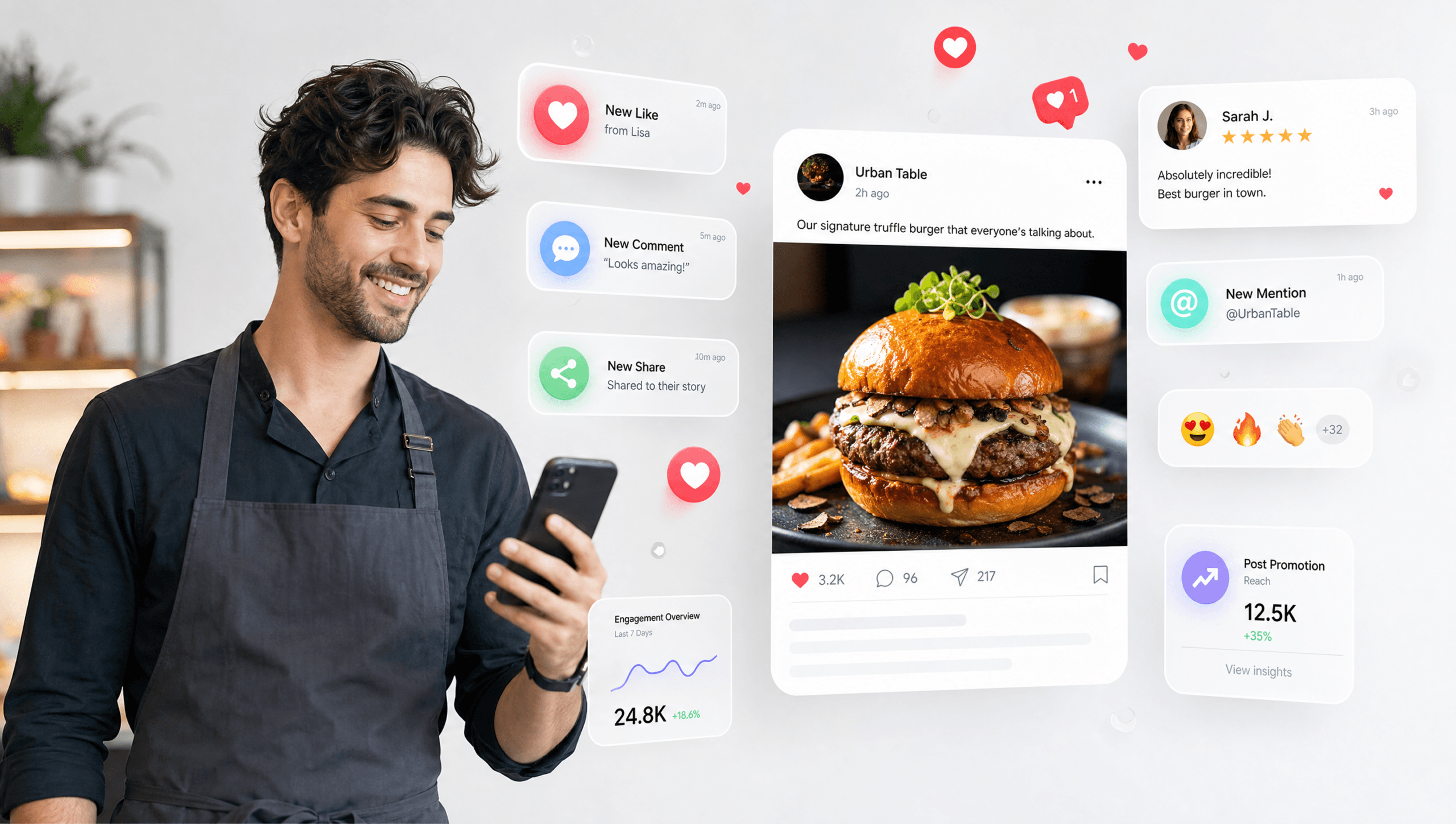

Food

Ambience

Prices

Reviews

Experiences

Offers
Paid advertising helps restaurants stay visible inside crowded local feeds.
16. Best restaurant ad campaign types
| Campaign Type | Primary Goal |
| Awareness Campaigns | Introduce the restaurant locally |
| Engagement Campaigns | Build trust and visibility |
| Conversion Campaigns | Generate reservations |
| Retargeting Campaigns | Re-engage interested visitors |
Retargeting often delivers the highest ROI because diners typically need multiple touchpoints before booking.
16.1 Awareness campaigns
Best for:
- New restaurants
- Rebrands
- New menu launches
- Location expansions
Best-performing content:
- Signature dishes
- Atmosphere videos
- Chef storytelling
- Restaurant introductions
16.2 Conversion campaigns (Bookings)
These campaigns focus directly on reservations.
Popular campaigns:
- Valentine’s Day menus
- Weekend availability
- Tasting menus
- Holiday promotions
- Private dining offers
Strong CTAs include:
- “Reserve Now”
- “Limited Availability”
- “Book Before Friday”
- “Reserve Your Table”
Urgency significantly improves conversion rates.
Make Every Reel a Growth Opportunity for Your Brand
Reels are no longer just entertainment—they’re one of the fastest ways to increase visibility, build trust, and attract new customers. Create a content strategy that turns short videos into long-term business growth.
16.3 Instagram ads for restaurants
Instagram remains one of the strongest platforms for restaurant discovery.
Best-performing ad formats:
- Stories ads
- Reels ads
- Carousel ads
- Video ads
High-performing creatives usually include:
- Close-up food photography
- Dish reveals
- Guest experiences
- Atmosphere footage
- Chef videos
16.4 Facebook ads for restaurants
Facebook remains highly valuable for:
- Local targeting
- Family audiences
- Event promotion
- Group dining
- Community awareness
Effective formats:
- Carousel ads
- Video campaigns
- Event promotions
- Testimonial ads
16.5 TikTok ads for restaurants
TikTok works especially well for:
- Trend-driven restaurants
- Casual concepts
- Younger demographics
- Viral dishes
Restaurants should test organic TikTok content first before scaling paid campaigns.
Authentic, personality-driven content often outperforms highly polished advertisements.
17. Converting social media followers into table bookings
Many restaurants successfully generate likes, comments, and followers, but struggle to turn social attention into actual bookings. Conversion optimisation helps bridge that gap.
Many restaurants generate engagement but fail to turn followers into paying customers.
The difference usually comes down to conversion optimisation. Restaurants that make bookings easy typically generate stronger ROI from restaurant social media marketing.
Your social profiles should function like conversion-focused landing pages.
Every profile should immediately communicate:
- What your restaurant offers
- Why should people visit
- How to book quickly
Every restaurant Instagram profile should include:
- A direct booking link
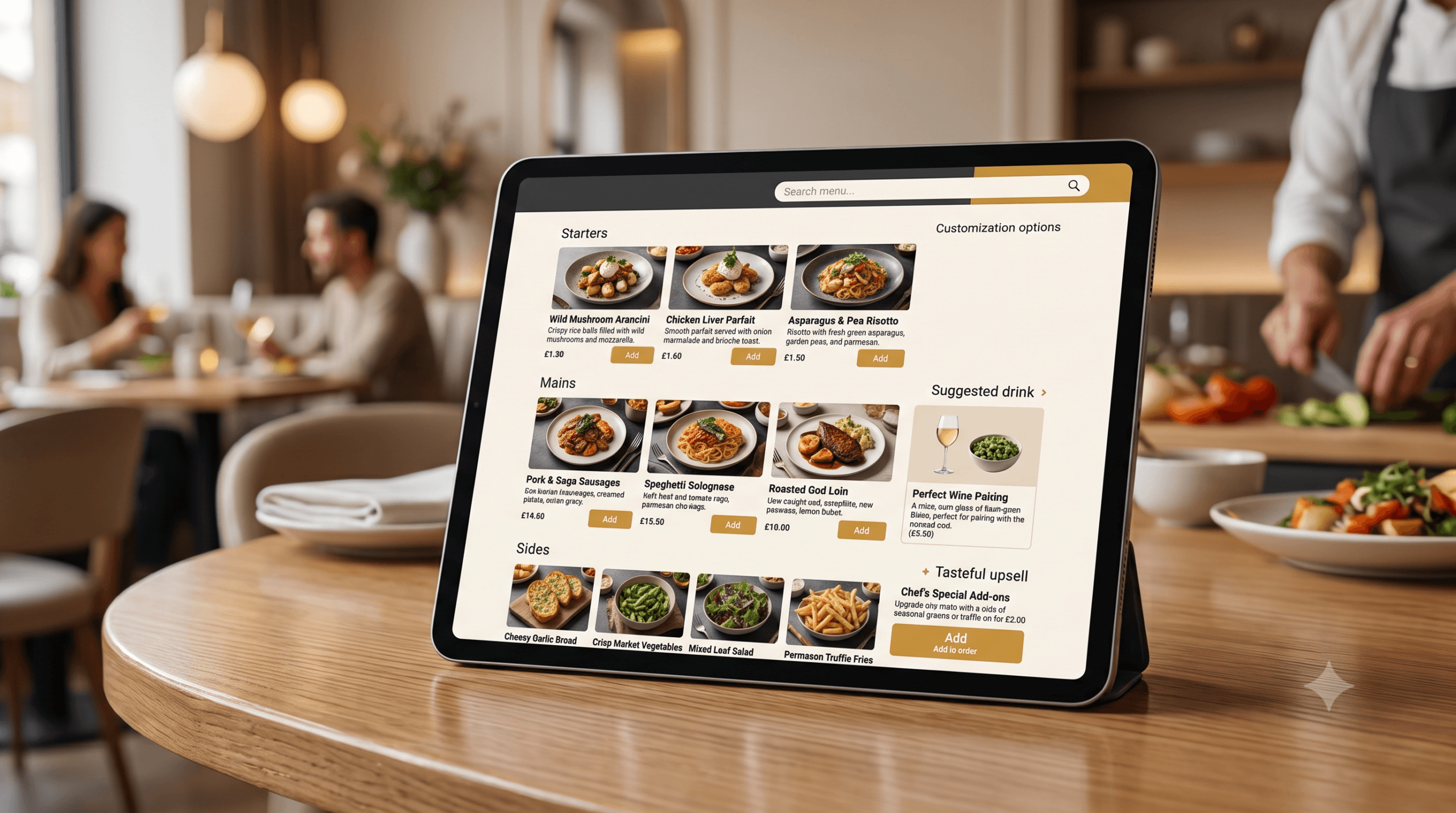
- Menu access
- Contact buttons
- Accurate address
- Story Highlights
- Clear bio description
- Menu
- Reviews
- Events
- Specials
- Behind the scenes
- Cocktails
- Private dining
Restaurants with incomplete profiles often lose bookings before customers even visit the website.
Restaurants should ensure:
- Opening hours stay updated
- Menus remain accurate
- Booking buttons function properly
- Reviews are monitored actively
- Events are posted regularly
An outdated Facebook page immediately reduces trust.
Stories remain one of the strongest tools for restaurant customer engagement because they feel immediate and personal.
High-performing Story tactics include:
- Countdown stickers
- Booking reminders
- Flash promotions
- Last-minute availability
- Polls
- Limited-time offers
Stories often create urgency more effectively than static posts.
Example:
A Liverpool cocktail bar increased Thursday bookings after running weekly “Last Tables Available” Stories with countdown stickers and direct booking links.
18. Making booking frictionless
The easier it is to reserve, the higher the conversion rates become.
18.1 Best practices for restaurant booking pages
- Mobile optimisation
- One-click booking
- Fast page speed
- Minimal form fields
- Instant confirmations
- Clear CTAs
Complex reservation systems reduce conversions significantly.
Many restaurants lose customers simply because their mobile booking experience is frustrating.
A high-converting, mobile-friendly experience often starts with professional restaurant website design services.
18.2 Direct booking incentives
Restaurants should encourage direct reservations to reduce dependency on delivery apps and booking platforms.
Popular incentives include:
- Complimentary drinks
- Free appetisers
- Priority seating
- Exclusive dishes
- Dessert upgrades
Direct booking campaigns help restaurants improve long-term profitability.
18.3 Event and private dining promotion
Social media is extremely effective for promoting:
- Wine tastings
- Chef nights
- Live music
- Seasonal events
- Corporate bookings
- Private dining
Restaurants should create dedicated event campaigns with:
- Urgency messaging
- Limited availability
- Countdown content
- Reservation CTAs
18.4 Private dining marketing
Important private dining content includes:
- Event setups
- Group menus
- Celebration videos
- Testimonials
- Corporate dining visuals
These campaigns perform especially well on:
19. Managing your restaurant’s online reputation
Online reputation now plays a major role in restaurant discovery and customer trust. Reviews, tagged content, and social conversations can directly influence whether potential diners choose your restaurant or a competitor.
Online reputation directly impacts bookings.
Most diners now read reviews before deciding where to eat.
Strong online reputation improves:
- Trust
- Conversion rates
- Repeat visits
- Local SEO visibility
- Social proof
19.1 Monitoring brand mentions
Restaurants should monitor:
- Tagged posts
- Hashtag mentions
- Google reviews
- Facebook reviews
- TikTok mentions
- Instagram Story tags
Social listening helps restaurants stay aware of public perception.
19.2 Responding to positive reviews
Best practices:
- Respond quickly
- Personalise responses
- Mention specific details
- Invite guests back
- Thank customers genuinely
Fast and thoughtful responses often encourage repeat visits.
19.3 Responding to negative reviews
Best approach:
- Stay calm
- Acknowledge concerns
- Apologise sincerely
- Offer resolution privately
- Follow up professionally
Deleting criticism often damages public trust more than the original complaint.
19.4 Building social proof
Restaurants should show:
- Testimonials
- Reviews
- Awards
- Press features
- Influencer mentions
- Certifications
Social proof strongly influences dining decisions online.
20. Tools and resources for restaurant social media
Managing restaurant social media consistently becomes much easier with the right systems and tools.
Restaurants that streamline content creation often achieve:
- Better consistency
- Faster publishing
- Higher quality visuals
- Stronger engagement
- More measurable ROI
20.1 Best content creation tools
Photo Editing Tools
- Lightroom Mobile
- VSCO
- Snapseed
Video Editing Tools
- CapCut
- InShot
Design Tools
- Canva
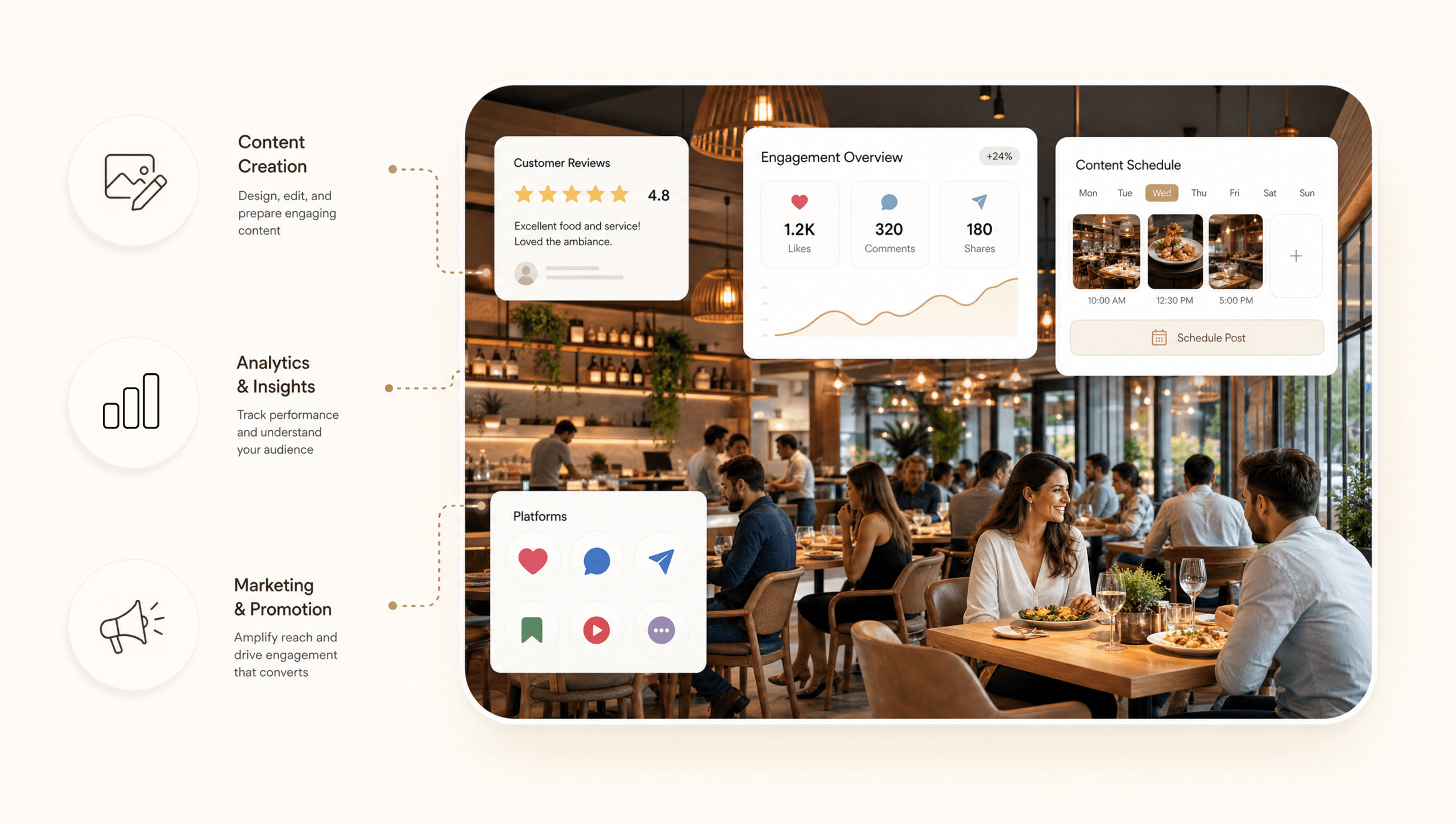
21. Best scheduling tools
| Tool | Best For |
| Later | Instagram scheduling |
| Buffer | Simple scheduling |
| Hootsuite | Multi-platform management |
| Planoly | Feed planning |
| Meta Business Suite | Facebook & Instagram management |
22. Measuring social media ROI for restaurants
One of the biggest challenges in restaurant social media marketing is proving measurable business impact. Tracking the right KPIs helps restaurants understand which content and campaigns actually drive revenue.
Many restaurants focus too heavily on vanity metrics.
Likes alone do not grow revenue.
Restaurants should focus on business-driven KPIs tied directly to:
- Reservations
- Revenue
- Repeat customers
- Customer lifetime value
Restaurants that treat social media marketing for restaurants as a measurable business growth channel usually achieve stronger long-term ROI and more predictable customer acquisition.
22.1 Important restaurant social media KPIs

Awareness Metrics
- Reach
- Impressions
- Follower growth
- Brand mentions

Conversion Metrics
- Table bookings
- Website visits
- Phone calls
- Direction requests
- Online orders

Engagement Metrics
- Comments
- Shares
- Saves
- Story replies
- Video watch time

Revenue Metrics
- Revenue from social bookings
- Average spend
- Repeat visit rate
- Event inquiries
Turn Social Media Engagement Into More Diners
Your next customers are scrolling right now. A strategic social media presence helps your restaurant stand out, build loyalty, and drive more reservations and walk-ins.
23. Realistic benchmarks for restaurants
| Metric | New Accounts | Established Accounts |
| Engagement Rate | 1–3% | 3–6% |
| Monthly Followers | 100–300 | 5–10% monthly growth |
| Social Bookings | 5–15 monthly | 20–50+ monthly |
TikTok engagement rates often outperform Instagram because discovery is more algorithm-driven.
23.1 Attribution strategies
Restaurants should combine:
- Direct attribution
- Indirect attribution
23.2 Direct attribution examples
- Discount codes
- Booking links
- Reservation surveys
- Campaign landing pages
23.3 Indirect attribution examples
- Walk-in increases
- Brand search growth
- Repeat customer increases
- Booking spikes during campaigns
Not every customer converts immediately after seeing content.
24. Common social media marketing mistakes restaurants make
Many restaurants waste budget and time because of avoidable mistakes.
24.1 Content mistakes
- Poor food photography
- Inconsistent posting
- Over-promotional content
- Ignoring short-form video
- Outdated menus
24.2 Engagement mistakes
- Ignoring comments
- Slow replies
- Generic responses
- Deleting criticism
24.3 Advertising mistakes
- Poor targeting
- Weak creative
- No retargeting
- Weak mobile booking experience
24.4 Expert insight
One of the most common restaurant marketing mistakes is focusing too heavily on follower counts instead of customer behaviour and bookings.
A smaller, engaged local audience usually generates more revenue than a large, disengaged one.
25. Advanced strategies for competitive restaurant markets
Restaurants in competitive UK cities need stronger differentiation strategies.
Generic content rarely stands out anymore.
Hyper-Local Content Strategy
Restaurants should showcase:
- Neighbourhood culture
- Local events
- Area partnerships
- Community stories
- Supplier relationships
This strengthens local restaurant marketing visibility and community trust.
Seasonal Ingredient Storytelling
Restaurants should showcase:
- Farm partnerships
- Seasonal menus
- Ingredient sourcing
- “Farm-to-table” content
This improves both engagement and brand perception.
Dietary-Specific Content
Restaurants should create dedicated content for:
- Vegan diners
- Gluten-free audiences
- Vegetarian customers
- Allergy-conscious diners
Clear dietary communication builds trust and expands audience reach.
Experience-Based Marketing
Restaurants should market experiences, not just meals.
- Date nights
- Celebration packages
- Bottomless brunches
- Pet-friendly dining
- Chef experiences
Emotional positioning usually performs better than feature-focused marketing.
Live Content and Real-Time Engagement

Instagram & Facebook Live
Restaurants can stream:
- Cooking demos
- Kitchen tours
- Chef Q&As
- Event previews
- Live music
Live content creates immediacy and authenticity.

Real-Time Story Content
Stories work especially well for:
- Daily specials
- Last-minute tables
- Kitchen activity
- Team updates
- Flash promotions
This keeps restaurant accounts active and up to date.
26. AI, AEO & future trends in restaurant marketing
Restaurant discovery is changing rapidly as AI-powered search, conversational queries, and recommendation systems become more common across Google, TikTok, Instagram, and voice assistants.
Search behaviour is changing rapidly.
Customers increasingly discover restaurants through:
- AI Overviews
- Voice search
- Conversational search
- Visual search
- Google Maps recommendations
Restaurants that optimise for AI-driven discovery will gain major visibility advantages over competitors.
AI-powered discovery is rapidly changing how social media marketing for restaurants works across Google, Instagram, TikTok, voice assistants, and conversational search platforms.
26.1 How AI search is changing restaurant discovery
AI-powered search systems increasingly prioritise:
- Well-structured information
- Strong reviews
- Local relevance
- Consistent business data
- Engaging visual content
This means restaurant visibility now depends on more than traditional SEO alone.
26.2 Optimising restaurant content for AI overviews
Restaurants should structure content using:
- Clear FAQs
- Conversational headings
- Natural language queries
- Structured formatting
- Local keywords
- Entity-based SEO
26.3 Example conversational queries
- “Best brunch near me”
- “Romantic restaurants in Manchester”
- “Best vegan restaurant in London”
AI systems increasingly pull answers from content that is:
- Easy to scan
- Clearly structured
- Highly relevant
- Locally optimised
26.4 Voice search & conversational search
Voice search continues growing rapidly.
Customers now search using phrases like:
- “Best Italian restaurant near me”
- “Sunday roast open now”
- “Best rooftop restaurant in Birmingham”
Restaurants should optimise for conversational search phrases instead of only traditional keywords.
26.5 Visual search & image discovery
Google and social platforms increasingly use image recognition systems to understand:
- Food photography
- Location visuals
- Restaurant interiors
- Dish presentation
Restaurants with high-quality visuals and strong metadata will likely benefit more from visual discovery trends.
26.6 AI-Powered personalisation
AI recommendation systems increasingly influence:
- TikTok feeds
- Instagram discovery
- Google suggestions
- Restaurant recommendations
Restaurants with:
- High engagement
- Consistent posting
- Strong local signals
- Quality reviews
- Frequent customer interaction
are more likely to appear inside AI-driven recommendation systems.
27. Working with restaurant social media specialists
As restaurant marketing becomes more competitive and content-heavy, many hospitality businesses struggle to maintain consistent social media performance without professional support.
Many restaurant owners struggle to manage social media consistently while also running their businesses daily.
Professional support often becomes necessary when:
- Posting becomes inconsistent
- Engagement remains low
- Advertising underperforms
- Content quality suffers
- Teams lack time
27.1 What to look for in a restaurant marketing agency
Industry Experience
Look for agencies with:
- Hospitality expertise
- UK market knowledge
- Restaurant case studies
- Food photography experience
Hospitality marketing requires a specialised creative strategy.
Service Capabilities
Restaurant marketing agencies should offer:
- Content creation
- Food photography
- Video production
- Paid advertising
- Community management
- Analytics reporting
Integrated services usually produce better long-term results.
Proven Results
Restaurants should ask for:
- Booking growth examples
- Engagement improvements
- ROI reporting
- Client testimonials
- Case studies
Results matter far more than vanity metrics.
28. How ThisRapt supports UK restaurants
ThisRapt helps restaurants grow through:
- Restaurant-specific social media strategies
- Professional food photography
- Video production
- Paid advertising
- Community management
- Local SEO support
- Brand positioning
- Performance tracking
The goal is not just engagement, but measurable bookings and sustainable growth.
Expected Timeline
| Months 1–2 | Months 3–4 | Months 5–6 | Months 6+ |
|
|
|
|
In 2026, successful social media marketing for restaurants is no longer only about posting food photos. It is about building visibility, trust, local authority, customer loyalty, and measurable business growth.
Your future customers are already scrolling, searching, watching food videos, and deciding where to eat next.
The question is whether your restaurant will stand out when they do.
Explore ThisRapt’s Social Media Marketing services to build a table-filling social presence for your UK restaurant.
29. SMM Restaurants FAQs
Social media marketing for restaurants involves using platforms like Instagram, Facebook, TikTok, and Google to attract diners, improve visibility, increase bookings, strengthen customer engagement, and drive long-term growth for restaurants online.
Social media marketing helps restaurants increase visibility, attract local customers, improve engagement, promote menus, and generate direct bookings through Instagram, Facebook, TikTok, and Google.
Instagram is usually the most important platform because food content performs extremely well visually. Facebook remains highly valuable for local engagement, while TikTok continues to grow rapidly for restaurant discovery.
Most restaurants should aim to post:
- Instagram: 5–7 times weekly
- Facebook: 4–5 times weekly
- TikTok: 3–5 videos weekly
- Daily Stories across platforms
Consistency matters more than volume.
The highest-performing restaurant content usually includes:
- Food photography
- Reels and TikTok videos
- Behind-the-scenes footage
- Guest experiences
- Seasonal dishes
- User-generated content
- Chef storytelling
Restaurants can improve bookings by:
- Using booking links in bio
- Running targeted ads
- Posting strong visuals
- Sharing customer reviews
- Using Stories with booking CTAs
- Promoting limited-time offers
Yes. Restaurant Facebook ads can effectively target local diners, promote events, fill off-peak tables, and retarget previous visitors. Well-managed campaigns often generate strong ROI.
Independent restaurants often start with £200–£ 1,000 per month, depending on location, competition, and growth goals.
Most restaurants begin seeing measurable improvements within 3–6 months when posting consistently, engaging actively, and using targeted advertising.
Restaurants often benefit from agency support when they lack time, struggle with consistency, or want professional photography, advertising management, and measurable booking growth.