The Copper Fig, a 60-cover independent restaurant in a competitive UK city dining district, had a loyal local following but almost no visibility for the searches that actually drive new bookings – “best restaurant [neighbourhood]”, “Sunday roast near me”, “date night restaurant [city]”. What little paid advertising the team had tried was unmanaged, running broad, untracked campaigns that spent budget without a clear return. Over a 6-month engagement, a combined local SEO and paid marketing strategy rebuilt organic visibility and turned paid spend into a measurable, efficient acquisition channel – a pattern we’ve seen repeat across several similar independent restaurants.
1. The starting point: Invisible in search, inefficient in paid
Before the engagement, The Copper Fig ranked outside the top 10 results for every priority local search term, and organic traffic to the website was minimal. A small, self-managed Google Ads account had been running for several months with no conversion tracking, no negative keywords, and broad match terms pulling in irrelevant clicks – cost per booking was estimated at over £38, and there was no paid social presence at all. Direct reservations made up roughly 28% of total covers, with the rest split between phone bookings and a third-party reservation platform taking a commission on every seated guest.
| Discover how a focused restaurant SEO & paid marketing strategy helped The Copper Fig strengthen visibility, attract more direct bookings and drive long-term business growth. |
|
2. The strategy: Two coordinated workstreams
2.1 Local SEO Overhaul
Technical SEO fixes addressed page speed, mobile usability, and duplicate/thin content across the site, while an on-page content strategy targeted the specific local search terms guests actually use – neighbourhood-plus-cuisine queries, occasion-based searches (“anniversary dinner”, “private dining”), and menu-specific terms. The Google Business Profile was rebuilt with a full menu, accurate categories, and a weekly Google Posts cadence, and a structured local link-building push earned mentions from city food blogs and a regional hospitality directory.
2.2 Paid Search & Paid Social
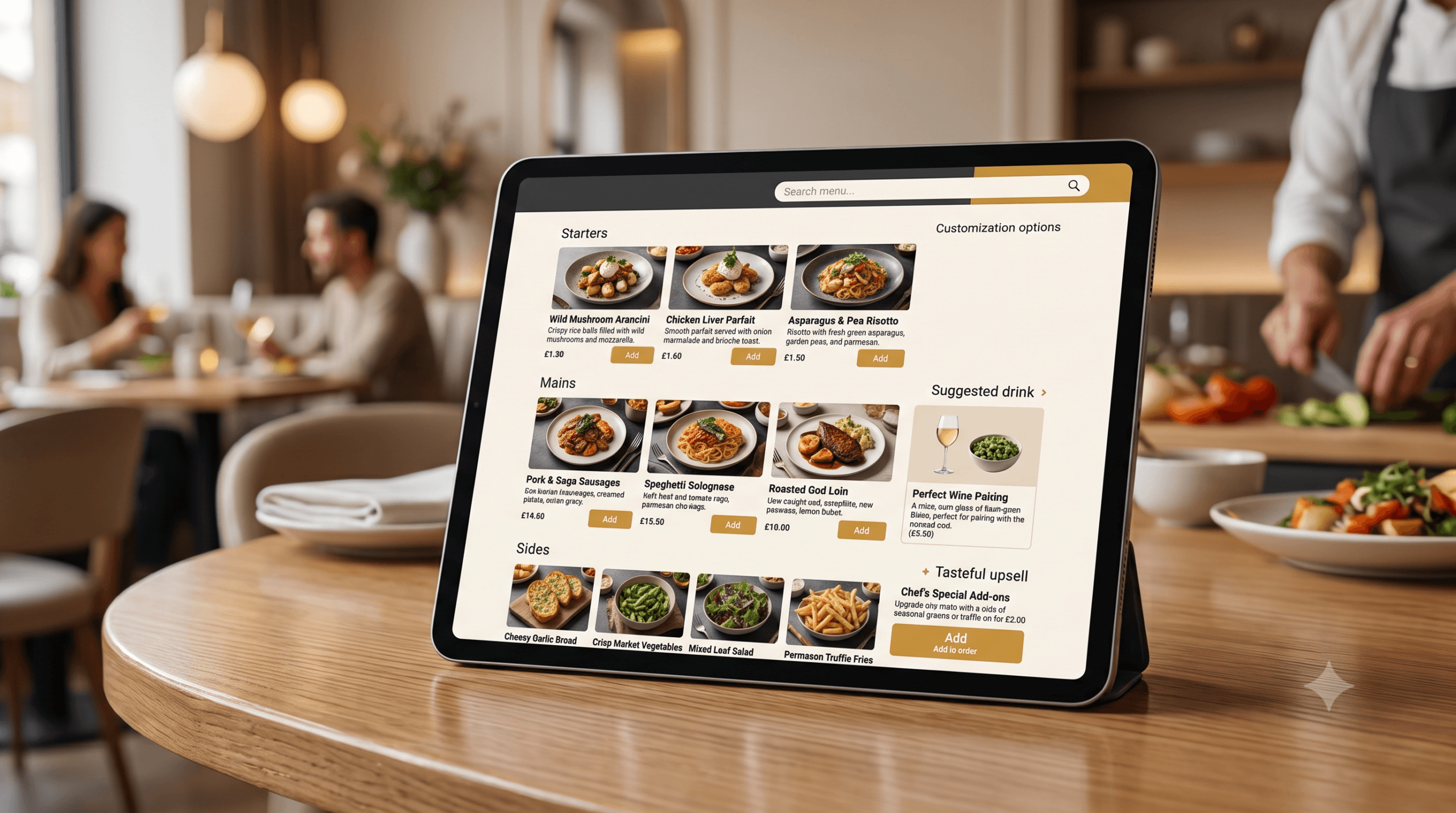
The Google Ads account was rebuilt from scratch around tightly themed ad groups, exact and phrase match keywords, a full negative keyword list, and proper conversion tracking on the reservation button – replacing broad, untracked spend with a measurable, optimisable campaign. A new Meta Ads programme ran geo-targeted campaigns to a 5-mile radius, split between brand-awareness creative for new audience reach and direct-response creative – a specific offer, a clear reservation call to action – retargeted to people who had visited the website but not booked.
3. Turning ad spend into a tracked, optimisable channel
The single biggest shift was measurement. With conversion tracking properly in place for the first time, spend could be shifted week by week toward the keywords, audiences, and creative that were actually driving bookings — rather than being spread evenly across a broad, unmanaged campaign. Retargeting website visitors who hadn’t booked recovered a meaningful share of “almost bookings” at a fraction of the cost of new-audience acquisition.
3.1 SEO and paid working together, not separately
Landing pages built for the SEO content strategy – occasion-based pages, a dedicated private dining page – were also used as paid landing destinations, so organic and paid traffic converted against the same optimised pages rather than a generic homepage. Keywords that performed well organically were also tested in paid search to capture demand immediately while the organic rankings built over time.
4. Key results and learnings
- Direct reservations rose from 28% to 50% of total covers
- Cost per booking from paid channels fell 42%, from an estimated £38 to £22
- Organic search traffic grew 85%, with 9 priority local keywords reaching page 1
- Paid campaigns achieved a 5.2x return on ad spend (ROAS) across Google and Meta combined
- Google Business Profile actions (calls, direction requests, website clicks) grew 61%
5. Restaurant SEO & paid marketing results breakdown
| Metric | Before (Problem) | Strategy Implemented | After (Result) |
| Direct Reservations | 28% of covers, third-party dependent | Local SEO, optimised landing pages, retargeting | Rose to 50% of covers |
| Cost Per Booking | ~£38, untracked broad-match ads | Rebuilt Google Ads with conversion tracking | Fell to £22 (-42%) |
| Organic Visibility | Outside the top 10 for all priority terms | Technical SEO fixes, local content, GBP overhaul | 9 keywords ranking on page 1, 85% traffic growth |
| Paid Efficiency | No ROAS visibility, no negative keywords | Structured campaigns, exact/phrase match, retargeting | 5.2x ROAS across Google & Meta |
| GBP Engagement | Incomplete listing, no posting cadence | Full profile rebuild, weekly Google Posts | 61% increase in GBP actions |
6. Actionable checklist for restaurant owners to implement
- Set up conversion tracking before spending another pound on paid ads
- Replace broad match keywords with tightly themed ad groups and a negative keyword list
- Build local, occasion-specific landing pages and use them for both SEO and paid traffic
- Retarget website visitors who didn’t book — it’s consistently the most cost-efficient audience
- Keep your Google Business Profile complete and actively posting; it’s a ranking and conversion signal
- Review paid spend weekly and shift budget toward what’s actually converting, not what was planned
7. Conclusion: Visibility and spend, both working harder
The Copper Fig’s results show what happens when local SEO and paid marketing are run as one coordinated strategy rather than two disconnected efforts. Organic visibility brought in demand at zero marginal cost, paid search and social captured it immediately and recovered visitors who nearly booked; and proper tracking meant every pound of ad spend could be pointed at what was actually working – turning a previously unmeasured, inefficient channel into one of the restaurant’s most reliable sources of direct bookings.
Key takeaways
- Local SEO and paid marketing compound each other when they share the same landing pages and keyword targets.
- Conversion tracking is the precondition for making paid spend efficient — not an optional add-on.
- Retargeting website visitors who didn’t book is typically the highest-ROI paid audience available.
- A complete, actively maintained Google Business Profile lifts both organic ranking and paid campaign performance.
Want your SEO and paid marketing working as one strategy?
ThisRapt builds the local SEO foundations and the tracked, optimisable paid campaigns that turn search visibility and ad spend into direct, commission-free bookings.
8. FAQs
Ideally both together – SEO builds visibility that compounds over months at no marginal cost per click, while paid search and social capture demand immediately and can be precisely measured and optimised from day one.
Without it, budget is spent blind – you can’t tell which keywords, audiences, or creative are actually driving bookings, which typically leads to broad, inefficient campaigns like the one this restaurant started with.
Yes – retargeting website visitors who didn’t complete a booking is consistently one of the most cost-efficient paid audiences, since these are people who have already shown clear intent.
Paid campaign efficiency typically improves within 4–6 weeks of proper tracking and structure being put in place, while organic ranking improvements from local SEO usually build over 3–6 months.