

In the competitive hospitality industry, your website is often the first impression guests have of your brand. Whether it’s a luxury hotel, boutique resort, or a charming restaurant, the way your website looks and functions plays a massive role in influencing guest decisions. It’s no longer enough to simply have a website; you need one that captures the essence of your brand, provides a seamless experience, and drives bookings effectively.
This is where the latest web design trends come into play. By incorporating modern design elements and best practices specifically tailored for hospitality, you can create a digital experience that delights visitors, reflects your brand’s luxury and comfort, and ultimately boosts your revenue.
A hotel website used to be judged on how it looked. In 2026, it’s increasingly judged on how well it acts – whether it can answer a guest’s question the moment they arrive, adapt to who’s actually looking at it, and hand off cleanly to an AI agent researching on someone else’s behalf. That’s the real shift behind this year’s trends: less “digital brochure,” more distribution engine that happens to also look good.
Here’s what’s actually changing for 2026 heading into 2027 — and what’s just noise dressed up as innovation.
Trend 1: Agentic AI moves from Chatbot to navigation layer
Adopt. This is the single biggest shift in web design generally, not just hospitality. According to Figma’s 2025 AI report, the share of users building AI agents into their products jumped from 21% to 51% year-over-year, and 60% of designers now expect agentic AI to have a major impact through 2026.
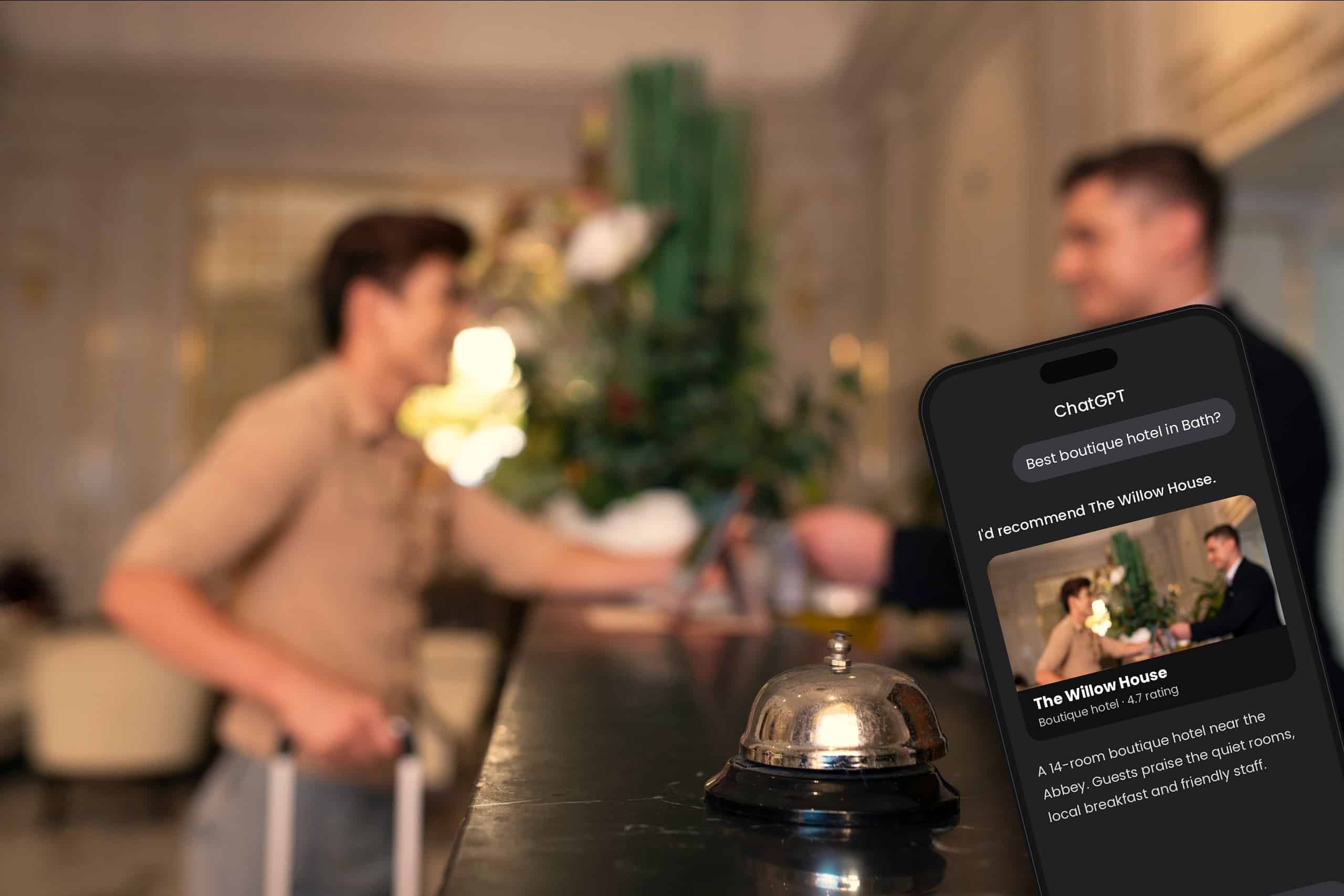
For hotels, this means the AI assistant on your site stops being a chat widget stuck in the corner waiting to be clicked, and starts being embedded into navigation itself – proactively guiding a guest toward the room type, package, or answer they’re looking for, the way a good concierge would, rather than sitting passively until prompted. Increasingly, the question being asked of hospitality websites is literally whether they’re “AI agent ready” – built so that both a human visitor and an external AI agent researching on a guest’s behalf can navigate and extract information cleanly.
What to actually do: move your AI concierge from a bolt-on widget to a core navigation element, and make sure it’s drawing from the same structured, accurate data your booking engine and Google Business Profile use — not a disconnected FAQ script.
Trend 2: Structuring for AI answers becomes a design requirement, not an SEO afterthought
Adopt, urgently. 2026 hospitality marketing analysis increasingly points to Generative Engine Optimisation – content and data structured clearly enough to be extracted and cited by AI Overviews and AI Mode – as a core requirement, not a technical add-on handled after launch.
Practically, this means your web design brief now needs to include: schema markup (Hotel, Room, Offer, FAQPage), consistent naming for rooms and packages across every page (an AI system that sees “Deluxe King” on one page and “Superior Double Room” describing the same thing on another struggles to resolve you as a coherent source), and direct-answer content blocks rather than everything buried in a downloadable brochure PDF.
What to skip: treating this as an SEO plugin task disconnected from the actual design and content architecture. It has to be built in from the wireframe stage, not patched in afterward.
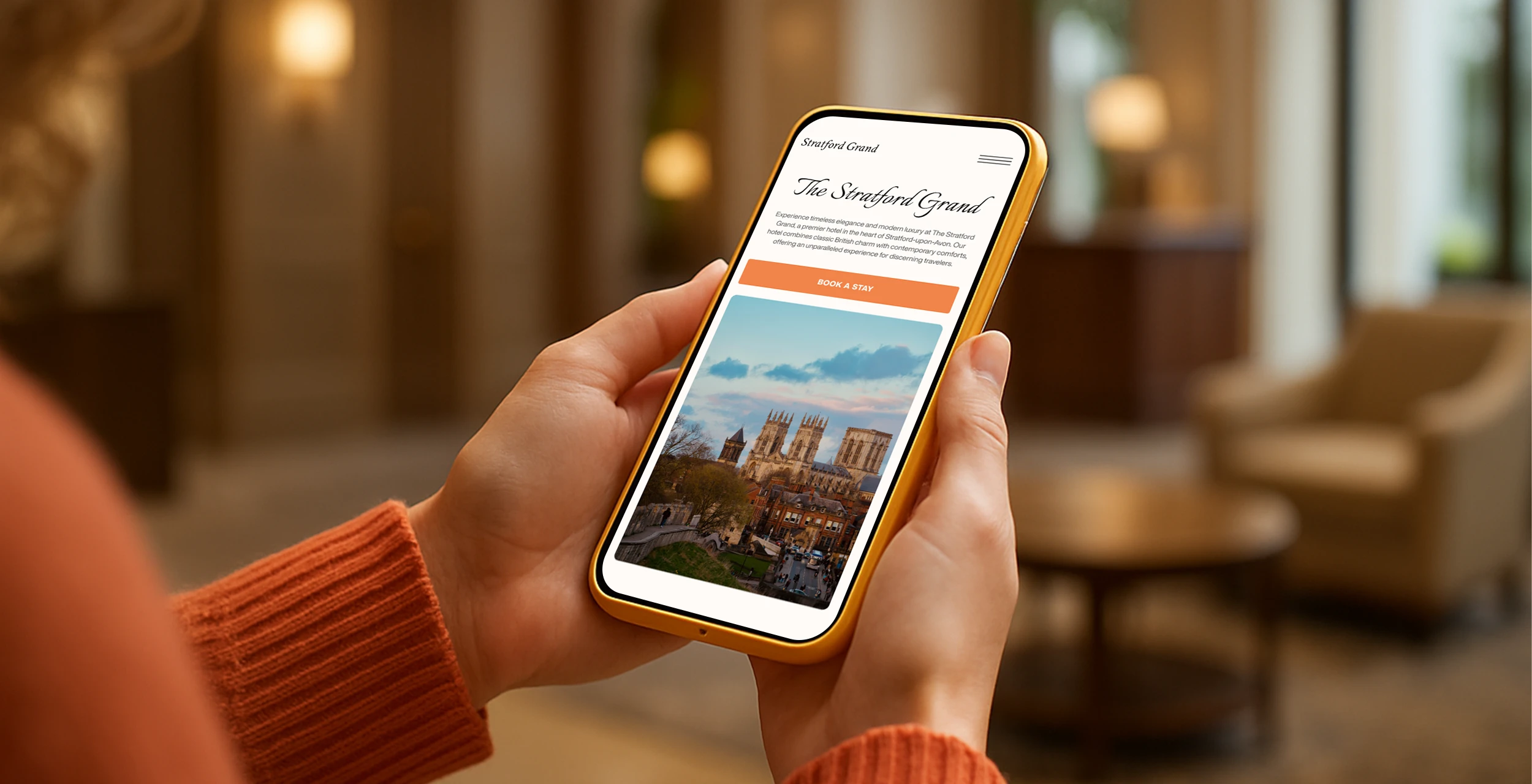
Trend 3: The homepage becomes a table of contents, not a book cover
Adopt. Current hospitality UX research is shifting away from treating the homepage as a single aesthetic “first impression” moment, and toward treating it as a navigational hub – guests expect to land and immediately see clear paths to room types, amenities, galleries, and the booking engine, rather than scrolling through a cinematic intro before finding what they came for.
This doesn’t mean abandoning visual storytelling – it means front-loading utility alongside it, so a guest who already knows what they want isn’t forced through the same journey as someone browsing for inspiration.
Trend 4: Real-Time personalisation, driven by behaviour rather than guesswork
Adopt selectively. Advances in analytics and AI now let hospitality sites adapt content dynamically to who’s actually looking — a returning guest sees different content than a first-time visitor, location and even weather can shift what’s promoted (a spa package surfaced on a rainy forecast, a rooftop bar promoted on a clear evening), and luxury hospitality brands specifically are being pushed to treat this kind of dynamic adaptation as a competitive differentiator rather than a nice-to-have.
The tension worth naming: this sits directly against the cookie-less, privacy-first shift happening in tracking generally (covered in our tracking and automation tools guide). The trend for 2026–2027 isn’t “collect everything” — it’s first-party, consented behavioural data doing the personalisation work that third-party cookies used to, which means your design and your data strategy need to be built together, not separately.
Trend 5: “Cinematic Conversion” replaces the static photo gallery
Adopt with discipline. The direction of travel for 2026 is described by some hospitality design specialists as “cinematic conversion” — immersive video, high-definition walkthroughs, and AI-driven personalisation working together to reduce what’s being called “look-to-book” friction, the gap between a guest feeling emotionally sold and actually completing a booking.
The discipline part matters: cinematic doesn’t mean heavier. A gorgeous autoplay video that tanks your load time defeats its own purpose – the trend is toward purposeful motion (short walkthroughs, subtle cinemagraphs) engineered for speed, not unbounded video weight.

Trend 6: Accessibility moves from best practice to enforcement
Adopt – this one isn’t optional. The European Accessibility Act’s compliance deadline has moved from “future concern” to active enforcement territory, and UK equality expectations sit alongside it. For hospitality specifically, an inaccessible booking journey is now genuine legal exposure, not just a missed best practice – and it’s compounding with the AI trends above, since the same clean, well-structured markup accessibility requires (proper headings, alt text, semantic structure) is exactly what AI systems parse and cite most easily.
What to skip going into 2027
Not everything getting attention right now is worth your budget:
- Heavy 3D/WebGL property previews – impressive in a portfolio piece, often a load-time liability in practice; wait for the tooling to mature rather than shipping something that slows your booking flow
- AI-generated stock-style imagery – increasingly recognisable and increasingly distrusted; the authenticity trend (real photography, real staff, real guests) is moving in the opposite direction
- Chasing every micro-interaction trend – subtle motion still matters, but stacking animation for its own sake, without a purpose tied to conversion, is exactly the kind of “flashy effect” 2026 design commentary is actively moving away from in favour of faster, more human, more inclusive experiences
Looking toward 2027: What’s coming next
The trajectory beyond 2026 points toward genuinely agentic booking – AI systems not just recommending a hotel but completing bookings directly on a guest’s behalf, connected through emerging open standards linking AI agents to booking engines. If that arrives at the pace current agentic AI investment suggests (88% of business leaders are already increasing AI budgets specifically for agentic capabilities), the practical implication for hospitality web design is clear: the structured-data and AI-readiness work described in Trends 1 and 2 above isn’t just this year’s checkbox – it’s the foundation everything in 2027 gets built on top of.
Conclusion: Transform your hospitality website with these web design trends
By embracing the latest web design trends, optimising booking flows, prioritising accessibility, speed, and brand consistency, hospitality brands can create websites that truly resonate with their audiences.
In 2026, your website should do more than just inform; it should inspire, engage, and convert effortlessly.
Ready to elevate your hospitality website?
At ThisRapt, we specialise in crafting cutting-edge web design for hospitality that combines stunning design with seamless functionality, tailored to your brand’s unique needs. Whether you’re a boutique hotel, luxury resort, or restaurant, we’ll help you implement the best web design for hotels and hospitality businesses to boost bookings and delight your guests.
FAQs
Structuring your website so AI systems can accurately parse and cite it — schema markup, consistent naming, direct-answer content — is the trend with the most compounding importance, since it underpins both current AI search visibility and the agentic booking capabilities expected to expand through 2027.
Selectively. Purposeful, well-optimised video that reduces booking hesitation (short walkthroughs, 360° tours) is worth the investment; heavier 3D/WebGL previews are still maturing and often cost more in load time than they return in conversion today.
Yes – the trend is shifting toward first-party, consented behavioural data (return-visit recognition, location, on-site behaviour) rather than third-party tracking, meaning personalisation and privacy-first data strategy need to be designed together rather than treated as separate workstreams.
Very. The European Accessibility Act’s enforcement window is active, and UK equality expectations apply in parallel — this has moved from best practice to genuine legal exposure for hospitality businesses with inaccessible booking journeys.
Momentum is pointing that direction – agentic AI investment and capability are accelerating quickly, and hospitality-specific structured data work being done now is largely the same groundwork that would make a property eligible for that kind of AI-mediated booking once it matures.




I love how this blog covers a variety of topics, making it appeal to a diverse audience. There is something for everyone here!
Your posts always speak to me on a personal level and I believe that is a testament to your authenticity and genuine nature.