Voice search adoption is skyrocketing!
Over 20.5% of people use voice search optimisation daily, and forecasts show that up to half of all web searches could be voice-based by 2026. For hotels, this signals an essential shift. Travelers are now booking via Amazon Alexa, Google Assistant, or Siri, marking the rise of voice search optimisation strategy in hospitality.
| This blog offers an in-depth blueprint for voice search optimisation in hospitality. We'll explore: |
Historically, hoteliers prioritized text-based SEO. Today, brands must optimise for voice search to meet guests in the conversational channels they prefer. And the rewards are clear: hotels using voice engine optimisation gain visibility and boosted direct bookings, while others risk losing market share.
Instead of typing “boutique hotel in London,” a guest might say, “Hey Google, find a boutique hotel in London near Hyde Park with breakfast included.” These conversational search optimisation queries require hotels to rethink content: using natural language, structured data, and FAQ format.
Embrace voice marketing and voice seo for hospitality, now an emerging booking channel poised to transform guest acquisition.
The voice search landscape in hospitality
There are now over 8.4 billion digital voice assistants worldwide, already exceeding one per person. Smart speakers, mobile assistants, and in-room devices are the foundation of traveler research and bookings. In the hospitality sector, studies report that more than 30% of guests have used voice to search for hotels, with a voice search optimisation strategy improving real-time booking visibility.
Voice-first interactions differ dramatically from traditional typing. Users engage conversationally: “Hey Siri, book a deluxe room at the Marriott near Piccadilly,” instead of searching with fragments like “Marriott Piccadilly deluxe.”
This demands that hotels design for voice engine optimisation, structuring content, data, and features as natural language answers.
The traditional funnel: search → research → click → booking—is compressed
No need to visit multiple OTA sites when the assistant itself can initiate a reservation, eliminating the middleman entirely, if you’re optimised. That’s the power of voice search for hotels.
Voice uses shorter, on-the-go sessions. Queries are direct and location-based. Understanding these differences is critical. SEO for voice search isn’t about tricking algorithms; it’s about reshaping your brand presence so travelers can say exactly how they want to stay, and your hotel responds correctly.
Voice search optimisation gives hotels an advantage in early adoption; being present on voice platforms means capturing intent before competitors do.
Understanding voice search user intent
Voice queries sound more like conversations than typed keywords.
Good conversational search optimisation requires understanding this nuance and structuring your site and content accordingly.
Voice query profiles:
- Transactional queries: “Book a room at Hotel Verde tomorrow.”
- Informational queries: “What time is check-in at Hotel Verde?”
- Navigational queries: “How far is Hotel Verde from Central Station?”
- Local queries: “Best hotels near me with free WiFi and breakfast.”
Notice the difference: voice queries contain natural language hotel search optimisation, while typed searches are fragmented. To optimise content for voice search, mimic how real people talk.
Recognizing voice search for hotels also means acknowledging urgency. Travelers demand instant answers; if you provide that through a structured, spoken format, voice assistants will deliver your hotel as the first suggestion.
Use voice assistant hotel reservation trends to analyse frequently asked questions. Common queries include:
- “Is parking available?”
- “Do you have pet-friendly rooms?”
- “Can I book today and check out tomorrow?”
Answering these directly in FAQ pages positions you for voice search optimisation success.
Technical optimisation strategies
a) Schema markups
Integrate structured data:
- Hotel schema: Defines property details (amenities, rating, price).
- LocalBusiness schema: Lists name, address, phone, and timezone.
- FAQ schema: Supplies precise Q&A for common traveler questions.
These schemas enable voice engine optimisation voice assistants can extract and speak answers.
Example:
json
CopyEdit
“@type”: “Question”,
“name”: “Do you offer airport shuttle?”,
“acceptedAnswer”: { “@type”: “Answer”, “text”: “Yes, complimentary shuttle is available 24/7.” }
b) Site speed & mobile UX
Fast-loading, mobile-friendly sites help achieve seo for voice search success—Google demands under 3 seconds.
Test regularly and optimise server response, asset compression, and viewports.
c) Featured snippet optimisation
Optimise answers to be concise, ~40–60 words, to lock into featured snippets.
Example snippet: “Yes, we offer late check-in until 1 AM. Just let us know 24 hours in advance.”
d) Speakable schema
Label “speakable” parts of your content with the short answers suited for audio playback.
Ideal for FAQs and definitions.
e) URL & site structure
Keep site navigation simple:
- /faq/voice-queries
- /location/near-me
Avoid long IDs, human-friendly structure assists, and optimise for voice search and accessibility.
f) Voice testing
Periodically test:
- Ask Alexa/Google Home typical booking questions
- Check that the answers correctly use your data
- Iterate until your hotel is consistently recognized
Content strategy for voice search
a) Use conversational long-tail keywords
Include natural phrases like:
- How to optimise a hotel website for voice search
- Best hotels near me voice search
- Hotel booking through smart speakers
- Voice assistant hotel reservation trends
- Optimise hotel content for voice queries
These align with voice search optimisation strategies for hotels and improve discoverability.
b) Organise FAQs rigorously
Create content hubs:
- General FAQs
- Booking & Cancellation
- Amenities
- Local Info
Be sure each question is phrased as guests speak.
c) Conversational copywriting
Ditch rigid wording. Write like speech: “We offer free early check-in.” Just say ‘Hey Google, ask Hotel GC if early check-in is available.’”
d) Local & seasonal content
Examples:
- “What family-friendly activities are near Hotel GC in summertime?”
- “Is there a Christmas market near Hotel GC in December?”
These incorporate optimising hotel content for voice queries and help appear in local-based voice results.
e) Compare optimised vs non-optimised
Non-optimised: “Breakfast buffet included”
Optimised: “Do you include a continental breakfast buffet with gluten-free options?”
FAQs addressing real guest concerns ensure voice search optimisation strategies for hotels work.
f) Voice-friendly blog
Include:
- Sample queries
- Voice booking guides
- Success stories
These reinforce brand authority and strengthen overall SEO.
Local SEO & voice search integration
Voice search relies heavily on location-based SMB data.
To improve voice search local SEO for hotels, you need:
NAP consistency & GMB
- Ensure Name, Address, and Phone details match across platforms.
- Add phrases like “tiny boutique hotel near you” to improve voice engine optimisation.
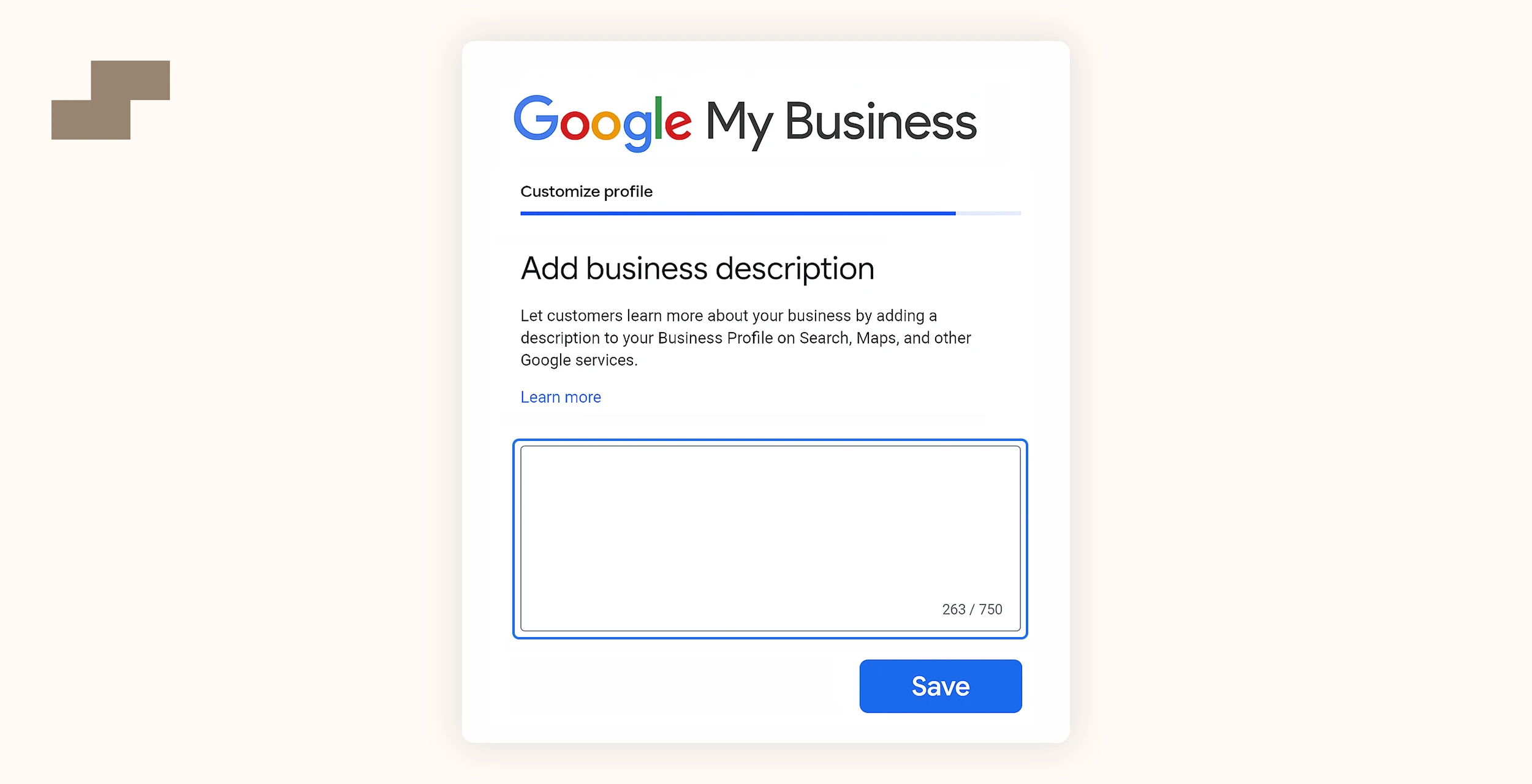
GMB optimisation
- Include FAQ-style content:
- “Does your hotel allow late check-in?”
This helps Google Assistant surface detailed, accurate answers.
- “Does your hotel allow late check-in?”
Reviews & Reputation
- Positive ratings amplify local relevance. Voice assistants often surface hotels with high ratings (“Alexa, find a 4-star hotel near me”).
Locally-Focused ads
- Use voice marketing by running local voice ads (“OK Google, find a hotel with pool near me.”)
Third-Party listings
- Ensuring correct information in TripAdvisor, Expedia settings is vital for voice marketing visibility.
Voice search analytics & measurement: Proving performance & ROI
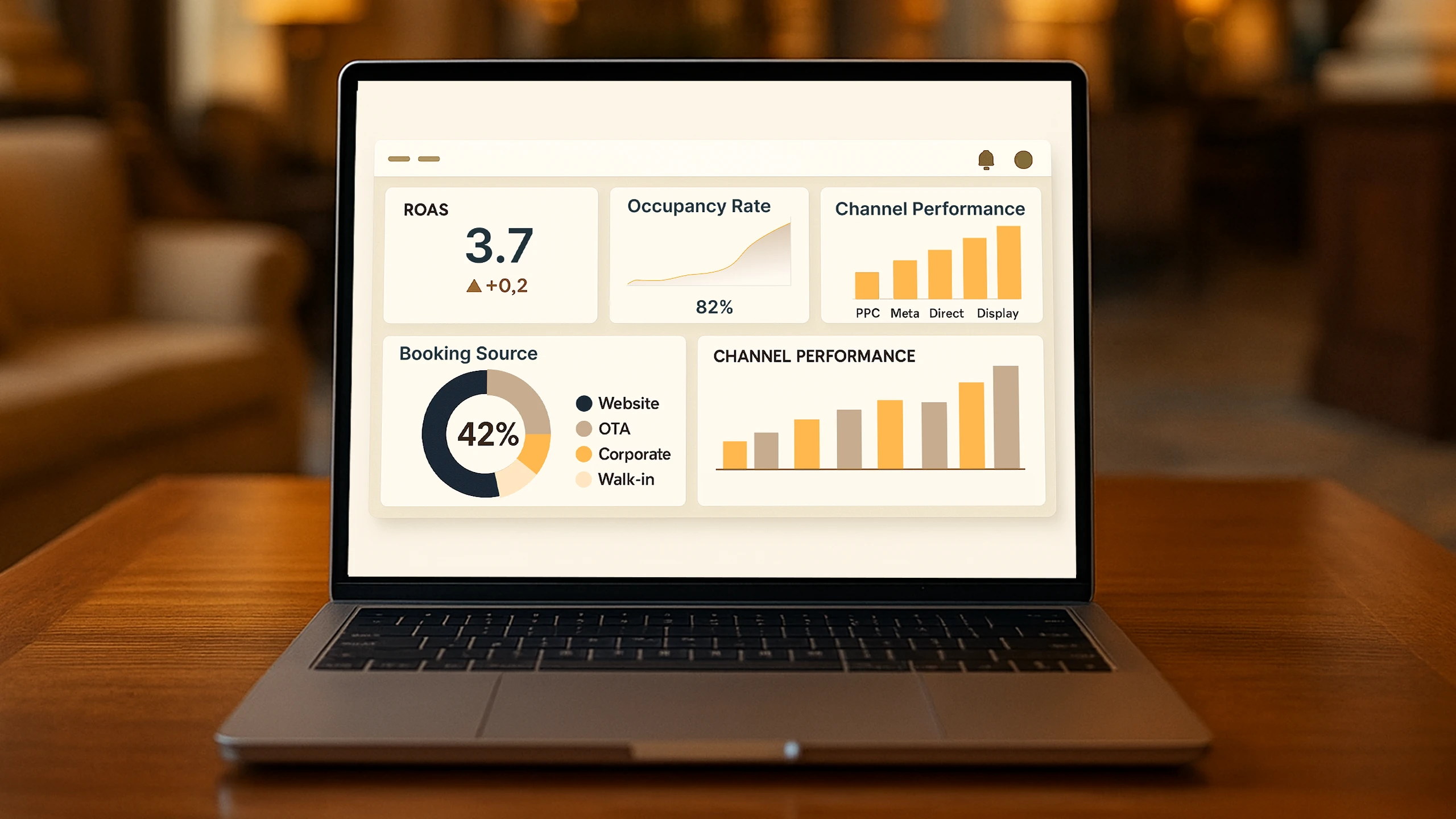
Implementing a voice search optimisation strategy is only half the battle; measuring its impact is what separates progressive hotels from the rest. As guests increasingly use voice to search, inquire, and book, your analytics systems must be set up to capture voice-specific interactions and tie them back to real business outcomes like bookings and engagement.
Let’s explore how to track and optimise your voice SEO for hospitality efforts with precision.
1. Conversion analytics: Tracking voice-driven behavior in GA4
Modern voice users don’t just land on your site; they ask questions, use smart speakers, and take action. With Google Analytics 4 (GA4), you can now track voice-related user behavior using custom event tags.
Key Event Tags:
- faq_spoken: Triggered when a visitor listens to or interacts with spoken FAQ content
- click_to_call: Measures conversion from voice-driven visits to call-based bookings
- smart_speaker_referral: Tracks traffic originating from known voice assistant platforms
Pro Tip: Create custom segments that separate voice-driven sessions from traditional typed search. This will help refine your voice search optimisation strategy based on actual user behavior.
2. Keyword discovery: Understanding voice query language
To optimise content for voice search, you need to know how users speak, not just how they type.
Use Tools Like:
- SEMrush / Ahrefs: Filter keyword data with “phrase match” filters to uncover long-tail, natural-sounding queries.
- Google Search Console: Look for queries starting with “how,” “what,” “where,” “can I,” “near me,” etc.
Voice queries are more conversational and question-oriented. So your analytics strategy must map these insights back into your conversational search optimisation plan.
Example:
- Typed: “London Hotel 4 star”
- Spoken: “What are the best 4-star hotels near Hyde Park in London?”
3. Advertising attribution & voice ROI
If you’re using voice marketing or running campaigns across smart speaker platforms (e.g., Amazon Alexa skills or Google Assistant Actions), you can track ROI with specific attribution tags.
Recommended UTM Tags:
- utm_medium=voice
- utm_campaign=smart_speaker_ads
By tagging your hotel promotions accurately, you can:
- Measure voice-to-booking conversion rates
- Attribute revenue from audio ads and smart speaker campaigns
This is vital for quantifying the voice search impact on hotel bookings and justifying continued investment.
4. Review & reputation metrics: Listening to your guests
User-generated content is a goldmine for voice-specific feedback. Many guests now mention voice assistants in their reviews, especially when referring to:
- Voice-controlled room features
- Smart check-in/check-out
- Frustrations with booking via voice
Actionable Ideas:
- Use tools like ReviewPro or TrustYou to scan for keywords: “Alexa,” “Google,” “voice command,” “hands-free,” “smart room.”
- Create a dashboard that tracks how often voice-enabled features are mentioned and link that to guest satisfaction scores.
This is an indirect but powerful measure of how effective your voice SEO for hospitality truly is.
5. Benchmarking & continuous optimisation
Once you’ve tagged, tracked, and segmented, you need to set benchmarks and optimise continuously.
Set KPIs for:
- Voice search traffic volume
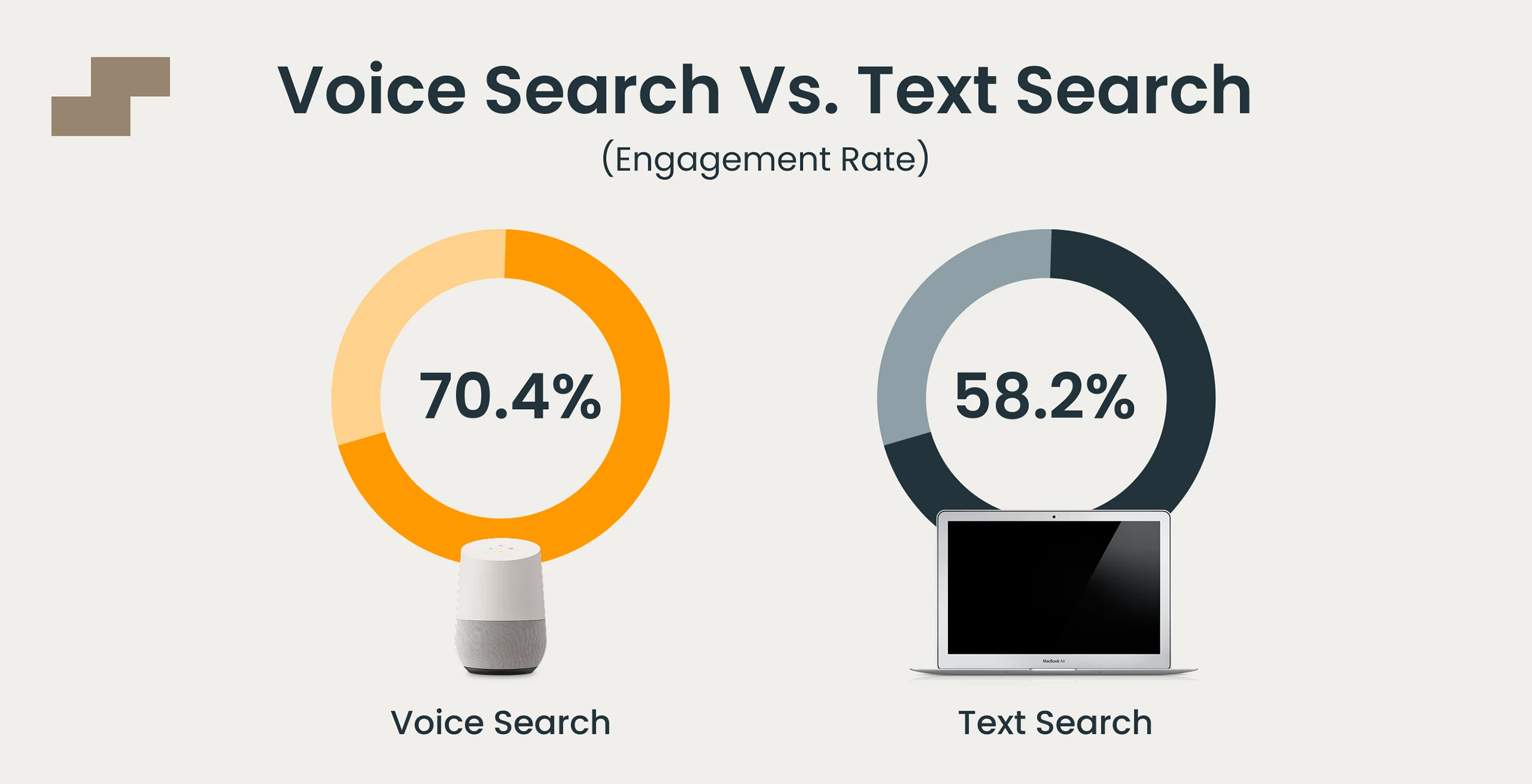
- Engagement rate on voice-targeted content (e.g., FAQs, location pages)
- Bookings or calls initiated by voice-referral sessions
- Audio ad conversion rates
Revisit your voice search optimisation strategy quarterly. Align data insights with technical fixes, new content development, and schema improvements.
Future trends & preparation: Where voice search is heading in hospitality
Voice technology isn’t just advancing, it’s reshaping how travelers search, book, and experience hotels. What was once a novelty is fast becoming the norm, with voice search optimisation evolving to include wearables, multilingual capabilities, smart hotel room automation, and frictionless payments. Hotels that prepare now will lead the next era of voice marketing and guest personalization – a shift highlighted in our 2026 Smart Hotel Technology Trends guide.
Let’s break down what’s ahead and how to prepare:
1. Wearables & Voice-Activated Travel Search
As AR glasses and smart wearables become mainstream, travelers will begin initiating voice searches on the go.
- Imagine a user walking down the street saying, “Find the best hotels near me with spa and free breakfast.”
- These hyper-contextual, real-time voice queries will require:
- Lightning-fast page speed
- Real-time local content
- Schema-rich hotel listings
Hotels that optimise content for voice search will be the ones appearing in these on-the-move moments.
2. Smart hotel rooms with conversational booking capabilities
Voice-activated smart rooms are no longer futuristic; they’re functional. Guests are already interacting with in-room assistants like Alexa, Google Nest, and even custom hotel voice interfaces.
Key innovations:
- “Alexa, book this same room next July.”
- “Hey Google, upgrade me to a suite with an ocean view.”
To support these requests, your hotel must integrate voice search optimisation strategies directly into:
- Property Management Systems (PMS)
- Loyalty platforms
- Mobile apps and booking engines
The more conversational search optimisation you enable, the more touchpoints you’ll own in the guest lifecycle.
3. Voice commerce & frictionless transactions
Thanks to voice authentication, payments through smart speakers are becoming secure and seamless.
What this means for hotels:
- Bookings, upgrades, and even spa services will be completed via voice commands.
- Your voice SEO for hospitality must go beyond discoverability; it needs to align with voice commerce capabilities.
Example:
“Alexa, book two massages at the hotel spa for 4 pm today and charge it to my room.”
Ensuring your hotel’s voice-ready booking system is PCI-compliant and integrated with loyalty IDs is key to staying competitive.
4. Multilingual voice search: Global guests, global queries
Travelers are speaking to voice assistants in their native languages – French, Spanish, Mandarin, and German. Hotels need to prepare for multilingual voice queries that ask:
- “Quels hôtels près de moi ont une piscine?”
- “最靠近市中心的酒店是哪一个?”
To respond effectively:
- Implement multilingual schema markup
- Use hreflang tags for international SEO
Train staff and content systems to accommodate international voice searches
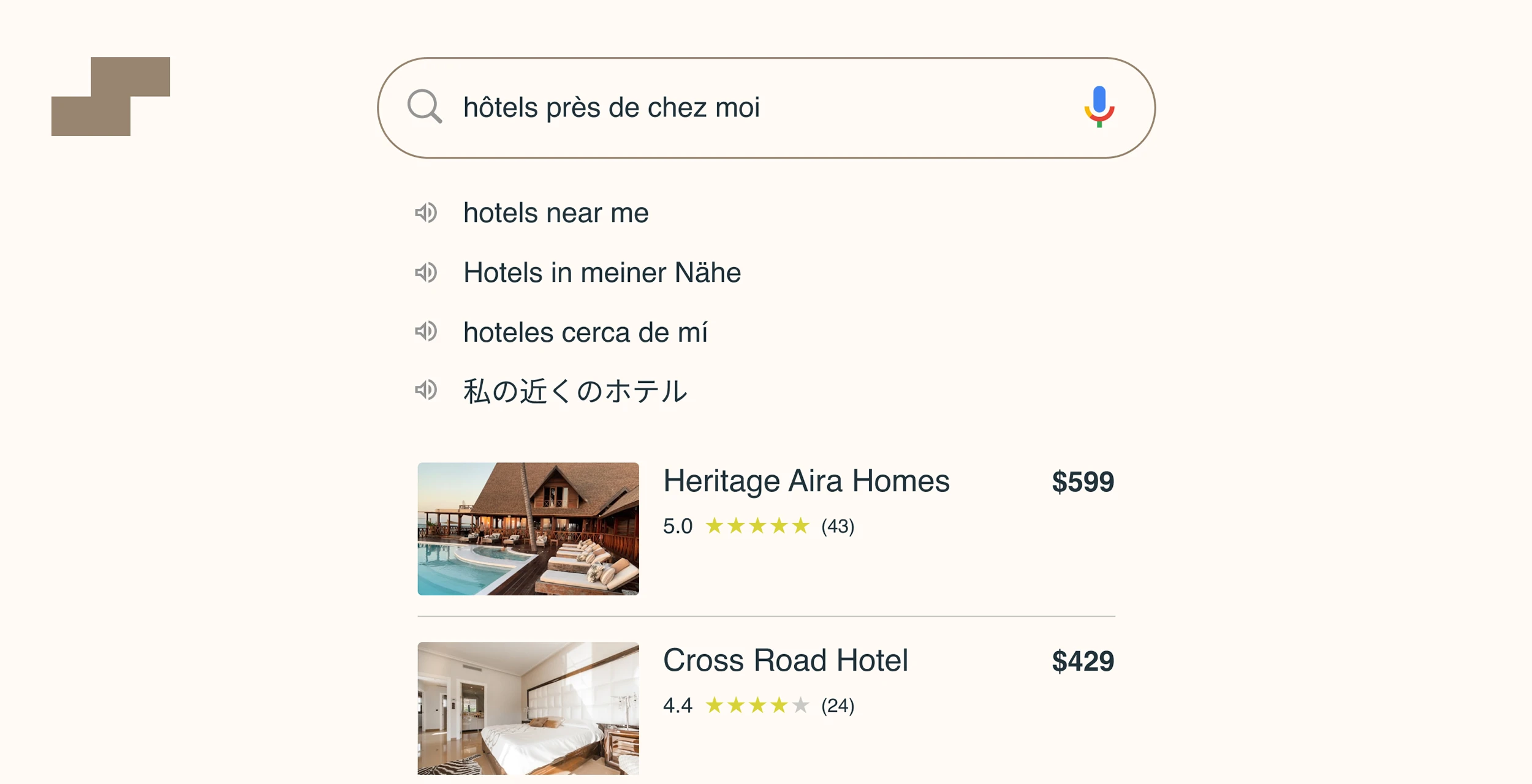
Embracing voice search local SEO for hotels means going beyond English to capture the full global market.
Future-ready hotels will win the loyalty game
The real leaders in voice search optimisation will be those who tie voice capabilities into loyalty, upsells, and guest delight:
- Pre-arrival upsell: “Add a bottle of champagne to my room.”
- Mid-stay loyalty perks: “What are my elite benefits tonight?”
- Post-stay rebooking: “Rebook my last stay for the same weekend next year.”
These interactions depend on natural language content, seamless back-end integration, and personalized voice triggers.
Voice search optimisation strategy: Step-by-step implementation roadmap for hotels
Implementing a powerful voice search optimisation strategy doesn’t have to be overwhelming. By breaking it down into structured phases across the year, hotels can gradually upgrade their digital presence to rank for voice search for hotels, improve conversational search optimisation, and boost direct bookings through voice marketing.
This roadmap outlines six actionable steps, each tied to core goals, relevant long-tail keywords, and quarterly priorities. Follow this blueprint to systematically optimise content for voice search, deploy technical enhancements, and empower your team to dominate this emerging booking channel.
Step 1: Run a voice SEO audit
Before optimising, you need to assess where you stand.
Key tasks:
- Conduct voice search tests using tools like SEMrush Voice Search Checker, and smart assistants (Google, Alexa, Siri).
- Check for schema markup implementation errors using Google’s Structured Data Testing Tool or Schema Validator.
- Review mobile site speed and Core Web Vitals, since voice engine optimisation heavily favors mobile-first experiences.
Step 2: Structured data & schema optimisation
Voice assistants rely on structured data to extract answers. This phase focuses on embedding rich schema markup to help your hotel speak Google’s language.
- Add the following schema types:
- Hotel schema for room types, amenities, and prices
- Local Business schema for geo-targeting and proximity searches
- FAQ Page schema for question-based content
- Speakable schema for highlighting content meant to be read aloud
- Ensure clean markup and test in Google’s Rich Results Tester.
Step 3: Content refresh & conversational optimisation
Voice search is built on natural language hotel search optimisation. Update your content to speak like a guest, not a search bot.
Tasks:
- Add conversational FAQ sections answering real voice queries like:
- “What are the check-in hours?”
- “Is breakfast included?”
- “Which is the best hotel near Hyde Park?”
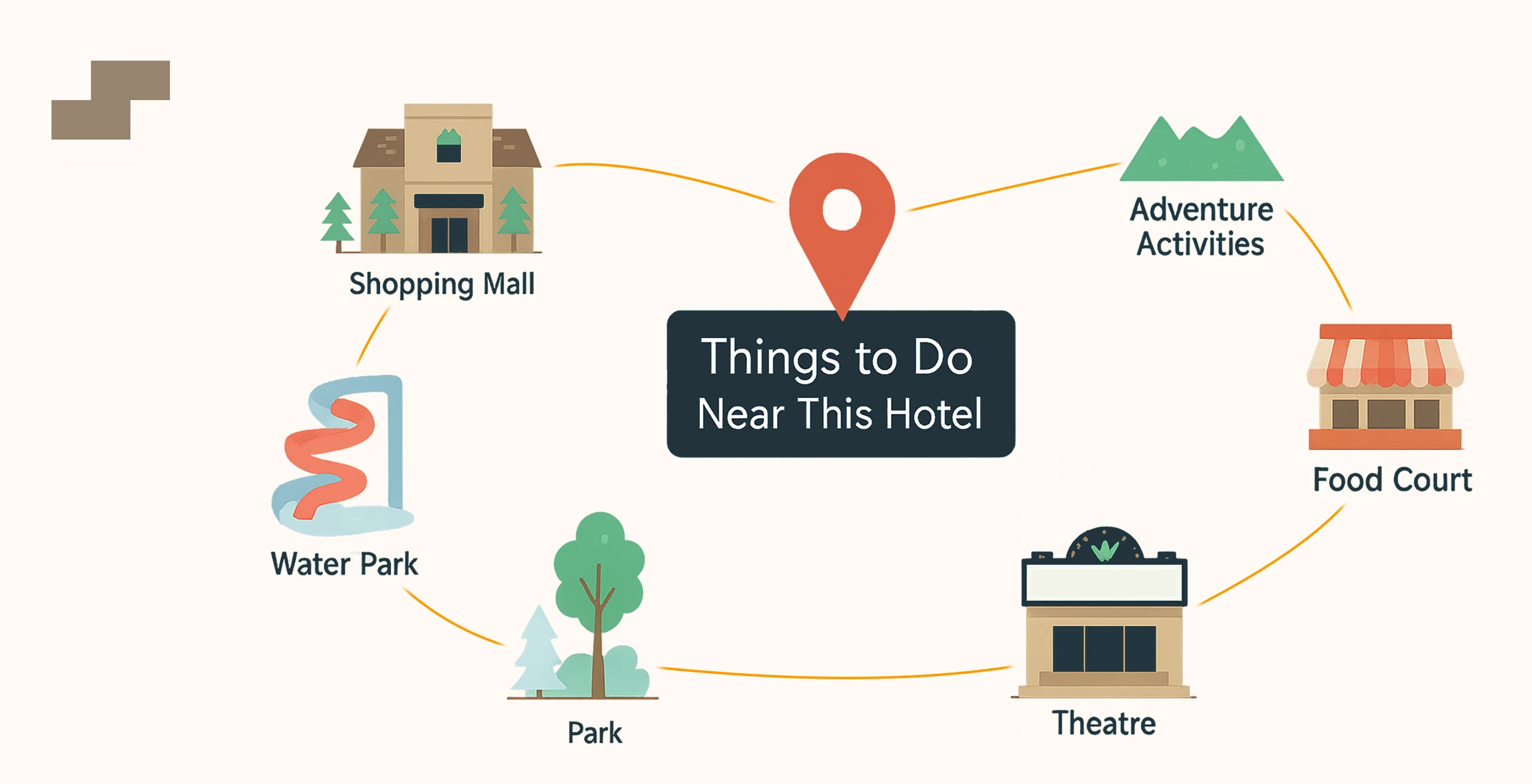
- Build local area guides with conversational content to capture “best hotels near me” and “things to do near [hotel name]” searches.
- Optimise meta tags and H2s with long-tail voice queries.
Step 4: Tagging, tracking & voice-specific analytics
You can’t optimise what you don’t measure. In this step, track how voice-driven traffic behaves on your site using digital marketing and analytics tools.
- Use Google Tag Manager to set up event tags on FAQs, click-to-call buttons, and voice landing pages.
- Segment voice visitors in GA4 by filtering mobile voice-search sessions or referral sources like Google Assistant.
- Set up custom dashboards for metrics like:
- FAQ page engagement
- Local SEO traffic sources
- Bounce rate from voice-initiated queries
Step 5: Quality assurance & testing
Monthly testing helps catch new bugs, content mismatches, and missed optimisation opportunities.
- Run voice assistant queries using smart devices (e.g., “Book a hotel in [city] with free parking”).
- Review customer service call logs to identify patterns in voice-led inquiries.
- Ask your team to test frequently asked questions using different assistants.
Step 6: Staff training & internal adoption
Your front desk and marketing teams must also speak the language of voice search.
- Train staff on common vocal phrases used by guests (e.g., “best hotel near me tonight,” “pet-friendly hotel in London”).
- Instruct them to use voice-optimised keywords naturally in blog posts, responses to reviews, and GMB updates.
- Encourage synergy between customer support and digital marketing.
Conclusion
Voice search isn’t just a trend; it’s transforming the way travelers discover, compare, and book hotels. The question isn’t if your guests are speaking, it’s whether your hotel is ready to answer.
A smart voice search optimisation strategy helps you meet guests where they are: speaking naturally, on the go, and expecting instant, personalized results. By aligning your content, technology, and local presence for voice interactions, you’ll position your hotel to win more direct bookings before competitors even show up in the results.
It’s no longer enough to be visible on Google. You need to be spoken by Alexa, found by Siri, and chosen by guests who never visit your website.
Are you ready to lead the conversation?
Whether you’re a boutique hotel or part of a global chain, optimising for voice search can unlock a powerful new channel for bookings and brand loyalty. Don’t wait to fall behind.