In today’s digital-first world, travelers no longer rely on travel agents or walk-ins to find accommodations. Instead, they search online, most often with location-based queries. This is where local SEO for hospitality becomes your most powerful growth strategy.
A well-executed local search optimisation strategy ensures that your property appears in relevant local search results, drives more direct bookings, and enhances guest trust. But it’s not just about getting found; it’s about getting chosen.
This comprehensive guide explores why local SEO for hospitality is a game-changer and how you can implement it strategically to compete with larger chains and OTAs.
What is local SEO, and why does it matter for hospitality
Local SEO (Search Engine Optimisation) refers to the process of optimising your digital presence so that your hotel appears in location-based search results, especially on platforms like Google Search and Google Maps.
For example, when someone types “beach resorts near Miami” or “budget hotels in London,” Google serves up nearby, optimized listings based on proximity, relevance, and credibility.
For hoteliers, this means being visible at the exact moment someone is ready to book.
Local SEO for hospitality focuses on:
- Optimising your Google Business Profile
- Being listed in local business directories for hospitality
- Using geo-targeted marketing for hotels
- Creating content tailored to local events or attractions
- Gathering authentic reviews from guests
According to a 2024 report by BrightLocal, 78% of location-based mobile searches result in an offline purchase, and in the hotel industry, this often translates to a booking. If your property isn’t appearing in these local searches, you’re leaving money on the table.
Common pain points for hoteliers related to digital marketing
Before diving into tactics, let’s address the real challenges hoteliers face:
- Drowning in OTA commission fees
Many hotels rely heavily on Booking.com, Expedia, and other OTAs, paying 15-25% commissions per booking. Without strong local search optimisation, direct bookings remain elusive. - Invisible to high-intent travellers
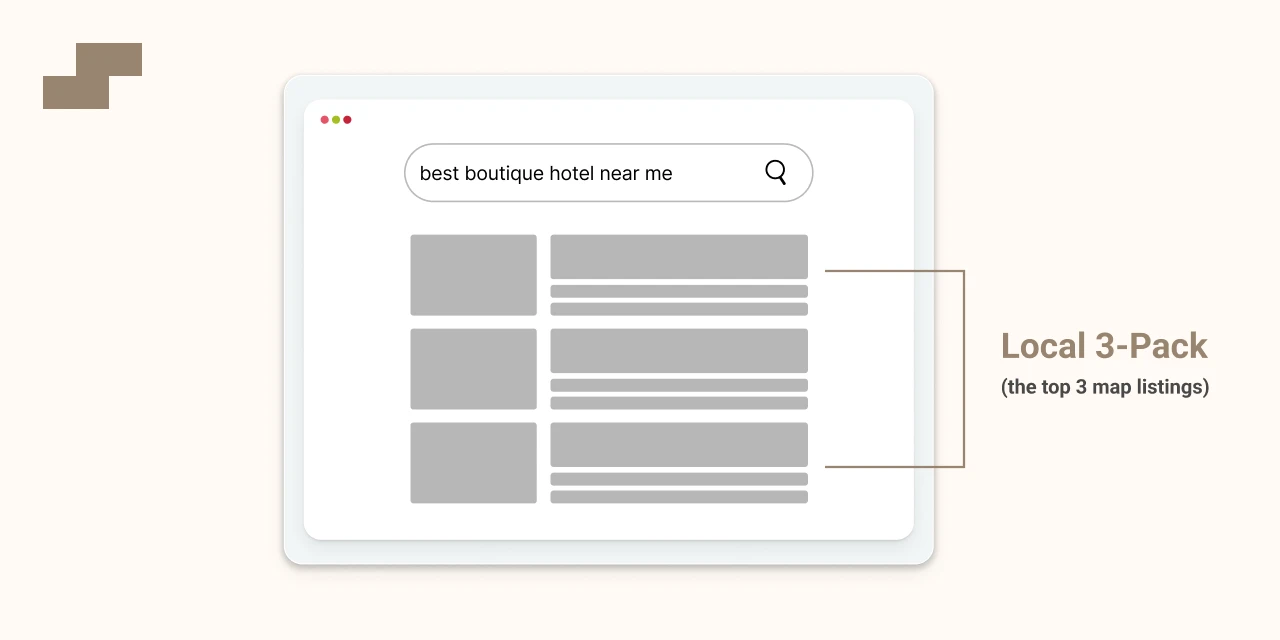
Your property might be excellent, but if it doesn’t appear in the local 3-pack (top 3 Google Maps results), potential guests will never find you. This is especially painful for independent hotels competing with chain brands. - Inconsistent online presence
Different addresses, phone numbers, or business names across directories confuse search engines and damage your local rankings. This is a silent killer for local SEO for hospitality. - Lack of time and technical expertise
Most hoteliers are experts in hospitality, not SEO. Managing Google Maps optimisation for hotels alongside daily operations feels overwhelming. - Negative reviews damaging reputation
A few bad reviews left unaddressed can tank your local rankings and discourage bookings, even if your service is generally excellent. - Limited marketing budget
Small hotels can’t compete with big chains on advertising spend, making organic strategies like SEO strategies for small hotels absolutely critical.
Why local SEO is critical for hotel bookings
Today, 4 out of 5 consumers use search engines to find local information. For travelers, this behavior is even more specific, looking for location, ratings, amenities, and photos before making a decision.
If you’re not optimised for local search, potential guests may never see your property, even if you’re the best in town.
According to Google, 46% of all searches have a local intent, and hospitality businesses that appear in the local 3-pack (the top 3 map listings) receive 700% more clicks than those listed below.
Investing in local search optimisation is no longer optional; it’s foundational.
Google Maps optimisation for hotels
Being listed on Google Maps is not enough. You need to optimise your listing.
Make sure your Google Business Profile includes:
- High-quality bedroom, pool, dining & lobby images
- Accurate NAP (Name, Address, Phone Number)
- Updated amenities list
- Booking link
- Review responses
- Google Posts featuring offers
According to Moz, Google Maps optimisation for hotels can drive up to 30% more traffic to your booking site when done properly. It also improves trust and visibility, two essential factors for conversion.
Mastering local business directories for hospitality
One of the simplest yet most underused tools in local SEO for hospitality is listing your property on local business directories for hospitality.
These include:
- TripAdvisor
- Booking.com
- Yelp
- MakeMyTrip
- Agoda
- Niche local directories based on region or tourism boards
Why directory consistency matters:
By ensuring consistency across these platforms (same name, address, and phone number), you boost your local search optimisation score.
A study by Yext found that businesses listed on at least 5 local directories saw a 76% higher engagement rate and improved organic visibility.
Directory management best practices:
- Claim all listings (don’t let incorrect information persist)
- Use an identical NAP across every platform
- Fill out every field completely (business hours, amenities, photos)
- Keep information updated (especially seasonal changes)
- Monitor and respond to reviews on all platforms
- Use tracking URLs to measure traffic from each directory
Pro Tip: Create a spreadsheet tracking all your directory listings with login credentials, publication dates, and review response dates.
Geo-targeted marketing for hotels: The competitive edge
Geo-targeted marketing for hotels allows you to push promotions, ads, or content to people based on their current location or areas they’ve shown interest in.
Effective Geo-Targeting Strategies:
- Location-Based PPC Campaigns
- Facebook or Google Ads targeted at people searching for “hotels near Manchester”
- Radius targeting around your property (5-50 miles, depending on location)
- Mobile Marketing
- SMS or WhatsApp promotions sent to guests currently in your city
- Push notifications through your hotel app for guests nearby
- Social Media Geo-Targeting
- Instagram Stories targeted at travellers who visited nearby tourist spots
- Facebook event promotions for local festivals or conferences
- Content Localisation
- Blog posts about “Top 10 Things to Do Near [Your Hotel]”
- Neighbourhood guides showcasing nearby restaurants, shops, and attractions
Hotels using geo-targeted marketing often see CTR (click-through-rates) that are 2x higher than generic campaigns, according to a report by Think with Google.
SEO strategies for small hotels
Boutique hotels and smaller properties often feel they can’t compete with big chains. But the right SEO strategies for small hotels can flip the script.
Focus on:
- Hyperlocal keywords like “heritage homestay near Eiffel Tower”
- Creating blog content around local events, cuisine, and experiences
- Partnering with local influencers or travel bloggers
- Getting backlinks from local news, tourism blogs, or regional portals
Small hotels that invest in content + local SEO often enjoy better engagement rates than larger competitors, due to their personalized and authentic appeal.

Technical SEO essentials for small hotels:
- Mobile-optimised website (most searches are mobile)
- Fast loading speeds (aim for under 3 seconds)
- Local schema markup (helps search engines understand your business)
- Location pages, if you have multiple properties
- HTTPS security (Google ranking factor)
The power of reviews in local SEO for hospitality
Guest reviews are not just social proof, they’re ranking signals.
Google uses both the quantity and quality of your reviews to decide where you should rank in local listings. A consistent stream of 4-5 star reviews can dramatically improve your visibility.
How reviews impact local SEO:
- Ranking Factor: More positive reviews = higher rankings in the local pack
- Click-Through Rate: Properties with 4+ stars get significantly more clicks
- Conversion Factor: 88% of travellers trust online reviews as much as personal recommendations
- Content Signal: Review text provides keyword-rich content about your property
- Recency Matters: Fresh reviews signal an active, current business
Encourage reviews by:
- Send review request emails 24-48 hours post-checkout
- Include direct links to Google, TripAdvisor, and Booking.com
- Train front desk staff to ask satisfied guests
- Provide QR codes on check-out materials
- Provide loyalty points for feedback
- Share user-generated content on social media (with permission)
Responding to reviews: best practices
For positive reviews:
- Thank the guest personally
- Mention specific details they shared
- Invite them back
For negative reviews:
- Respond within 24 hours
- Apologise sincerely without making excuses
- Address specific concerns mentioned
- Take the conversation offline if needed
- Show what you’re doing to improve
- End on a positive note
88% of travelers trust online reviews as much as personal recommendations, making them one of the most influential parts of your local search optimisation.
Local SEO = Direct Bookings
Let’s talk ROI.
When done well, local SEO for hospitality can reduce dependency on OTAs (Online Travel Agencies) and increase direct bookings, saving you hefty commission fees.
How local SEO drives direct bookings:
- Branded Search Traffic: Guests find you on Google, then visit your website directly
- Google Business Profile Links: Drive traffic straight to your booking engine
- Trust Building: Strong local presence = guests feel confident booking direct
- Less Price Comparison: Local searchers are less focused on price aggregators
- Better Guest Data: Direct bookings give you customer information for remarketing
According to a Skift survey, hotels that actively manage their local SEO campaigns see 22% more direct bookings annually, simply by being visible to high-intent travelers at the right time.
In an age where visibility equals viability, local SEO is not just a tactic; it’s a long-term strategy.
Local SEO Checklist
| Hotels | Restaurants | Spas |
|---|---|---|
|
|
|
FAQs
1. What is Local SEO for hospitality?
Local SEO for hospitality helps hotels, restaurants, and spas to maintain their online presence to rank higher in location-based searches on Google Maps, Google Search, and AI search tools.
2. What’s the difference between local SEO and regular SEO?
Regular SEO targets broad, often national or international search terms, while local search optimisation specifically targets location-based queries. Local SEO emphasises proximity, Google Business Profile, local citations, and reviews.
3. How does Google Maps help hotels get more bookings?
Google Maps optimisation for hotels directly impacts your visibility during high-intent searches like “hotels near me” or “accommodation in [city]” – queries that often result in same-day or next-day bookings.
4. Do small hotels benefit from Local SEO?
Yes. Effective SEO strategies for small hotels help them compete with larger brands and reduce OTA dependency. Your unique story and local expertise are competitive advantages.
5. Why are local business directories important?
Being listed in local business directories for hospitality strengthens your credibility and improves your ranking. NAP (Name, Address, Phone) consistency is crucial for local SEO for hospitality. Inconsistencies confuse search engines and hurt your rankings.
6. How long does Local SEO take to show results?
Most hotels see initial improvements within 4-8 weeks, with significant results appearing in 3-6 months. Quick wins like completing your Google Business Profile can show impact within days, while comprehensive local search optimisation strategies build momentum over time.
Final thoughts
The hospitality landscape is evolving fast, and digital visibility is at the heart of it. By prioritizing local SEO for hospitality, you’re not just improving your online presence; you’re building a sustainable pipeline of high-quality, organic traffic.
From Google Maps optimisation for hotels to leveraging local business directories for hospitality and deploying geo-targeted marketing for hotels, the opportunities are endless.
Start with the checklist above, implement the quick tips, address your biggest pain points first, and commit to consistency. Within months, you’ll see your property climbing local rankings, attracting more qualified traffic, and converting more direct bookings.
Whether you run a boutique hotel, a neighbourhood restaurant, or a luxury spa, mastering local search optimisation is essential for growth in 2026 and beyond.