Willowbrook Spa & Wellness, an independent day spa in the Cotswolds with eight treatment rooms, had a loyal weekend client base but a brand identity that hadn’t evolved in years, a booking website that made guests pick up the phone instead of booking online, and almost no presence in the corporate and gifting market. Treatment room utilisation sat around 60% overall, with weekdays as low as 40%. Over a 9-month engagement, a rebrand paired with a booking funnel rebuild and a lifecycle marketing programme meaningfully shifted both utilisation and average spend per visit – a pattern we’ve seen repeated across several similar independent spa and wellness businesses.
1. The starting point: A loyal client base, an ageing brand
Weekday treatment room utilisation was around 40%, well below the weekend’s 85%+. The visual brand – logo, colour palette, in-spa signage, and packaging – hadn’t been refreshed in over a decade and no longer matched the calm, modern positioning the spa wanted to hold in a competitive local market. The booking website required guests to call to check availability for anything beyond a single standard treatment; membership and gifting were not actively marketed, and there was no lifecycle email programme to bring past clients back.
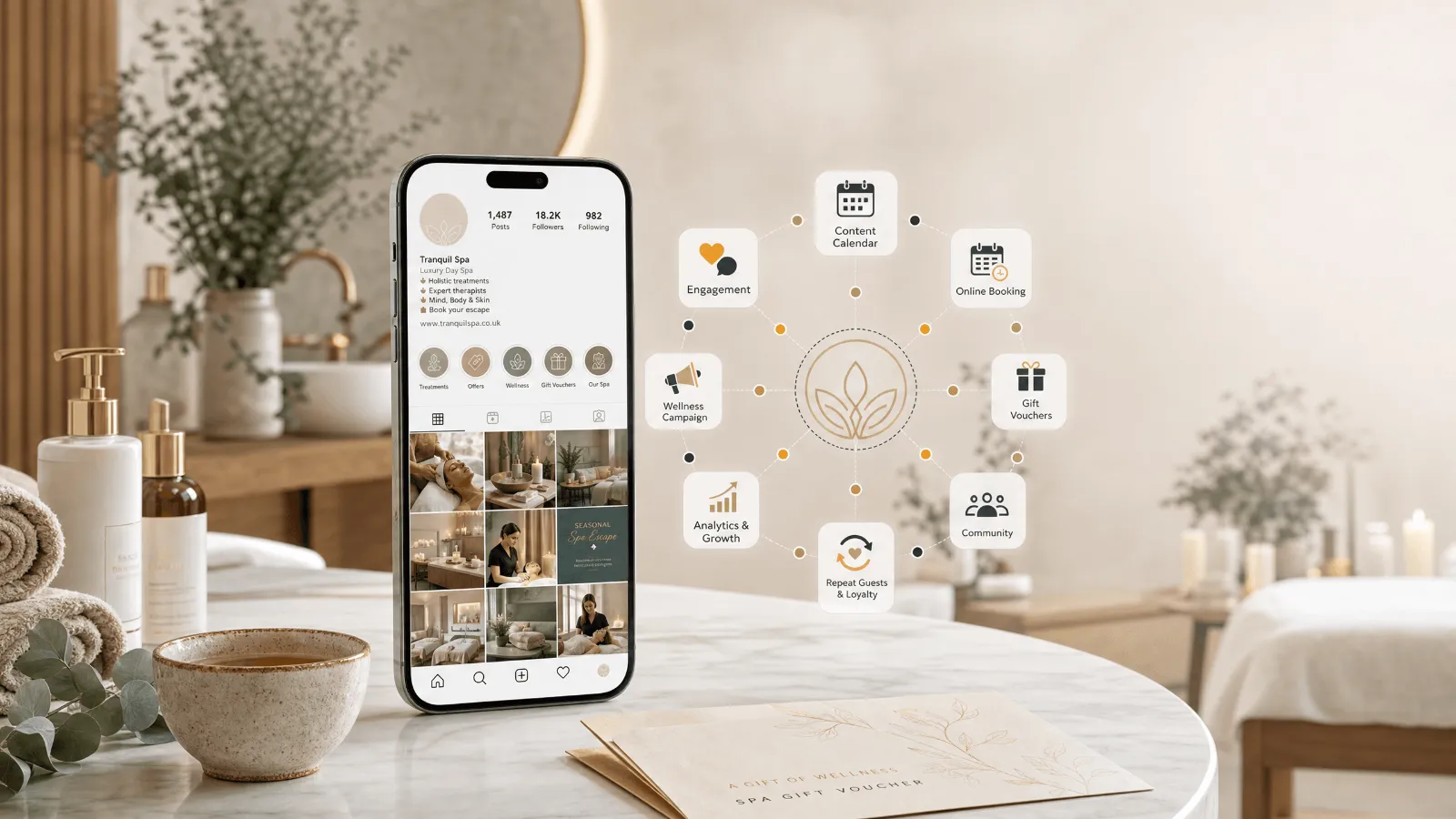
| Discover how a focused spa marketing strategy helped Willowbrook Spa & Wellness strengthen visibility, attract more direct bookings and drive long-term client growth. |
|
2. The strategy: Four coordinated workstreams
2.1 Brand Refresh
The visual identity was rebuilt around a calmer, more contemporary palette and typography, extended consistently across the website, in-spa signage, treatment menus, gift vouchers, and social channels. Tone of voice was redefined to move away from generic “relax and unwind” language toward specific, benefit-led copy tied to real treatments and real outcomes.
2.2 Website & Booking Funnel Overhaul
The booking engine was rebuilt so that packages, add-ons, and multi-treatment spa days could be booked entirely online, removing the phone-call bottleneck that was quietly costing bookings outside opening hours. We prioritised mobile load times and a simplified checkout, alongside clearer package and membership pages.
2.3 Lifecycle Email & Loyalty Marketing
A segmented email programme replaced one-off seasonal newsletters: a first-visit welcome sequence, a 60-day “time for your next treatment” reminder, birthday and anniversary offers, and a dedicated weekday-only offer sent exclusively to local subscribers. A paid membership scheme was launched and marketed through this same channel, giving the spa its first source of predictable, recurring revenue.
2.4 Segmented Paid Social & Local SEO
Meta campaigns were rebuilt around three audiences – couples seeking a spa day, local wellness-focused clients, and corporate HR contacts sourcing wellness days for their teams – each with distinct creative and offers, replacing a single generic “book now” campaign. Google Business Profile and local SEO were optimised in parallel to capture “spa day near me” and “couples spa [region]” search demand.
3. Corporate wellness as a weekday growth lever
Much like the B2B outreach that closes a hotel’s midweek occupancy gap, corporate wellness days proved to be one of the strongest levers for filling weekday treatment rooms. Outreach to local and regional businesses positioned Willowbrook as a team wellness and client-entertainment venue, with a dedicated package and LinkedIn-led marketing.
Corporate wellness packages
Half-day and full-day corporate packages were built specifically for weekday delivery, combining treatments with a private space for teams – directly targeting the hours the spa had the most spare capacity and the least competition for its calendar.
Membership as a retention engine
The new membership tier bundled a monthly treatment credit with retail and package discounts, turning occasional weekend visitors into predictable, recurring weekday and weekend revenue and giving the email programme a natural, ongoing reason to stay in touch.
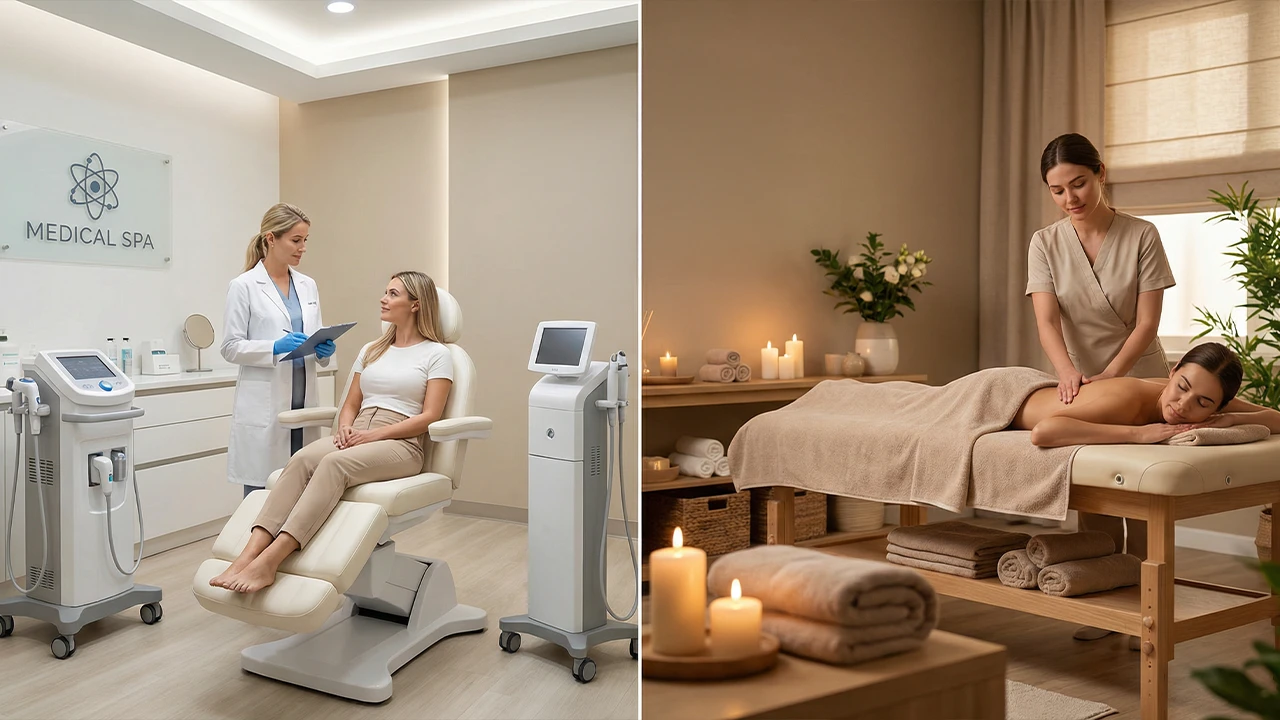
While memberships and corporate packages are universal growth levers, your broader strategy will depend heavily on your spa’s core model. Discover how to adapt your approach in our guide to Medical spa vs Day spa marketing in 2026.
4. Key results and learnings
- 28% increase in overall treatment bookings
- Weekday treatment room utilisation rose from 40% to 61%
- Average spend per visit increased by 22%, driven by package and add-on upsells at the point of online booking
- 340 members signed up for the new loyalty membership within the first six months
- Online reviews grew from 85 to 310+, with the average rating rising to 4.8
5. Spa marketing case study results breakdown
| Metric | Before (Problem) | Strategy Implemented | After (Result) |
| Weekday Utilisation | Around 40% of treatment room capacity | Corporate wellness packages, weekday-only email offers, targeted local paid social | Rose to 61% weekday utilisation |
| Overall Bookings | 60% overall utilisation, phone-dependent booking | Full online booking funnel for packages and multi-treatment days | 28% increase in overall treatment bookings |
| Average Spend | Flat, single-treatment bookings dominant | Package and add-on upsell prompts built into the online checkout | 22% increase in average spend per visit |
| Client Retention | No lifecycle programme, one-off newsletters only | Segmented email lifecycle: welcome, 60-day reminder, birthday, membership | 340 members signed in 6 months |
| Brand & Reputation | Ageing visual identity, 85 reviews at 4.1 | Full brand refresh, structured review generation and response | 310+ reviews, 4.8 average rating |
6. Actionable checklist for spa owners to implement
- Audit whether your brand identity still matches the experience you’re actually delivering
- Remove phone-call bottlenecks from your booking funnel – package and multi-treatment bookings should be entirely online
- Build weekday-specific offers and a corporate wellness package to target your lowest-utilisation hours
- Launch a membership or loyalty tier to convert occasional visitors into recurring revenue
- Prompt package and add-on upsells directly inside the online checkout, not just at reception
- Run a structured review generation and response process alongside your rebrand, not after it
7. Conclusion: A calmer brand, a fuller calendar
The transformation of Willowbrook Spa & Wellness shows that a brand refresh delivers its full value only when it’s paired with the operational and marketing systems that convert renewed interest into bookings – a frictionless online funnel, a weekday-focused offer strategy, and a lifecycle programme that keeps clients coming back. For spas struggling with weekday capacity in particular, corporate wellness and membership programmes offer a repeatable path to more predictable revenue.
Key takeaways
- A brand refresh should be paired with booking funnel and lifecycle marketing work to convert renewed interest into bookings.
- Corporate wellness packages are an effective, underused lever for filling weekday treatment room capacity.
- Membership and loyalty programmes convert occasional visitors into predictable, recurring revenue.
- Upsell prompts inside the online checkout meaningfully lift average spend without adding staff workload.
Ready to create similar growth for your spa?
See what a focused, data-driven marketing strategy can achieve for your spa. Let’s turn stronger visibility, more enquiries, and better customer engagement into measurable business growth.
8. FAQs
Yes, provided it’s paired with funnel and marketing work — a refreshed identity on its own rarely moves bookings, but it materially improves conversion once paired with a frictionless booking journey and consistent marketing.
Corporate wellness packages and weekday-exclusive offers sent to a segmented email list consistently outperform general discounting, because they target audiences with genuine flexibility to book midweek.
Yes – a modest monthly credit plus retail and package discounts is enough to convert occasional visitors into recurring clients and gives your lifecycle marketing a natural, ongoing reason to stay in touch.
Booking funnel and paid social improvements are typically visible within 6–10 weeks, with the fuller weekday-utilisation and membership gains building over 4–9 months as the brand refresh, corporate outreach, and lifecycle programme compound.