

Email remains the highest-ROI marketing channel in hospitality — but the rules changed in 2026, and most hotels haven’t caught up. Apple’s Mail Privacy Protection has made open rate an unreliable metric. Gmail and Yahoo now reject non-compliant bulk senders outright rather than just filtering them to spam. And AI tools like ChatGPT, Perplexity, and Google AI Overviews are increasingly answering travel questions directly, bypassing hotel websites entirely — which makes your owned email list more valuable than ever.
The travel and hospitality sector achieves a 98.6% email delivery rate, one of the highest of any industry, and email marketing revenue in hospitality is projected to reach $13.7 billion by 2027. But the delivery rate isn’t the same as the results. Hotels that still chase inflated open rates, skip authentication setup, or send generic blasts are leaving revenue on the table while their better-optimized competitors capture it.
1. Why email marketing still matters for the hospitality industry in 2026
Email marketing delivers an average ROI of $36–$42 for every $1 spent across industries, and hospitality typically lands at the higher end of that range — with top-performing lifecycle campaigns reporting $100 or more per $1 spent, largely because repeat guests carry higher lifetime value than one-time purchasers in most other sectors.
| This guide covers everything UK hospitality SMEs need to build an email programme that actually drives direct bookings in 2026. |
|
The single biggest reason email matters more in 2026: it’s the one guest relationship channel you fully own. AI-driven search is reshaping how travellers discover and choose hotels — tools like ChatGPT, Google AI Overviews, and Perplexity now surface recommendations directly, often without a single click to your website. Your email list is not subject to this disruption. It’s a direct line to guests that no algorithm change, AI Overview, or OTA policy shift can take away from you.
Current hospitality email performance benchmarks:
| Metric | Hospitality Benchmark | Notes |
| Email delivery rate | 98.6% | Among the highest of any industry |
| Average open rate (non-Apple) | ~25% | Fluctuates seasonally |
| One-time campaign CTR | 2.37% | |
| Automated/recurring campaign CTR | Up to 15.17% | 6x higher than one-time sends |
| Click-to-open rate (CTOR) | 8.7% | Slightly below the 10.5% cross-industry average |
| Booking conversion rate | ~2% | Counterintuitively lower for luxury properties |
| Cart abandonment email open rate | 69% | One of the strongest-performing automated triggers |
| Average ROI | $38 per $1 spent | Up to $100+ for well-targeted lifecycle campaigns |
Pain points hotel marketers still face:
- Uninspired subject lines dragging down engagement
- Generic, unsegmented blasts that ignore guest preferences
- Missing or misconfigured email authentication (SPF/DKIM/DMARC), causing silent deliverability failures
- Confusion around what “good” now means for open rate given Apple’s privacy changes
- GDPR and evolving privacy compliance concerns
- Difficulty proving ROI beyond vanity metrics
2. The metric shift: Why open rate can no longer be trusted
This is the most important change in email marketing since GDPR, and most hotel marketing guides haven’t caught up to it.
What happened: Apple’s Mail Privacy Protection (MPP), combined with similar privacy features across other clients, pre-loads tracking pixels automatically — regardless of whether a human actually opened the email. This means your reported open rate is now inflated by an estimated 10–30% compared to genuine engagement.
What this means practically: If your dashboard shows a 35% open rate, real human engagement could be closer to 25%. Worse, this makes historical comparisons unreliable — a “declining” open rate might just reflect a growing share of Apple Mail users on your list, not an actual drop in guest interest.
What to track instead
- Click-to-open rate (CTOR) — the percentage of openers who clicked something. This filters out the noise created by pixel pre-loading and reflects real content engagement. Hospitality’s current CTOR benchmark sits around 8.7%.
- Click-through rate (CTR) — measured against total emails sent, not opens. Less distorted by privacy protections since it requires an actual click.
- Conversion rate — bookings or redemptions generated, the metric that ties directly to revenue.
- Revenue per email (RPE) — total revenue generated divided by emails sent. This is becoming the primary KPI serious hospitality marketers report on instead of open rate.
- Deliverability rate — percentage of sent emails that actually reach the inbox (not spam or bounced).
Practical steps for hotels

Create parallel reporting: Apple Mail users vs. everyone else, and stop relying on open rate for the Apple segment

Shift automation triggers from “opened” to “clicked” wherever your platform allows it

Reset your internal benchmarks — a “25% open rate” campaign from 2023 is not directly comparable to a “25% open rate” campaign in 2026

Report CTR, conversion rate, and RPE to ownership/GMs instead of leading with open rate
3. Email deliverability in 2026: The authentication requirements that determine if you’re seen at all
This is the single biggest gap in most hotel email marketing advice — and the reason some hotels’ “great” campaigns quietly stopped arriving in guest inboxes at all.
3.1 What changed
Google and Yahoo introduced bulk sender requirements starting in 2024, and by 2026, enforcement had moved from soft warnings to outright rejection of non-compliant email. Microsoft (Outlook/Hotmail/Live) joined with its own enforcement from May 2025. As of November 2025, Gmail issues permanent rejections — not just spam-folder placement — for messages that fail to meet requirements.
Who this affects: Anyone sending 5,000+ emails per day to Gmail or Yahoo addresses is classed as a “bulk sender” and must meet the full requirements below. However, even smaller hotels sending fewer emails should follow these as best practice, since enforcement patterns are expected to tighten further, not relax.
3.2 The requirements checklist
For all senders (regardless of volume):
- Valid SPF (Sender Policy Framework) record
- Valid DKIM (DomainKeys Identified Mail) signature, minimum 1024-bit key
- Valid forward and reverse DNS (PTR) records for sending IPs
- TLS encryption for message transmission
- Spam complaint rate below 0.3% (0.1% is the safer working ceiling)
Additional requirements for bulk senders (5,000+/day):
- DMARC policy published (minimum p=none to start; industry best practice is moving toward p=quarantine or p=reject)
- SPF and DKIM domain alignment with your From: domain
- One-click unsubscribe (List-Unsubscribe header, not just a footer link)
- Unsubscribe requests are processed within 48 hours (2 days)
3.3 Common failure points for hotels
1. Using a third-party ESP without custom domain authentication
If you use Mailchimp, Klaviyo, or similar without configuring “Custom Domain Authentication,” your emails appear to come from the ESP’s domain rather than yours, breaking DMARC alignment.
2. SPF record exceeding the 10-DNS-lookup limit
Hotels using many connected tools (PMS integrations, booking engines, CRM, marketing platform) can accidentally exceed SPF’s lookup limit, causing silent permanent failures. Audit and remove unused entries, or use an SPF-flattening service.
3. Footer unsubscribe link only
A link in your email body isn’t the same as a “List-Unsubscribe” header, which is what triggers the native one-click unsubscribe button inside Gmail/Outlook. Both are now expected.
3.4 How to check your status
- Send a test email to your own Gmail account
- Open it, click the three-dot menu → “Show original”
- Check that SPF, DKIM, and DMARC all show PASS with aligned domains
- Use Google Postmaster Tools to monitor your ongoing spam complaint rate
Why this matters more than any subject line trick: A perfectly crafted, beautifully designed, GDPR-compliant email that fails authentication will never be seen by the guest at all. Deliverability is the foundation that everything else in this guide sits on top of.
4. Foundation setup: Building a high-performing guest list
A successful hospitality email programme starts with a permission-based, well-segmented subscriber list.
4.1 Guest data collection strategies
Capture guest details at every touchpoint:
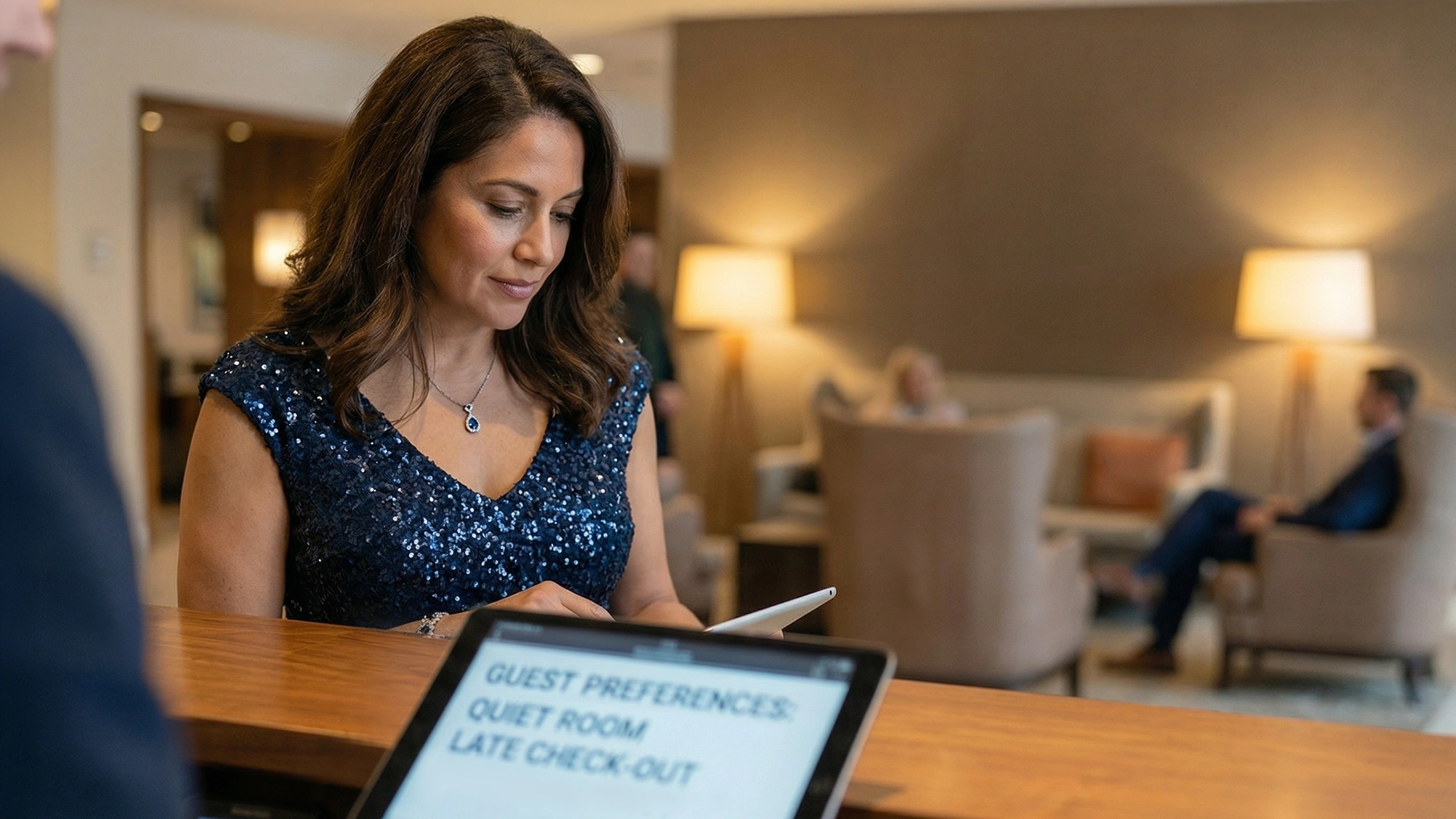
- Check-in and check-out: Train front-desk staff to ask guests if they’d like exclusive offers and travel guides. A simple tablet or kiosk streamlines this.
- Website: Use pop-ups offering genuine incentives (10% off, spa credit, late checkout) positioned on high-traffic pages like accommodation or booking pages.
- Social media: Lead-gen ads promoting seasonal offers or local experiences.
- Offline events: Weddings, corporate events, and private dining — collect emails via registration forms.
This ensures your list is organically grown and genuinely engaged, rather than purchased — a practice that damages both deliverability and your sender reputation under the 2026 authentication requirements above.
4.2 Permission-based & GDPR compliance
GDPR requires clear opt-in and effortless unsubscribe. Tell guests exactly why you’re emailing them (“concierge tips and VIP offers”) and honour that promise.
Compliance checklist:
- Double opt-in confirmation emails
- Clear, one-click unsubscribe link in every email (List-Unsubscribe header, not just footer text)
- Physical mailing address in the footer
- Privacy policy linked and accessible
- Defined and followed the data retention policy
- Regular list cleaning to remove hard bounces (protects your deliverability score)
- Unsubscribe requests are actioned within 48 hours
4.3 Guest segmentation
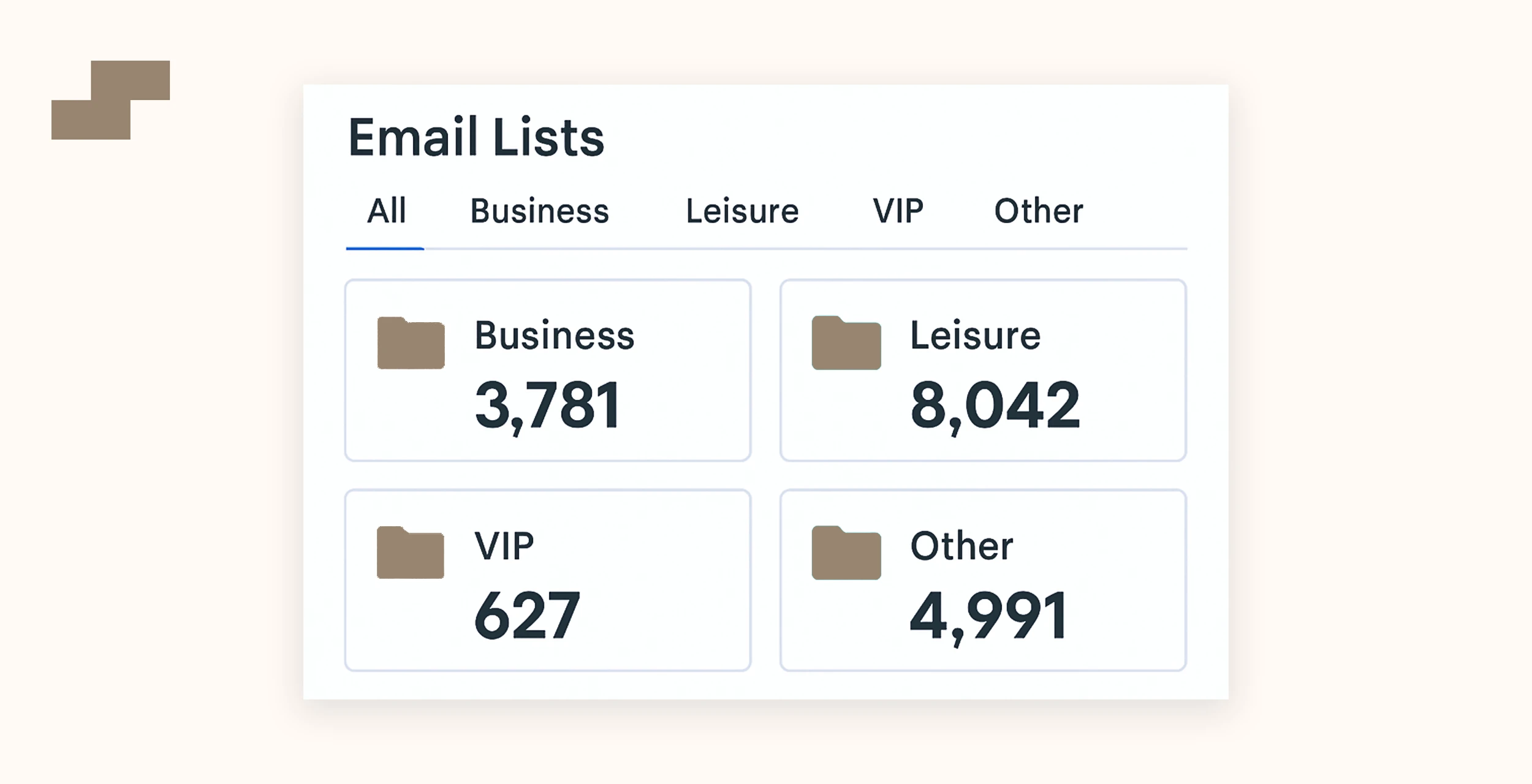
Segment your list so business travellers and families aren’t receiving identical content:
- Guest type: Business vs. leisure vs. repeat guests vs. event attendees
- Stay history: First-time visitors vs. VIPs vs. annual returners
- Preferences: Spa lovers, family travel, culinary enthusiasts, wellness-focused guests
- Geography and language: Local vs. international travellers
- Booking behaviour: Last-minute vs. advance planners, direct bookers vs. OTA converts
- Lifecycle stage: Prospects, active guests, post-stay, dormant subscribers
- Spending patterns: Budget-conscious vs. luxury seekers
Quick win – the welcome segment: Start with just three segments: New Subscribers, Recent Guests (stayed within 90 days), and Everyone Else. Refine as you gather more data.
5. Design and Content strategy: Newsletters that get opened
Mobile-Responsive, On-Brand Design
Over 60% of hotel email opens happen on mobile, climbing above 75% for leisure travellers browsing on weekends.
- Single-column layouts for easy scrolling
- Tap-friendly CTAs: “Book Your Room,” “View Offer”
- Clean, legible, brand-aligned fonts and header imagery
- Design tools: BeeFree, Stripo, Mailchimp
Design mistake to avoid: Image-heavy emails with text embedded in graphics. Spam filters penalise these; they’re inaccessible to screen readers, and — critically in 2026 — they hurt your spam complaint rate, which directly threatens your Gmail/Yahoo deliverability standing.
The value-rich 60/40 content mix
Blend content for trust and engagement:
- Value-driven content (60%): Travel tips, local events, guest testimonials, behind-the-scenes stories
- Promotional content (40%): Seasonal deals, room upgrades, spa discounts
Example structure:
- Header: “Welcome Back, Sarah!”
- Feature article: “Top 5 Hidden Beaches Near Our Resort” (300–400 words, strong photography)
- User-generated highlight: Guest photo with credit
- Secondary story: “Meet Our New Head Chef”
- Promo block: “Summer Deluxe Room — 20% Off”
- Footer: Social links, contact info, one-click unsubscribe
A/B testing design
Run controlled tests:
- Version A: Local guide first, offer later
- Version B: Offer first, then local guide
Test with 15–20% of your list; send the winner to the remainder. Wait for statistical significance (200–300 opens minimum) before declaring a winner — and remember to weight this toward click data given the open-rate reliability issue above.
6. Optimisation techniques: Subject lines, timing & personalisation
6.1 High-impact subject line formulas
- Offer + Value + Urgency: “20% Off Sea View Stays — Book by Tomorrow”
- Personal + Location-based: “John, a Spa Day Awaits in Edinburgh”
- Question format: “Need a Weekend Break by the Sea?”
- Seasonal: “Fall in Love with Our Autumn Escape Package”
- Curiosity-driven: “You Won’t Believe What’s New on Our Menu”
- Social proof: “500+ Guests Loved This — Your Turn?”
Avoid: ALL CAPS, excessive punctuation (spam filter triggers), misleading promises, generic “Newsletter #47” labels.
6.2 Optimal send times
- Tuesday–Wednesday, 10–11 AM tends to perform best across most industries (catches morning planning/coffee-break browsing)
- Afternoon sends (2–3 PM) work well for leisure travellers
- Avoid late Friday afternoons and weekends unless testing shows otherwise for your specific audience
- Always test against your own guest behaviour data rather than assuming generic benchmarks apply
6.3 A/B testing strategy
Test one variable at a time:
- Subject line length, emoji use, personalisation
- Preview text: direct vs. curiosity-driven
- CTA copy and placement
- Content block order
- Send time and day
Use 10–20% of your list for testing; scale the winner to the rest.
6.4 Deep personalisation
Go beyond “Dear [Name].” Dynamically insert:
- Past stay information
- Previously booked room types
- Tailored package suggestions
Personalisation of this depth can meaningfully lift click rates — but requires CRM/PMS data integration rather than basic ESP merge tags alone.
7. Automation and timing: Smart email sequences
Automation delivers contextually relevant content at each guest lifecycle stage without manual effort — and automated/recurring campaigns achieve dramatically higher CTR than one-off blasts (up to 15.17% vs. 2.37%).
a. Welcome Series (New Subscribers)
- Immediate: Welcome message, facility highlights
- Day 6: First-booking incentive (10% off or complimentary upgrade)
- Day 12: Local area guide
- Day 20: Limited-time seasonal offer
b. Pre-arrival & Post-stay Sequence
Before stay:
- 7 days out: Check-in details, upsell offers, packing tips
- 2 days out: Weather and local dining suggestions
- Day of arrival: Wi-Fi details, check-in confirmation, front desk contact
After stay:
- Day 1: Genuine thank-you message
- Day 3: Review request with a small incentive
- Day 7: Loyalty programme or referral invitation
- Day 30–60: “Miss you” campaign with new seasonal offers
c. Cart/Booking abandonment (Highest-Performing Automated Trigger)
If a guest starts a booking but doesn’t complete it, this is one of your most valuable automated emails — abandonment sequences average around a 69% open rate in hospitality, well above any other campaign type, because intent is already established.
- Show the exact room and dates they viewed
- Reinforce your best-rate guarantee if applicable
- One clear, prominent CTA to complete the booking
- Keep it short — should take under 10 seconds to read
d. Milestone & Celebration Emails
- Birthday/anniversary triggers (captured at booking or loyalty enrolment)
- Personalised with name and occasion
- Offer something tangible: complimentary upgrade, dining credit, celebratory rate
e. Seasonal & Holiday Campaigns
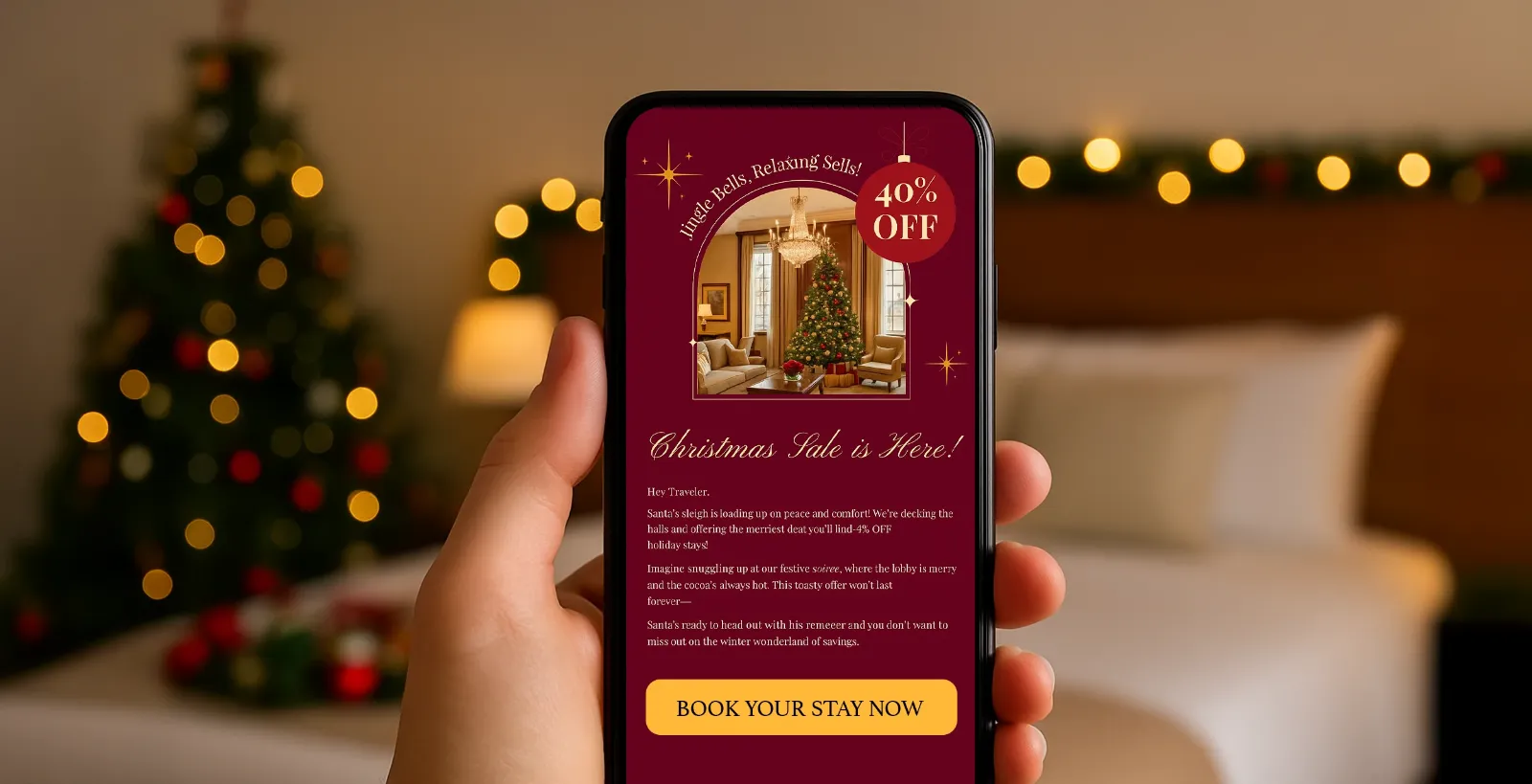
Pre-build templates for: early-bird summer offers, autumn countryside breaks, Christmas party packages, New Year’s celebrations, Valentine’s escapes, spring bank holiday availability.
f. Re-Engagement Campaigns
For guests who haven’t opened (or, better, clicked) in 3–6 months:
- “We Miss You” offer or “Things Have Changed” property update
- Highlight new features or programmes
- If unresponsive after 3 emails, remove from active sending to protect your spam complaint rate and deliverability standing
8. Measurement & continuous improvement
8.1 Essential KPIs (2026 Priority Order)
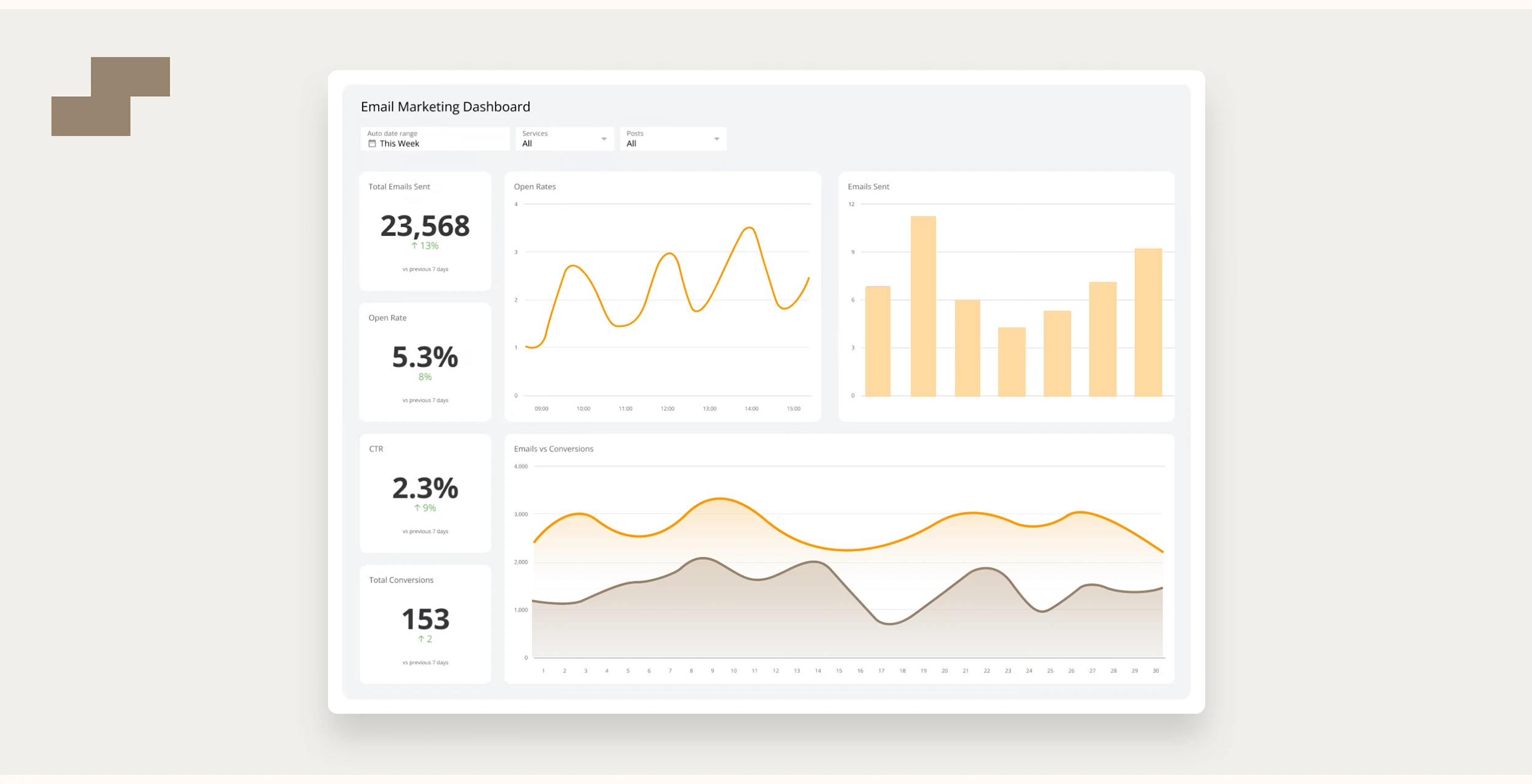
- Revenue per email (RPE) — the metric that ties directly to business outcomes
- Conversion rate — bookings or redemptions (hospitality average: ~2%)
- Click-through rate — 2.37% for one-time sends, up to 15.17% for automated
- Click-to-open rate (CTOR) — 8.7% hospitality benchmark; more reliable than open rate alone
- Deliverability rate — should track close to the 98.6% industry benchmark
- Unsubscribe rate — should stay under 0.2%
- Spam complaint rate — must stay below 0.3%, ideally under 0.1%
- Open rate — track for trend direction only, not as an absolute performance indicator
8.2 Tools
- Basic reporting: Mailchimp (good for smaller properties starting)
- CRM integration: HubSpot, Salesforce, Klaviyo
- Deliverability/authentication checking: Google Postmaster Tools, Red Sift Investigate, dmarcian
- On-site behaviour: Google Analytics with UTM parameters
- Heatmaps: Litmus, Email on Acid
8.3 Pitfalls to Avoid
- Leading with open rate in reports (misleading post-MPP)
- Ignoring mobile optimisation
- Skipping authentication setup (SPF/DKIM/DMARC)
- Bombarding unengaged subscribers instead of re-engaging or removing them
- No clear CTA
- Sending without testing
8.4 Ongoing Optimisation Cadence
- Refresh templates quarterly (seasonal themes)
- A/B test subject lines monthly
- Reassess send times every 2–3 months
- Audit authentication status (SPF/DKIM/DMARC) at least twice a year
- Review automation flow performance and prune underperformers
9. Conclusion
Hotel email marketing in 2026 rewards hotels that get the fundamentals right in a way earlier eras didn’t punish as harshly: authentication that actually passes, metrics that reflect real engagement rather than inflated pixel data, and automation built around genuine guest lifecycle moments rather than generic monthly blasts.
You now have the blueprint: a permission-based, well-segmented list; deliverability that survives Gmail and Yahoo’s enforcement; content that earns opens and clicks; automation that captures revenue at every stage of the guest journey; and measurement that reflects reality rather than vanity metrics.
We’ll tailor an email system that feels personal, drives bookings, and deepens guest love without bombarding inboxes. Let’s build something they truly open and remember.
10. Hotel Email Marketing FAQs
Aim for 15–25%, but treat this as directional rather than absolute, since Apple’s Mail Privacy Protection inflates reported opens by an estimated 10–30%. Click-to-open rate (hospitality benchmark: 8.7%) and conversion rate are more reliable indicators of real engagement.
If you send fewer than 5,000 emails per day, you’re not technically classed as a “bulk sender,” but DMARC, SPF, and DKIM are still strongly recommended. They improve inbox placement even for smaller senders, and enforcement patterns from Gmail, Yahoo, and Microsoft are expected to tighten further over time.
Industry-wide average is roughly $38 per $1 spent, with the ceiling closer to $42. Highly targeted, automated lifecycle campaigns can significantly outperform this, with some hospitality brands reporting $100 or more per $1 spent.
This is almost always related to Apple Mail Privacy Protection and similar client-side privacy features, not a genuine change in guest interest. Segment your reporting by Apple Mail vs. other clients, and prioritise CTOR and click data instead.
At minimum: a welcome series, pre-arrival sequence, post-stay/review request sequence, and booking abandonment recovery emails. Abandonment emails alone average around 69% open rate in hospitality due to existing guest intent.
As AI tools like ChatGPT and Google AI Overviews increasingly answer travel questions directly, hotels lose some organic discovery traffic. Your email list is unaffected by this shift — it’s a direct relationship channel you fully own, making it more strategically important as AI reshapes upper-funnel discovery.







If a visitor has a question and nobody replies, they often contact another company. This guide covers practical AI lead capture for small business websites.