2026 is the decline of traditional revenue generation channels like walk-ins, OTA listings, and word-of-mouth. Social media visibility has become an essential top-of-the-funnel driver of marketing for Hotels, Restaurants, and Spas. The question is not whether to advertise on social media; it’s whether you’re doing it effectively.
According to the stats, the UK hospitality sector is projected to reach nearly $99 billion by 2032. However, not every business benefits equally from this growth. This growth flows to those who show up consistently and smartly.
79% of the UK population uses social media platforms such as Instagram, Facebook, and TikTok, and relies on information available on them. The platforms are well-established and have a strong audience base, making them a wonderful source for reaching potential guests.
Social media advertising is no longer an option; it’s the driving force behind hotels filling rooms, restaurants being full, and spa treatment appointments being scheduled back-to-back. All you need is a hospitality-specific paid social media strategy to be part of that revenue growth.
| This blog serves as a complete guide for mastering social media advertising for UK hotels, restaurants and spas. Here’s a clear brief: |
|
This guide covers platform selection, audience targeting, seasonal campaign planning, measuring real ROI – you name it; this guide has it. If you run a hospitality business in the UK and want to seek expert help, then explore ThisRapt’s Social Media Marketing Service, built especially for businesses like yours.
1. Why does social media advertising work differently for hospitality?
Most social media advertising strategies are designed for the e-commerce industry. Hospitality, however, is different and thus requires different strategies.
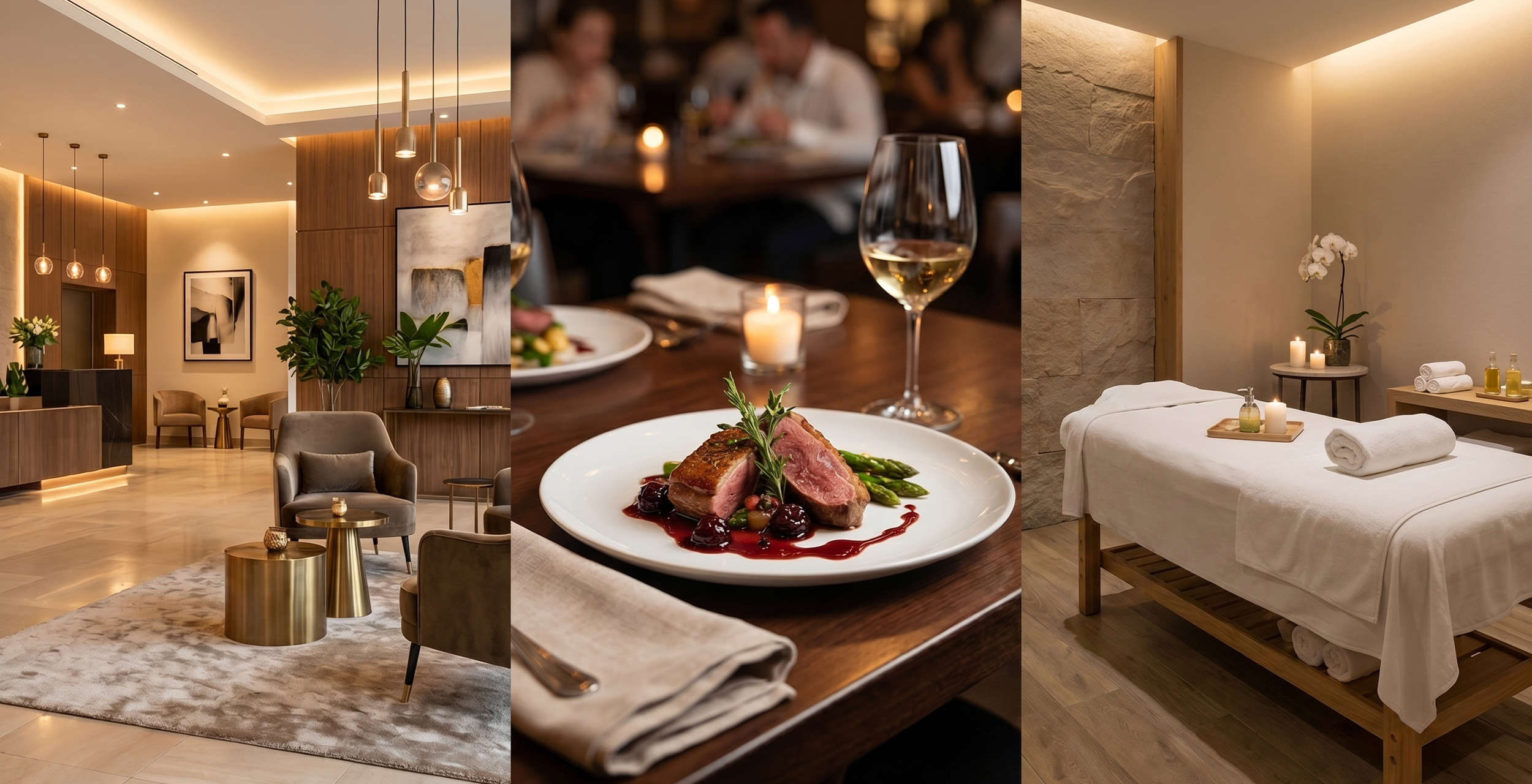
We don’t consider a hotel stay, a restaurant dinner, and a day being pampered at a spa to be an impulsive purchase. These are emotion-driven. When people scroll through Instagram and see a beautiful restaurant, they actually want to be there and live the experience.
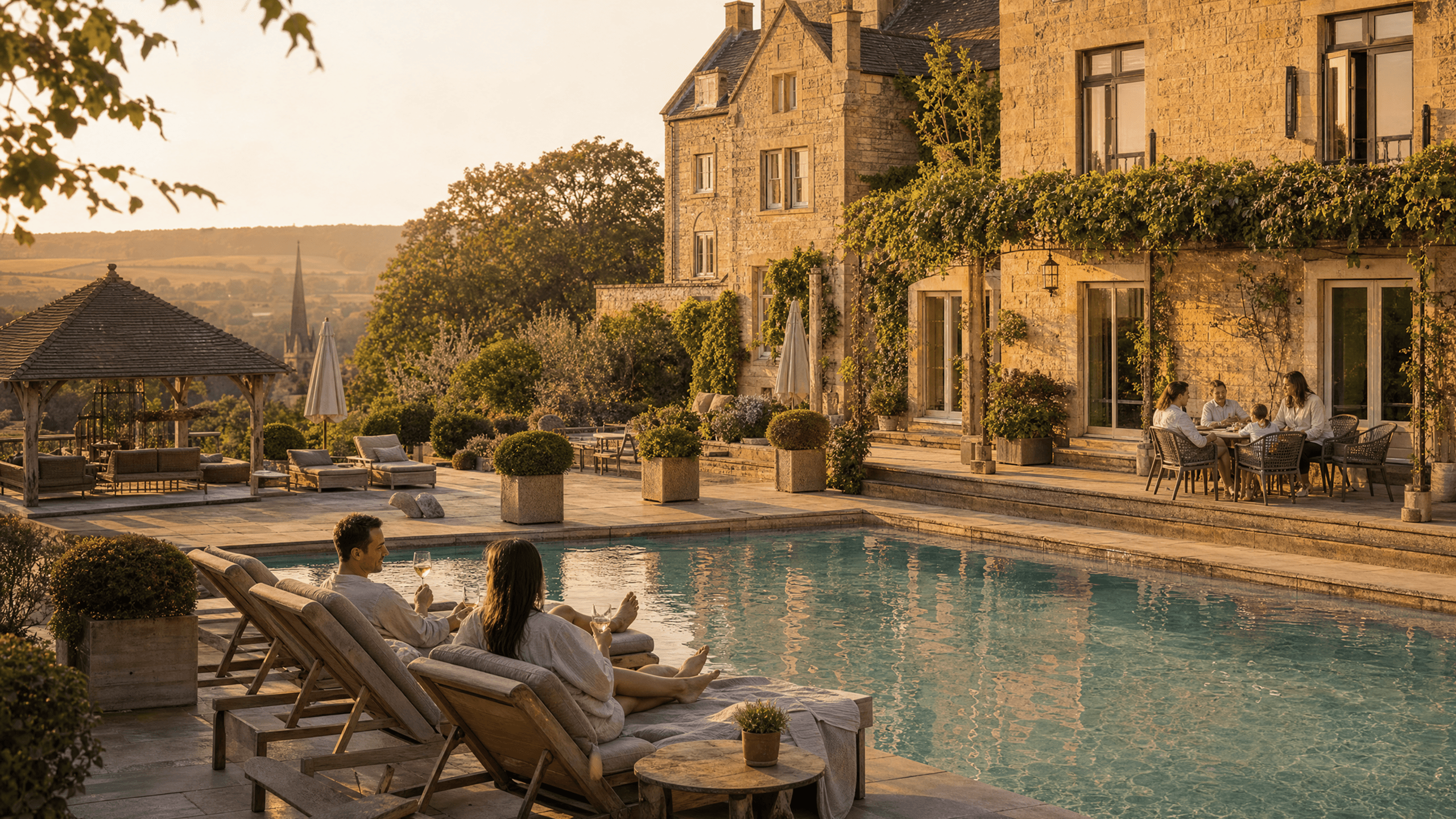
This is a big reason for hospitality businesses to be on visual platforms. A delicious picture of a Sunday roast. A relaxing, slow-motion video of a Spa hot tub. A picture of a beautiful view from a hotel room’s balcony. These are not just content; they’re the stepping stone to receiving numerous bookings.
The only problem is that organic reach cannot do the job alone anymore. Your 10,000 followers alone can’t make you grow; you need to reach a new audience. Paid social media advertising will boost your content and push it to new potential customers.
You need to understand the role of social media in hospitality marketing to grow your business exponentially.
2. Know your high-intent audience
A social media advertising strategy that actually converts needs to have a precise understanding of the target audience. The intent and triggers for each target differ from business to business.
(i) Hotels
- Staycationers: They search for ‘UK weekend breaks’ and ‘boutique hotels near me.’ And these are triggered by bank holidays, school holidays, and seasonal wanderlust.
- Business travellers: They look for city centres and conference venues. This audience books fast and values frictionless bookings.
- Wedding planners and event bookers: They are high-value and long-term clients. But you can only convince them by content that showcases the venue and has social proof.
- Family holiday bookers: Plan months in advance. Triggered by family packages, facilities content, and messaging that holds value.
(ii) Restaurants
- Occasion diners: They seek bookings for birthdays, anniversaries, and Valentine’s Day. These diners are emotion-driven and respond to ambience, experience, and heartfelt messaging.
- Tourists: Discover you through location-based targeting and Google search, but they need trust signals such as reviews, menu previews, and a clear location.
- Local regulars: These people already know you. Loyalty offers help sustain them.
- Corporate lunch bookers: Look for convenience, private dining options, and good speed of service.
(iii) Spas
- Gifters: Active around Mother’s Day, Christmas, Valentine’s Day, and Birthdays. Gift voucher campaigns work well for this group.
- Wellness seekers: This is a growing segment in the UK. They respond to warm messaging, treatment benefits, and retreat-style content.
- Hen party groups: They do group bookings, which means high spend. Can be targeted via Facebook groups and Instagram; often book 3-4 months prior.
- Loyalty members: Already converted audience. Keep them loyal with early access offers and seasonal treatments.
Building campaigns around these intent signals dramatically improves your conversion rate.
3. The right platforms for UK hospitality
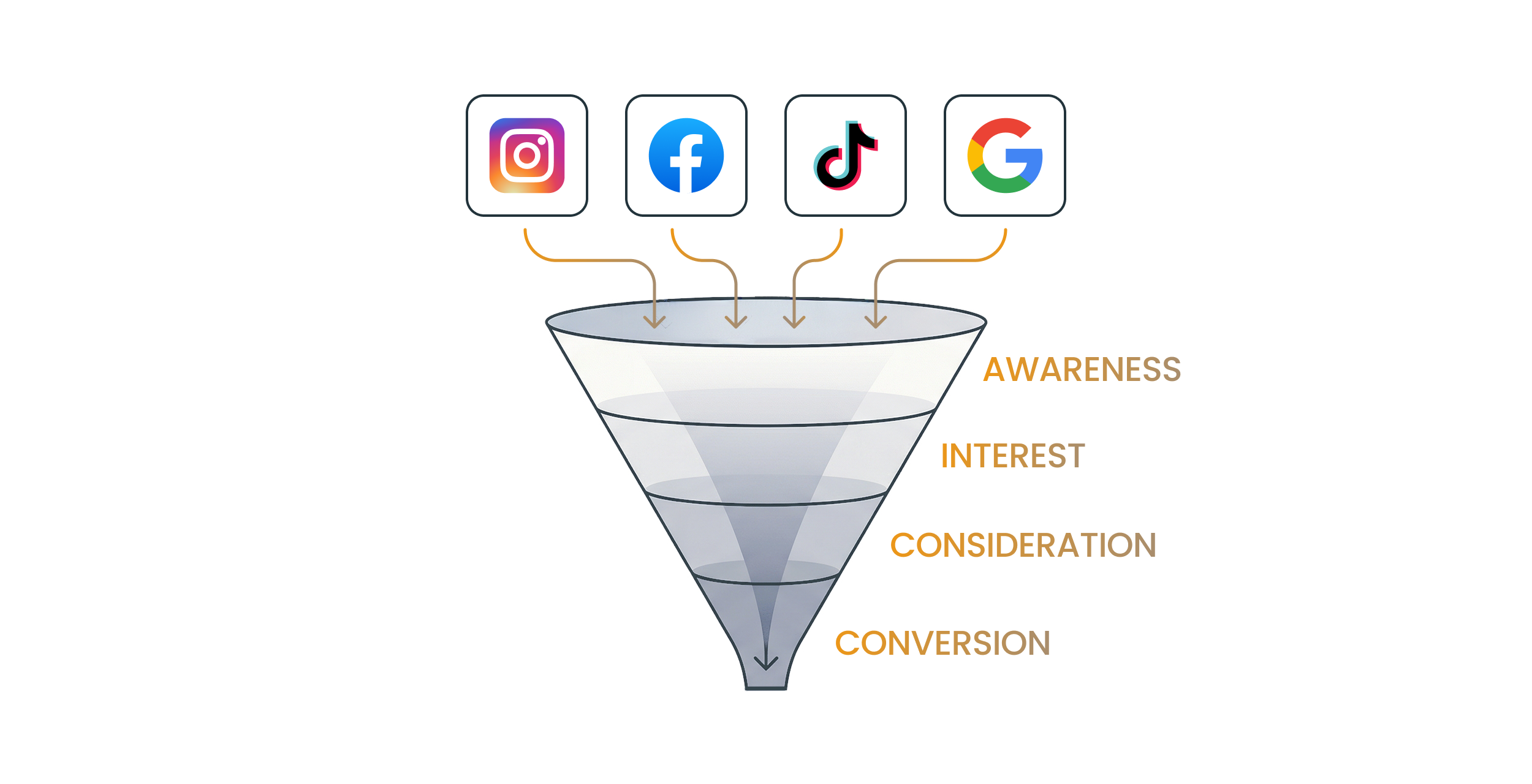
Not every platform is the same. And not every platform mandatorily suits your business type. Different platforms function differently within the UK hospitality context.
- Visual storytelling
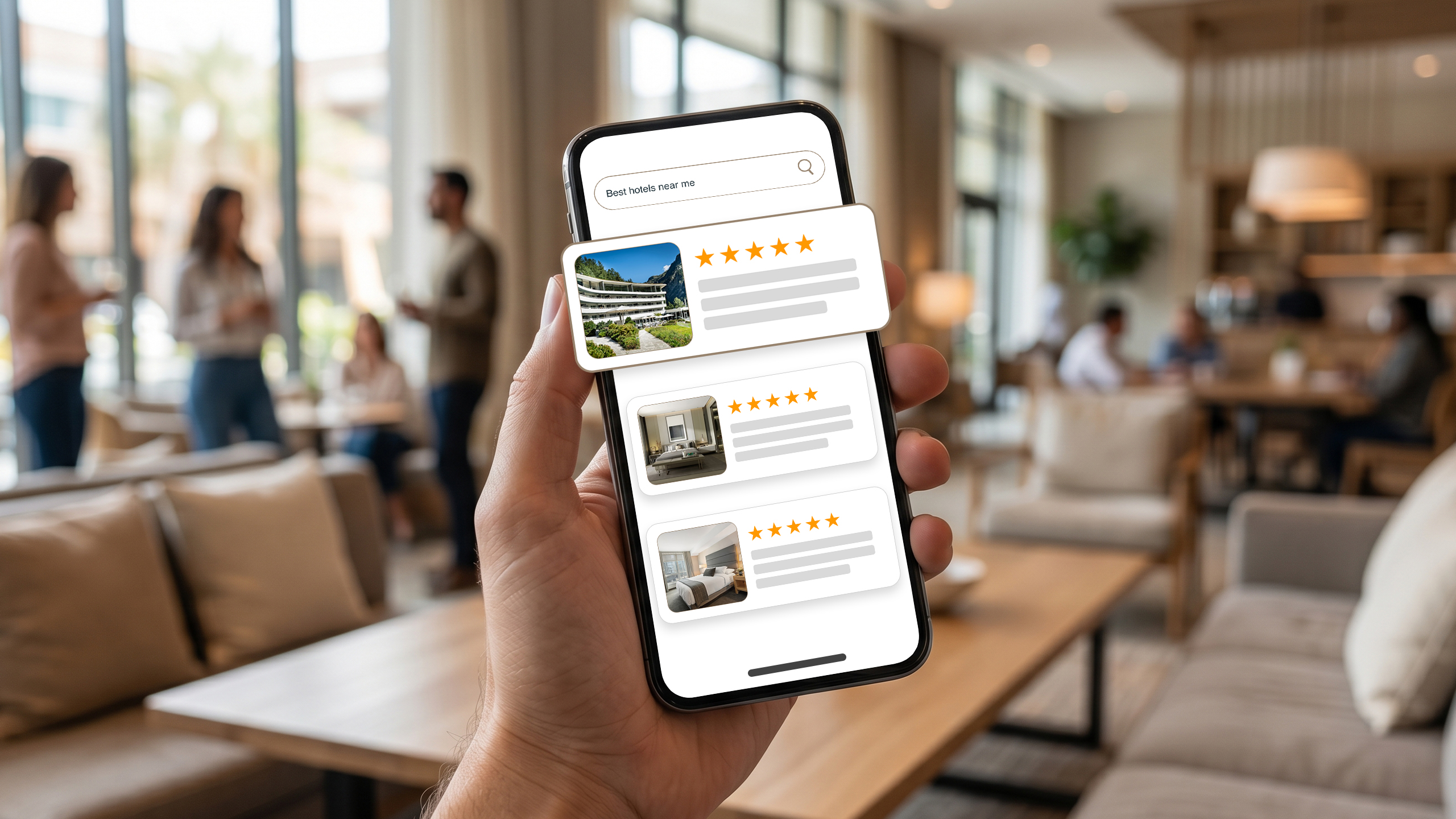
The UK has over 35 million users, making Instagram the primary platform for hospitality discovery. It puts visual storytelling on a pedestal, which makes it ideal for showcasing hotel rooms, the making and plating of dishes, spa environments, and guest moments. Instagram ads can be in any format, like stories, posts, or reels, and work best in awareness and consideration campaigns. UGC performs well here.
- Retargeting, Events, and 35+ Demographics
Facebook has about 38.3 million users, significantly older than Instagram’s. This makes Facebook hugely beneficial for hospitality. The demographic of 35-65 makes up a disproportionate portion of high-value hotel and restaurant bookings. Facebook works best for event promotion, retargeting past visitors, and running lookalike campaigns against the best existing guests.
TikTok
- Discovery for younger audiences
TikTok is the fastest-growing discovery channel for younger audiences, particularly those between 18 and 30. It now reaches 26.8 million UK users via ads. According to research, TikTok primarily drives initial desire. It’s a top-of-funnel tool that works best when paired with Instagram and Facebook. And a key platform to attract young diners, spa-goers, and boutique hotel guests.
Google Ads
- Bottom-funnel & Direct bookings
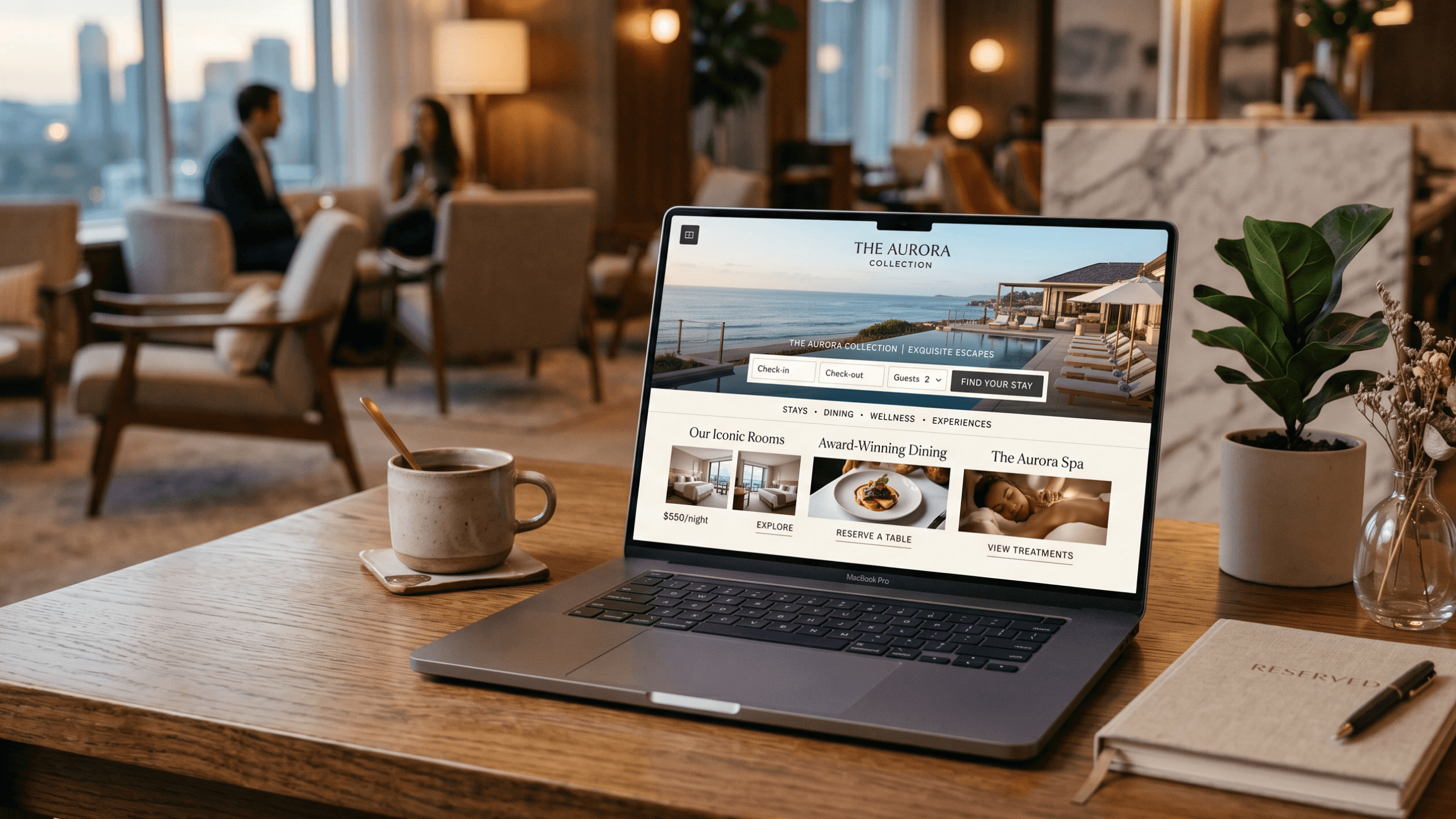
If someone picks up their phone and searches “spa day Edinburgh” or “romantic hotel Yorkshire weekend” instead of opening Instagram or TikTok, they surely are ready to book. Google Search Ads captures the peak intent moment. With Google’s display and catchy ad formats, this is the engine at the bottom of your funnel. To reduce OTA dependencies, see 5 proven ways to increase direct bookings for hotels in 2026.
4. Types of campaigns that drive real bookings
A single campaign cannot be defined as a whole paid social strategy. A strong social strategy is a layered system of campaign types.
Awareness Campaigns
This serves as an introduction to your hotel, restaurant, or spa for people who are unaware of its existence. Here, people are targeted by location, interests, and behaviour, designed specifically to generate first impressions. The best performers here are videos and reels. The goal behind this type of campaign is not bookings; it’s a remembrance of the place.
Retargeting Campaigns
These are considered the highest-converting campaigns. People who are already your virtual visitors or clicked the ads once are the target here. You need to display an offer like ‘10% off for bookings made this week’; this type of campaign converts faster than cold traffic.
Lookalike Audience Campaigns
Once you build a core customer base on platforms like Instagram and Facebook, they allow you to find new people who resemble your existing audience in behaviour and demographics. Just upload a list of past guests’ emails, and the platform will do the rest. It builds a lookalike audience of profiles of people with similar behaviour and interests.
Seasonal and Event-Based Campaigns
The UK hospitality industry has a well-defined calendar of peak events: Valentine’s Day, Mother’s Day, Easter, summer staycations, and the festive period. Plan event-based campaigns timed precisely around these windows, which drives a sense of urgency and attracts definite bookers.
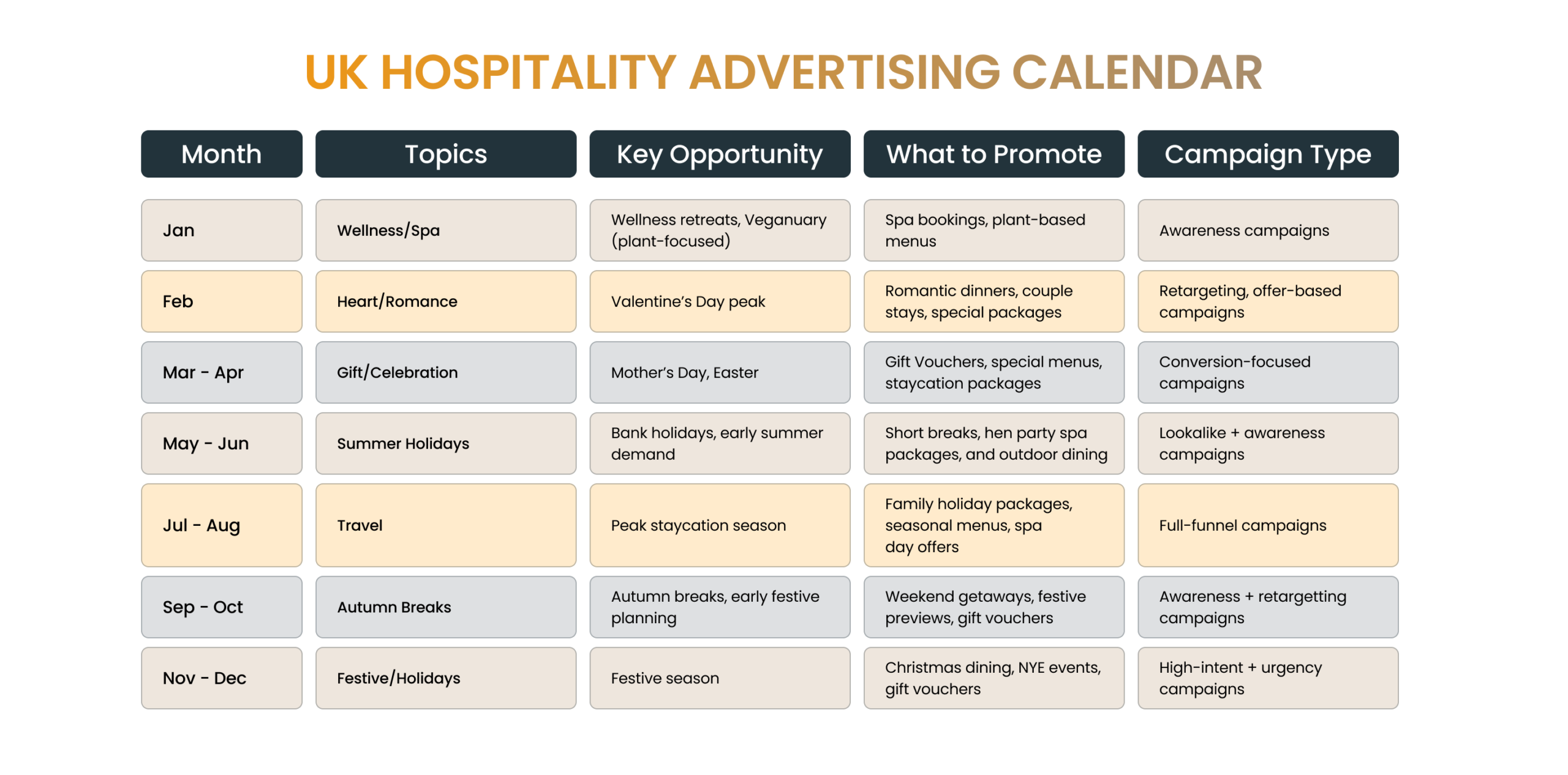
5. The UK hospitality advertising calendar
Timing is everything. Here’s a month-by-month guide for your hospitality business:
6. Creative that converts
In the hospitality industry, the creative is the product. Don’t worry; here you’ll know everything about creatives.
UGC vs. Professional Shoots
Both are great, but serve different purposes. Professional shoots set your baseline brand standard. UGC, on the other hand, builds trust and social proof. Effective strategies blend both by using professional content for awareness and brand campaigns and UGC for retargeting and conversion ads.
Videos vs. Stills
We are all familiar with the fact that videos always outperform static images in terms of reach on Instagram and TikTok. Short-form videos should be a core part of your creative mix, as they engage more people via Reels, TikToks, and Stories. That said, for Facebook and Google Display, high-quality stills remain the most effective.
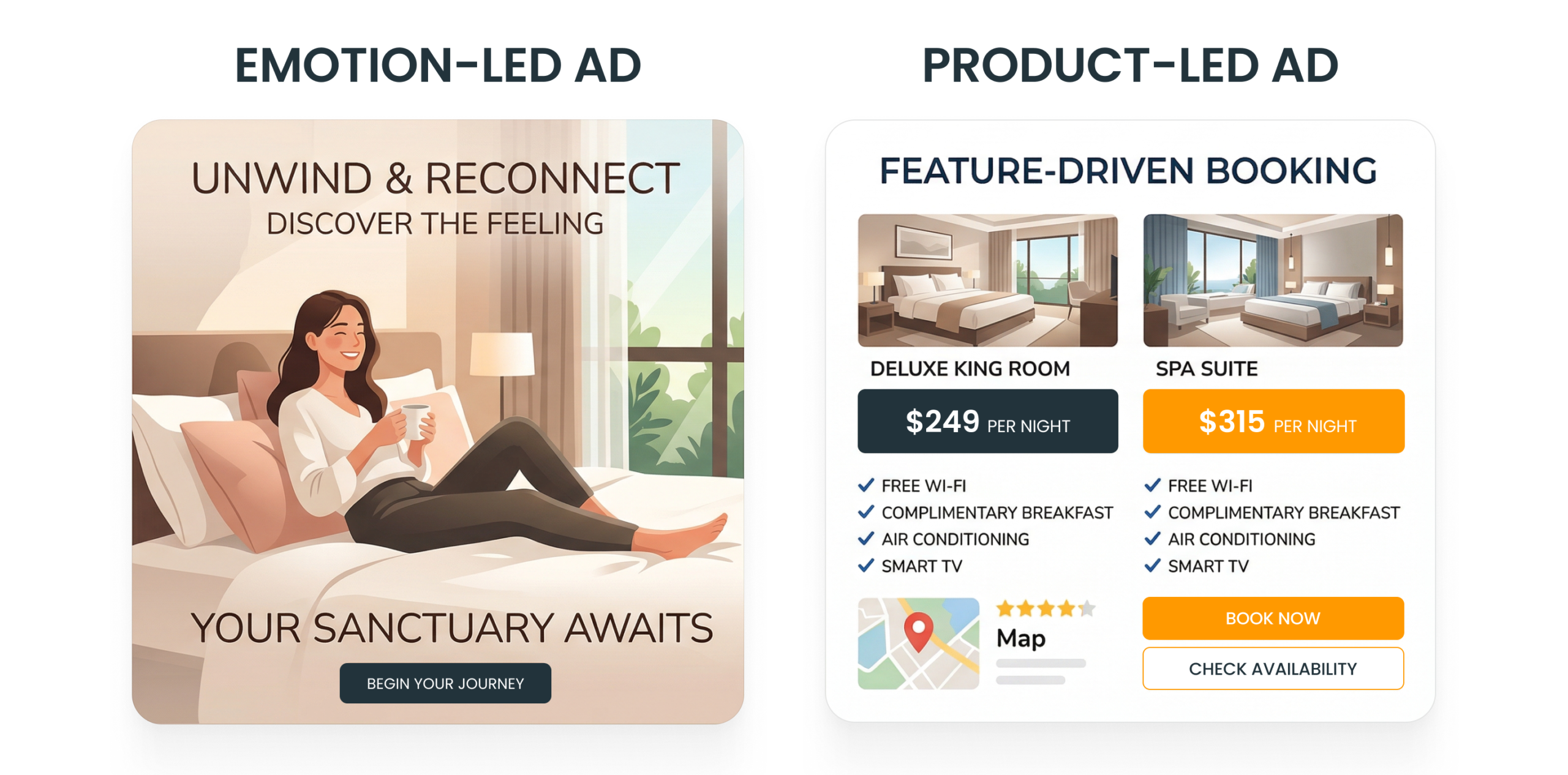
Offer-led vs. Emotion-led creative
Emotion-led creatives perform well for restaurants and hotels. While offer-led creative works better in retargeting, where the audience is already familiar with your business and only needs a reason to commit.
Platform-specific tips
- Hotels: Show the rooms, views, and in-property experiences that make people want
to experience the same. Seasonal content performs strongly. - Restaurants: Food is your main character here, but do not forget about the atmosphere. BTS of the making of a dish and the ‘dish reveal’ videos drive high engagement.
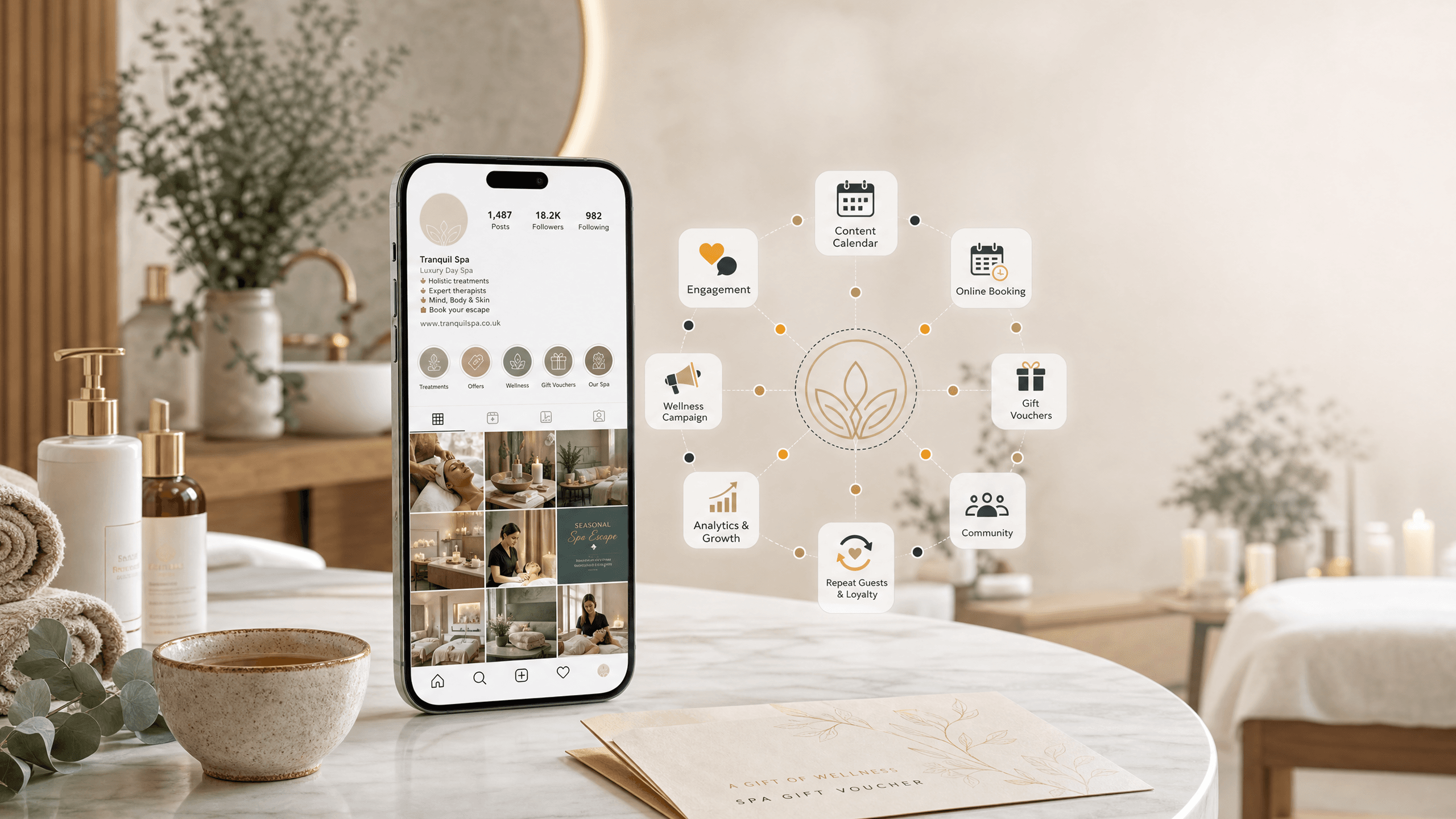
- Spas: Treatment sneak peeks, ambience of environment, and ‘gift the feeling’ vouchers and messaging work best.
- Hotels: Show the rooms, views, and in-property experiences that make people want
To strengthen your creative strategy, consistently showcase guest experiences and seasonal moments supported by high-quality visuals.
7. Measuring what matters
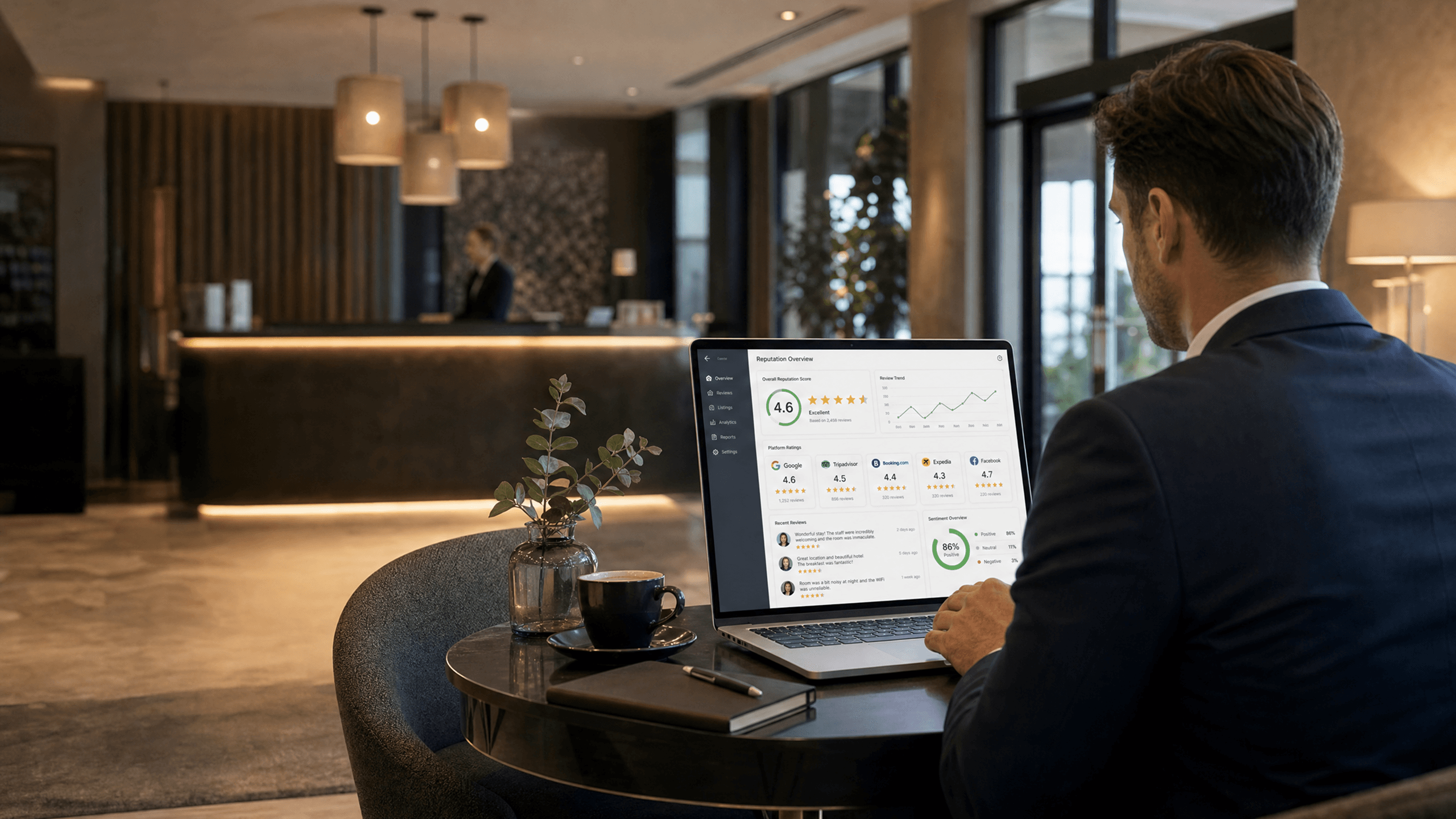
Running campaigns is necessary, but without tracking the right metrics, it’s just a waste of time, effort, and money. Here are the KPIs that you need to consider:
For Hotels
- Cost Per Booking (CPB): This metric is the most direct measure of your ad’s efficiency. It tracks everything from click to confirmed reservation.
- ROAS (Return on Ad Spend): It measures the revenue generated from each ad spend.
- Occupancy Rate Impact: Compares occupancy in campaign-active periods vs. non-campaign periods.
- Direct vs. OTA Ratio: Tracks if your ads are driving direct bookings or if you’re still paying OTAs.
For Restaurants
- Cost Per Cover: Total spending on the ad divided by the number of covers booked via ad-driven traffic.
- Reservation Conversion Rate: Among the people who click your ad, what percentage of people complete the booking?
- Engagement Rate: Important for building a local audience over time.
For Spas
- Gift Voucher Revenue: Important in Q4 and around Mother’s Day.
- Treatment Booking Rate: From clicking the ad to booking a treatment. Where are the gaps?
- Repeat Guest Rate: Are these social media campaigns bringing previous guests back?
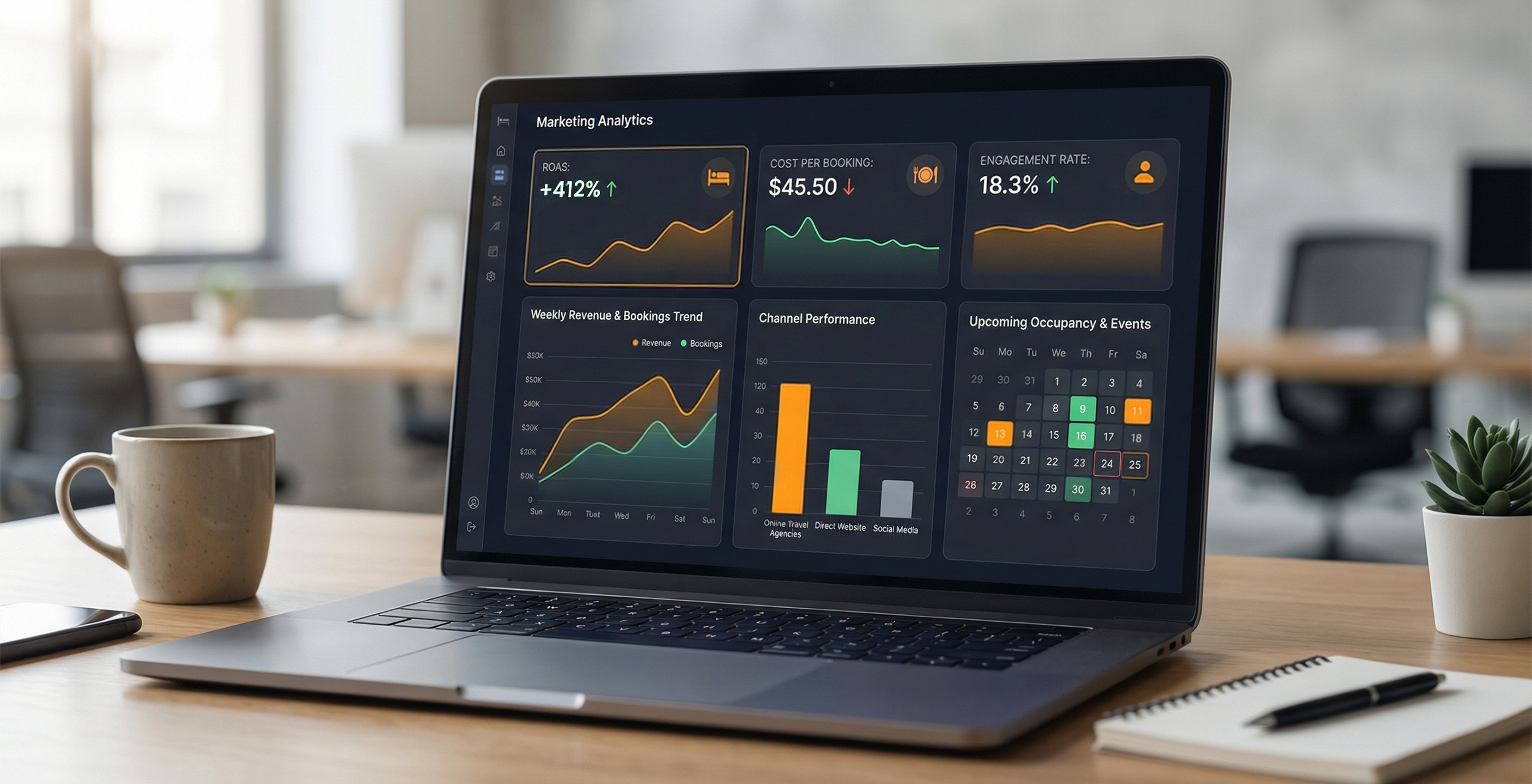
For a deeper understanding of the analytics, explore: Analysing your marketing ROI: Metrics every UK hotelier should track.
8. Why the UK hospitality businesses need specialists
Effective Social Media Advertising requires time, expertise, and a profound understanding of the industry. For most of the hotel, restaurant, and spa operators, one of these is missing.
While maintaining in-house marketing teams is beneficial, they frequently spread themselves too thin across all marketing areas, neglecting the fact that their capacity is depleting. A campaign is not a one-time thing; its performance is sustained only if regular testing, creative updates, and budget reallocation based on real-time data are provided.
However, generic digital agencies can run ads, but they lack familiarity with all the nuances of the industry. In such a scenario, you must look for agencies specialized in your industry.
Agencies like ThisRapt are built specifically for the UK hospitality industry. ThisRapt’s Social Media Marketing Service combines custom strategy with scroll-stopping creative, geo-targeted ads, and analytics-backed optimization. We build campaigns not around generic templates but by understanding the guests and their intent.
9. Conclusion
Social media advertising is not a luxury for the UK hospitality industry in 2026; it’s the driving engine for consistent revenue. The businesses experiencing the strongest returns are the ones using a structured, platform-specific, seasonally timed paid social strategy.
Doesn’t matter if you’re a boutique hotel chasing direct bookings, a restaurant building a loyal local following, or a spa growing gift voucher revenue; the framework stays the same. All you need is the right platform, the right audience, the right creative, and the right timing.
If you’re ready to use your social media as a revenue-generating machine, contact us to understand how ThisRapt’s Social Media Marketing Service can support your business.
10. FAQs
Instagram and Facebook tend to be the most effective advertising platforms for UK hotels. Instagram drives aspiration and discovery, while Facebook excels at retargeting past website visitors. Additionally, Google ads capture most high-converting ‘book now’ searches. An effective strategy combines all three of them mindfully.
The key metrics vary from business to business, but the most meaningful indicators are Cost Per Booking (for hotels), Cost Per Cover (for restaurants), and Gift Voucher Revenue (for spas). On an additional track, ROAS, website tracking from paid social, and the ratio of direct bookings to OTA bookings over time. For a deeper understanding, track key metrics like ROAS, cost per booking, and conversion rates over time.
There is no fixed cost, but a practical answer could be £500–£1500 per month for independent restaurants. Key factors like location, capacity, and seasonal peaks matter. However, the budget should significantly increase in the 4–6 weeks before high-value periods (Valentine’s Day, Mother’s Day, Easter, and the festive season).
Short-form videos, such as reels on Instagram and TikTok, drive the highest reach and engagement for hospitality businesses. Hotels should focus on showcasing atmospheric property content and guest experience moments. Restaurants should focus on food-forward content like plating, making, BTS, and seasonal dishes for better reach. Spas should focus on ambience, treatment, wellness-centred content, and warm messaging. To ease out the confusion, see Medical spa vs. Day spa marketing in 2026.