A great taste retains customers, but a story that feels personal is what actually attracts diners and eventually turns a restaurant into their favourite one.
But what kind of story can feel relatable and be your restaurant’s brand as well? Your chef’s story.
Yes, you heard it right: your chef cooks great, and that’s the whole point. He ‘cooks great,’ and so does his journey.
The UK is known for its rich hospitality, and restaurants aren’t solely competing over taste. They’re competing over branding, identity, and trust. While menus can feel similar and ambience can be replicated, what stays authentic is a chef’s journey.
A chef’s journey is wrapped in credibility, personality, and relatability. All these make a deadly mix for strong restaurant branding. Yet many restaurants fail to take advantage of this asset.
| Let’s explore how your chef can turn the table of your restaurant branding in 2026. Here you’ll learn: |
1. Every great restaurant has a story; you might just not know it yet.
Every restaurant has a story, and every element of that restaurant screams it. The dishes on the menu, their authentic flavours, and sometimes even the ambience that sets the mood.
While some restaurants choose to highlight this story, others choose to keep it to themselves. However, in the present day, when diners often prefer online searches before ever physically stepping into a restaurant, this is not a smart thing to do.
A restaurant becomes memorable when it feels relatable. Not everyone will be drawn to your chef’s story, but many diners might share similar interests, goals, histories, and sometimes journeys. What diners connect with today is not flashy perfection but authenticity.
This is where restaurant branding works beyond the logos and interiors. A brand that fails to communicate meaning might risk blending into the crowd. And more often than thought, that meaning is present inside the kitchen.
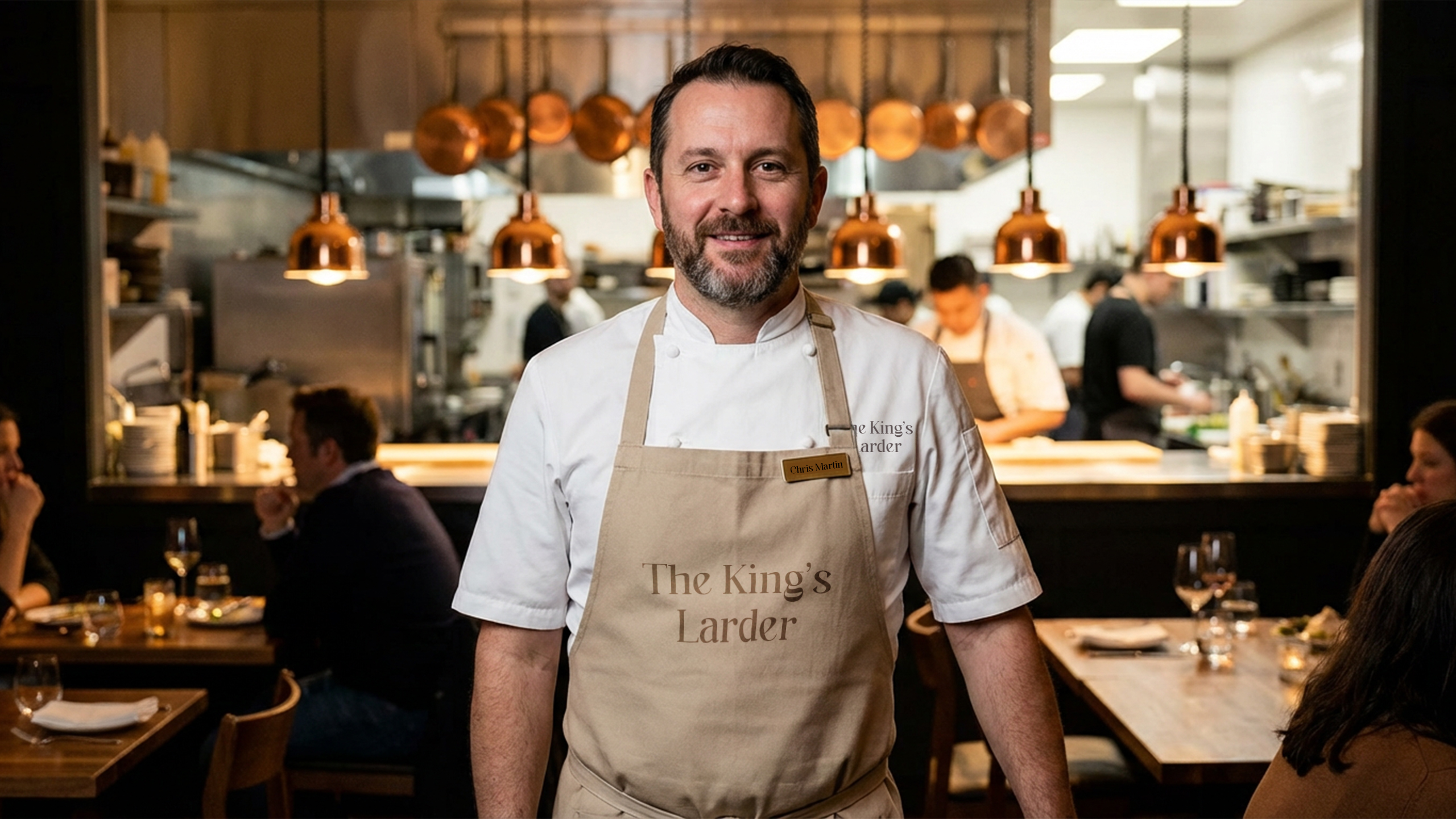
2. The chef is not just in the kitchen; they are the brand’s face.
Many restaurants decide to keep the chef invisible to the outside world. A chef is considered to be the person responsible for what arrives on the plate. But in reality, the chef represents a lot more than just cooking.
From the choice of ingredients to the way a dish is garnished, a chef’s personality and philosophy shape every aspect of a dining experience. Over time, this becomes the identity of the restaurant, and when this identity is communicated clearly, the chef naturally comes out of the kitchen and becomes the face of the brand.
We are living in an era where people seek connection as much as quality. In such a scenario, hiding the chef in the kitchen can cost restaurants a great opportunity. Restaurants that give space to their chef to be visible often tend to build stronger emotional connections with their audience. By enhancing credibility, this connection also strengthens restaurant branding by giving a human anchor that can’t be easily replicated.
3. Who’s the chef outside the kitchen?
A chef’s value isn’t limited to just cooking. Outside the kitchen, their journey to the title ‘chef’, experiences, beliefs, and decisions are layers diners rarely see. Yet, these layers are what they are most likely to connect with.
Understanding who the person actually is under the toque is where real stories are uncovered. And these stories add depth to restaurant branding, giving the diners something meaningful to hold onto rather than just good taste.
- Background & Origin
Not every person who knows how to cook is a chef, but every chef starts somewhere. Whether pushed by family traditions, seeking formal training, or attempting years of learning through trial and error, a chef’s background shapes the foundation of their culinary identity. Sharing this origin helps diners understand why certain flavours feel so distinct and why a restaurant claims them. With clear comprehension, a chef’s background adds context to a menu and makes it familiar to first-time visitors as well. - Philosophy & Values
Behind every authentic dish and taste lies a set of beliefs. It could be anything from a commitment to sustainability to a desire to keep recipes honest and real. A chef’s philosophy influences both the food and the overall experience. Making these values the highlights of a brand allows diners to align with that brand. When people resonate, loyalty flows.
- Background & Origin

- Failures, growth & identity
No journey is always linear. Setbacks and risks are inevitable. But failures play a crucial role in shaping both skill and character. Sharing the falls and comebacks makes a chef’s story relatable and human.
- Failures, growth & identity
These experiences form a strong sense of identity that can’t be replicated. When a restaurant embraces this honesty, it becomes a reflection of real evolution and resilience.
4. Why do most restaurants fail to show this digitally?
Many restaurants have rich stories, but they fail to communicate them effectively online. Their socials often focus heavily on menus, offers, and aesthetics, sidelining the human element. As a result, diners are left with loads of information, but no emotional connection.
One of the common mistakes among restaurants is treating their digital presence as static brochures rather than storytelling spaces.
Without a story, even the most beautifully presented dish can feel ordinary. When a chef’s journey isn’t delivered to the audience digitally, the restaurant fails to differentiate itself in an increasingly crowded hospitality market.
A chef’s values might be present in the kitchen, but if they’re missing from the digitally published content, diners might never get to experience that authenticity. This disconnection between what a restaurant appears online and what it actually could be often leads to diluted restaurant branding.
5. Turning your chef’s story into a marketing asset.
While a chef’s story matters, you can’t just go out and scream it to the world and expect people to connect with it. A chef’s story becomes an asset only when it is translated into something diners can feel and engage with. This is where storytelling should be blended mindfully with strategy. When done right, your chef’s journey evolves into a powerful marketing asset for your restaurant across all digital touchpoints.
One of the most common and effective ways to do this is through visual storytelling. Short-form videos, BTS moments, and real conversations allow diners to get familiar with the personality behind the dish on the plate. There’s no step-by-step guide to do this, just one fact to tattoo on your mind, and that fact is: “authenticity often outperforms perfection.”
An equally important part is how this story lives online. A restaurant’s digital presence, its website and socials, should consistently reflect the chef’s philosophy, background, and identity. When a new diner lands on a page or scrolls past a post, they should immediately get the idea of what the restaurant stands for and who is driving that vision.
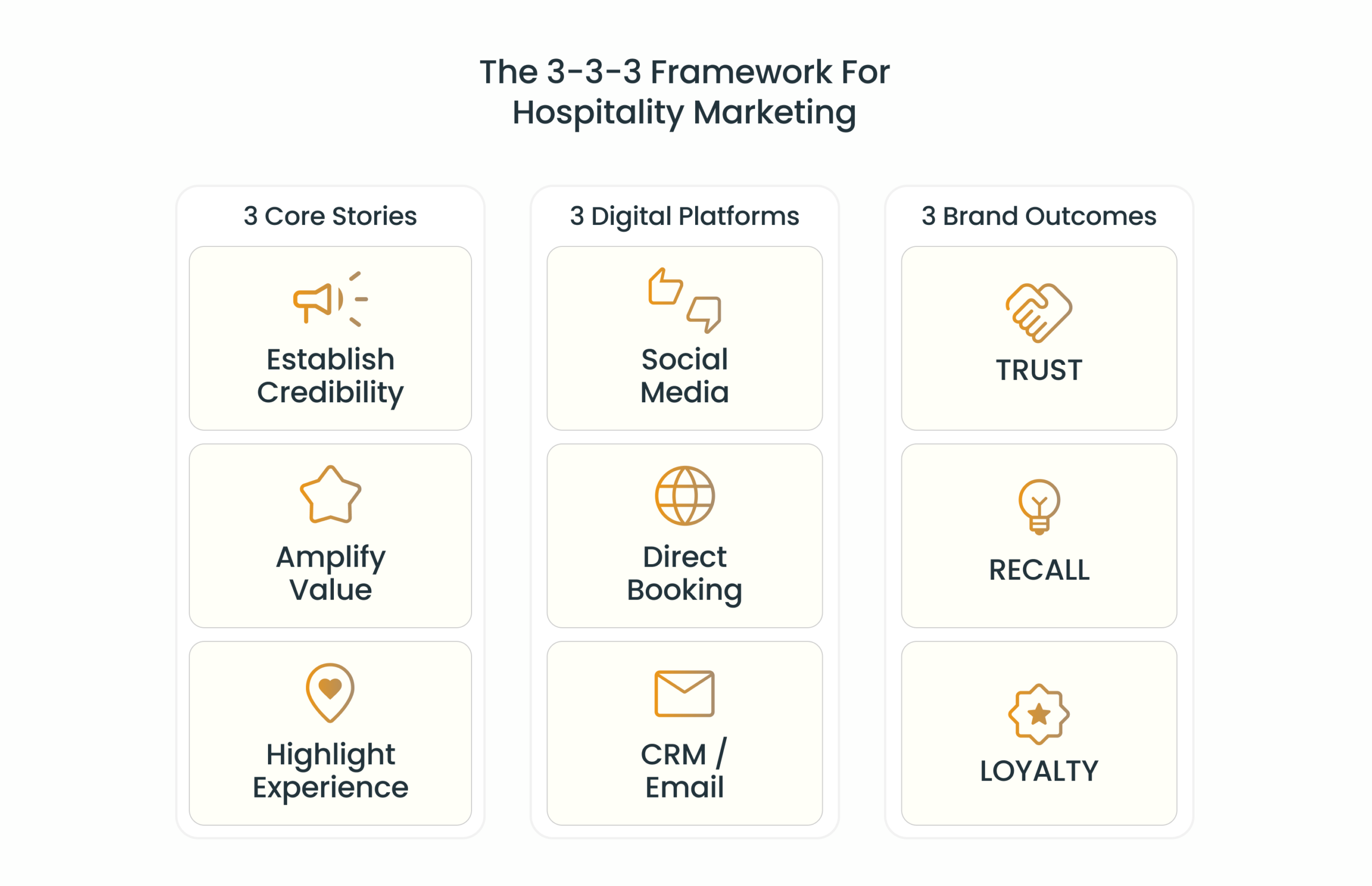
There’s a clear framework to save your back. Many successful restaurant brands call it the 3-3-3 approach.
- 3 core stories defining the chef’s journey.
- 3 key digital platforms the restaurant focuses on.
- 3 brand outcomes they aim to achieve: trust, recall, and loyalty.
This is often where restaurants might try to seek help from a hospitality marketing agency. Agencies like ThisRapt understand storytelling and strategy and hence help restaurants bridge the gap between a chef’s personal journey and an engaging digital presence, ensuring that the story not only sounds good but also scales brand growth.
6. Practical steps restaurant owners can take
- Define the chef’s core story by identifying background, values, and pivotal moments. These key elements become the foundation of your restaurant’s branding.
- Translate the story digitally across your socials in the form of visuals and short-form content that feels authentic.
- Ensure the chef’s voice and philosophy are clearly and consistently reflected through online descriptions and brand messaging.
- Keep your brand story evolving as your chef grows. This ensures that your brand stays relevant and human.
7. Importance in the UK hospitality market
No one is unaware of the competition in the UK hospitality market. Diners have endless options, and restaurants are now judged on the overall experience and identity rather than just food quality.
As diners today rely more on digital discoveries, trust and connection play a crucial role in decision-making. A chef-driven restaurant stands out by offering a human story rooted in authenticity. If your restaurant is looking forward to building long-term loyalty, then investing in meaningful storytelling is the only smart choice left.
Understanding that a chef’s personal journey is not just a narrative, but a strategic asset, is the turning point for a restaurant’s branding. When this realisation is guided by the right hospitality marketing agency, the chef’s story can be transformed into a cohesive brand presence, one that resonates and drives growth. Restaurants that are ready to move beyond surface-level branding should start by turning inward and consider holding ThisRapt’s hand to ease out the process.