Hotel chatbots are now a routine part of guest communication. Hotels, restaurants, and spas use them to handle bookings, answer common questions, and stay available at all hours. However, many businesses face the same issue. The chatbot works as intended, but it sounds robotic, impersonal, or disconnected from the brand experience guests expect.
When this happens, guests may still receive information, but they do not feel welcomed or reassured. Over time, this affects trust and engagement. Learning how to create a human-sounding hotel chatbot is no longer optional. The voice and tone of an AI concierge for hotels shape first impressions and booking confidence. This guide offers practical tips to help your chatbot sound natural, friendly, and in line with your in-person service.
1. Why hotel chatbots sound robotic and why it hurts guest experience
Hospitality depends on trust, comfort, and clear communication. Guests expect fast answers, but they also expect empathy and care. When a hotel chatbot sounds stiff or scripted, it creates distance instead of reassurance. Even correct answers can feel cold if the wording lacks warmth or context.
Robotic chatbots often rely on generic vendor language, long explanations, or system-style responses. This is one of the main reasons a hotel chatbot sounds robotic to guests. Phrases that feel neutral in software tools often feel out of place in hospitality conversations.
This has practical consequences. Guests may avoid using the chatbot, repeat questions through other channels, or contact staff directly. That increases the workload instead of reducing it. A human-sounding chatbot improves the overall hotel chatbot guest experience by making guests feel heard, supported, and confident at every step. Professional online reputation management also plays a crucial role in building this trust through positive guest reviews and feedback.
2. Common problems with AI concierges in hotels and spas
Many hospitality brands face the same recurring chatbot issues, regardless of size or location.
- Using generic vendor language
- Sharing too much information at once
- Avoiding human handover
- Focusing on speed over tone
- Treating chatbots as a one-time setup
Addressing these issues often leads to quick improvements without changing technology.
3. Chatbot persona for your hotel or Spa
Before writing chatbot responses, decide who your chatbot is meant to be. Without a clear persona, most tools default to generic corporate language that feels the same across industries.
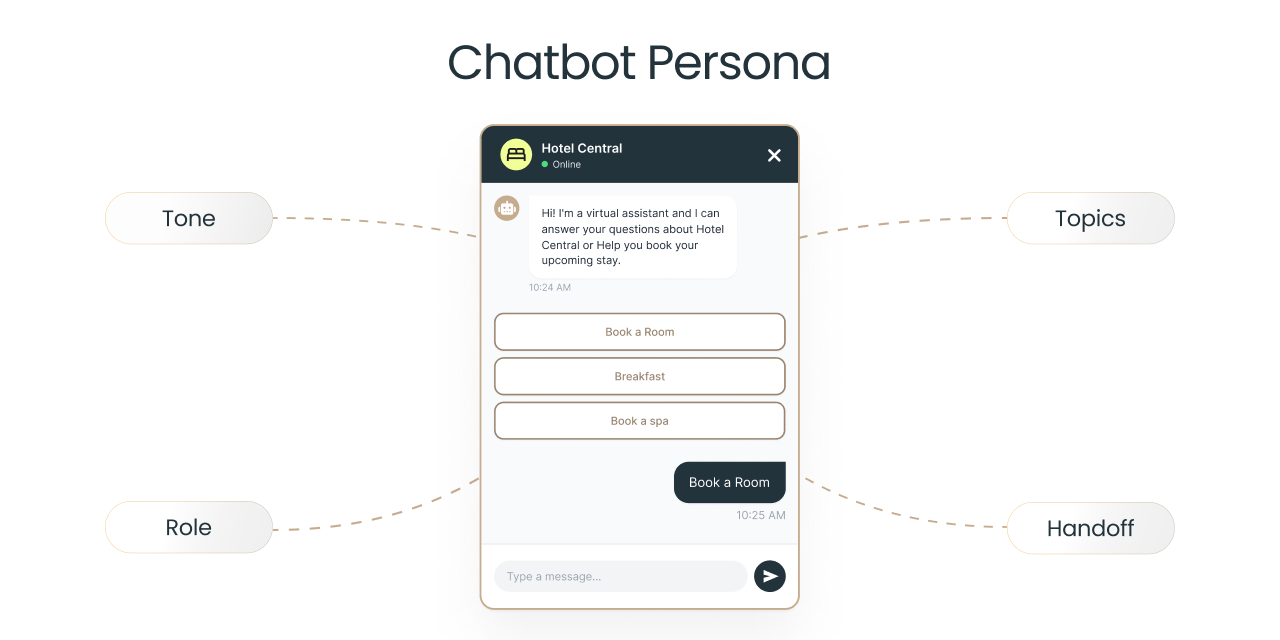
A chatbot persona is a steady reference point. It helps the chatbot sound consistent, whether answering booking questions, explaining policies, or handling on-site requests. This is especially important for hotels, restaurants, and spas with more than one location. This consistency should align with your overall hospitality branding strategy to ensure a unified guest experience across all touchpoints.
What a chatbot persona should cover
Your chatbot persona should answer four simple questions.
- How formal should the chatbot sound
- What role does it play in the guest journey
- What topics can it handle confidently
- When should it hand over to a human
Clear answers reduce confusion and help your team make better decisions about tone.
Match the persona to your property type
Different hospitality businesses set different expectations.
- A boutique hotel chatbot may sound friendly and conversational, with gentle suggestions.
- A luxury hotel chatbot should feel calm, polished, and discreet.
- A business hotel chatbot should focus on clarity, speed, and efficiency.
Write your chatbot persona in a short paragraph and share it with marketing, operations, and your AI provider. Update it as the guest’s needs change.
4. Core voice rules for a human-sounding AI concierge
Once the persona is clear, apply simple voice rules. These rules prevent robotic replies as content expands and help maintain a consistent hospitality chatbot voice.
Use simple, spoken English
Guests read chatbot messages quickly. Replies should sound like natural speech, not like website copy or policy text.
Avoid phrases like “please be advised” or “kindly note.” Use the same language a front desk team member would use when talking to a guest.
Keep responses short and focused
Each question should get one clear answer. If chatbots try to explain too much at once, guests lose patience.
A helpful structure is:
- Answer the question
- Add one useful detail
- Offer the next step
This structure supports better hotel chatbot conversation design and keeps interactions efficient.
Match the guest’s tone
Matching the guest’s tone is subtle but powerful. Guests who write short messages usually want quick replies. Guests who use polite language expect the same in return. Mirroring tone makes conversations feel natural without being too casual.
5. Hotel chatbot tone guidelines
Tone should shift based on context while staying within the same persona. Clear hotel chatbot tone rules help prevent confusion and frustration, especially when guests are making decisions or seeking help. A consistent approach also ensures the chatbot supports staff instead of creating extra follow-up work.
- Booking and reservations
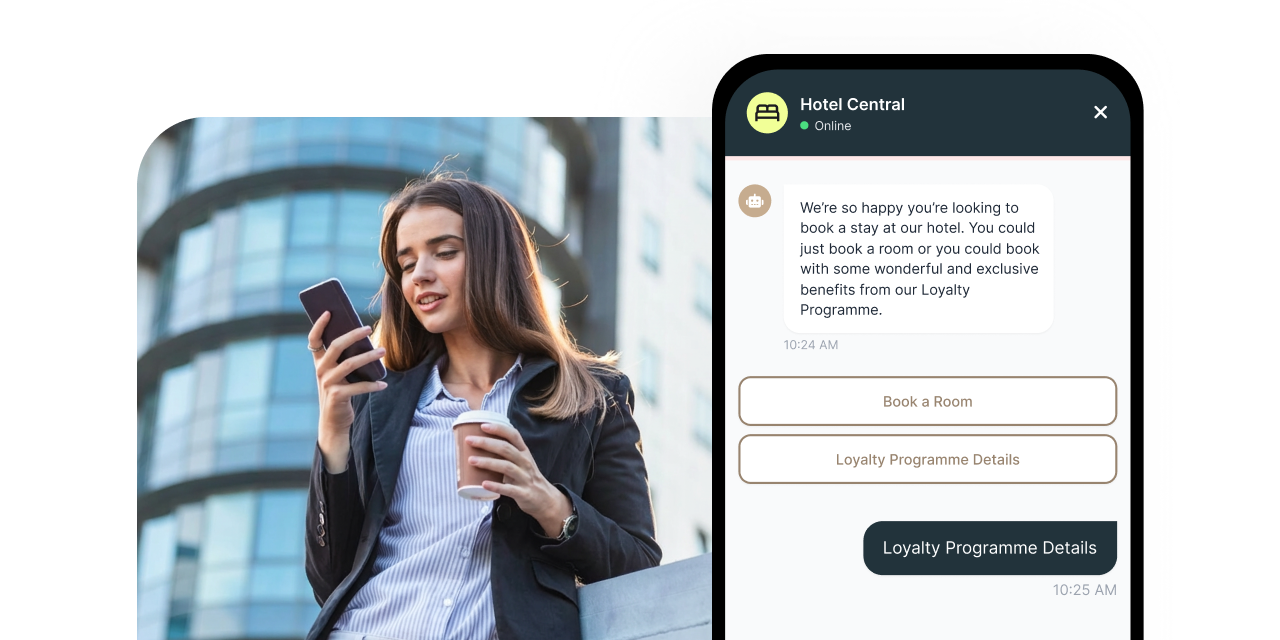
Booking is a key decision point in the guest journey. Guests want reassurance, accuracy, and clarity before they commit. The tone here should be calm, clear, and precise.
- Booking and reservations
Avoid playful language or extra details in this situation. Confidence and simplicity help build trust and make booking easier.
- On-site requests and concierge questions
On-site questions are a chance to use a warmer, more conversational tone. Guests are already engaged and often want quick help.
- On-site requests and concierge questions
Suggestions should feel helpful and optional, not sales-driven or rushed.
- Complaints or problems
This is where tone matters most. Tone should be respectful, briefly apologetic, and focused on action.
- Complaints or problems
Avoid long apologies or explanations. Guests want solutions and a clear next step.
6. Microcopy tips to make hospitality chatbots feel more human
Microcopy refers to the small but important phrases used in greetings, confirmations, and transitions during a chat. These short lines shape how the chatbot feels to a guest. When written well, they help avoid a non-robotic chatbot for hotels sounding forced or artificial, even during simple exchanges.
- Greetings
Greetings set the tone for the entire conversation. Time-based greetings feel natural and show awareness of the guest’s context.
Avoid generic openings that sound automated or scripted. A warm, relevant greeting helps guests feel acknowledged from the first message.
- Confirmations
Clear confirmations reduce uncertainty and help guests feel confident that their request has been handled correctly.
This type of response reassures guests instantly and avoids the need for follow-up questions.
- When the chatbot is unsure
A chatbot should never guess or give unclear answers.
Being open about limits builds trust and keeps conversations calm and productive.
7. Build a chatbot phrase library for consistent hotel communication
A phrase library is a shared document with approved replies for common guest questions used across all chatbot interactions. It helps keep tone consistent, accurate, and brand-aligned, even as teams change, new staff join, or chatbot content expands over time.
- What to include in a phrase library
Group replies by intent, so responses stay organised, easy to update, and simple for teams to review. Common intent groups include:
- What to include in a phrase library
- Check-in and check-out
- Amenities and facilities
- Dining and spa bookings
- Directions and transport
- Policies and payments
- Each reply should
- Follow persona rules
- Stay under 25 words where possible
- Include a clear next step
Review this library regularly using real chat transcripts.
8. When hotel chatbots should hand over to human staff
A human handover is not a failure of automation. In hospitality, it often leads to better outcomes, faster resolution, and higher guest satisfaction.
Clear escalation rules
Set clear rules in advance so the chatbot knows when to step aside without hesitation. Escalation should happen smoothly and at the right moment.
Escalate when:
- The chatbot is unsure
- The guest shows frustration or urgency
- The request involves complaints, refunds, or exceptions
Always pass context so guests do not repeat themselves
9. Accessible and guest-friendly AI chatbot for UK hotels
UK hospitality serves guests from many backgrounds and language levels. Chatbot language should be easy to understand, especially for an AI chatbot for UK hotels serving international visitors.
- Accessibility best practices
Follow simple language rules to keep conversations inclusive and stress-free.
- Use short sentences
- Avoid slang or local phrases
- Support screen readers
- Avoid all caps or heavy punctuation
Accessibility reflects care, professionalism, and respect for every guest interaction.
10. Privacy and trust signals in hotel AI chatbots
Guests want clear reassurance about how their personal details are used during chatbot conversations, especially for bookings and requests.
Clear, simple privacy language builds confidence without sounding legal or defensive.
11. How to measure and improve hotel chatbot conversations
Speed matters, but it is not the only way to judge chatbot success in hospitality environments. Quality and clarity are just as important.
- Useful performance indicators
- Conversation completion rate
- Escalation rate to human staff
- Post-chat satisfaction score
- Booking or enquiry conversion rate
Review transcripts monthly and refine tone where guests hesitate or disengage.
12. How hotel marketing and operations teams can manage chatbot voice together
Chatbots sit between brand voice and service delivery, shaping how guests experience your service before human interaction. By integrating chatbot strategy into your comprehensive hospitality marketing services, you create a seamless digital experience that drives bookings and enhances guest satisfaction.
- Marketing teams should define tone rules and review consistency.
- Operations teams should flag guest pain points and escalation needs.
Regular collaboration keeps chatbot communication aligned with real guest expectations for hotel, restaurant, and spa owners.
13. Conclusion
Hotel chatbots are now a standard part of guest communication. When they sound natural and welcoming, they support the experience your team delivers in person. When they sound robotic, they can quietly weaken trust and brand perception.
A human-sounding hotel chatbot relies on clear voice and tone, not more automation. With the right persona and simple language, small changes can quickly improve guest experience and brand alignment.
Speak with ThisRapt to explore how small changes could help your chatbot sound more natural and guest-friendly.
14. FAQs
Start by defining a clear chatbot persona that matches your property type and brand voice. Use simple, conversational language instead of formal corporate phrases. Keep responses short and focused, match the guest’s tone, and ensure your chatbot can smoothly hand over to human staff when needed. Regular reviews of chat transcripts help identify areas where the tone feels robotic or disconnected.
A human-sounding hotel chatbot uses natural language, short conversational replies, and clear tone guidelines instead of scripted or technical responses. This helps guests feel reassured and supported, especially during booking or on-site requests.
Track metrics like conversation completion rate, escalation rate to human staff, post-chat satisfaction scores, and booking conversion rates. Review chat transcripts monthly to identify where guests hesitate, disengage, or express frustration. Look beyond speed metrics—quality and clarity matter more in hospitality. Compare these metrics before and after implementing voice and tone improvements to measure real impact.
Yes. Hotel chatbot tone directly influences trust and confidence. A calm, clear, and human tone helps guests feel comfortable enough to complete bookings and ask follow-up questions.
An effective chatbot persona clearly defines formality level, role in the guest journey, topics it can handle confidently, and handover triggers. It should match your property type: boutique hotels might use friendly and conversational tones, luxury properties need calm and polished language, while business hotels should prioritize clarity and efficiency. Document this persona and share it with marketing, operations, and your AI provider to maintain consistency.