In 2026, spas are no longer judged only by their treatments. Guests now decide where to book based on how clearly a spa explains its value online. For UK hotel, restaurant, and spa owners, this has made medical spa vs day spa marketing a real challenge. Medical spas and day spas serve very different needs, yet many are still promoted in the same way. This lack of clarity weakens trust, confuses visitors, and limits bookings.
This guide explains the medical spa vs day spa difference for marketing and shows how spa owners can improve visibility through focused SEO, clearer positioning, and practical digital strategies that support long-term growth and bookings.
Why spa positioning matters for UK hotels and spas in 2026
The UK spa market is growing, but guest expectations are rising too. Customers now research more before booking. They compare services, read reviews, and judge a spa’s credibility by its online presence. If your message isn’t clear, guests will look elsewhere.
For hotel, restaurant, and spa owners, spa positioning for hotels and spas affects more than branding. It influences search rankings, booking quality, pricing power, and repeat visits. In 2026, spas that communicate clearly will attract the right guests and convert them faster.
Medical spa vs day spa marketing: The core difference
Understanding medical spa vs day spa marketing starts with recognising how different guest needs really are.
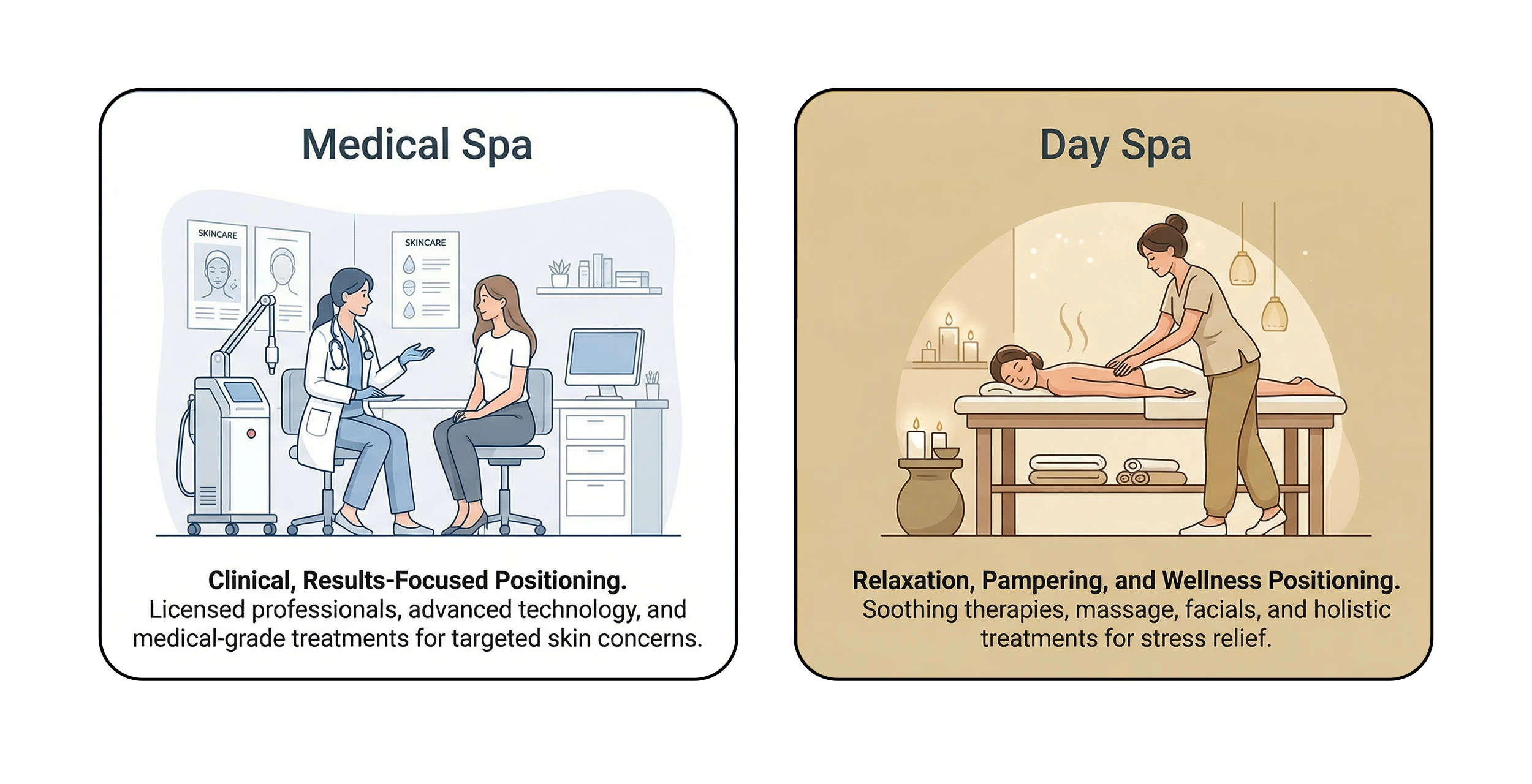
Medical spas offer treatments that deliver visible results. Trained professionals provide these services, so guests expect expertise, safety, and clear outcomes. Marketing should build trust and confidence at every step.
Day spas focus on relaxation and well-being. Guests look for calm, comfort, and a pleasant break from their routine. Visits are usually shorter and more frequent, especially for hotel guests and locals.
These differences between medical spas and day spas should guide all your marketing decisions, from website copy to ads and social media.
Step 1: Define your spa marketing goal and ideal customer
Before you start promoting your spa, decide who you want to attract. Having a clear goal helps you avoid mixed messages and wasted money.
Medical spa guests are looking for confidence, professional care, and long-term results. They are usually willing to invest more once trust is established. Day spa guests are looking for comfort, calm, and an easy escape from daily stress.
This step is the foundation of a strong spa marketing strategy for small hotels, especially where spa services support room bookings and guest experience.
Step 2: Spa website positioning and copy that drives bookings
Your website is often the first place guests judge your spa. Clear messaging helps visitors decide quickly if you are right for them.
Strong spa website positioning and copy explain what type of spa you run, who it is for, and why it is trustworthy. Medical spas should highlight consultations, professional oversight, and results. Day spas should focus on atmosphere, flow, and how guests will feel after their visit.
Service pages should remove doubt, not add confusion. Medical spa pages should explain treatments, providers, and aftercare. Day spa pages should explain duration, comfort, and ideal use cases.
A hospitality-focused agency like ThisRapt helps spas structure content that is clear, SEO-friendly, and designed to convert visitors into bookings.
Step 3: Spa SEO strategy for local and high-intent bookings
SEO works best when it attracts guests who are ready to book, not just browse.
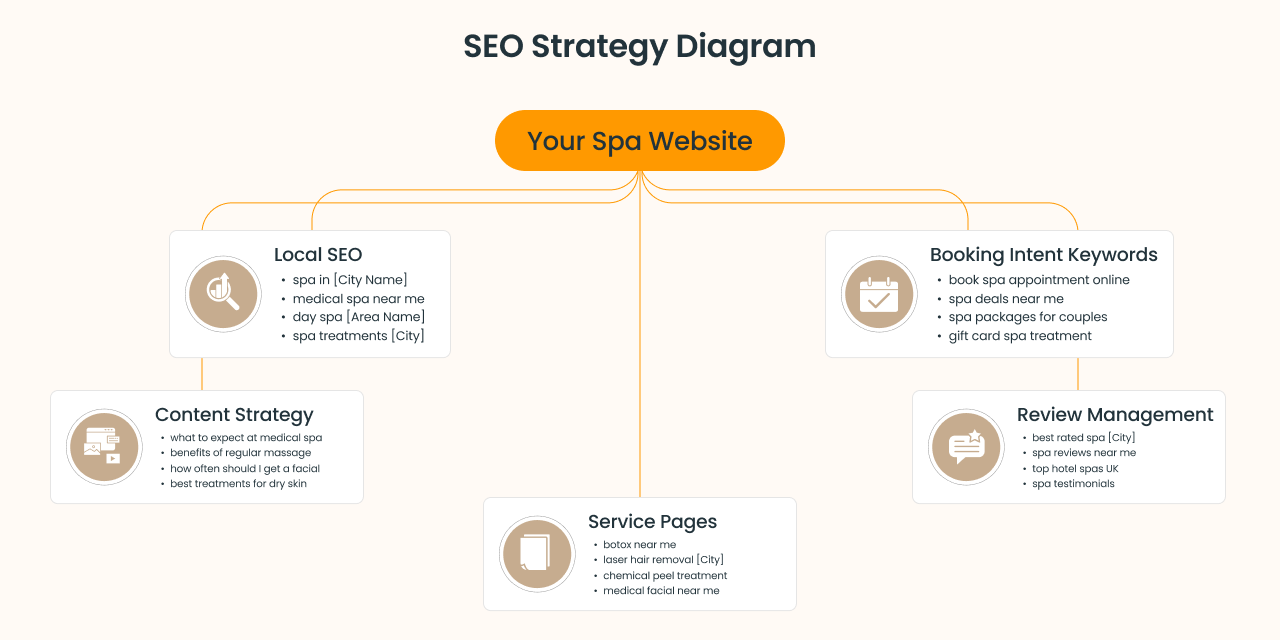
A strong spa SEO strategy for local bookings focuses on intent. Medical spa searches are often specific and location-based. Day spa searches are usually experience-led, such as spa days, hotel spa packages, or gift ideas.
Create separate service pages and avoid mixing medical and relaxation terms on the same page. This improves clarity for both search engines and users.
Content should support booking decisions. Educational blogs work well for medical spas, while seasonal and lifestyle content performs better for day spas.
Step 4: Building trust signals for medical spas and day spas
Trust is often the final factor before a booking is made.
Medical spas should clearly show practitioner experience, treatment details, and realistic expectations. Transparency reduces hesitation and builds confidence.
Day spas should highlight clean spaces, skilled therapists, and guest reviews focused on comfort and care. Visual proof plays a key role here.
Addressing common spa marketing challenges for hotels, such as low trust or unclear services, often starts with improving these signals.
Step 5: Improve spa booking flow and increase guest value
An easy booking experience directly affects revenue.
Most spa bookings now happen on mobile devices. A slow or confusing system leads to lost enquiries. Improving spa booking flow optimization helps guests complete bookings without friction.
Medical spas should make consultations easy to book online. Day spas should allow quick selection of treatments, time slots, and packages. Hotel spas should connect spa bookings with room reservations where possible.
To increase spa bookings for hotels, focus not only on traffic but also on guest value. Medical spas can offer treatment plans and follow-ups, while day spas can grow revenue through bundles, gift cards, and loyalty offers.
Step 6: Paid ads and social media for spa marketing success
Paid ads and social media are most effective when they match what guests are looking for.
Medical spas should focus on treatment-led campaigns that explain the process and outcomes. This approach supports those searching for solutions and learning how to market a medical spa in the UK responsibly.
Day spas should promote experiences, seasonal offers, and short breaks. Visual storytelling is key when showing how to market a day spa in the UK effectively.
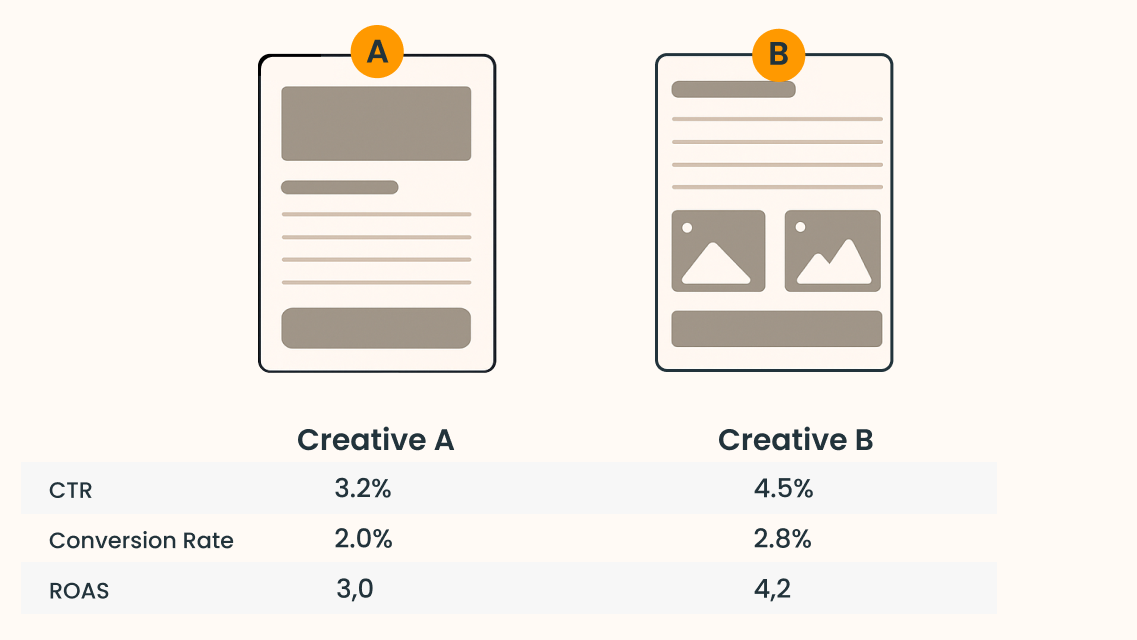
Keeping your ads, social posts, and landing pages consistent helps improve results and build brand recognition.
Step 7: Reputation management for spas in the hospitality sector
Online reviews strongly influence spa bookings. Many guests read reviews before visiting a website.
Medical spas should respond with professionalism and reassurance, especially when concerns are raised. Day spas should respond with warmth and focus on guest experience.
Active reputation management helps improve the spa’s online presence and builds long-term trust. This is an area where ThisRapt supports hospitality brands through structured review handling and visibility improvement.
Step 8: Spa marketing metrics UK owners should track in 2026
Tracking performance helps you improve results over time.
Key metrics include booking conversion rates, cost per booking from ads, average guest spend, review sentiment, and organic visibility for priority services. These insights support smarter decisions and stronger returns.
For businesses using UK spa marketing services, clear reporting helps link marketing spend directly to bookings and revenue.
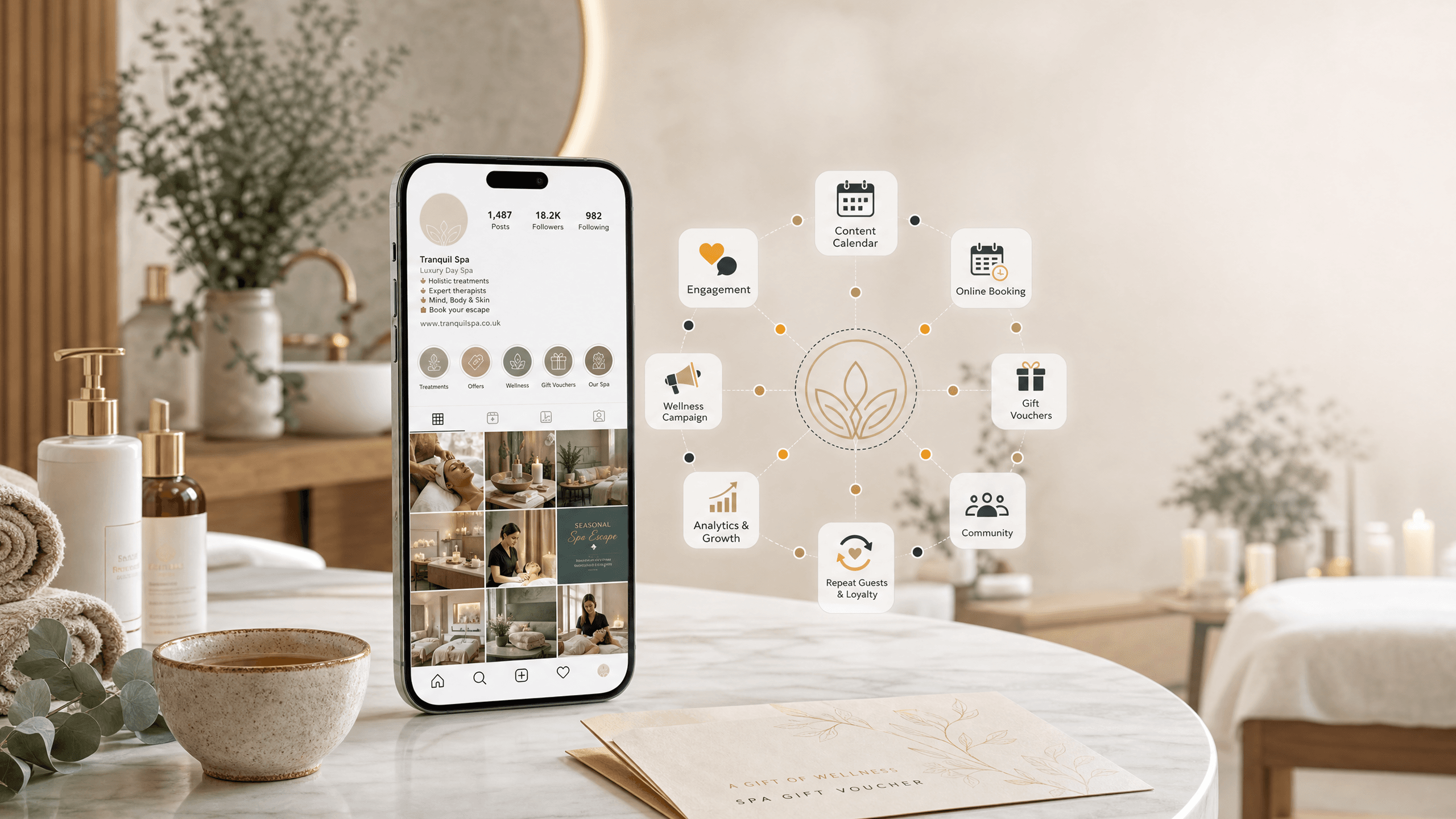
A 90-day Spa Marketing Plan
Plan a full year of content in minutes with our ready-to-use template - complete with seasonal themes, content ideas, and posting schedules.
Why work with a hospitality marketing agency for spas
Spa marketing in hospitality is different from general digital marketing. Guest journeys, seasonality, and booking habits all need specialist insight.
Working with a hospitality marketing agency for spas gives hotel and spa owners access to focused expertise. ThisRapt provides spa digital marketing support for hotels, combining SEO, paid media, content, and spa SEO and reputation management into one clear growth strategy.
Conclusion
In 2026, successful spas will be clear about who they serve and what they offer. Simple language, honest messaging, and focused digital strategy will build trust and drive bookings.
If your spa needs better positioning, more visibility, or higher returns, start with clarity and consistency.
Want expert guidance from a team that understands hospitality? Speak with ThisRapt to get a practical marketing plan built for UK hotels, restaurants, and spas.