Big giants like Nando’s and Wagamama don’t rely on mere guesswork. They look flawless on the front because they integrate tech in the backend. Their smooth services, consistent quality, and controlled costs are all by-products of using technology. By incorporating tech, they are able to track inventory in real time, optimize staff schedules, and analyze performance regularly.
| Let’s explore how independent restaurants can use big-brand technology to build a smarter, scalable, and cost-effective growth strategy. Explore these topics with us: |
|
A common thought might linger: “Big giants have big budgets to use technology.” While that’s not completely wrong, there’s still a good part…even if you’re an independent restaurant owner and don’t have such huge budgets, you can still use technology like the big brands.
The landscape had changed.
Technology for independent restaurants has been easily accessible. You can achieve the same operational intelligence in your budget. With the right tools, gain visibility into food costs, labour efficiency, and business performance. Many platforms are helping smaller restaurants adopt technology. One such platform is Growtality, which helps independent restaurants operate with big-brand-level precision while keeping complexity far away.
Technology is no longer expensive, but you might have to pay a huge price for not using it.
The technology gap in the restaurant industry
Have you ever visited any major restaurant chains?
If yes, then you might have noticed how smoothly everything runs. This level of consistency is more calculative than accidental. Such large restaurants prefer not just starters, not just appetizers, but a full-course meal, systematically plated on a single table. That translates to an integrated technology system that connects all their operations to one dashboard.
On the other hand, independent restaurants often don’t operate with this level of visibility. Many of them still depend on manual management. While there’s nothing wrong with that, and it can even work well, but only for the short term. Long-term scalability can be obstructed by unnoticed or neglected inefficiencies caused by this manual management.
The gap between large chains and independent restaurants is not cost; it’s the absence of the right tools. With the passing days into the modern world, technology becomes more accessible; independent restaurant owners now have the opportunity to fill this gap with the same level of control and efficiency that the larger brands have.
Why does tech in the restaurant business matter more than ever?
Running a restaurant in the UK, especially in today’s market, is more challenging than ever. With rising inflation, there has been a rise in food costs and labour expenses as well, which has tightened the profit margin. In such a scenario, even the tiniest inefficiencies can significantly impact the restaurant’s overall performance.
Restaurants adapting data and automation are gaining a visible advantage. By providing real-time visibility into the operations, technology enables the owners to actually understand where their money is being spent, where waste occurs, and where there’s room for improvement. Instead of reacting to problems after they happen, restaurant owners can be proactive and take advanced precautions to avoid those problems.
From food costs to staff schedules, the right technology can completely transform how independent restaurants operate. By reducing inefficiencies and uncertainty, technology can help your restaurant stay relevant in this highly competitive industry.
Hidden losses of avoiding technology
This is a common belief among many independent restaurants in the UK that avoiding tech is saving money. While the reality is exactly the opposite. Often, the manual operations are responsible for hidden costs that slowly reduce profitability. The absence of accurate data and real-time visibility leads to small inefficiencies, which over time lead to significant financial losses.
- Waste and Inventory Loss
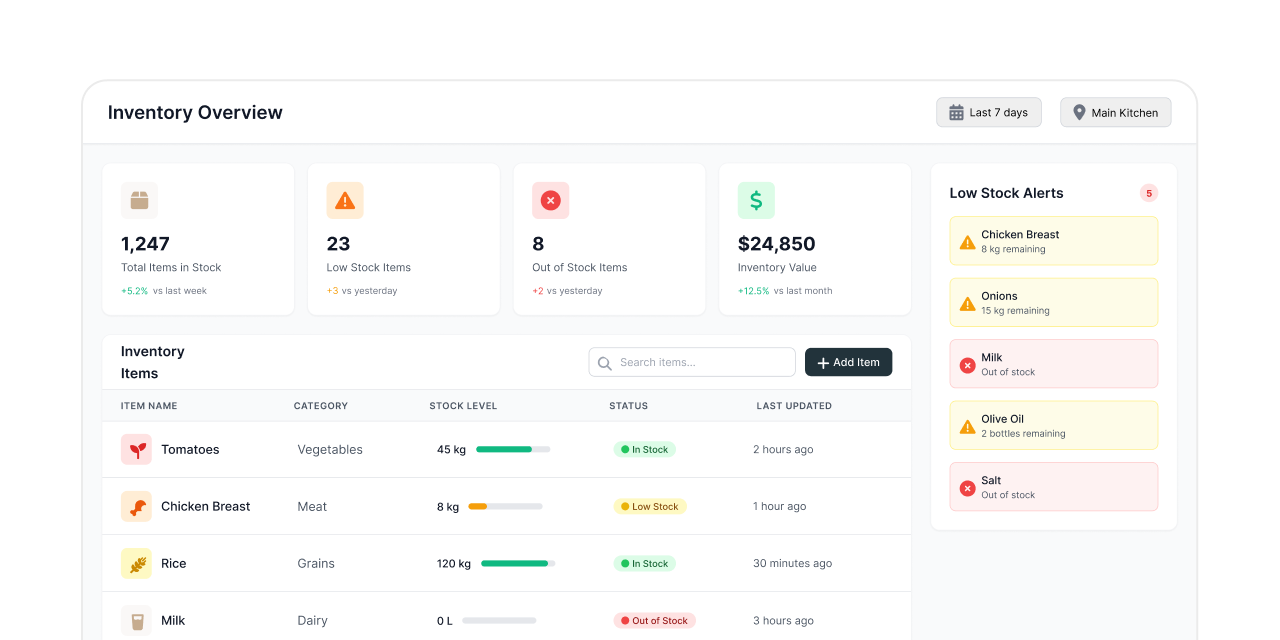
Without proper restaurant inventory management software, your restaurant can go through inaccurate stock tracking. Ordering extra can lead to spoilage; such discrepancies go unnoticed and cause the food costs to rise. When inventory management is not being monitored in real-time, restaurants often notice shortages, excessive stocking, or wastage only after bigger margins are already affected.
- Labour cost imbalance
Labour is one of the key elements and the largest expenses of any restaurant. Without proper data, restaurant labour costs cannot be clearly controlled. This might result in more labour during slower hours and less labour during peak times; both affect service quality. A data-driven scheduling system can ensure that the right number of staff is present at the right time, thereby controlling restaurant labour costs effectively. - No performance visibility
Many independent restaurants operate without clear performance analytics. They stay alien to the key factors that might boost their profitability. Operating on clear restaurant performance insights can help owners identify which menu items are popular among visitors, which hours perform best, and where costs are increasing unnecessarily. Unfamiliarity with data leads to uncertain decisions or reactions to problems after they have already happened. Real-time performance visibility can help owners make decisions that actually invest in boosting their restaurant’s scalability.
Bring big-brand tech to independent restaurants with Growtality
Technology has always felt out of reach for independent restaurants; it has been considered to be a “big-brand thing” because of its complexity and expensive nature. But not anymore, as Growtality is changing that by making enterprise-level systems accessible to independent restaurants.
As a built-for-purpose restaurant management software for small restaurants, Growtality brings all your operations into one integrated platform. Instead of relying on manual operations, restaurant owners can now get inventory, labour, and performance insights all in a unified view, helping them to make calculated decisions rather than guessing.
This platform is easy to use and very affordable; hence, independent restaurants can now incorporate tech like large chains without having to have a big budget. The focus is not just on automation but also on reducing waste, improving efficiency, and strengthening overall business performance by providing better control and precision to independent restaurants.
Key factors that drive real results
1. Automated Inventory Tracking
Being mindful of stock control is essential to protect margins. With integrated restaurant inventory management software, independent restaurants can monitor stock levels in real-time, avoid over-ordering, prevent shortages, and minimize food waste.
2. Smart labour optimisation
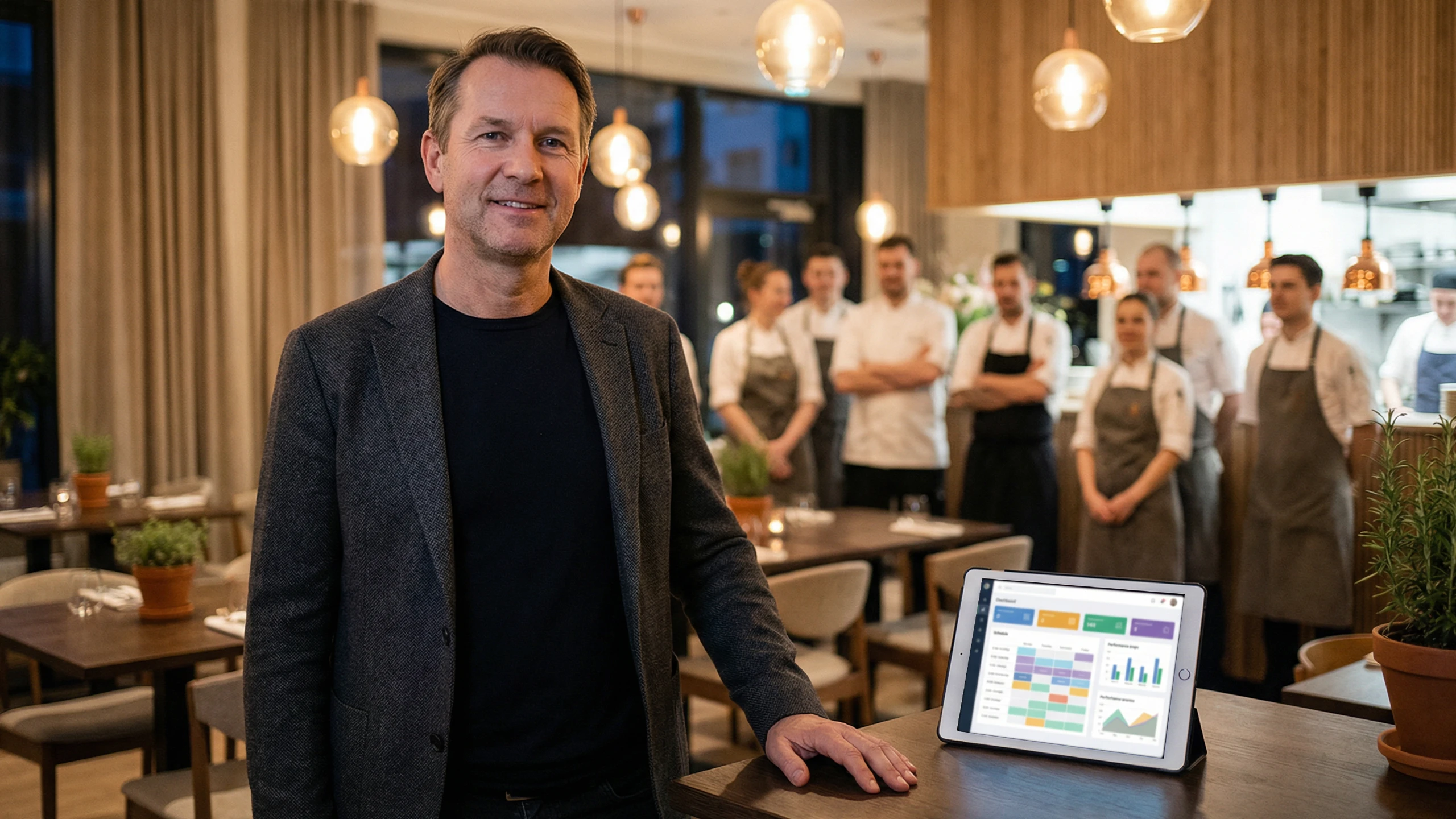
Labour is the most significant expense in any restaurant. Restaurants can achieve smart labour cost control by aligning staffing with actual demand patterns. Instead of driving on assumptions, restaurants can schedule more accurately and save unnecessary labour costs while maintaining service quality during peak times. Smarter scheduling leads to operating with improved efficiency.
3. Real-time performance dashboards
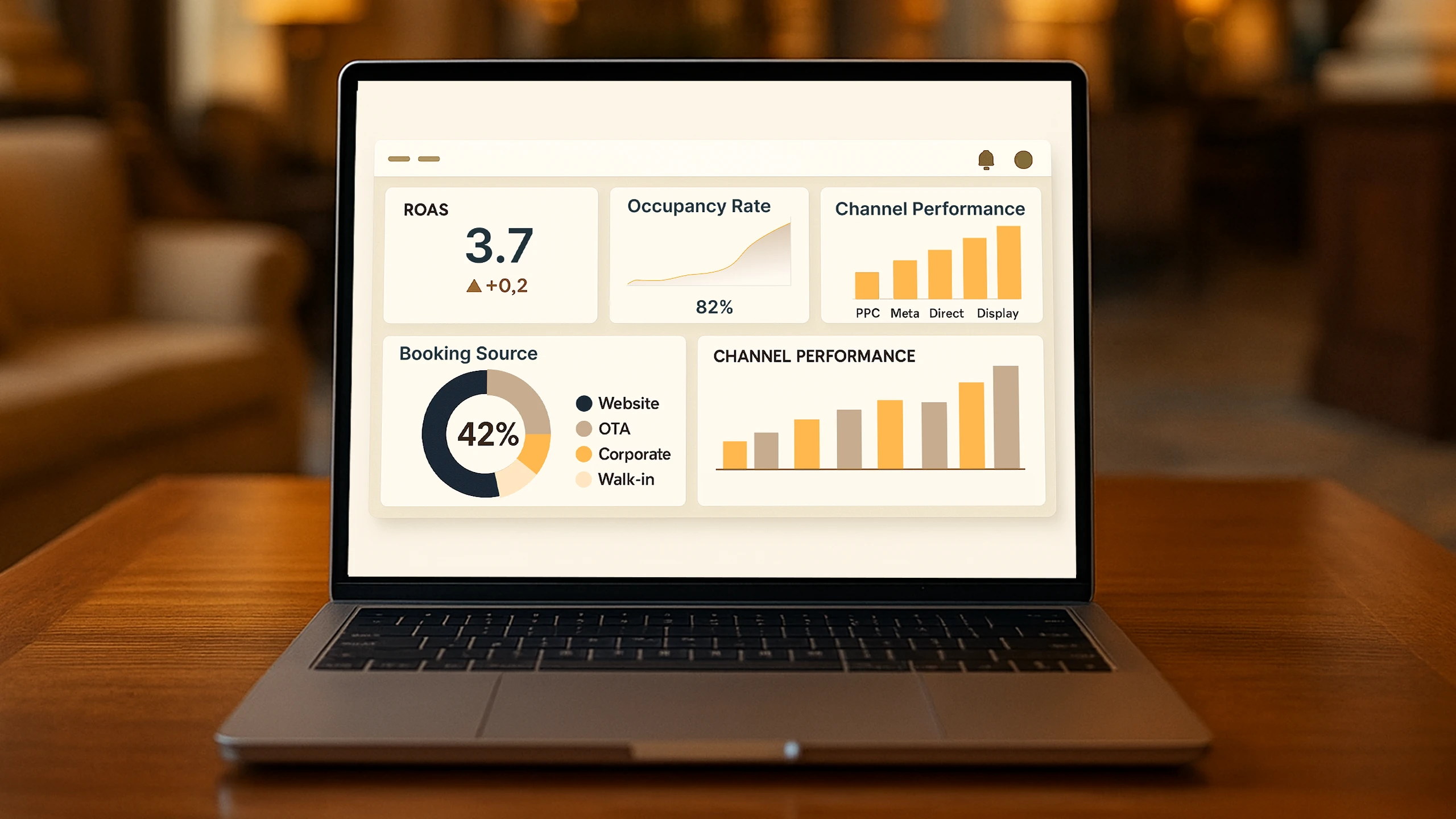
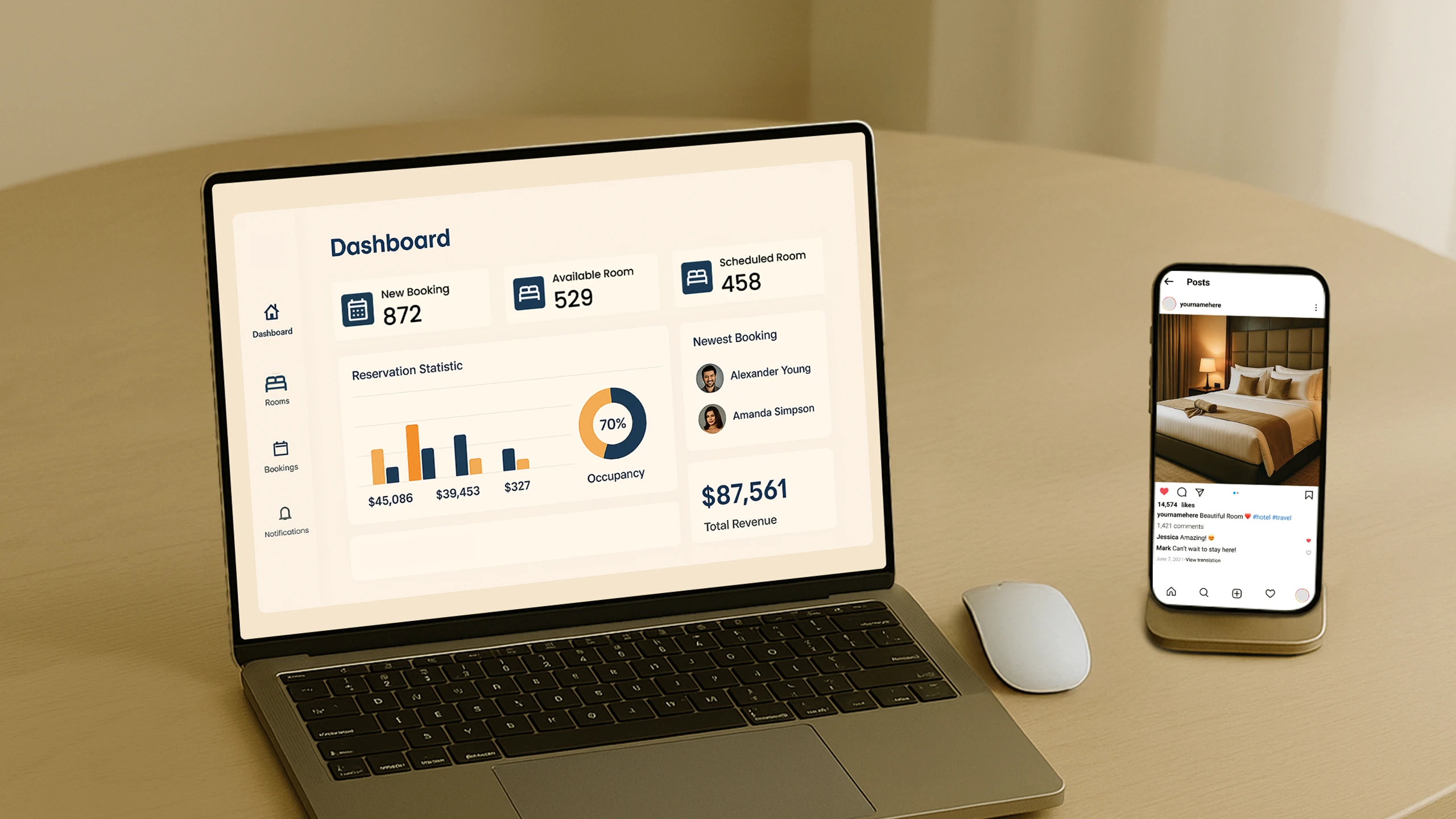
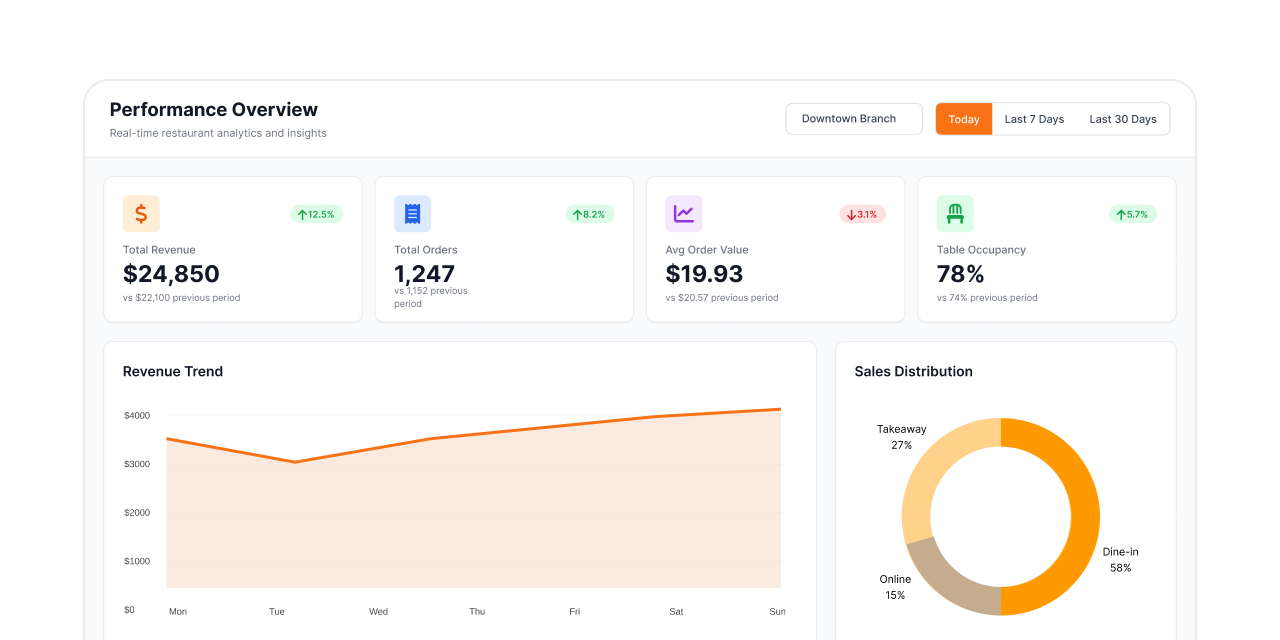
To take effective and faster decisions, restaurants would need clear visibility to your performance metrics. By integrating a restaurant performance analytics system, restaurants can have access to real-time insights into revenue trends, cost distributions, and overall business performance. With the help of these insights, restaurant owners can quickly identify areas of improvement, track progress, and make required adjustments based on reliable data.
4. Automation that saves time
A fixed routine with manual operations often consumes a lot of your valuable time. However, a built-in restaurant automation software can streamline your day-to-day operations by reducing administrative effort and minimizing human errors. Automation saves your valuable time and allows your restaurant team to focus more on customer experience than on repetitive operational tasks.
Real-world examples
Operational improvements shine most when restaurants gain a clear understanding of their daily performance. There are several challenges that an independent restaurant has to face every day. Some of the most common challenges among them are managing reservations, customer engagement, and online ordering while maintaining operational costs.
There’s an independent restaurant in Cardiff, UK, that adopted Growtality to simplify daily operations. The platform automated all the reservation calls during peak hours, streamlined online ordering, and reduced dependency on third-party delivery platforms. As a result, the restaurant experienced an enhanced service flow, improved customer engagement, and better control over operational processes.
Automation took care of the routine tasks and visibility into customer activity so that the restaurant could focus more on service quality and guest experience. This shift reduced operational friction for them and also strengthened customer retention. And the best part is that the restaurant was able to achieve all this without increasing any workload. The adaptation was neither complex nor costly.
This clearly demonstrates that all your restaurant needs is the right technology to optimize operations and maintain service quality.
Practical steps for independent restaurants
Improving operational efficiency does not always require you to move worlds. Even consistent baby steps towards better visibility and data-driven decision-making can improve performance over time. Independent restaurants can consider taking the following practical actions to strengthen their operations.
- Regularly track food costs. Identify wastes and inconsistencies by comparing ingredient usage against purchase data.
- Analyze daily and weekly sales patterns to identify peak and slow periods. Align the staff with demand to improve efficiency and achieve better restaurant labour cost control without affecting service quality.
- Identify low-margin food items in the menu. Analyze their ingredient cost and sales performance to understand which items need pricing, portion, or sourcing adjustments.
- Ditch manual tracking using those disconnected spreadsheets and switch to automated tracking. This saves time and reduces errors.
- Stop relying on assumptions and start using real performance insights to manage inventory, staffing, and daily operations.

The future belongs to tech-savvy restaurants
The restaurant industry is becoming exponentially data-driven. With the rising operational costs and evolving customer expectations, restaurants are bound to adapt to automation. Restaurants that still choose to solely depend on manual processes may find it difficult to persist in such competition. Access to real-time insights, automation, and integrated systems is not just a luxury but an operational necessity today.
Independent restaurants can now have what was once limited only to the large chains. With better access to visibility into inventory, labour, and overall performance, independent restaurants can make faster and more informed decisions that invest in long-term stability. Data-driven operations help reduce costs while also enhancing customer experience.
As technology keeps evolving, the gap between big giants and small independent restaurant businesses is narrowing. Platforms like Growtality are actively enabling smaller restaurants to adopt automation for clarity, control, confidence, and a better sustainable future.
See how your restaurant compares
Every restaurant has opportunities to improve and save costs. The challenge is to identify those opportunities. Early identification of these opportunities can make meaningful improvements in cost control, staffing, and overall performance.
If you’re exploring how technology for independent restaurants can benefit cost control, staff scheduling, or streamlining operations, taking a closer look at your current position might help.
You can always opt for a Growtality demo or operational review to understand:
- Where are inefficiencies lying, and how are they affecting your restaurant’s performance?
- How can visibility support inventory and labour optimization?
- How can everyday operations be simplified by automation?
- What could a more data-backed approach look like for your restaurant?
Independent restaurants can now access advanced operational technology without emptying their pockets, making it easier to run with better clarity and control.